
The RepBro Blog
Lifting, decoded. One honest cue at a time.
Research-backed writing on hypertrophy, strength programming, recovery, and the lifts that actually move the needle — from the team building RepBro.
Complete Exercise Technique Guide: Ab Roller, Pallof Press, and Back Squat Form
Master proper form for ab roller exercise, Pallof press reps, and back squat technique. Get specific cues, rep ranges, and common mistakes to avoid for maximum results.
More from the blog
7 Bench Dips Alternatives That Build Stronger Triceps (No Bench Required)
Discover effective bench dips alternatives using bodyweight and minimal equipment. Learn Copenhagen plank progressions, spider curl substitutes, and tricep-building moves that work anywhere.
7 Walking Lunges Alternatives and Nordic Curl Substitutes That Actually Work
Replace walking lunges, Nordic curls, and wall sits with equipment-free alternatives that target the same muscles. Get 7 proven substitutes for advanced leg exercises.
Hip Abduction Machine Alternatives: 7 Exercises to Build Glute Strength Without the Machine
Build glute medius strength with resistance bands, dumbbells, and bodyweight exercises. These hip abduction machine alternatives target lateral hip stability and glute activation effectively.
7 Nordic Hamstring Curl Alternatives That Actually Build Eccentric Strength
Nordic hamstring curl alternatives using resistance bands, dumbbells, and partner assistance. Build eccentric hamstring strength without advanced equipment for injury prevention and performance.
7 Chest Supported Row Alternatives to Build Your Back at Home
Build a thick back without a chest supported row machine. These 7 alternatives using dumbbells, bands, and bodyweight target the same muscles with proper form cues.
How Many Sets Per Muscle Per Week for Maximum Hypertrophy
Research shows 10-20 weekly sets per muscle group maximizes hypertrophy for most lifters. Here's how to find your optimal volume and avoid junk sets that waste recovery.
How Many Sets Per Muscle Per Week? The Science-Based Guide to Training Volume
Most lifters need 10-20 sets per muscle group per week for optimal hypertrophy. Beginners start at 8-12 sets, intermediates aim for 12-16, and advanced lifters may need 16-20+ sets weekly.
How Many Sets Per Muscle Per Week for Maximum Hypertrophy
Research shows 10-20 weekly sets per muscle group optimizes hypertrophy for most lifters. Beginners start at 10-14 sets, intermediates need 14-18, advanced lifters may require 16-22 sets per week.
How Many Sets Per Muscle Per Week: The Science-Based Answer
Research shows 10-20 sets per muscle per week optimizes hypertrophy for most lifters. Beginners start at 10-12 sets, intermediates need 14-18 sets, advanced lifters may require 16-20+ sets per muscle group weekly.
How Many Sets Per Muscle Per Week: The Science-Based Guide to Training Volume
Most lifters need 10-20 sets per muscle per week for hypertrophy. Beginners start at 8-12 sets, intermediates use 12-18 sets, and advanced lifters may need 16-22 sets depending on recovery capacity.
How Many Sets Per Muscle Per Week: The Science-Based Guide to Training Volume
Most lifters need 10-20 sets per muscle group per week for optimal hypertrophy. Beginners start at 8-12 sets, intermediates need 12-18 sets, and advanced lifters may require 16-22 sets weekly.
How Many Sets Per Muscle Per Week for Maximum Hypertrophy
Research shows 10-20 sets per muscle per week optimizes hypertrophy for most lifters. Here's how to find your ideal volume and track it effectively.
How Many Sets Per Muscle Per Week for Maximum Growth
Most lifters need 10-20 sets per muscle per week for optimal hypertrophy. Here's how to find your sweet spot based on training experience, recovery, and muscle group.
How Many Sets Per Muscle Per Week for Maximum Growth
Research shows 12-20 sets per muscle per week optimizes hypertrophy for most lifters. Here's how to find your ideal volume and track it effectively.
How Many Sets Per Muscle Per Week: The Science-Based Guide for Maximum Growth
Research shows 10-20 sets per muscle per week optimize hypertrophy for most lifters. Beginners start at 10-12 sets, intermediates need 12-16, and advanced lifters may require 16-20+ sets.
How Many Sets Per Muscle Per Week for Maximum Hypertrophy
Research shows 10-20 weekly sets per muscle group maximizes hypertrophy. Start with 10-12 sets for beginners, progress to 16-20 for advanced lifters. Individual recovery varies.
How Many Sets Per Muscle Per Week for Maximum Hypertrophy
Research shows 10-20 sets per muscle per week maximizes hypertrophy for most lifters. Beginners start at 8-12 sets, intermediates need 12-16, advanced lifters may require 16-20+ sets weekly.
How Many Sets Per Muscle Per Week for Maximum Hypertrophy
Research shows 10-20 sets per muscle per week maximizes hypertrophy for most lifters. Beginners start at 8-12 sets, intermediates need 12-16, advanced lifters may benefit from 16-20+ sets per muscle group weekly.
How Many Sets Per Muscle Per Week: The Science-Based Guide to Weekly Volume
Research shows 10-20 sets per muscle per week optimize hypertrophy for most lifters. Beginners need 8-12 sets, intermediates 12-18, advanced lifters up to 20+ sets weekly.
How Many Sets Per Muscle Per Week for Maximum Hypertrophy
Research shows 10-20 sets per muscle per week maximizes hypertrophy for most lifters. Here's how to find your optimal weekly set volume based on training experience and recovery.
How Many Sets Per Muscle Per Week for Maximum Hypertrophy
Research shows 10-20 sets per muscle per week optimizes hypertrophy for most lifters. Here's how to find your ideal weekly volume based on training experience and recovery capacity.
How Many Sets Per Muscle Per Week for Maximum Hypertrophy
Most lifters need 10-20 sets per muscle per week for optimal hypertrophy. Beginners start at 8-12 sets, intermediates use 12-18 sets, and advanced lifters may need 16-22 sets depending on recovery capacity.
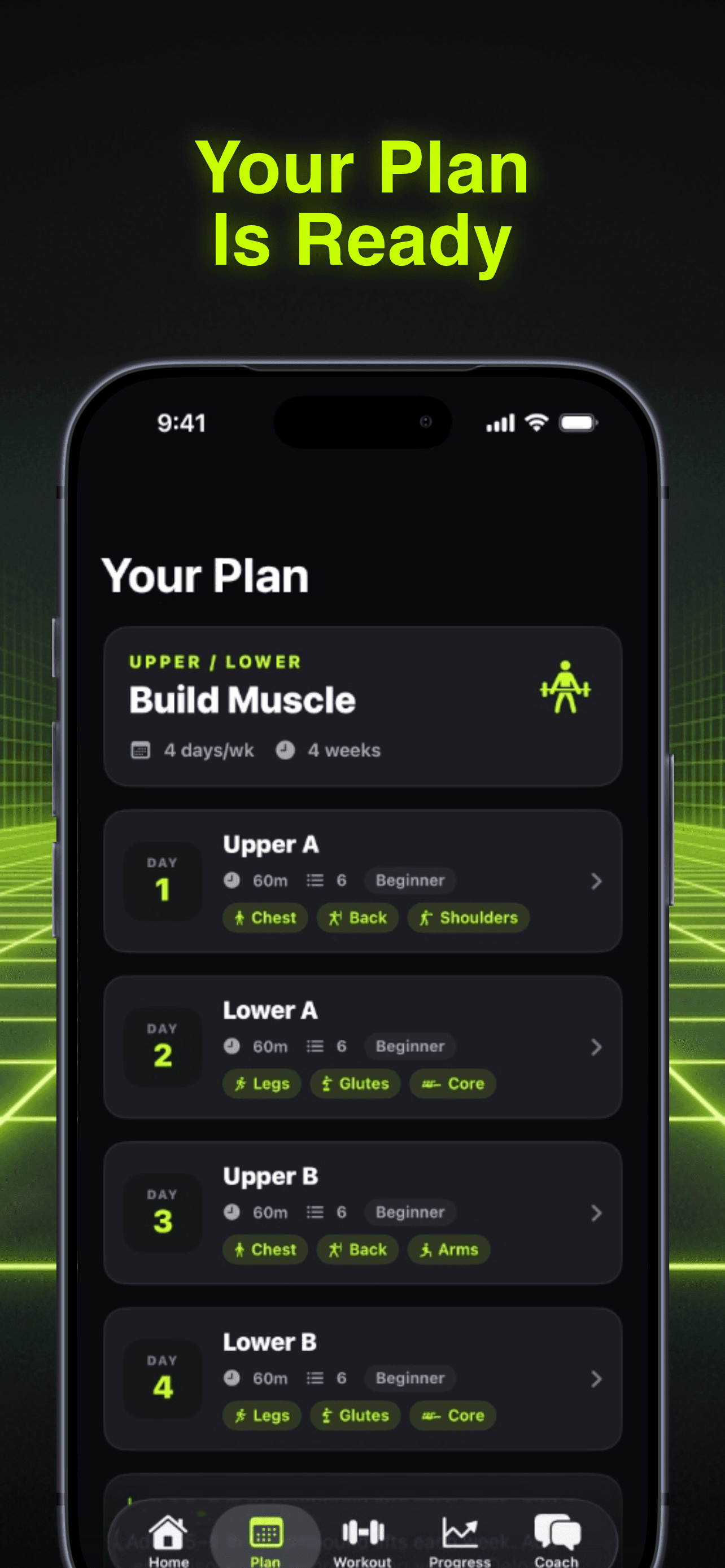
Complete Beginner Gym Workout Plan: 4-Week Program to Build Strength and Confidence
A structured 4-week beginner gym workout plan with compound movements, progressive overload, and exercise demonstrations. Start with 3 days per week, master the basics, and build lasting strength.
How to Progress Your Workouts: A Beginner's Guide to Getting Stronger
Learn workout progression methods for beginners: progressive overload techniques, when to add weight, rep ranges, and systematic approaches to build strength and muscle consistently.
7 Beginner Gym Mistakes That Kill Your Progress (And How to Fix Them)
Avoid these 7 common beginner gym mistakes that slow progress and increase injury risk. Learn proper form, programming, and recovery techniques for faster gains.
Face Pulls for Renters: 7 Apartment-Friendly Alternatives Using Resistance Bands
Master face pulls for renters with resistance bands and doorway anchors. Seven effective alternatives that strengthen rear delts and improve posture without damaging walls or requiring gym access.
3-Day Beginner Workout Plan: Build Strength Fast
A simple 3-day full-body workout plan for beginners focusing on compound movements. Build strength with progressive overload using squats, deadlifts, bench press, and rows.
Face Pulls at Home: 5 Equipment-Free Alternatives That Actually Work
Learn how to perform effective face pulls at home using resistance bands, towels, and bodyweight alternatives. Build stronger rear delts and improve posture without a cable machine.
First Week at the Gym: Complete Beginner's Guide
Your first week gym experience doesn't have to be intimidating. Follow this step-by-step guide covering workout basics, gym etiquette, and confidence-building strategies for new lifters.
How to Do a Glute Bridge with Proper Form: Fix Your Pelvic Tilt and Lockout
Master glute bridge form with proper pelvic tilt and lockout position. Learn to feel it in your glutes, not your lower back, with step-by-step technique cues and common mistakes to avoid.
How to Do a Dumbbell Row with Proper Form: Stop Twisting Your Spine
Master dumbbell row form by keeping your torso stable and pulling in the right path. Avoid spine rotation that kills gains and causes injury with these technique cues.
How to Do a Seated Cable Row with Proper Form (Stop Rounding Your Back)
Master seated cable row form by fixing back rounding and shoulder shrugging. Keep chest up, shoulders down, and pull to your lower ribs for maximum lat activation.
How to Do a Cable Fly with Proper Form: Master Every Angle
Cable flies target different chest regions by adjusting cable height and elbow angle. Set cables at shoulder height for mid-chest, high for lower chest, low for upper chest.
How to Do a Rear Delt Fly with Proper Form: Stop Making These 3 Mistakes
Master the rear delt fly with proper torso angle and squeeze cues. Learn why 45-degree forward lean and controlled tempo activate rear delts, not momentum.
How to Do a Skull Crusher with Proper Form (Without Elbow Pain)
Learn proper skull crusher form with correct bar path and elbow angle to build triceps safely. Avoid the common mistakes that cause elbow pain and limit growth.
How to Do a Tricep Pushdown with Proper Form (Stop Making These 3 Mistakes)
Master tricep pushdown form by keeping elbows pinned, avoiding shoulder lean, and choosing the right attachment. These fixes turn a mediocre chest exercise back into a tricep builder.
How to Do the Lat Pulldown with Proper Form (Stop Training Your Biceps Instead)
Master lat pulldown form with the right grip width, pull angle, and tempo. Avoid the 5 common mistakes that turn this lat builder into a bicep exercise.

Heart Rate Zones Explained Simply: What Each Zone Actually Does for Your Training
Heart rate zones explained simply: Zone 1 (50-60%) for recovery, Zone 2 (60-70%) for fat burning, Zone 3 (70-80%) for aerobic fitness, Zone 4 (80-90%) for lactate threshold, Zone 5 (90-100%) for power.
Step Count vs Dedicated Cardio Sessions: Which Actually Matters More for Your Goals
Daily steps and structured cardio sessions both improve fat loss and heart health, but structured cardio delivers faster results while steps provide sustainable, long-term benefits.
Assault Bike Workouts That Don't Feel Like Punishment: 5 Structured Interval Formats
Transform your assault bike sessions from suffering machines into strategic cardio tools with these 5 structured interval formats designed for fat loss and conditioning without the mental torture.
How to Use the Rowing Machine with Proper Form: Master the Legs-Back-Arms Sequence
Learn proper rowing machine form with the legs-back-arms sequence. Master the catch, drive, and recovery phases to maximize power and prevent injury on the rower.
Morning vs Evening Training: Which Actually Builds More Muscle
Research shows workout timing has minimal impact on muscle growth. Performance peaks 6-8 hours after waking, but consistency matters more than clock time for building muscle.
Training When Sore: Should You Skip the Gym or Push Through?
Training when sore depends on soreness type and intensity. Light soreness (1-3/10) means train normally. Moderate soreness (4-6/10) means reduce intensity. Severe soreness (7+/10) means rest or train different muscles.
Compound vs Isolation Exercises: How to Balance Both for Maximum Growth
Compound exercises build strength and mass efficiently, but isolation exercises target weak points and add volume. The optimal approach combines both in a structured ratio for maximum muscle growth.
5 Progressive Overload Schemes That Don't Require Adding Weight
Progressive overload schemes beyond adding weight: increase volume, density, frequency, range of motion, or time under tension. These methods work when plates run out or strength gains stall.
5x5 Programs Explained: Why Simple Beats Complicated for Strength
5x5 workout programs use 5 sets of 5 reps at 80-85% 1RM to build strength efficiently. Perfect for beginners to intermediates seeking linear progression with compound movements.
Deload Weeks Explained: When to Take One and How to Structure It
Deload weeks reduce training volume by 40-60% every 4-6 weeks to manage fatigue. Learn when to deload based on performance drops, sleep issues, and motivation loss.
4 Day Split Workout Plans That Actually Fit Real Schedules
The best 4 day split workout plan depends on which muscles recover slowest for you. Compare upper/lower, push/pull/legs, and body part splits to find your optimal training frequency.
How to Do a Goblet Squat with Perfect Form (Beginner's Guide)
Master goblet squat form with this step-by-step guide. Learn proper foot placement, depth, and breathing to build strength safely before progressing to back squats.
How to Barbell Row with Proper Form for a Stronger Back
Master barbell row form with the right torso angle and pull path. Keep your torso at 45-60 degrees, pull to your lower chest, and squeeze your shoulder blades to build lats instead of straining your lower back.
How to Do a Hip Thrust with Proper Form for Maximum Glute Growth
Master hip thrust form with proper bench setup, foot placement, and lockout position. Avoid common mistakes that reduce glute activation and limit growth.
Supersets vs Straight Sets: When to Use Rest Timers, Drop Sets, and Advanced Techniques
Supersets save time but may reduce strength gains. Straight sets with 2-5 minute rest intervals optimize performance. Drop sets boost hypertrophy when used sparingly.
Voice Workout Logging: Why Talking to Your Gym App Beats Typing Mid-Set
Voice workout logging lets you track sets without breaking rest periods or losing focus. Learn when voice input beats typing and how to log workouts hands-free during training.
Como Acompanhar Seu Progresso na Academia: 7 Indicadores que Realmente Importam
Descubra como medir evolução na academia além da balança: carga levantada, fotos de progresso, medidas corporais e outros indicadores que mostram seus ganhos reais.
PPL: Como Funciona o Treino Push Pull Legs (Guia Completo)
PPL (Push Pull Legs) divide os treinos por movimentos: empurrar, puxar e pernas. Ideal para 3-6 dias por semana, permite recuperação adequada e volume alto por grupo muscular.
Treino em Casa vs Academia: Qual Realmente Traz Resultado?
Treino em casa vs academia: ambos funcionam para hipertrofia e força quando bem executados. A diferença está na progressão de carga, consistência e equipamentos disponíveis.
Treino Full Body 3x na Semana: o Programa Mais Simples que Funciona
O treino full body 3x por semana é mais eficiente que divisões tradicionais para quem tem pouco tempo. Cada músculo é estimulado 3x por semana, maximizando síntese proteica e resultados.
Cardio Antes ou Depois da Musculação: O Que a Ciência Diz
Fazer cardio antes ou depois da musculação? A ordem importa para ganhos de força e hipertrofia. Descubra o que diz a pesquisa sobre o efeito de interferência.
Dor Muscular Pós Treino: O Que É Normal e O Que É Sinal de Alerta
A dor muscular pós treino é normal e dura 24-72 horas. Aprenda a diferençar DOMS de lesão e quando procurar ajuda médica para treinar com segurança.
Quantas Séries e Repetições Fazer: Guia Definitivo Para Força, Hipertrofia e Resistência
Descubra quantas séries e repetições fazer para hipertrofia (8-20 reps, 10-20 séries/semana), força (1-6 reps, 6-12 séries/semana) e resistência (15+ reps, 12-25 séries/semana).