How Many Sets Per Muscle Per Week for Maximum Hypertrophy
Research shows 10-20 weekly sets per muscle group maximizes hypertrophy. Start with 10-12 sets for beginners, progress to 16-20 for advanced lifters. Individual recovery varies.
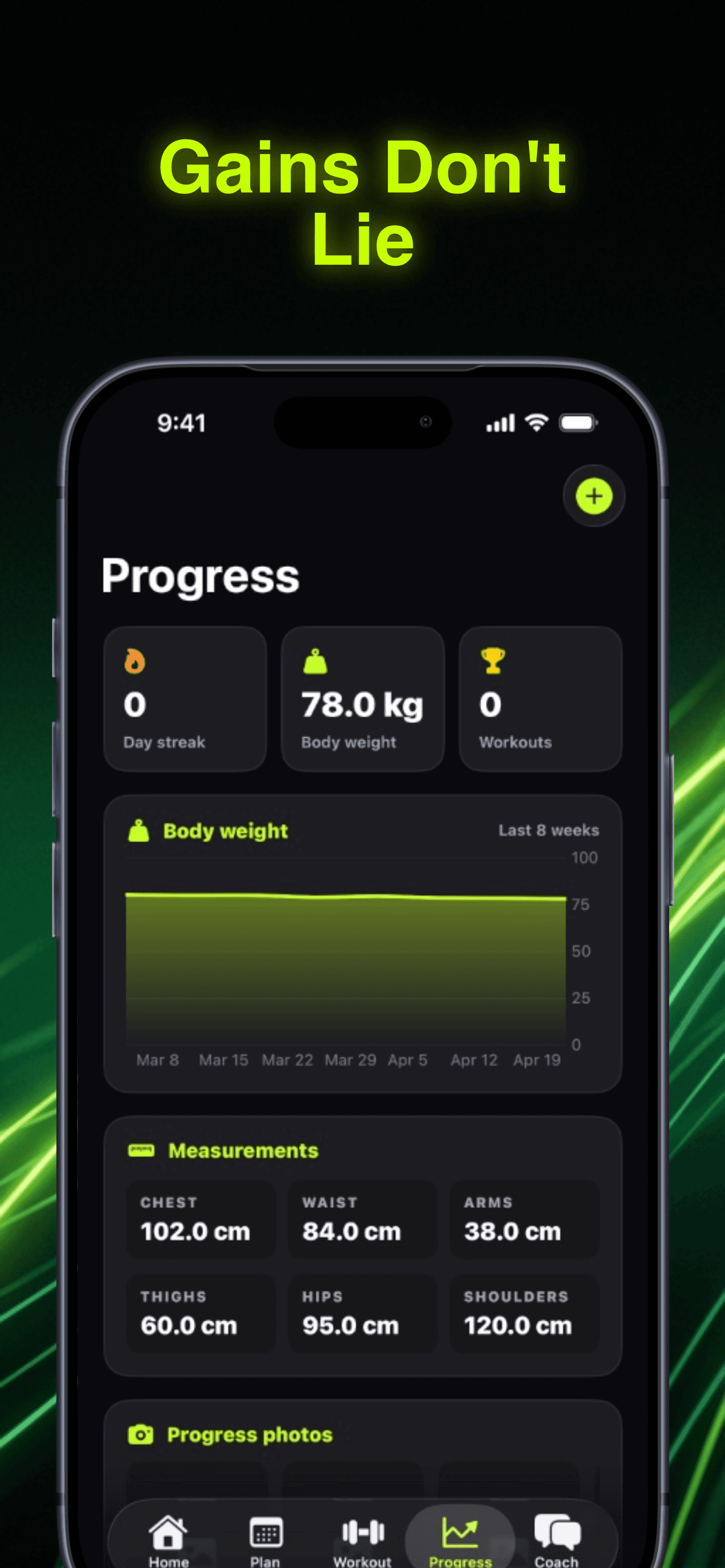
Photo by RepBro.
You walk into the gym with a plan. Chest, back, legs — you know which muscles to hit. But here's the question that determines whether you build muscle or just go through the motions: how many sets should you actually do per muscle group each week?
The research-backed answer: 10-20 weekly sets per muscle group maximizes hypertrophy for most lifters. Beginners see excellent growth with 10-12 sets weekly, while advanced trainees often need 16-20+ sets to continue progressing. The sweet spot depends on your training age, recovery capacity, and how you distribute those sets across the week.
This isn't guesswork. Meta-analyses consistently show a dose-response relationship between weekly set volume and muscle growth — up to a point. Beyond 20+ sets per muscle per week, most lifters hit diminishing returns or even regression from inadequate recovery.
The Volume Landmarks That Actually Matter
Training volume research reveals clear patterns across thousands of lifters. Here's what the data shows:
Minimum Effective Volume (MEV): 8-10 sets per week This is your baseline. Below this threshold, muscle growth crawls. Even complete beginners need at least 8 weekly sets per muscle to see meaningful hypertrophy.
Maximum Adaptive Volume (MAV): 16-22 sets per week Your ceiling before recovery becomes the limiting factor. Push beyond this consistently, and you'll likely see strength drops, sleep disruption, or stalled progress.
Optimal Growth Zone: 10-16 sets per week Where most lifters should live most of the time. This range maximizes the growth stimulus while preserving recovery for consistent progression.
These numbers assume you're training each muscle group 2-3 times per week. If you're hitting chest once weekly with 15 sets, you're not optimizing the frequency component of the volume equation.
How Training Experience Changes Your Volume Needs
Your training age dramatically affects how much volume you need and can handle.
Beginners (0-2 Years)
Start with 10-12 weekly sets per muscle group. Your nervous system is still learning movement patterns, and your recovery systems haven't adapted to high volumes yet. A beginner who jumps straight to 18 sets per muscle often burns out within weeks.
I've seen new lifters make excellent progress on full-body routines hitting each muscle with just 3-4 sets per session, three times weekly. The consistency matters more than the absolute volume at this stage.
Intermediate (2-5 Years)
Bump up to 12-16 weekly sets per muscle. Your work capacity has increased, but you're also experiencing the intermediate plateau where linear progression slows. Higher volume becomes necessary to drive continued adaptation.
Advanced (5+ Years)
May need 16-20+ weekly sets per muscle to see growth. Advanced lifters have exhausted most neurological gains and require greater training stress to force adaptation. However, they also have superior recovery abilities from years of training adaptation.
The Distribution Strategy: Frequency Matters
How you spread those weekly sets matters as much as the total number. Research consistently shows that training each muscle 2-3 times per week produces superior hypertrophy compared to once-weekly training, even when total weekly volume is matched.
Optimal Distribution Patterns:
- 2x per week: 5-8 sets per session for 10-16 total weekly sets
- 3x per week: 3-5 sets per session for 12-15 total weekly sets
- 4x per week: 2-4 sets per session for 12-16 total weekly sets
The upper body typically handles higher frequencies better than legs. You might train chest and shoulders 3x weekly while hitting legs hard twice weekly.
When More Sets Actually Hurt Your Progress
Volume has a ceiling. Push past your Maximum Recoverable Volume (MRV), and you'll see these warning signs:
- Strength decreases session to session
- Sleep quality drops despite fatigue
- Motivation to train plummets
- Joint aches that don't resolve between sessions
- Plateau or regression in muscle measurements
Your MRV isn't fixed. Stress, sleep, nutrition, and life circumstances all affect how much volume you can productively handle. A lifter managing work stress and poor sleep might need to drop from 16 to 12 weekly sets per muscle temporarily.
Programming Your Weekly Volume
Here's how to structure your weekly sets for consistent progress:
Week 1-3: Accumulation Phase Start at the lower end of your volume range. Build momentum and perfect technique before adding stress.
Week 4-6: Intensification Phase Gradually increase weekly sets by 1-2 per muscle group. Monitor recovery markers closely.
Week 7: Deload Drop volume to 50-60% of your peak week. Maintain intensity but give your system a break.
Week 8+: Repeat with Higher Baseline Start your next block with slightly more volume than your previous starting point.
This periodization prevents staleness and allows for long-term progression without burning out.
Muscle-Specific Volume Considerations
Not every muscle group responds identically to volume. Some patterns emerge across lifters:
Higher Volume Responders:
- Shoulders and arms (can often handle 16-20+ weekly sets)
- Calves (notoriously stubborn, may need 20+ sets)
- Rear delts and side delts (recover quickly between sessions)
Moderate Volume Responders:
- Chest and lats (12-16 sets typically optimal)
- Quads and glutes (powerful muscles, need adequate recovery)
Lower Volume Responders:
- Hamstrings and traps (respond well to 10-14 sets)
- Lower back (easily overtrained, especially with compound movements)
Remember that compound movements contribute volume to multiple muscle groups. A heavy squat session adds significant volume to your quads, glutes, and even upper back.
Tracking Volume in Practice
Counting sets sounds simple until you start programming. Here's what counts toward your weekly muscle volume:
Full Credit (1.0x):
- Isolation exercises (bicep curls for biceps)
- Primary movers in compounds (chest in bench press)
Partial Credit (0.5x):
- Secondary movers in compounds (triceps in bench press)
- Stabilizers under significant load (rear delts in rows)
No Credit:
- Minimal involvement exercises (biceps in squats)
- Warm-up sets below 60% of working weight
Most successful lifters track their weekly volume and adjust based on progress and recovery. The RepBro app automatically calculates this for you, tracking both direct and indirect volume contributions across your entire program.
Your next workout should start with a volume audit. Count your current weekly sets per muscle group, compare them to the research-backed ranges above, and adjust accordingly. Most lifters discover they're either doing too little volume on lagging muscles or too much on muscles that aren't recovering properly.
Frequently asked questions
- How many sets per muscle group should beginners do per week?
- Beginners should start with 10-12 weekly sets per muscle group. This provides sufficient stimulus for growth while allowing proper recovery and technique development. Focus on consistency and progressive overload rather than high volume.
- Is 20 sets per muscle per week too much?
- For most lifters, 20+ weekly sets per muscle approaches or exceeds Maximum Recoverable Volume. Advanced trainees may handle this briefly, but monitor for signs of overtraining like decreased strength, poor sleep, or stalled progress.
- Should I count partial reps toward my weekly set volume?
- Only count sets taken close to failure (1-3 reps in reserve) toward your weekly volume. Warm-up sets, partial range of motion, or sets well short of failure don't provide meaningful hypertrophy stimulus.
- How do I distribute 15 weekly sets across multiple workouts?
- For 15 weekly sets, train the muscle 2-3 times per week. Options include 8+7 sets (2x weekly), 5+5+5 sets (3x weekly), or 4+4+4+3 sets (4x weekly). Higher frequency typically produces better results.
- Do compound exercises count toward multiple muscle groups?
- Yes, but use fractional counting. Give full credit (1.0x) to primary movers, half credit (0.5x) to significant secondary movers, and no credit to minimally involved muscles. For example, bench press = 1.0x chest, 0.5x triceps and front delts.