How to Progress Your Workouts: A Beginner's Guide to Getting Stronger
Learn workout progression methods for beginners: progressive overload techniques, when to add weight, rep ranges, and systematic approaches to build strength and muscle consistently.
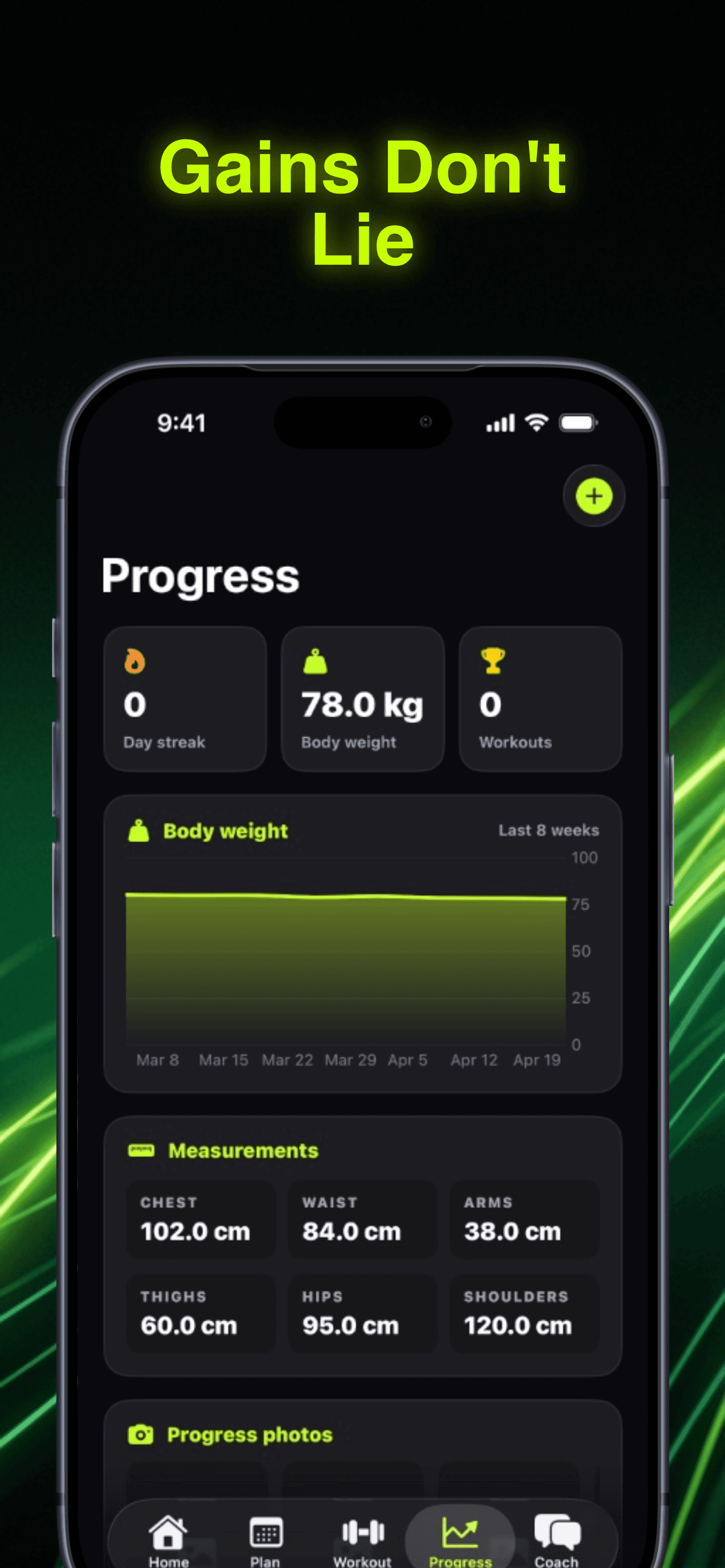
Photo by RepBro.
Your first month at the gym was exciting. You learned the basic movements, felt the burn, and saw some quick changes. But now you're stuck. The same weights that challenged you four weeks ago feel easy, yet you're not sure when or how to make things harder.
Workout progression for beginners follows a simple principle: systematically increase training stress through more weight, reps, or sets while maintaining good form. The most effective approach combines progressive overload with consistent tracking, allowing you to add 2.5-5 pounds per week on major lifts during your first 3-6 months of training.
Here's how to progress your workouts without guessing, plateauing, or getting injured.
Understanding Progressive Overload
Progressive overload means gradually increasing the demands on your muscles over time. Your body adapts to training stress by getting stronger and building muscle. Without increasing that stress, adaptation stops.
You can apply progressive overload through four main variables:
- Weight (load): Adding more plates to the bar
- Reps: Performing more repetitions at the same weight
- Sets: Adding additional working sets to your routine
- Frequency: Training muscle groups more often per week
Most beginners should focus primarily on weight and reps. These create the most direct stimulus for strength gains and are easiest to track consistently.
The Double Progression Method
The most reliable progression system for beginners is double progression. You work within a rep range (like 8-12 reps) and only increase weight once you can hit the top of that range for all sets.
Here's how it works:
- Choose a rep range (8-12 is ideal for beginners)
- Select a weight where you can complete 8 reps with good form but not much more
- Each workout, try to add reps while maintaining perfect technique
- Once you can complete 12 reps for all sets, increase the weight by 2.5-5 pounds
- Drop back to 8 reps with the new weight and repeat the cycle
Example progression on bench press:
- Week 1: 135 lbs x 8, 8, 8 reps
- Week 2: 135 lbs x 10, 9, 8 reps
- Week 3: 135 lbs x 12, 11, 10 reps
- Week 4: 135 lbs x 12, 12, 12 reps
- Week 5: 140 lbs x 8, 8, 8 reps
This method ensures you're always working near your current capacity while building volume before jumping to heavier loads.
When and How Much Weight to Add
For compound movements (squat, deadlift, bench press, overhead press), add 2.5-5 pounds per week when you complete all sets at the top of your rep range. Start with smaller jumps—your body will tell you what it can handle.
For isolation exercises (bicep curls, tricep extensions, lateral raises), progression happens more slowly. Add 2.5 pounds every 2-3 weeks, or focus on adding reps rather than weight.
Use these guidelines based on the exercise:
- Deadlift: 5-10 pounds per week initially
- Squat: 5 pounds per week
- Bench press: 2.5-5 pounds per week
- Overhead press: 2.5 pounds per week (slowest to progress)
- Rows: 2.5-5 pounds per week
If your gym doesn't have 2.5-pound plates, bring your own or use fractional plates. Many gyms have 1.25-pound plates specifically for this purpose.
The Rep Range Strategy
Different rep ranges serve different purposes, but beginners benefit most from moderate ranges that build both strength and muscle:
- 6-8 reps: Primarily strength focused, heavier loads
- 8-12 reps: Balanced strength and muscle building (best for beginners)
- 12-15 reps: More muscle building, lighter loads
Start with 8-12 reps for all major movements. This range allows frequent practice with challenging but manageable weights while building the muscle mass that supports future strength gains.
As you advance, you can cycle between rep ranges every 4-6 weeks to continue progressing.
Tracking Your Progress
You cannot manage what you don't measure. Every successful progression plan requires consistent tracking of weights, reps, and sets.
Record these details for every workout:
- Exercise name
- Weight used
- Sets completed
- Reps achieved per set
- How the lift felt (optional RPE rating 1-10)
I learned this lesson the hard way during my second year of training. I thought I was progressing steadily, but when I finally started logging workouts, I discovered I'd been using the same weights for months without realizing it.
Digital tracking beats pen and paper for most people. Apps automatically calculate when you're ready to progress and show trends over time that motivate continued effort.
Common Progression Mistakes
Adding weight too quickly leads to form breakdown and plateaus. If you can't complete your target reps with perfect technique, the weight is too heavy.
Ignoring deload weeks causes accumulated fatigue. Every 4-6 weeks, reduce weight by 10-15% for one week to recover while maintaining movement patterns.
Changing programs too often prevents adaptation. Stick with a progression plan for at least 8-12 weeks before evaluating whether it's working.
Focusing only on weight misses other progression opportunities. Sometimes adding a set or improving rep quality creates better long-term results than forcing heavier loads.
Programming Your Weekly Progression
Structure your week to support consistent progression:
Monday: Heavy compound day (lower rep ranges, focus on adding weight)
Wednesday: Moderate intensity (middle rep ranges, focus on rep progression)
Friday: Higher volume day (upper rep ranges, focus on total work)
This approach varies training stress while maintaining progressive overload principles throughout the week.
When Progression Stalls
Expect your rate of progression to slow after 3-6 months. This is normal adaptation, not failure.
When you can't add weight or reps for two consecutive weeks:
- Check your recovery: Are you sleeping 7-8 hours and eating enough protein?
- Deload: Reduce weight by 15% for one week, then resume progression
- Adjust rep ranges: Switch from 8-12 reps to 6-8 reps with heavier weight
- Add volume: Include an extra set rather than more weight
Most stalls resolve with better recovery or a brief deload period.
The key to long-term progress is consistency over intensity. Small, regular improvements compound into significant strength gains over months and years.
Ready to start tracking your progression systematically? The fastest way to implement these principles is with an app that automatically calculates your next workout based on your previous performance.
Frequently asked questions
- How often should beginners increase weight in their workouts?
- Beginners should increase weight when they can complete all sets at the top of their rep range with good form. For compound movements, this typically means adding 2.5-5 pounds per week during the first 3-6 months of training.
- What's the best rep range for beginner workout progression?
- 8-12 reps is ideal for beginners as it balances strength and muscle building while allowing frequent practice with challenging weights. This range provides enough volume to stimulate growth while building the strength base for heavier loads.
- How do I know if I'm progressing too fast in my workouts?
- You're progressing too fast if your form breaks down, you can't complete your target reps, or you experience joint pain. Reduce the weight by 10-15% and focus on perfect technique before advancing again.
- What should I do when my workout progression stalls?
- When progression stalls for two weeks, first check your sleep and nutrition. Then try a deload week (reduce weight by 15%), change rep ranges, or add an extra set instead of more weight. Most stalls resolve with better recovery.
- Do I need to track every workout for proper progression?
- Yes, consistent tracking is essential for systematic progression. Record weight, sets, reps, and how each exercise felt. Without tracking, you can't identify patterns, plan increases, or know when you've actually improved.