
4 Day Split Workout Plans That Actually Fit Real Schedules
The best 4 day split workout plan depends on which muscles recover slowest for you. Compare upper/lower, push/pull/legs, and body part splits to find your optimal training frequency.
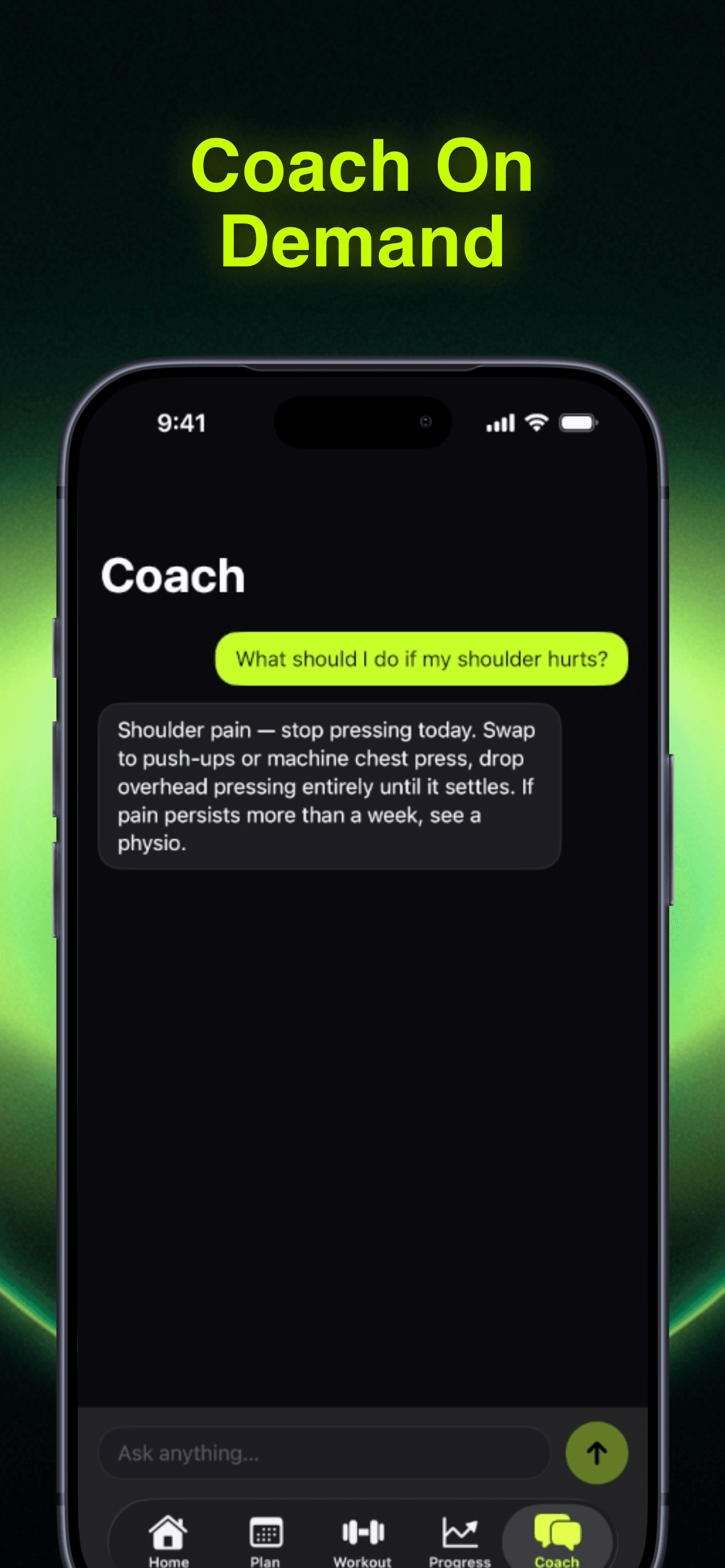
Photo by RepBro.
You need a 4 day split workout plan that actually works with your Tuesday meeting, your kid's soccer practice, and that one day when you just can't make it to the gym. Most lifters pick their split based on what sounds cool, not what fits their recovery patterns or real schedule.
The best 4 day split depends on which muscle groups recover slowest for you. If your legs need 72+ hours between sessions, upper/lower wins. If your chest and shoulders bounce back fast but your back doesn't, push/pull/legs might be better. The key is matching training frequency to your individual recovery capacity, not copying someone else's program.
Here's how to pick the right 4-day split based on your recovery patterns and schedule constraints.
Why 4-Day Splits Work for Most Lifters
Four training days hit the sweet spot between frequency and recovery. You train each muscle group 1.5-2 times per week, which research shows is optimal for both strength and hypertrophy gains. You get three full rest days, which matters more as you get stronger and need more recovery between sessions.
The real advantage? Flexibility. Miss Monday? You can still hit all four sessions by Sunday. Have a crazy work week? Drop to three days and you're still training everything once.
I've programmed hundreds of lifters, and the ones who stick with their programs long-term almost always train 4 days per week. It's sustainable.
The Three Main 4-Day Split Options
Upper/Lower Split (2x per week frequency)
Structure: Upper body Monday/Thursday, lower body Tuesday/Friday
This split trains each muscle group exactly twice per week. Your upper days hit chest, back, shoulders, and arms. Lower days focus on quads, hamstrings, glutes, and calves.
Best for: Lifters whose legs need more recovery time, beginners to intermediate trainees, anyone who wants to prioritize compound movements.
Sample week:
- Monday: Upper (bench, rows, overhead press, pullups)
- Tuesday: Lower (squats, deadlifts, lunges, calf raises)
- Wednesday: Rest
- Thursday: Upper (incline press, lat pulldowns, lateral raises, curls)
- Friday: Lower (Romanian deadlifts, leg press, leg curls, hip thrusts)
The upper/lower split works because most people's legs genuinely need more recovery than their upper body. Your quads and glutes are bigger muscles that take more time to rebuild after heavy squats and deadlifts.
Push/Pull/Legs Split (1.33x per week frequency)
Structure: Push Monday/Thursday, pull Tuesday/Friday, legs Wednesday/Saturday (rotating)
This splits your body by movement patterns. Push days train chest, shoulders, and triceps. Pull days hit back and biceps. Leg days cover everything below the waist.
Best for: Intermediate to advanced lifters, people who recover quickly from upper body work, lifters who want to specialize in specific movement patterns.
Sample rotation:
- Week 1: Push/Pull/Legs/Push
- Week 2: Pull/Legs/Push/Pull
- Week 3: Legs/Push/Pull/Legs
The push/pull/legs split lets you really focus on movement quality. All your pressing happens on push days, so you can perfect your bench technique without fatigue from rows interfering.
Body Part Split (1x per week frequency)
Structure: Chest/Back/Shoulders/Legs (or similar groupings)
Each day focuses on 1-2 major muscle groups with high volume and intensity.
Best for: Advanced lifters who need more recovery between sessions, people with specific weak points to address, lifters who enjoy longer, focused workouts.
Sample week:
- Monday: Chest and triceps
- Tuesday: Back and biceps
- Wednesday: Rest
- Thursday: Shoulders and abs
- Friday: Legs and glutes
Body part splits work when you're strong enough that training chest hard genuinely impacts your shoulder performance two days later. Most intermediate lifters aren't there yet.
How to Choose Your Split Based on Recovery Patterns
Your split should match how fast your muscles recover, not what looks good on paper.
Pick upper/lower if:
- Your legs feel sore for 48+ hours after squats or deadlifts
- You're relatively new to lifting (less than 2 years consistent training)
- You want to focus on big compound movements
- You prefer shorter, more intense workouts
Pick push/pull/legs if:
- Your upper body recovers quickly (24-36 hours)
- You want to train movement patterns, not just muscles
- You're comfortable with a rotating schedule
- You have 4-6 days available most weeks
Pick body part splits if:
- You're advanced (3+ years, can bench 1.5x bodyweight)
- You have specific weak points that need extra volume
- You enjoy longer workouts (75+ minutes)
- You recover slowly between sessions
The Schedule Reality Check
The best split is the one you'll actually follow. Here's how each split handles real-life schedule disruptions:
Upper/lower: Most flexible. Miss upper body Monday? Do it Tuesday and push everything back a day. Still hit everything twice.
Push/pull/legs: Moderate flexibility. The rotating schedule means you can usually find a way to fit four sessions in, but you might train legs twice one week and not at all the next.
Body part splits: Least flexible. Miss chest day and you won't train chest again for a week. This matters more than most people think.
Programming Your 4-Day Split for Results
Regardless of which split you choose, follow these programming principles:
- Volume: 10-20 sets per muscle group per week
- Intensity: Mix heavy (3-6 reps), moderate (6-12 reps), and higher rep (12+ reps) ranges
- Progression: Add weight, reps, or sets every week
- Recovery: Take at least one full rest day between training the same muscles
Start conservative with volume. You can always add sets, but it's harder to recover from doing too much too soon.
Making Your Split Stick
The split that works is the one you can maintain for months, not weeks. Pick based on your honest assessment of your schedule, recovery capacity, and training experience.
If you're not sure which muscles recover slowest for you, start with upper/lower. It's the most forgiving and gives you the best frequency for muscle growth. After 6-8 weeks, you'll know if your legs need more recovery time or if you could handle training upper body more often.
The goal isn't to find the perfect split. It's to find a good split you'll actually follow consistently. Consistency beats optimization every time.
Ready to stop guessing about your programming? RepBro's AI coach analyzes your recovery patterns and builds a personalized 4-day split that adapts to your real schedule and progress."
Frequently asked questions
- What is the best 4 day split for muscle gain?
- Upper/lower splits are best for most lifters because they train each muscle group twice per week, which is optimal for hypertrophy. Push/pull/legs works well for intermediate lifters who recover quickly from upper body work.
- How often should I train each muscle group on a 4 day split?
- Upper/lower splits train each muscle 2x per week. Push/pull/legs trains each muscle about 1.33x per week on a rotating schedule. Body part splits train each muscle once per week.
- Can beginners use a 4 day split workout plan?
- Yes, beginners should use upper/lower 4-day splits. This provides enough recovery time while maintaining optimal training frequency for muscle growth and strength gains.
- What if I miss a day on my 4 day split?
- Upper/lower splits are most flexible - just push everything back one day. Push/pull/legs can accommodate missed days due to the rotating schedule. Body part splits are least forgiving since you'll miss that muscle group for a full week.
- How long should each workout be on a 4 day split?
- Upper/lower workouts typically last 45-75 minutes. Push/pull/legs sessions run 60-90 minutes. Body part splits often take 75-120 minutes due to higher volume per muscle group.