How Many Sets Per Muscle Per Week for Maximum Hypertrophy
Research shows 10-20 sets per muscle per week maximizes hypertrophy for most lifters. Beginners start at 8-12 sets, intermediates need 12-16, advanced lifters may benefit from 16-20+ sets per muscle group weekly.
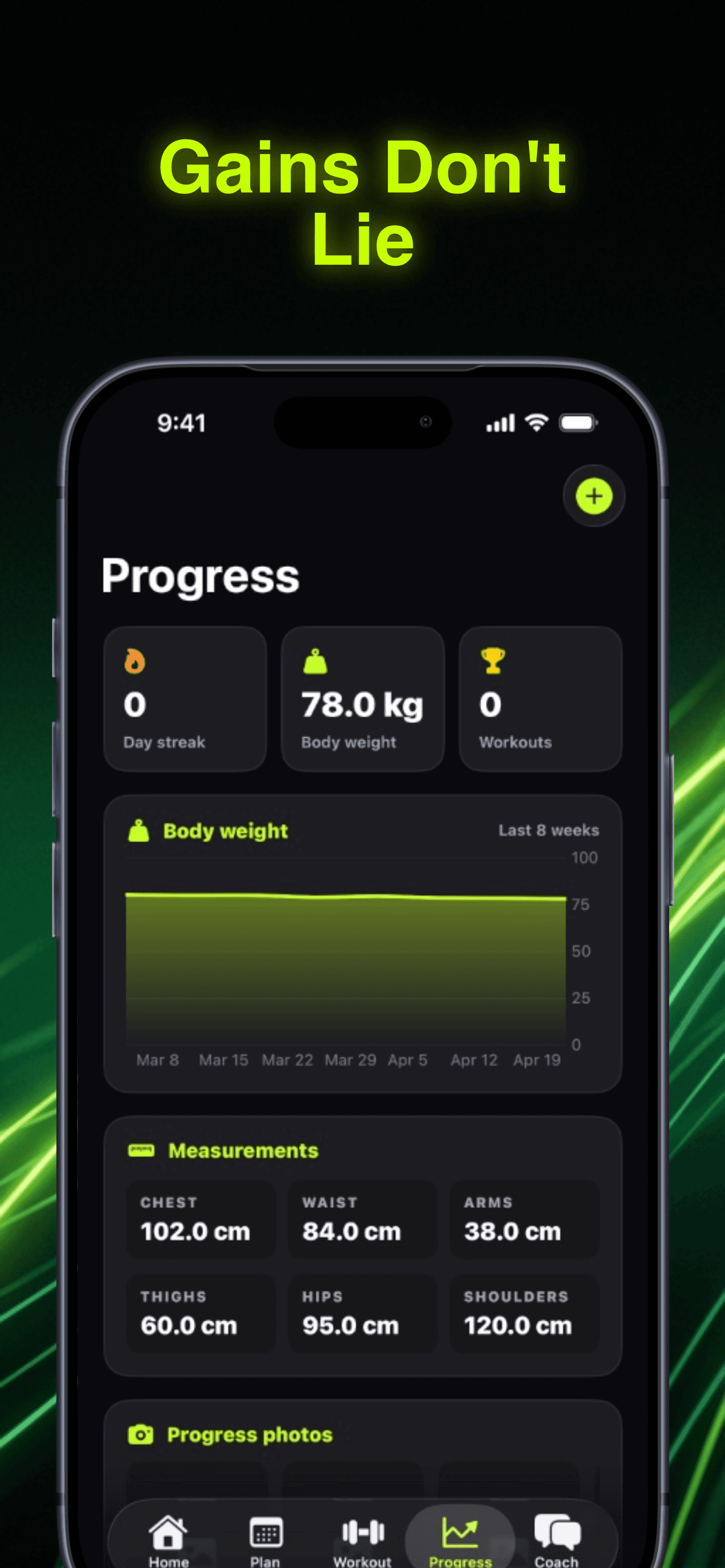
Photo by RepBro.
You walk into the gym with a plan. You know which exercises to do, how much weight to load, and how hard to push each set. But here's the question that separates mediocre progress from serious gains: how many total sets should you do per muscle group each week?
For maximum hypertrophy, research consistently shows that 10-20 sets per muscle per week is the sweet spot for most lifters. Beginners can grow effectively with 8-12 sets per muscle weekly, intermediates typically need 12-16 sets, and advanced lifters often require 16-20+ sets per muscle group to continue progressing. This range accounts for individual recovery capacity, training history, and the diminishing returns of excessive volume.
The answer isn't just about picking a number. Your optimal weekly set count depends on your training age, recovery ability, exercise selection, and how close to failure you train each set.
Why Weekly Set Volume Matters More Than Daily Splits
Most lifters obsess over their daily routine. Should you hit chest twice per week or three times? Is a push-pull-legs split better than upper-lower? These questions miss the bigger picture.
Weekly volume is the primary driver of muscle growth. Whether you complete 14 sets of chest work across two sessions or three sessions makes little difference for hypertrophy, as long as you can recover between sessions and maintain intensity.
Dr. Brad Schoenfeld's landmark research on training volume established clear volume landmarks:
- 8-12 sets per week: Effective for beginners and maintenance phases
- 12-16 sets per week: The growth zone for most intermediate lifters
- 16-20+ sets per week: Advanced territory where individual response varies widely
These numbers represent hard sets taken within 2-3 reps of failure. Easy warm-up sets and activation work don't count toward your weekly tally.
How to Count Sets That Actually Matter
Not all sets are created equal. A set of lateral raises taken to failure stimulates more growth than three easy sets with the same weight. Here's how to count sets that contribute to your weekly volume:
Sets that count:
- Any set taken within 3 reps of failure (RPE 7+)
- Compound movements where the target muscle is a prime mover
- Isolation exercises for the target muscle
- Drop sets, rest-pause sets, and other intensity techniques
Sets that don't count:
- Warm-up sets with light weight
- Sets stopped 5+ reps from failure
- Compound movements where the target muscle is only a stabilizer
For example, if you're counting chest volume, bench press sets count fully. Overhead press sets count partially since chest assists but isn't the prime mover. Tricep dips might count as 0.5 chest sets depending on your form and focus.
Volume Recommendations by Training Experience
Beginners (0-2 years of consistent training)
Start with 8-12 sets per muscle per week. Your nervous system is still adapting to resistance training, and you'll grow from relatively low volumes. Focus on learning movement patterns and building consistency.
A simple full-body routine hitting each muscle group with 2-3 exercises twice per week often works best. Think: 2 sets of bench press, 2 sets of incline dumbbell press, and 2 sets of flies for chest across three weekly sessions.
Intermediates (2-4 years of training)
Bump up to 12-16 sets per muscle per week. You've built a strength base and can handle more volume while still recovering adequately. This is where most lifters see their best gains when they dial in their volume.
Split routines become more practical here. A push-pull-legs split might include 4 sets of bench press, 3 sets of incline press, 3 sets of dips, and 3 sets of flies across two push sessions for 13 total chest sets.
Advanced (4+ years of consistent training)
You'll likely need 16-20+ sets per muscle per week, but individual variation becomes huge. Some advanced lifters respond better to moderate volume with higher intensity. Others thrive on high-volume phases followed by deload weeks.
The key is systematically testing different volume ranges and tracking your response. What worked in your second year of training probably won't cut it in your fifth year.
Adjusting Volume Based on Your Goals and Recovery
Your optimal weekly set count isn't fixed. It changes based on your current goals, stress levels, sleep quality, and training phase.
Increase volume when:
- Progress has stalled for 3+ weeks
- You're in a gaining phase with adequate calories
- Sleep and stress are well-managed
- You have time for longer sessions
Decrease volume when:
- You're cutting calories aggressively
- Life stress is high or sleep is poor
- You're experiencing joint pain or excessive fatigue
- You want to focus on strength over size
I've seen lifters make their best progress by cycling between moderate volume phases (12-14 sets) and higher volume phases (18-20 sets) every 6-8 weeks. The variation prevents adaptation and keeps progress steady.
Practical Volume Distribution Across the Week
Once you know your target weekly sets, distribute them intelligently across your training days. Here are three proven approaches:
Option 1: Even distribution (Push-Pull-Legs twice weekly)
- 16 chest sets = 8 sets per push day
- 16 back sets = 8 sets per pull day
- 16 quad sets = 8 sets per leg day
Option 2: Frontloaded (Upper-Lower-Upper-Lower)
- 16 chest sets = 10 sets on first upper day, 6 sets on second upper day
- Prioritizes your most important muscle groups when you're fresh
Option 3: Specialization (Body part focus)
- 20 arm sets = 12 sets on dedicated arm day, 4 sets each on upper days
- Use this when you want to bring up a lagging muscle group
The best distribution is the one you can execute consistently without burning out.
Tracking Your Volume for Consistent Progress
You can't manage what you don't measure. Successful lifters track their weekly volume just as carefully as they track their weights and reps.
Use a simple spreadsheet or training app to log every working set. At the end of each week, tally your sets per muscle group. Look for patterns between volume changes and progress.
Most lifters discover they've been doing too much volume for some muscles (usually arms and shoulders) and too little for others (usually legs and back). The data reveals these blind spots quickly.
The fastest way to dial in your optimal volume is to track everything systematically, then adjust based on results rather than feelings. Your next workout should build on data from your last dozen workouts, not yesterday's motivation level.
Ready to optimize your weekly training volume? RepBro automatically tracks your sets per muscle group and suggests volume adjustments based on your progress and recovery. No more guesswork—just systematic progression toward your goals.
Frequently asked questions
- How many sets per muscle group should beginners do per week?
- Beginners should start with 8-12 sets per muscle group per week. This provides enough stimulus for growth while allowing adequate recovery as your body adapts to resistance training.
- Do compound exercises count as full sets for all muscles worked?
- Compound exercises count fully for prime mover muscles but only partially for assisting muscles. For example, bench press counts as a full chest set but only 0.5 sets for triceps and front delts.
- What happens if I do too many sets per week?
- Excessive volume leads to poor recovery, decreased performance, increased injury risk, and potentially less muscle growth. Most lifters see diminishing returns above 20-22 sets per muscle per week.
- Should I count warm-up sets toward my weekly volume?
- No, only count working sets taken within 3 reps of failure (RPE 7+). Warm-up sets and easy activation work don't provide enough stimulus to count toward your weekly volume targets.
- How do I know if my weekly volume is too high or too low?
- Track your progress weekly. If you're not gaining strength or size after 3-4 weeks, try increasing volume by 2-3 sets per muscle. If you're constantly fatigued or performance drops, reduce volume by 20-25%.