How Many Sets Per Muscle Per Week for Maximum Growth
Research shows 12-20 sets per muscle per week optimizes hypertrophy for most lifters. Here's how to find your ideal volume and track it effectively.
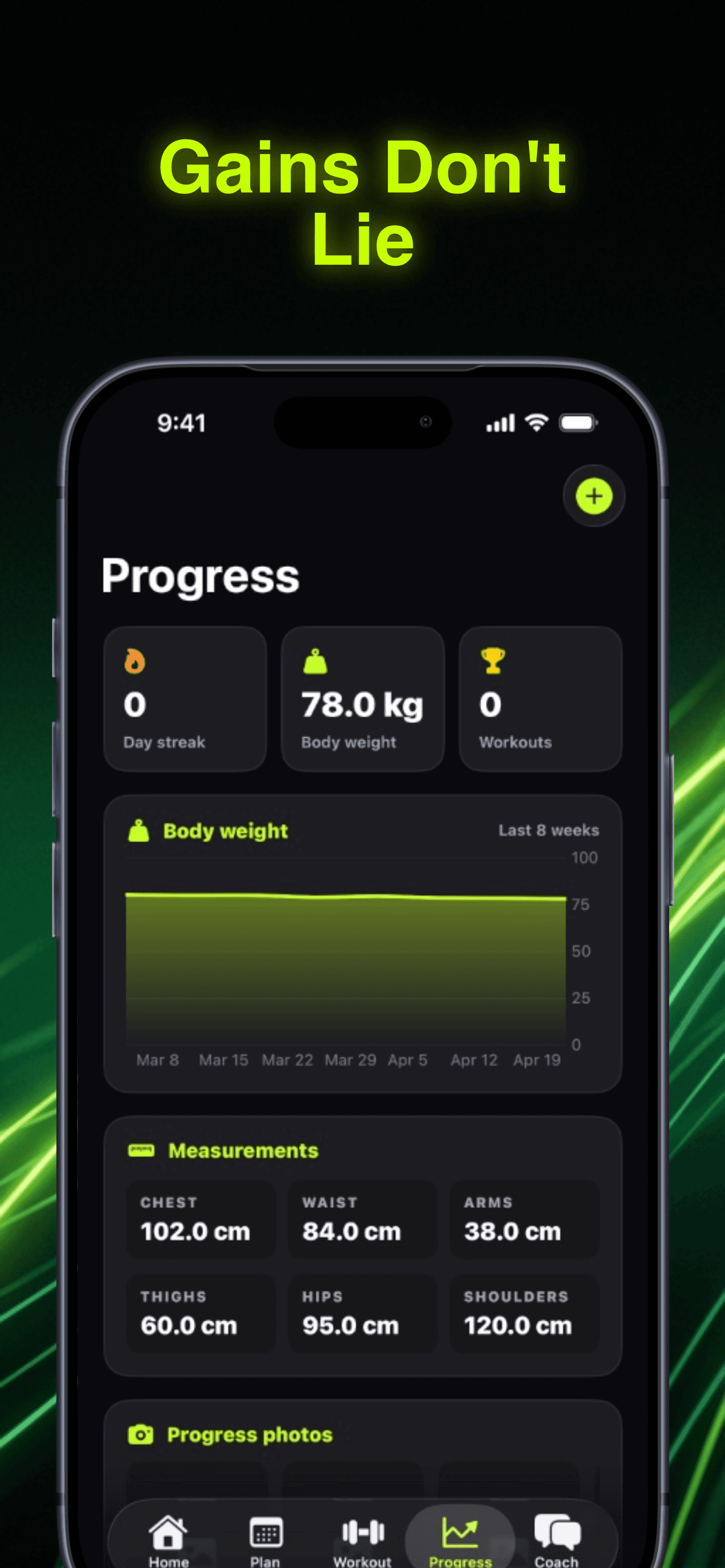
Photo by RepBro.
You're doing 15 sets for chest this week. Is that enough? Too much? The question haunts every lifter who's moved past randomly throwing weight around.
For most lifters, 12-20 sets per muscle per week optimizes hypertrophy. Beginners grow well on 8-12 sets, while advanced trainees may need 16-22+ sets. The key is finding your personal sweet spot between minimum effective volume (MEV) and maximum recoverable volume (MRV), then tracking it systematically.
This isn't guesswork. It's based on decades of research from Schoenfeld, Helms, and Israetel. But knowing the numbers is only half the battle. You need a system to count, track, and adjust your volume week by week.
What Counts as a "Set"?
Not all sets are created equal. A working set that challenges you counts toward your weekly volume. Warm-up sets don't.
Here's what counts:
- Working sets at 6+ RPE (4+ reps in reserve)
- Drop sets and cluster sets (count each mini-set)
- Myoreps and rest-pause sets (count the activation set plus back-off sets)
What doesn't count:
- Warm-up sets under 6 RPE
- Isolation exercises for stabilizers (rear delts during rows)
- Sets that are purely neurological (heavy singles at 9+ RPE)
A chest day with bench press (4 sets), incline dumbbell press (3 sets), and dips (3 sets) gives you 10 weekly chest sets. Simple math, but most lifters never actually count.
Volume Landmarks: Your Personal Training Zones
Dr. Mike Israetel's volume landmarks give you a framework to dial in your training:
Maintenance Volume (MV): 4-6 sets per week keeps muscle mass stable during cuts or deload phases.
Minimum Effective Volume (MEV): The lowest dose that triggers growth. Beginners: 8-10 sets. Intermediates: 10-14 sets. Advanced: 14-16 sets.
Maximum Adaptive Volume (MAV): Your growth sweet spot. Most lifters: 12-20 sets per week. This is where you want to live most of the time.
Maximum Recoverable Volume (MRV): The ceiling before recovery fails. Highly individual, but often 20-25+ sets for large muscles like chest and back.
Your job is finding these landmarks through systematic testing. Start at your estimated MEV. Add 2-3 sets per week until performance drops or fatigue accumulates faster than you recover. That's your MRV.
How Volume Varies by Muscle Group
Not every muscle needs the same dose. Larger muscles typically handle more volume than smaller ones.
High-volume muscles (16-22+ sets):
- Chest
- Back (lats + rhomboids/mid-traps)
- Quadriceps
- Glutes
Medium-volume muscles (12-16 sets):
- Shoulders (anterior/medial/posterior delts combined)
- Hamstrings
- Triceps
Lower-volume muscles (8-14 sets):
- Biceps
- Calves
- Forearms
These ranges assume you're training each muscle 2-3 times per week. Higher frequency often allows higher total volume because each session is less fatiguing.
The Frequency Factor
Weekly volume matters more than how you distribute it, but frequency affects how much volume you can handle.
Training a muscle once per week limits you to maybe 6-8 productive sets before fatigue kills your performance. Split that same volume across two sessions, and you might handle 10-12 total sets. Three sessions could push you to 14-16 sets.
This is why upper/lower splits often outperform bro splits for hypertrophy. You're not just hitting muscles more often—you're able to accumulate more total volume.
Optimal frequency for most lifters: 2-3 times per week per muscle group. This maximizes the overlap between protein synthesis windows and gives you more opportunities to practice movement patterns.
Tracking Volume: The Missing Piece
Most lifters guess their volume. They think they're doing 16 sets for chest but they're actually doing 11. Or they're doing 23 sets and wondering why they feel beat up.
You need a systematic way to count and track volume over time. This means logging every working set with weight, reps, and RPE. It means categorizing exercises by primary muscle group. It means looking at weekly totals, not just individual workouts.
The best approach is a training app that automatically calculates volume per muscle group. Manual tracking works, but it's tedious and error-prone. You want to spend your mental energy on training, not spreadsheet math.
Adjusting Volume: The Art of Autoregulation
Your volume needs change based on stress, sleep, nutrition, and training phase. Rigid adherence to 16 sets per week ignores these fluctuations.
Signs you need more volume:
- Easy recovery between sessions
- No muscle soreness 24-48 hours post-workout
- Strength gains have stalled for 2+ weeks
- You're sleeping well and managing stress
Signs you need less volume:
- Performance declining across multiple sessions
- Excessive fatigue or mood changes
- Sleep quality dropping
- Getting sick more often
Smart lifters adjust volume based on these signals. Add 2-3 sets when recovery is good and progress stalls. Drop 3-5 sets when fatigue accumulates faster than you can recover.
Programming Volume Across Training Phases
Volume isn't static. It should wave up and down across training blocks.
Accumulation phase (4-6 weeks): Gradually increase volume from MEV toward MAV. Start conservative and add sets weekly.
Intensification phase (2-3 weeks): Maintain volume while increasing intensity (lower rep ranges, higher RPE).
Realization phase (1-2 weeks): Drop volume 30-50% while testing strength or peaking for competition.
Deload week: Drop to maintenance volume (4-6 sets per muscle) every 4-7 weeks depending on fatigue accumulation.
This approach prevents adaptation plateau and manages fatigue systematically. You're not just randomly adding volume—you're following a plan.
Common Volume Mistakes
Mistake 1: Counting junk volume. Your 20-rep calf raise burnout sets aren't the same as 8-rep working sets. Quality over quantity.
Mistake 2: Ignoring indirect volume. Rows work your rear delts. Pull-ups hit your biceps. Don't double-count, but don't ignore secondary muscle involvement either.
Mistake 3: Chasing someone else's volume. Your training partner might thrive on 20 chest sets while you need 14. Find your landmarks, not theirs.
Mistake 4: Never tracking. You can't manage what you don't measure. Guessing your volume is like guessing your calories—wildly inaccurate.
Mistake 5: Adding volume without adding recovery. More sets demand more sleep, food, and stress management. Volume without recovery is just fatigue accumulation.
The goal isn't maximum volume. It's optimal volume for your recovery capacity and life circumstances.
Finding your ideal volume per muscle per week takes systematic testing and honest tracking. Start with the research-backed ranges, adjust based on your response, and use tools that make volume tracking automatic rather than manual busywork.
Frequently asked questions
- How many sets per muscle per week should beginners do?
- Beginners should start with 8-12 sets per muscle per week. This provides enough stimulus for growth while allowing adequate recovery as your body adapts to training stress.
- Is 20 sets per muscle per week too much?
- 20 sets per week can be appropriate for advanced lifters with good recovery, but it's likely too much for beginners and intermediates. Most lifters optimize growth between 12-18 sets per muscle per week.
- Do compound exercises count toward multiple muscle groups?
- Yes, but count them primarily for the main mover. For example, bench press counts as chest volume, but also provides some tricep and front delt volume. Avoid double-counting the same exercise for multiple muscles.
- How often should I train each muscle per week?
- Training each muscle 2-3 times per week typically allows for higher total weekly volume and better growth than once-per-week training. This frequency maximizes protein synthesis and movement practice.
- Should I count warm-up sets toward weekly volume?
- No, only count working sets performed at 6+ RPE (4 or fewer reps in reserve). Warm-up sets don't provide sufficient stimulus for hypertrophy and shouldn't be included in volume calculations.