
Compound vs Isolation Exercises: How to Balance Both for Maximum Growth
Compound exercises build strength and mass efficiently, but isolation exercises target weak points and add volume. The optimal approach combines both in a structured ratio for maximum muscle growth.
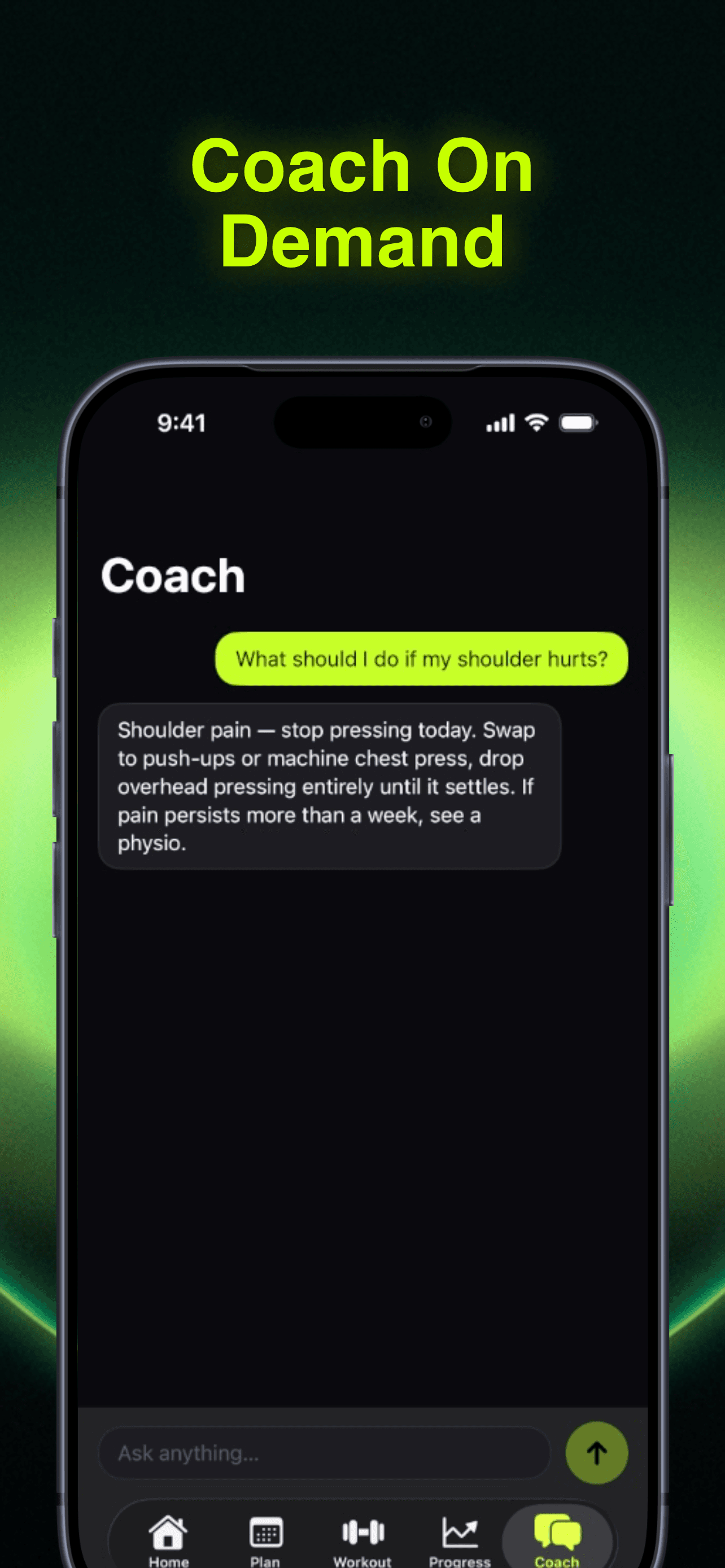
Photo by RepBro.
The compound vs isolation exercises debate misses the point. You don't choose one or the other. You use both strategically.
The optimal approach combines compound exercises as your strength and mass foundation with isolation exercises to target weak points and add training volume. Research consistently shows that programs using both movement patterns produce superior muscle growth compared to programs relying exclusively on either approach.
Most lifters make one of two mistakes: they either chase the "functional" trend and skip isolation work entirely, or they get lost in endless isolation exercises while neglecting heavy compound movements. Both approaches leave gains on the table.
What Makes Compound Exercises Essential
Compound exercises work multiple muscle groups across multiple joints. They're your heavy hitters for building overall strength and mass.
The squat doesn't just build your quads. It hammers your glutes, hits your core, challenges your upper back, and forces your entire body to coordinate under load. That's why a 315-pound squatter typically has more overall muscle mass than someone who can leg press 500 pounds but never squats.
Key compound exercises include:
- Squat variations (back squat, front squat, goblet squat)
- Deadlift variations (conventional, sumo, Romanian deadlift)
- Press variations (bench press, overhead press, incline press)
- Row variations (barbell row, T-bar row, chest-supported row)
- Pull-up and chin-up variations
Compound exercises excel at three things: they allow you to use heavy loads, they create significant mechanical tension across multiple muscles, and they're time-efficient. A well-executed squat session works more muscle mass in 20 minutes than most people hit in an hour of isolation work.
The hormonal response argument for compounds is often overstated, but the mechanical advantages are real. When you can squat 400 pounds, your quads, glutes, and core have all adapted to handle serious load.
Why Isolation Exercises Still Matter
Isolation exercises target one muscle group across one joint. They're your precision tools for addressing weak points and adding targeted volume.
Here's where the "compounds only" crowd goes wrong: compound exercises don't hit every muscle equally. Your rear delts might be the limiting factor in your overhead press, but pressing alone won't bring them up fast enough. Direct rear delt work will.
Essential isolation exercises include:
- Bicep curls (barbell, dumbbell, hammer curls)
- Tricep extensions (overhead, lying, pushdowns)
- Lateral raises and rear delt flyes
- Leg curls and leg extensions
- Calf raises and face pulls
- Ab-specific work (planks, hanging leg raises)
Isolation exercises also let you accumulate volume without systemic fatigue. You can hammer your biceps with curls after deadlifting without compromising your next squat session. Try doing that with more heavy rows.
A client of mine added 2 inches to his arms in 6 months by keeping his compound movements consistent but doubling his isolation volume for arms. The compounds provided the foundation, but the isolation work filled in the gaps.
How to Structure Both in Your Training
The magic happens when you sequence compound and isolation exercises strategically within each session.
Start every session with your primary compound movement. This is when your nervous system is fresh and you can handle the most load. Whether it's squats, deadlifts, or bench press, do your heavy compound work first.
Follow with secondary compound movements. These might be variations of your main lift or different movement patterns entirely. If you started with back squats, you might follow with Romanian deadlifts or Bulgarian split squats.
Finish with isolation exercises targeting the muscles you just worked. After squatting and deadlifting, hit leg curls, leg extensions, and calf raises. After pressing and rowing, target your arms, shoulders, and rear delts directly.
This sequence maximizes both strength gains and muscle growth. You get the heavy loading benefits of compounds when you're fresh, then use isolation work to add volume and target specific muscles when systemic fatigue would limit compound performance.
The 70/30 Rule for Exercise Selection
A practical framework: allocate roughly 70% of your training volume to compound exercises and 30% to isolation work.
This doesn't mean 70% of your exercises should be compound movements. It means 70% of your total sets should come from multi-joint exercises. If you're doing 20 sets per session, 14 might be compound movements and 6 might be isolation exercises.
For a typical upper body session:
- Bench press: 4 sets
- Barbell row: 4 sets
- Overhead press: 3 sets
- Pull-ups: 3 sets
- Bicep curls: 2 sets
- Tricep extensions: 2 sets
- Lateral raises: 2 sets
That's 14 sets of compound work and 6 sets of isolation work—exactly 70/30.
This ratio ensures you're getting the strength and mass benefits of heavy compound movements while still addressing weak points and adding targeted volume where needed.
Common Programming Mistakes to Avoid
Mistake 1: Starting sessions with isolation work. Save your energy for the movements that matter most. Curling before deadlifting is like eating dessert before dinner.
Mistake 2: Treating isolation exercises like compound movements. You don't need to progressive overload your lateral raises the same way you progress your squat. Focus on quality contractions and moderate loads.
Mistake 3: Skipping isolation work entirely. Your bench press won't fix weak rear delts or lagging triceps fast enough. Direct work accelerates the process.
Mistake 4: Programming too much isolation volume. More isn't always better. Six sets of bicep curls per week often produces better results than 15 sets.
The goal is strategic combination, not random mixing. Every exercise should have a purpose in your program.
Adjusting the Balance Based on Your Goals
Your compound-to-isolation ratio should shift based on your primary training goal.
For maximum strength: Increase compound work to 80-85% of total volume. Powerlifters might spend 90% of their time on competition lifts and close variations.
For muscle growth: The 70/30 split works well for most lifters. Bodybuilders might shift toward 60/40 during specialization phases.
For beginners: Start with 80% compound movements. Master the basic patterns before adding complexity.
For injury management: Isolation exercises often provide a safer way to maintain training volume around injuries. A shoulder issue might limit pressing, but you can still train triceps with extensions.
Your training age also matters. Beginners see massive gains from compound movements alone. Advanced lifters need more targeted work to continue progressing.
Ready to implement this balanced approach? RepBro's AI coach can help you structure compound and isolation exercises based on your goals, equipment, and experience level—then guide you through every set with personalized coaching.
Frequently asked questions
- Should beginners focus only on compound exercises?
- Beginners should prioritize compound exercises (80% of training volume) to build foundational strength and movement patterns, but adding basic isolation work for arms and shoulders can help with muscle development and injury prevention.
- How many isolation exercises should I do per workout?
- Most lifters benefit from 2-4 isolation exercises per session, focusing on muscles that weren't fully targeted by the compound movements. This typically amounts to 4-8 sets of isolation work per session.
- Can isolation exercises replace compound movements for muscle growth?
- No. While isolation exercises are valuable for targeting specific muscles, compound exercises allow heavier loads and greater overall muscle stimulation. The best muscle growth comes from combining both movement types.
- When should I do isolation exercises during my workout?
- Always perform compound exercises first when your nervous system is fresh, then follow with isolation exercises. This sequence maximizes strength gains while allowing targeted volume accumulation without compromising performance.
- How do I know if I need more isolation work?
- If you have visible muscle imbalances, weak points limiting your compound lifts, or specific physique goals, you likely need more isolation work. A good starting point is the 70/30 compound-to-isolation ratio.