How to Do the Lat Pulldown with Proper Form (Stop Training Your Biceps Instead)
Master lat pulldown form with the right grip width, pull angle, and tempo. Avoid the 5 common mistakes that turn this lat builder into a bicep exercise.
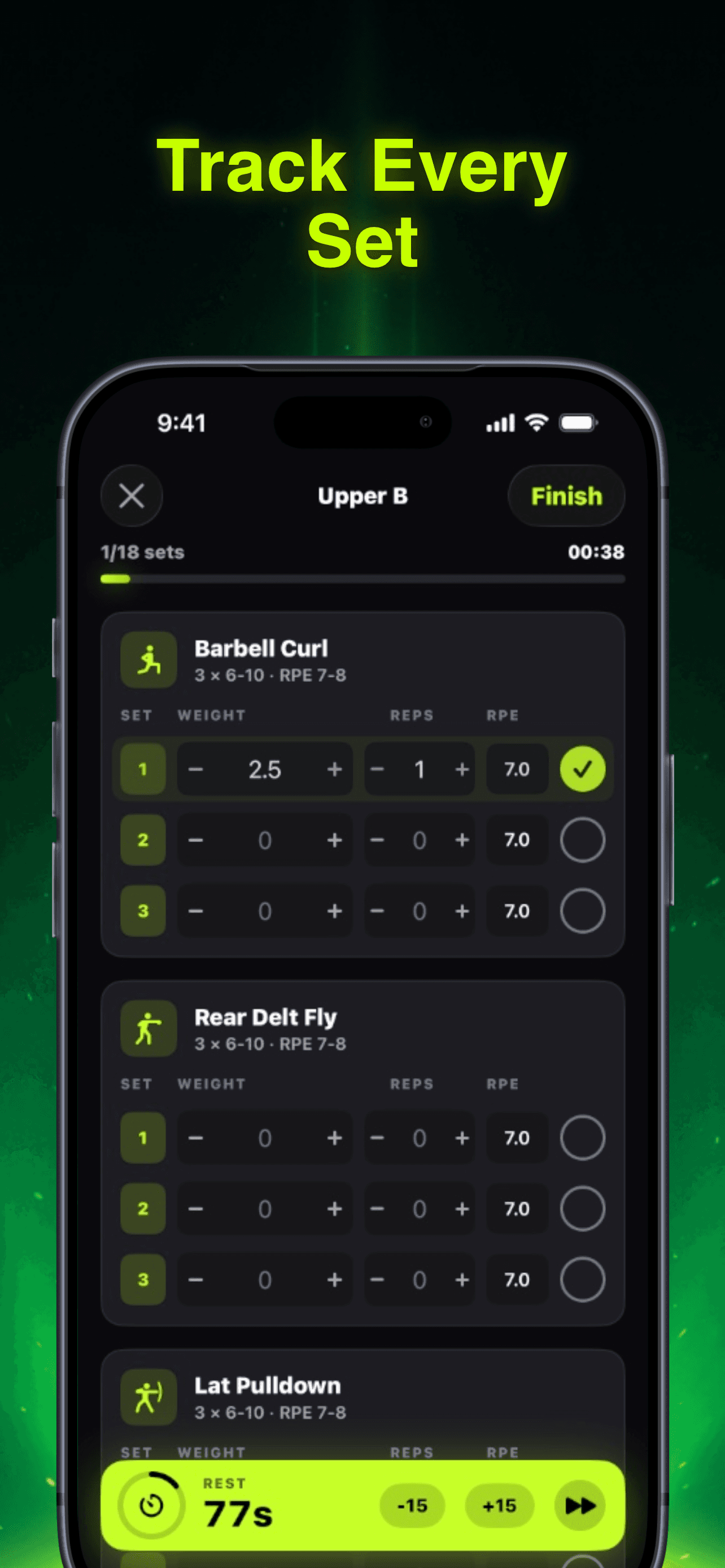
Photo by RepBro.
The lat pulldown should build your lats. But walk into any gym and you'll see lifters turning it into a bicep curl with a cable machine. They're pulling with their arms, using momentum, and wondering why their back development stalls.
How to do the lat pulldown with proper form: Sit upright with a shoulder-width overhand grip, pull your shoulder blades down and back first, then drive your elbows down toward your hips while keeping your chest up. The bar should touch your upper chest, not your neck. Focus on initiating the movement with your lats, not your biceps.
This distinction matters more than you think. EMG studies show that proper lat pulldown form can activate the latissimus dorsi 40% more than common variations that rely on arm strength. The difference between building a wide back and spinning your wheels often comes down to these setup and execution details.
Why Most People Get Lat Pulldowns Wrong
The lat pulldown looks simple. Grab a bar, pull it down. But this simplicity is deceptive. Your body wants to recruit the strongest available muscles to move the weight, and for most lifters, that means the biceps and rear delts take over.
I see five mistakes repeatedly:
- Pulling behind the neck - This reduces lat activation and puts your shoulders in a compromised position
- Using too wide of a grip - Wider isn't always better for lat development
- Leading with the arms - Pulling with biceps instead of initiating with the lats
- Leaning back excessively - Turning the movement into a rowing pattern
- Rushing the eccentric - Missing half the muscle-building potential
Each of these shifts the emphasis away from your lats and onto smaller, weaker muscles that fatigue first.
The Setup: Getting Your Position Right
Your setup determines everything that follows. Start by adjusting the thigh pad so it sits snugly against your legs when seated. You shouldn't be able to lift off the seat during the movement, but the pad shouldn't pin you down either.
Grab the bar with an overhand grip, hands positioned slightly wider than shoulder-width. Your arms should form a slight V-shape, not a straight line across. This grip width maximizes lat activation while maintaining shoulder health.
Sit tall with your chest up and a slight arch in your lower back. Your feet should be flat on the floor, creating a stable base. Think of this position as athletic, not relaxed.
The Pull: Lat Activation Before Arm Flexion
Here's where technique separates effective lat training from arm work. Before you pull the bar down, initiate the movement by pulling your shoulder blades down and back. This engages your lats first and sets up the proper movement pattern.
Drive your elbows down toward your hips, not out to the sides. Imagine trying to put your elbows in your back pockets. This elbow path keeps the focus on your lats rather than your rear delts.
Pull the bar to your upper chest, right around the collarbone area. The bar should move in a straight vertical line, not an arc. Your torso stays upright throughout the movement - resist the urge to lean back.
How Wide Should Your Grip Be?
Grip width is one of the most debated aspects of lat pulldown form. Research suggests that a grip slightly wider than shoulder-width produces optimal lat activation. Going too wide actually reduces the range of motion and shifts emphasis to the rear delts.
A good rule: position your hands so your forearms are roughly parallel when the bar is at chest level. This typically puts your hands 1.5 to 2 times shoulder-width apart, depending on your arm length.
Experiment within this range to find what feels strongest and most comfortable for your anatomy. Some lifters with longer arms may benefit from a slightly narrower grip, while those with shorter arms might prefer the wider end of the spectrum.
The Eccentric: Control the Negative
The lowering phase builds as much muscle as the pulling phase, but most lifters waste it by letting the weight drop. Control the bar back to the starting position over 2-3 seconds, maintaining tension in your lats throughout.
Feel the stretch at the top position without letting your shoulders roll forward. Your lats should feel engaged even when your arms are extended overhead.
Lat Pulldown vs Pull-Up: Which Is Better?
Both exercises target the lats effectively, but they serve different purposes. Pull-ups require more core stability and coordination, making them excellent for overall strength development. However, they're limited by your body weight and can be difficult to progress systematically.
Lat pulldowns allow for precise load control and easier progression. You can train closer to failure safely and adjust the weight in small increments. For most lifters focused on lat development, pulldowns offer better training control.
Use both if possible. Pull-ups for strength and coordination, pulldowns for targeted hypertrophy work.
Common Form Cues That Actually Work
"Pull your elbows to your back pockets" - This keeps the movement focused on lat adduction rather than elbow flexion.
"Chest to the bar, not bar to chest" - Think about bringing your chest up to meet the bar rather than yanking the bar down.
"Shoulders down and back first" - Always initiate with scapular depression and retraction before arm movement.
"Squeeze a tennis ball between your shoulder blades" - This mental cue helps maintain proper scapular position throughout the movement.
Programming Your Lat Pulldowns
For hypertrophy, aim for 3-4 sets of 8-12 reps with a 2-3 second eccentric. Choose a weight that challenges you in the target rep range while maintaining perfect form.
Progressive overload works best when you can complete all sets with good form, then add 2.5-5 pounds the following week. Track your sessions to ensure consistent progression over time.
The lat pulldown works well as either a primary back exercise or as an accessory movement after pull-ups or rows. Place it earlier in your workout when training for strength, later when focusing on hypertrophy and muscle activation.
Master these form principles and your lat pulldowns will actually build the wide, thick back you're training for. The difference between effective and wasted sets often comes down to these technical details that take seconds to implement but years to perfect.
Ready to track your lat pulldown progress and get real-time form coaching? RepBro's AI coach can analyze your technique and suggest improvements based on your specific goals and training history.
Frequently asked questions
- What grip width is best for lat pulldowns?
- Use a grip slightly wider than shoulder-width, typically 1.5 to 2 times your shoulder width. This maximizes lat activation while maintaining shoulder safety. Your forearms should be roughly parallel when the bar reaches chest level.
- Should I pull the bar behind my neck or to my chest?
- Always pull to your upper chest, around the collarbone area. Behind-the-neck pulldowns reduce lat activation and put your shoulders in a compromised position that increases injury risk.
- How do I activate my lats instead of my biceps during pulldowns?
- Start each rep by pulling your shoulder blades down and back before bending your arms. Drive your elbows toward your back pockets rather than out to the sides. This engages your lats first and maintains proper muscle recruitment throughout the movement.
- Are lat pulldowns better than pull-ups for building lats?
- Both are effective, but they serve different purposes. Pulldowns allow better load control and progression, making them ideal for targeted hypertrophy. Pull-ups develop more overall strength and coordination. Use both if possible for complete back development.
- How much should I lean back during lat pulldowns?
- Maintain an upright torso with just a slight natural arch in your lower back. Excessive leaning turns the movement into a rowing pattern and reduces lat activation. Keep your chest up and pull in a straight vertical line.