Supersets vs Straight Sets: When to Use Rest Timers, Drop Sets, and Advanced Techniques
Supersets save time but may reduce strength gains. Straight sets with 2-5 minute rest intervals optimize performance. Drop sets boost hypertrophy when used sparingly.
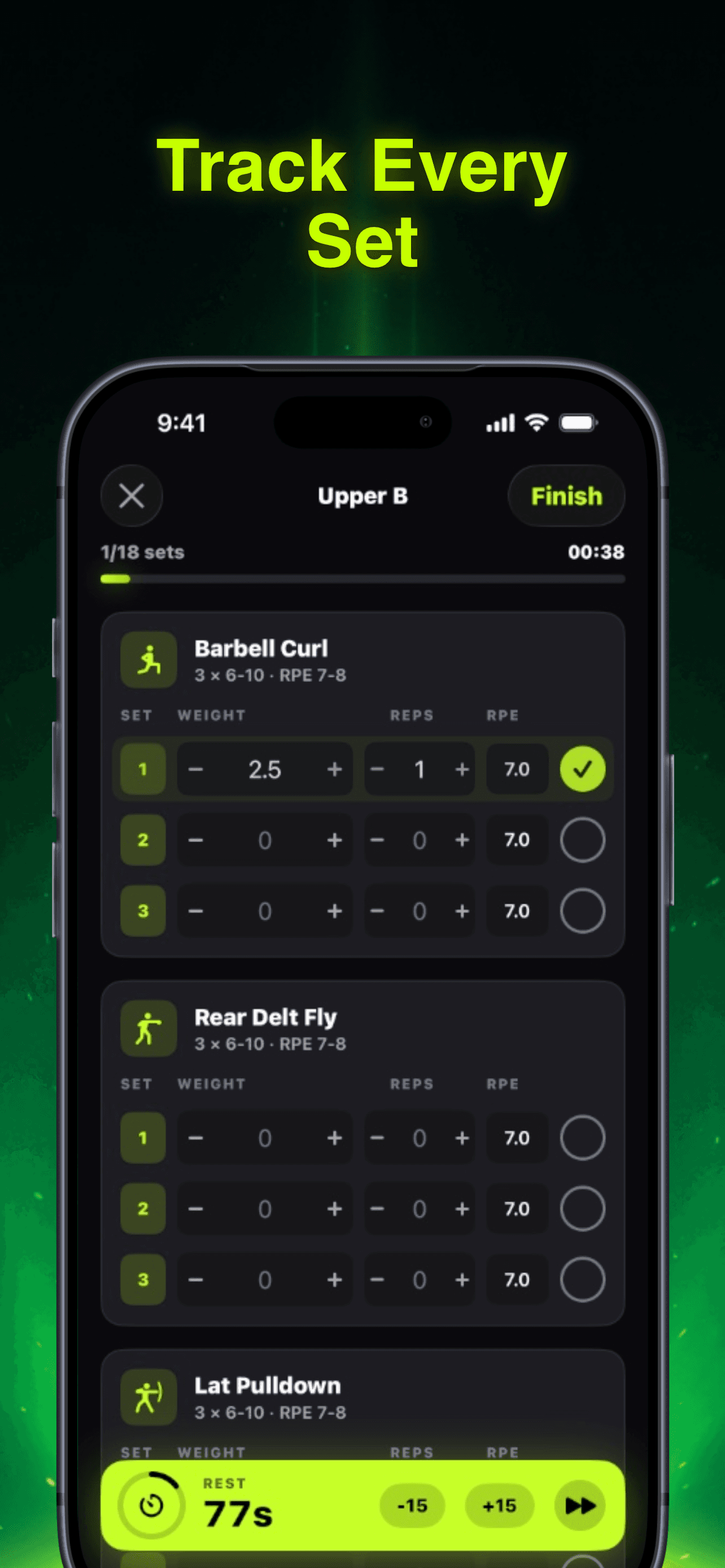
Photo by RepBro.
The Programming Question Every Intermediate Lifter Asks
You've mastered the basics. Your squat form is solid, you understand progressive overload, and you can execute a straight-set program without thinking twice. Now you're eyeing those advanced techniques: supersets, drop sets, rest-pause protocols. The question isn't whether these methods work—it's when each technique earns its place in your program.
The short answer: Straight sets with proper rest intervals remain the gold standard for strength and muscle gains. Supersets excel for time efficiency and weak point training. Drop sets amplify hypertrophy when used strategically, not as a daily habit.
Most lifters jump into advanced techniques too early or use them incorrectly. A superset isn't just two exercises back-to-back. A drop set isn't just lifting until failure, then reducing weight randomly. Each method serves specific goals and comes with trade-offs you need to understand.
Why Straight Sets Still Rule
Straight sets—performing all sets of one exercise before moving to the next—optimize performance for one simple reason: they allow complete recovery between efforts. When your goal is moving maximum weight or achieving peak muscle activation, nothing beats dedicated rest periods.
Research consistently shows that 2-5 minutes of rest between sets maintains power output and total volume. Shorter rest periods (30-90 seconds) work for isolation exercises or when hypertrophy is the sole focus, but compound movements demand longer recovery.
The strength argument is clear. If you can bench 225 for 5 reps with 3 minutes of rest, you might only hit 3-4 reps with 90 seconds. Over an entire session, that volume deficit adds up. Your muscles grow from the total stress applied, and incomplete recovery limits that stress.
When to Stick with Straight Sets
- Strength-focused phases: Maximum weight requires maximum recovery
- Compound movements: Squats, deadlifts, and presses demand full neural recovery
- Beginner to early intermediate: Master one variable before adding complexity
- Competition prep: Practice what you'll perform under competition conditions
Supersets vs Straight Sets: The Time-Efficiency Trade
Supersets pair two exercises performed consecutively with minimal rest. The appeal is obvious: cut your workout time in half while maintaining training volume. The reality is more nuanced.
Antagonist supersets (chest and back, biceps and triceps) work best because one muscle group rests while its opposite works. Pairing bench press with bent-over rows allows your chest to recover during the rowing movement. Performance drops are minimal, and you save significant time.
Compound supersets (targeting the same muscle group) create a different stimulus. Following squats with leg press or bench press with push-ups amplifies metabolic stress and extends time under tension. You'll use lighter weights, but the hypertrophic stimulus can be substantial.
The trade-off is always performance. Even well-designed supersets reduce the weight you can handle compared to straight sets. If your primary goal is strength, this matters. If you're chasing muscle growth and pressed for time, supersets become valuable.
Effective Superset Combinations
Upper/Lower Antagonist Pairs:
- Bench press + bent-over row
- Overhead press + pull-ups
- Incline dumbbell press + chest-supported row
Compound Supersets for Hypertrophy:
- Leg press + walking lunges
- Dumbbell bench press + push-ups
- Barbell curls + hammer curls
Pre-exhaustion Supersets:
- Leg extensions + squats
- Lateral raises + overhead press
- Tricep extensions + close-grip bench press
Drop Sets Explained: Maximum Stimulation, Minimum Recovery
Drop sets extend a set beyond failure by immediately reducing weight and continuing. The concept is metabolic overload: when you can't complete another rep at 185 pounds, drop to 155 and keep going. Then 135. Then bodyweight.
The hypertrophic stimulus is intense. You're forcing muscle fibers to work under extreme fatigue, recruiting additional motor units, and creating significant metabolic stress. The pump is incredible. The soreness is real.
But drop sets are a supplement, not a staple. They're incredibly taxing on recovery. Use them too frequently, and you'll compromise subsequent workouts. Most experienced lifters limit drop sets to 1-2 exercises per session, and only during hypertrophy-focused blocks.
Drop Set Guidelines
Frequency: 1-2 times per week per muscle group maximum Placement: End of workout or final set of an exercise Weight reduction: 20-30% per drop Total drops: 2-3 maximum before diminishing returns Best exercises: Machines, cables, and dumbbells (easy weight changes)
Rest Time Between Sets: The Forgotten Variable
Your rest timer isn't just about catching your breath. It's programming recovery for specific adaptations. Different goals demand different rest intervals, and most lifters rest either too little (ego) or inconsistently (no plan).
Strength and power: 3-5 minutes between heavy compound sets. Neural recovery takes time, and rushing compromises the next set's quality.
Hypertrophy: 2-3 minutes for compound movements, 1-2 minutes for isolation work. You want enough recovery to maintain training intensity but not so much that metabolic stress dissipates.
Muscular endurance: 30-90 seconds. Short rest periods train your muscles to work under fatigue and improve lactate clearance.
The key insight: rest periods are part of your program, not a suggestion. If your program calls for 3 minutes between squat sets, honor that timing. Consistency in rest intervals creates consistency in training stimulus.
Programming These Techniques Together
Advanced techniques work best when programmed systematically, not randomly thrown into workouts. Here's how experienced lifters integrate them:
Week 1-2: Straight sets, establish baseline strength and volume Week 3-4: Add antagonist supersets for time efficiency Week 5-6: Introduce drop sets on final sets of isolation exercises Week 7: Deload with straight sets and longer rest periods
This progression allows adaptation to each technique while maintaining program structure. You're not abandoning straight sets—you're enhancing them with strategic additions.
Consider your training age and recovery capacity. A lifter with two years of experience can handle more advanced techniques than someone with six months. Your program should reflect your ability to recover, not just your desire to try new methods.
The Practical Application
Start your next training block with this approach: use straight sets for your primary compound movements, add antagonist supersets for accessory work, and finish with drop sets on one isolation exercise per session. Track your performance metrics—weight, reps, and subjective recovery—to determine what works for your body and schedule.
The goal isn't complexity for its own sake. It's using the right tool for the right job. Sometimes that's a straightforward set of 5x5 squats with 4 minutes rest. Sometimes it's a brutal drop set that leaves your biceps screaming. The difference is knowing when each technique serves your goals.
Most importantly, master the basics before adding complexity. A perfectly executed straight-set program will always outperform a poorly planned combination of advanced techniques. Build your foundation first, then enhance it strategically.
Your next workout doesn't need every technique in this article. It needs the right technique for your current goal, executed with precision and programmed with purpose. That's how intermediate lifters become advanced ones.
Frequently asked questions
- Should I use supersets or straight sets for muscle growth?
- Straight sets with 2-3 minutes rest optimize muscle growth for most lifters. Supersets can enhance hypertrophy when time is limited, but may reduce the weight you can handle. Use antagonist supersets (chest/back) to maintain performance while saving time.
- How long should I rest between sets for strength training?
- Rest 3-5 minutes between heavy compound sets for strength training. This allows complete neural recovery and maintains power output. Shorter rest periods compromise performance and reduce total training volume.
- How often can I use drop sets in my workout?
- Limit drop sets to 1-2 exercises per session and use them only 1-2 times per week per muscle group. They're highly fatiguing and can impair recovery if overused. Save them for the final set of isolation exercises.
- What's the difference between compound and antagonist supersets?
- Antagonist supersets pair opposing muscle groups (chest/back, biceps/triceps) allowing one to rest while the other works. Compound supersets target the same muscle group consecutively, creating greater fatigue and metabolic stress but requiring lighter weights.
- Can beginners use advanced training techniques like supersets?
- Beginners should master straight sets with proper form and progressive overload before adding complexity. Focus on learning movement patterns and building a strength base for 6-12 months before incorporating advanced techniques.