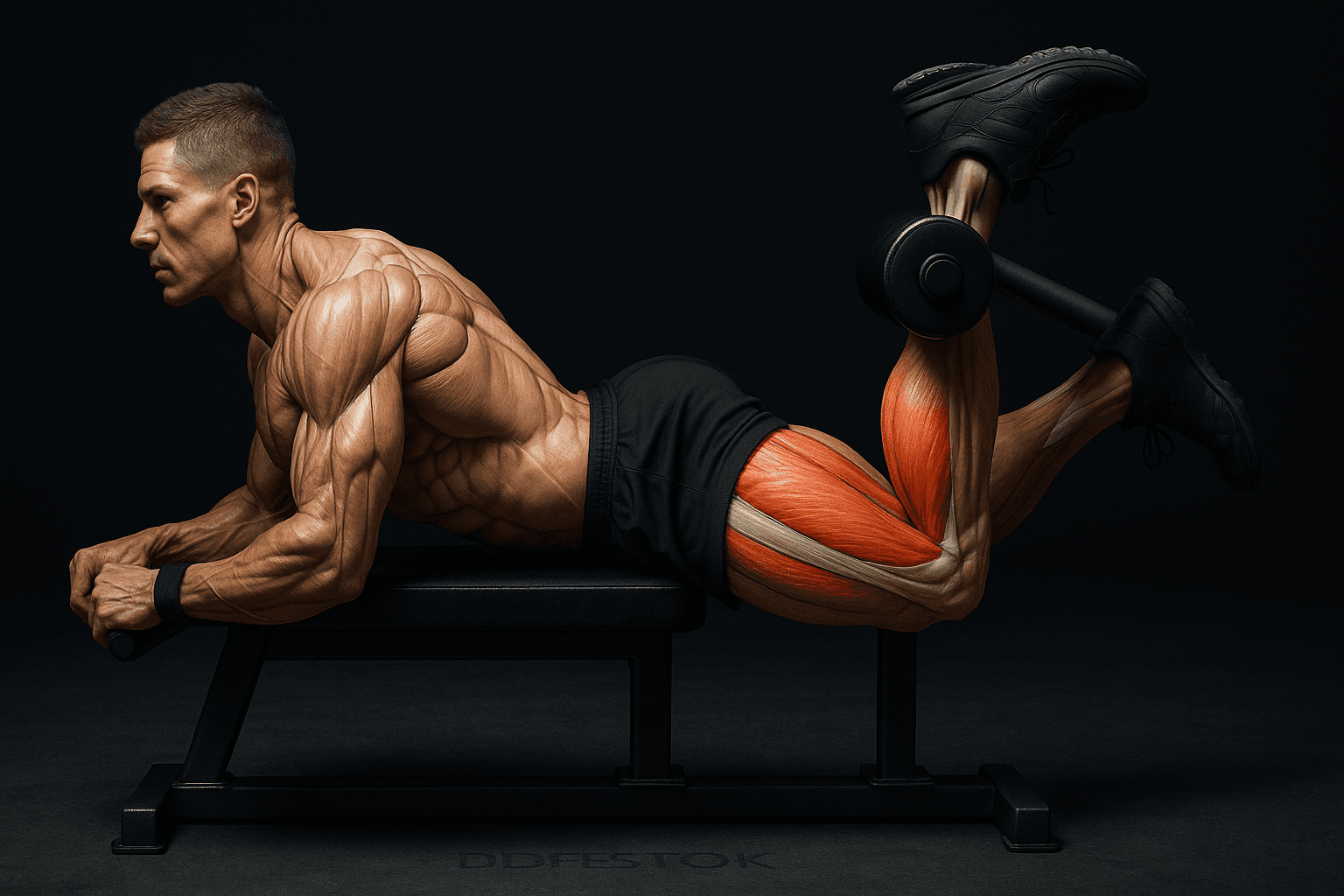
Incline Dumbbell Press: Muscles Worked and Best Alternatives
Learn which muscles the incline dumbbell press trains, how it fits in a program, and 4 practical alternatives with when to pick each for equipment, injury, or plateaus.
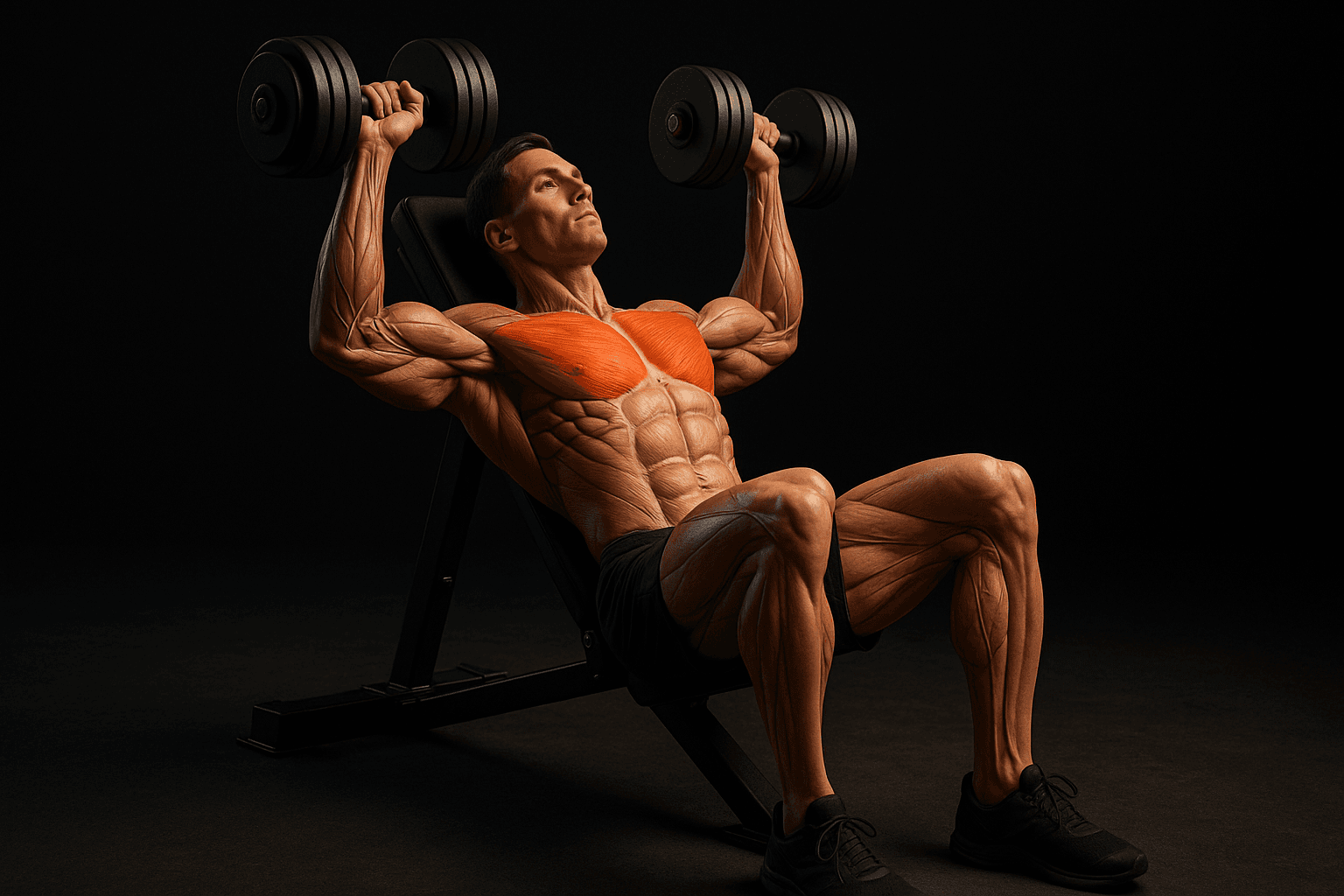
Photo by RepBro.
The incline dumbbell press primarily trains the clavicular (upper) head of the pectoralis major; secondary muscles include the anterior deltoid, triceps brachii, serratus anterior, and scapular stabilizers. Performed at roughly 15–30 degrees it emphasizes upper-chest development and adds unilateral control and a slightly longer range of motion than a barbell press.
What specific muscles does the incline dumbbell press work?
Primary
- Clavicular head of pectoralis major (upper chest)
Secondary
- Anterior deltoid (front shoulder)
- Triceps brachii (elbow extension)
- Serratus anterior and scapular stabilizers (control and protraction)
Accessory activation
- Biceps and forearm muscles for stabilization
- Upper trapezius and rotator cuff to a small degree for shoulder integrity
How does bench angle change which muscles are targeted?
- 15–30 degrees: greatest emphasis on the upper chest while still recruiting pec major broadly. Use this for most upper-chest work.
- 30–45 degrees: more anterior deltoid involvement; still works upper pec but with higher shoulder demand.
- Above 45 degrees: shifts closer to shoulder press mechanics; less chest-specific.
Aim for a modest incline (15–30 degrees) if your goal is upper-chest development.
How should you perform the incline dumbbell press safely and effectively?
Key setup and cues
- Bench: set 15–30 degrees.
- Footing: both feet planted, hips on the bench, natural lumbar curve but avoid excessive arch.
- Start: dumbbells at chest level with elbows at about 45 degrees to the torso, palms facing each other or slightly rotated out.
- Press: drive the dumbbells up and slightly together, finishing with arms nearly but not fully locked out. Lower under control to about chest level or just above.
- Tempo: 1–2 seconds concentric, 2–3 seconds eccentric for hypertrophy; heavier loads slow the eccentric naturally.
Common errors to avoid
- Bench set too steep: moves focus to shoulders.
- Flared elbows at 90 degrees: increases shoulder strain.
- Using too heavy dumbbells and sacrificing full range of motion or control.
- Excessive low-back arching to 'press' more weight.
Safety note
Stop if you feel sharp shoulder or chest pain. If pain persists, consult a qualified health or movement professional; this guide is not medical advice.
Where does the incline dumbbell press fit in a program?
- Placement: use it on a 'push' day or chest-focused session. Place it early in the workout if it is a primary target for the day.
- Frequency: 1–2 times per week is sufficient for most lifters.
- Volume: 9–16 working sets per week for chest is a reasonable target; allocate 3–6 of those sets to incline work if upper chest is a priority.
- Rep ranges: 3–4 sets of 6–12 for hypertrophy; 3–5 sets of 3–6 if focusing on strength with heavier loads.
- Progression: progressively add load, reps, or improve control and range of motion. Track sets and weights using an app like RepBro to keep steady progress and spot plateaus.
What are solid alternatives and when should you pick each?
- Incline barbell press
- When to pick: you want to move heavier loads and reduce the balance/stability demand relative to dumbbells. Useful for strength emphasis and progressive overload.
- Equipment: bench and barbell.
- Pros: allows heavier absolute loads, consistent bar path.
- Cons: less unilateral work, fixed hand spacing can stress shoulders for some lifters.
- Flat dumbbell press
- When to pick: limited access to an adjustable bench or when you want simpler setup; also useful if you feel shoulder strain on inclines.
- Equipment: flat bench and dumbbells.
- Pros: still trains pec and triceps with free-weight stability; often more comfortable for people with limited overhead mobility.
- Cons: less specific upper-chest emphasis than incline.
- Machine incline press or Smith incline press
- When to pick: recovering from a minor shoulder tweak (low pain), managing stability limits, or pushing to technical failure safely without a spotter.
- Equipment: plate-loaded incline machine or Smith machine.
- Pros: controlled bar path reduces stabilizer demand, easier to maintain consistent form, safer for heavy sets to failure.
- Cons: fixed path may load joints differently and reduce rotator cuff engagement.
- Incline push-up or feet-elevated push-up
- When to pick: no equipment available, early rehab progression (pain-free), or as an accessory for higher-rep conditioning.
- Equipment: none or a bench/step.
- Pros: scalable with sets/reps or added external resistance; extremely accessible.
- Cons: harder to progressively overload precisely compared with weights, though you can add load or change incline to increase difficulty.
Bonus: Landmine press at an upward angle can mimic incline mechanics for people with limited shoulder mobility or who need a more diagonal pressing path.
How to choose between alternatives during plateaus or injury risk?
- Plateau on load: switch between dumbbell and barbell incline to vary stability demand and overload patterns; introduce heavier barbell sets once every 1–3 weeks.
- Plateau on reps: change tempo, add rest-pause, or use machines to push higher quality volume without form breakdown.
- Shoulder irritation: decrease incline angle toward flat, reduce range of motion slightly, or use machine presses; consult a movement specialist if pain persists.
- Equipment limits: pick flat dumbbell presses or incline push-ups when adjustable benches or barbells are unavailable.
If you want to compare exercises in your plan, use RepBro's compare tools to log differences and pick the most productive variant for your goals: https://www.repbro.app/vs. To track and import workouts for progressive overload, see RepBro on the app store: https://apps.apple.com/us/app/gym-workout-coach-repbro/id6763749305.
One-sentence takeaway: The incline dumbbell press is a reliable upper-chest builder that also trains anterior delts and triceps—use a 15–30 degree bench, focus on control, and pick an alternative that matches your equipment, pain tolerance, and progression needs.
Frequently asked questions
- Does the incline dumbbell press target the upper chest?
- Yes. The incline dumbbell press primarily targets the clavicular head of the pectoralis major (upper chest), with secondary emphasis on the anterior deltoid and triceps.
- What bench angle is best for the incline dumbbell press?
- Use about 15–30 degrees. Lower angles favor upper-chest activation; angles above 45 degrees shift emphasis toward the anterior deltoid.
- How many sets and reps should I use?
- For hypertrophy use 3–4 sets of 6–12 reps; for strength use 3–5 sets of 3–6 reps. Progress load, reps, or time under tension over weeks.