The Most Common Incline Dumbbell Press Mistakes (and How to Fix Them)
Fix the most common incline dumbbell press mistakes: bench angle, elbow flare, wrist position, shoulder shrug, momentum, and uneven ROM — with one concrete fix each.
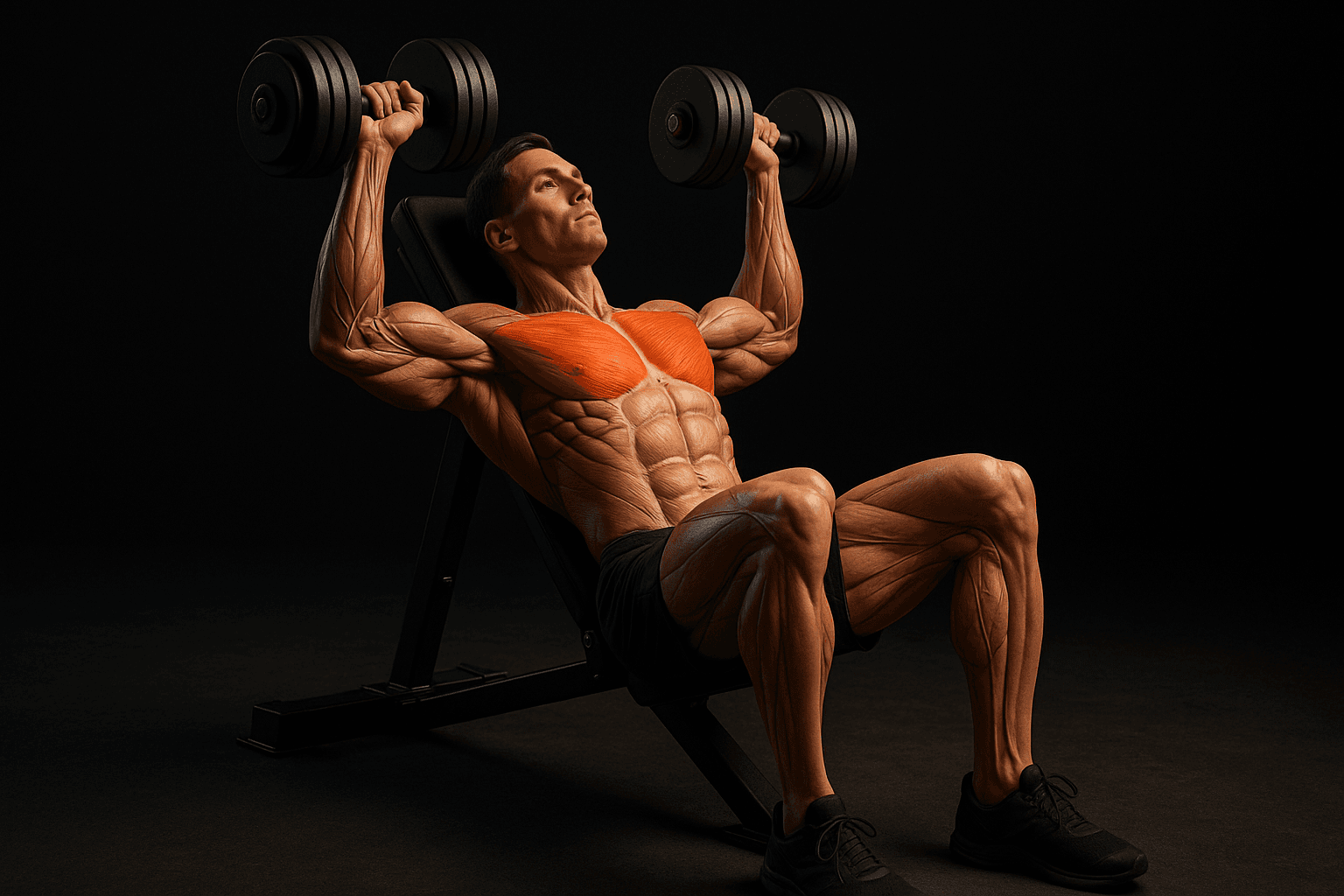
Photo by RepBro.
The most common incline dumbbell press mistakes are bench angle too steep, shrugging the shoulders, elbows flared too wide, poor wrist alignment, using momentum instead of control, and uneven range of motion between arms. Fix each and you get more chest stimulus with less shoulder risk and fewer wasted reps.
? Is your bench set too steep or flat?
Why it happens: People assume higher angle equals more upper chest. Gyms also have preset angles and lifters anchor to them. What it costs: Angles above 45 degrees shift load to the anterior deltoid, increase shoulder joint stress, and reduce safe loading capacity. Too flat and you miss the upper-chest target. Fix: Set the bench to 20–30 degrees. Use a protractor app or the bench markings where available. If you feel more shoulder than chest in the first 2 reps, lower the angle by 5 degrees.
? Are you shrugging the shoulders instead of stabilising them?
Why it happens: Heavy weight, fatigue, or lack of scapular control causes people to hike the shoulders toward the ears to create a pseudo-pressing platform. What it costs: Increased risk of impingement, less pec activation, and leak of force through the neck and traps. Reps become less efficient for chest development. Fix: Before each set, pinch the shoulder blades down and back and hold that position. Think of creating a stable shelf for the dumbbells. Use a light warmup set of 10 reps with 40 to 50 percent of working weight to reinforce the scapular position.
? Are your elbows flared too wide or tucked too close?
Why it happens: Natural compensation, mirror chasing, or copying bench press cues that don't translate to an incline dumbbell press. What it costs: Full flare puts the shoulder joint into a vulnerable position and reduces pressing leverage; over-tucking shifts emphasis to triceps and reduces chest stretch. Fix: Aim for an elbow path roughly 30 to 45 degrees from the torso. Cue: if you could draw an arrow from elbow to hip midline, it should point diagonally, not straight out. Practice with lighter dumbbells and pause for 1 second at the bottom to confirm position.
? Are your wrists collapsing or dumbbells tipping in your hands?
Why it happens: Grip weakness, heavy weight, or not actively aligning forearm and wrist. Many lifters let the wrist break backward to get the bell over their chest. What it costs: Wrist pain, reduced force transfer, and a short-range press that limits pec recruitment. Long term, repeated wrist stress can become an annoyance or injury risk. Fix: Keep a neutral wrist with the knuckles stacked over the forearm. Squeeze the dumbbell handle with full-hand grip and imagine trying to bend the handle toward your forearm without actually moving it. If your wrists still collapse, drop 5 to 10 percent of the weight and re-establish position.
? Are you using momentum instead of muscle control?
Why it happens: Too-heavy loads, rep chasing, or fatigue. Dumbbells allow more wiggle than a bar so it is easy to drop, bounce, or press explosively without control. What it costs: Less time under tension for the chest, inconsistent muscle recruitment, and higher strain on connective tissue. Frequent momentum-based reps add up to less hypertrophy per set. Fix: Use a 2 second eccentric, 1 second bottom pause, and 1 second concentric tempo. Count reps aloud or use a metronome app. If you cannot maintain tempo for the target rep range, reduce weight by 10 to 20 percent.
? Are your arms moving unevenly or is one side doing more work?
Why it happens: Strength imbalances, uneven grip, or starting position differences (one shoulder higher, different dumbbell rotation). What it costs: Persistent asymmetries, compensations that limit the weaker side, and a higher chance of chronic pain or plateau. Fix: Start with unilateral work and address the weak side first. Do 2 extra reps or an extra slow rep on the weaker side, or program 1 to 2 unilateral sets at the end of the workout. Use a mirror for setup and check that both shoulders are pinned and both feet are equally braced.
Safety note: Stop if you feel sharp or unusual joint pain and consult a qualified professional. These cues are technical tips, not medical advice.
? How should you build this into your session?
Load the incline dumbbell press when you want upper-chest focus: 3 to 4 sets of 6 to 12 controlled reps is a practical starting point. Warm up with 2 ramp sets starting at 40 percent and 70 percent of working weight. Track angle, tempo, and pain-free range of motion to measure progress. If you want a quick app to log sessions and compare different presses, try RepBro and see comparisons with other lifts at https://www.repbro.app/vs.
One-sentence takeaway: Fixing bench angle, scapular position, elbow path, wrist alignment, tempo, and symmetry gives you safer, more effective incline dumbbell press reps.
Frequently asked questions
- What is the best bench angle for the incline dumbbell press?
- Use 20 to 30 degrees for upper-chest emphasis without excessive shoulder strain. Angles above 45 degrees shift work to the anterior deltoid and increase shoulder loading.
- How heavy should I go on the incline dumbbell press?
- Choose a weight that allows controlled reps with a 2 second eccentric and 1 second concentric tempo for 6 to 12 reps. If form breaks before the target rep range, reduce load by 5 to 15 percent.
- Should my elbows flare on the incline dumbbell press?
- Keep elbows at roughly 45 degrees to the torso. Excessive flare increases shoulder strain and reduces pressing power; tucking too much shifts load toward triceps.