How to Increase Training Volume Safely Without Burning Out
Add 1–2 sets per muscle per week each mesocycle, deload every 4–6 weeks, and repeat. This structured approach builds volume progressively without overtraining or stalling your gains.
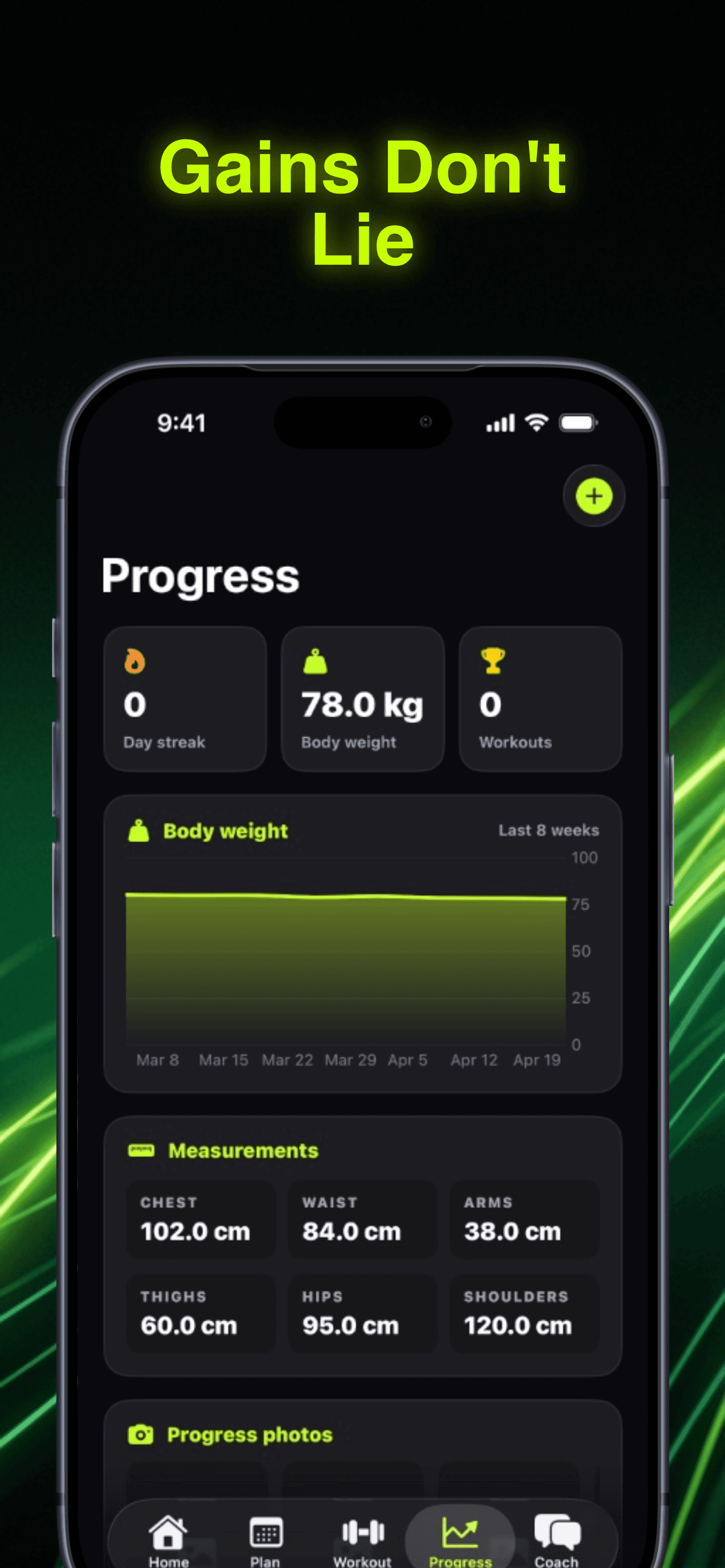
Photo by RepBro.
The Plateau Problem Most Intermediate Lifters Miss
You've been training consistently for 12–18 months. Your beginner gains are gone. You're not getting weaker, but you're not really getting bigger either. The instinct is to add more sets — and that instinct is correct. The mistake is doing it all at once.
Dumping an extra 10 sets per muscle group into your program on Monday is how you end up crushed by Thursday, sleeping poorly by Saturday, and skipping the gym entirely by the following week. That's not overtraining in the clinical sense — it's just poor programming.
The short answer: To increase training volume safely, add 1–2 hard sets per muscle group per week across a 4–6 week mesocycle, then take a deload week before repeating the cycle at a slightly higher starting point. This keeps you in the productive zone between your Minimum Effective Volume (MEV) and your Maximum Recoverable Volume (MRV) without crossing the line into accumulated fatigue that kills progress.
How Many Sets Per Week Do You Actually Need?
The research on this is cleaner than most gym debates. A 2017 dose-response meta-analysis by Schoenfeld, Ogborn, and Krieger found that training a muscle with 10+ sets per week produced significantly more hypertrophy than fewer sets. More recent work consistently supports the idea that for most intermediate lifters, 10–20 hard sets per muscle per week is the productive range — with the upper end reserved for advanced trainees in peak phases.
That range isn't a fixed target. It's a window, and your job is to move through it systematically.
Mike Israetel and the RP Strength team popularized a useful framework for thinking about this:
- MEV (Minimum Effective Volume): The least volume that still produces measurable growth. Roughly 6–10 sets per muscle per week for most people.
- MAV (Maximum Adaptive Volume): The sweet spot where you're growing fastest relative to the fatigue you're accumulating. Usually 12–18 sets per week for most muscles.
- MRV (Maximum Recoverable Volume): The ceiling. Go above this and you accumulate more fatigue than you can clear between sessions. Progress stalls or reverses.
MRV isn't the same for everyone, and it shifts based on sleep, nutrition, stress, and training age. That's exactly why you can't just copy someone else's high-volume program and expect it to work.
The Mesocycle Approach: Add Volume in Blocks, Not All at Once
A mesocycle is simply a training block with a defined goal — typically 4–6 weeks. Volume-focused mesocycles follow a straightforward pattern:
Week-by-Week Volume Build
- Week 1: Start at or just above your current MEV. If you've been doing 8 sets of chest per week, start at 10.
- Week 2: Add 1–2 sets per muscle group. You're now at 11–12.
- Week 3: Add another 1–2 sets. Now 13–14.
- Week 4: Push to 15–16 sets. Fatigue is accumulating. This is intentional.
- Week 5 (Deload): Drop volume back to MEV or below. Cut sets in half, keep intensity moderate. Let your body catch up.
After the deload, you start the next mesocycle at a slightly higher floor than the last one — maybe 12 sets instead of 10. Over two or three cycles, you've built genuine tolerance for higher volume without ever spiking your fatigue so hard that you break down.
Why the Deload Isn't Optional
The deload week is where the adaptation actually gets expressed. During the accumulation weeks, you're building fatigue on top of fitness. When you deload, fatigue dissipates faster than fitness does — so you emerge from the deload week stronger and more recovered than you were at the end of the build. Skip the deload and you just carry that fatigue into the next block, raising your MRV ceiling and lowering your performance floor at the same time.
Deloads don't have to be a full week off. Most lifters do best keeping the same exercises and frequency but cutting sets by 40–50% and keeping intensity at roughly 60–70% of their working weights. Active recovery, not couch rest.
Practical Signs You're Approaching Your MRV
You don't need lab tests to know you're near your limit. Watch for these:
- Persistent joint soreness that doesn't clear between sessions (not DOMS — actual joint discomfort)
- Performance regression on lifts you've been progressing: weights feel heavier than they should at the same RPE
- Motivation tank: dreading sessions you normally enjoy
- Sleep quality drops despite no change in schedule or stress
- Pump is weak or absent on muscles you're training hard
Two or three of these at once is a signal to pull back, not push through. One of them in isolation is probably just a bad day.
How to Structure This for Different Muscle Groups
Not all muscles respond the same way. Smaller, more frequently trained muscles (biceps, triceps, rear delts) tolerate and often benefit from higher frequency, so you can spread volume across more sessions. Larger compound-heavy muscles (quads, back) accumulate systemic fatigue faster, so you may need to be more conservative.
A rough starting guide for intermediate lifters:
| Muscle Group | Starting Sets/Week | Peak Sets/Week (end of meso) |
|---|---|---|
| Chest | 10 | 16–18 |
| Back | 10 | 18–20 |
| Quads | 8 | 14–16 |
| Hamstrings | 6 | 12–14 |
| Shoulders | 10 | 18–20 |
| Biceps | 8 | 16–18 |
| Triceps | 8 | 16–18 |
These are starting points, not prescriptions. Your MRV will differ. The Stronger by Science training volume guide has a thorough breakdown of how to think about set counting across different modalities.
What "Hard Sets" Actually Means
Volume only counts if the sets are challenging. A hard set is one taken within 0–4 reps of technical failure — what coaches call leaving 0–4 reps in reserve (RIR), or an RPE of 6–10. Warm-up sets, feeder sets, and anything you could do 10 more reps of don't count toward your weekly volume tally.
This is where RPE logging matters. If you're tracking sets but not tracking how hard those sets actually were, you have no idea whether your volume is real or just noise. Logging RPE per set gives you a paper trail: when your RPE creeps up on a weight you used to move at RPE 7, that's objective evidence that fatigue is accumulating.
The One Thing to Try in Your Next Session
Pick one lagging muscle group — the one you suspect is undertrained. Count exactly how many hard sets you're currently doing per week. Then add two sets next week, two more the week after, and two more the week after that. Deload on week 5. That's it. Four weeks of disciplined execution beats any complex periodization scheme you'll find on a forum.
The biggest barrier isn't knowledge — it's tracking. If you're not logging sets, reps, weight, and RPE consistently, you're guessing. And guessing is how you either stall for months or blow past your MRV without noticing until you're injured.
RepBro tracks all of it automatically. Log every set with RPE, watch your weekly volume per muscle build across your mesocycle, and ask the AI coach mid-workout if you're not sure whether to push or pull back. It's the fastest way to take what you just read and actually run it.
Frequently asked questions
- How many sets per week should I add to increase muscle hypertrophy?
- Add 1–2 hard sets per muscle group per week during a 4–6 week mesocycle. Most intermediate lifters start around 10 sets per week per muscle and peak at 14–20 sets before taking a deload week. Jumping too far too fast raises fatigue faster than your body can adapt.
- How do I know if I'm overtraining from too much volume?
- Watch for persistent joint soreness between sessions, weights feeling heavier at the same RPE, declining motivation, poor sleep, and weak pumps. Two or more of these signals together usually means you're near or past your Maximum Recoverable Volume and need a deload.
- How long should a volume-building mesocycle be?
- 4–6 weeks is the standard range. Shorter blocks (4 weeks) work well for lifters who accumulate fatigue quickly. Longer blocks (6 weeks) suit those who are more resilient. Always follow the build phase with a 1-week deload before starting the next cycle.
- What is a deload week and do I really need one?
- A deload week is a planned reduction in training volume — typically cutting sets by 40–50% while keeping exercises and frequency the same. It's not optional. Fatigue dissipates faster than fitness, so you emerge from a deload stronger than when you went in. Skip it and you carry accumulated fatigue into your next block.
- What counts as a 'hard set' for volume tracking purposes?
- A hard set is any set taken within 0–4 reps of technical failure — RPE 6 to 10, or 0–4 reps in reserve (RIR). Warm-up sets and anything you could easily extend by 10+ reps do not count toward your weekly volume tally.
- How is volume progression different for beginners vs. intermediate lifters?
- Beginners grow from almost any stimulus and don't need structured volume progression — consistent practice of the main lifts is enough. Intermediate lifters have exhausted that low-hanging fruit and need deliberate, mesocycle-based volume increases to keep driving hypertrophy.