
How to Structure an Arnold Split: Day-by-Day Workout Schedule for Hypertrophy
The Arnold split pairs chest/back, shoulders/arms, and legs across 6 days, hitting each muscle twice weekly. Here's the full schedule, exercise selection rationale, and volume guidelines.
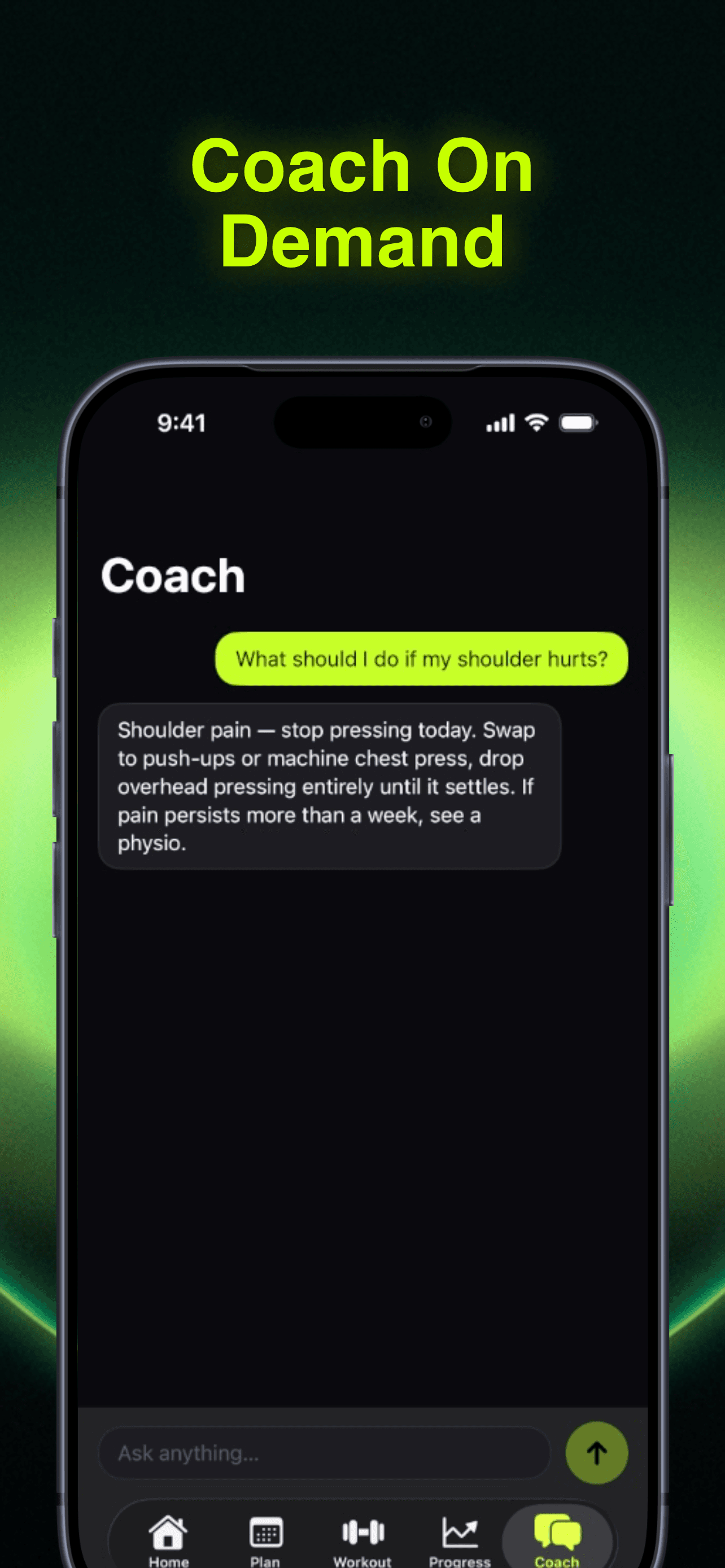
Photo by RepBro.
What Is the Arnold Split, and Does It Still Work?
The Arnold split is a 6-day-per-week bodybuilding program that pairs antagonist or synergist muscle groups — chest with back, shoulders with arms, and legs — and repeats that rotation twice each week. Each major muscle group gets trained twice in seven days, which aligns with what the current hypertrophy literature consistently recommends: two or more sessions per muscle per week outperforms once-weekly training for muscle growth when volume is equated.
The short answer: The Arnold split runs a Monday-through-Saturday schedule with Sunday off. Day 1 is chest and back, Day 2 is shoulders and arms, Day 3 is legs, then that exact sequence repeats on Days 4–6. Each muscle gets ~16–22 working sets per week split across two sessions.
Arnold Schwarzenegger used a version of this structure during his competitive years in the late 1960s and early 1970s. The pairing logic is sound: training chest and back together lets you superset antagonist movements, keep rest periods short, and accumulate high volume without systemic fatigue spiking too fast.
The Full Arnold Split Workout Schedule
Here is the day-by-day breakdown. Adjust exercise order and set counts to your training age and recovery capacity.
Day 1 — Chest & Back
The chest-back pairing is the cornerstone of the split. You can superset a press with a row and barely rest — each muscle recovers while the other works.
Chest (primary movers: pec major, anterior delt, triceps)
- Barbell flat bench press — 4 x 6–10
- Incline dumbbell press — 3 x 8–12
- Cable or dumbbell fly — 3 x 12–15
Back (primary movers: lats, rhomboids, rear delt, biceps)
- Barbell or dumbbell row — 4 x 6–10
- Pull-up or lat pulldown — 3 x 8–12
- Seated cable row or chest-supported row — 3 x 10–15
Why this pairing: Bench press and barbell row share almost no primary musculature. Supersetting them cuts session time by 25–30% without compromising strength output on either lift.
Day 2 — Shoulders & Arms
Shoulders and arms is the most volume-dense session in the split. Your anterior and lateral delts are already partially fatigued from Day 1 pressing, so load selection on overhead work should reflect that.
Shoulders (primary movers: anterior, lateral, and posterior delt)
- Barbell or dumbbell overhead press — 4 x 6–10
- Dumbbell lateral raise — 4 x 12–20
- Face pull or rear delt fly — 3 x 15–20
Biceps
- Barbell curl — 3 x 8–12
- Incline dumbbell curl — 3 x 10–15
Triceps
- Close-grip bench press or overhead triceps extension — 3 x 8–12
- Triceps pushdown — 3 x 12–15
Note on volume: Arms receive indirect stimulus on Day 1 — biceps from rows, triceps from pressing. Keep direct arm volume moderate (5–7 sets per muscle per session) rather than chasing the old-school "20 sets of curls" approach.
Day 3 — Legs
Legs is the only unilateral session in the split. That's a feature, not a flaw. By Day 3, your upper body has two hard sessions behind it; a full lower-body focus lets you push intensity without systemic fatigue competing with your top sets.
Quads, hamstrings, glutes, calves
- Barbell back squat or leg press — 4 x 6–10
- Romanian deadlift — 3 x 8–12
- Leg curl — 3 x 10–15
- Leg extension — 3 x 12–15
- Standing or seated calf raise — 4 x 15–20
Days 4, 5, 6 — Repeat
Day 4 mirrors Day 1, Day 5 mirrors Day 2, Day 6 mirrors Day 3. You don't have to use identical exercises — in fact, rotating variations is a smart way to spread mechanical stress. If Day 1 featured flat barbell bench, Day 4 can lead with incline dumbbell press. If Day 2 had barbell overhead press, Day 5 can open with seated dumbbell press.
Day 7 is rest. Non-negotiable. Six consecutive training days produces meaningful fatigue accumulation; the seventh day is where adaptation happens.
Arnold Split Exercise Selection: The Principles
The classic mistake with this split is treating the day-by-day structure as fixed but the exercises as random. Exercise selection should follow three rules:
-
Cover all force vectors per muscle group. For chest: horizontal press (flat), inclined press (upper pec bias), and a fly variation (stretch-loaded). For back: vertical pull (lat pulldown/pull-up) and horizontal pull (row). Don't stack three variations of the same movement.
-
Front-load the compound work. Put your heaviest, most technically demanding movements first when the nervous system is freshest. Isolation work finishes the session.
-
Match the second session's exercises to the first session's gaps. If Session A chest work was all dumbbell pressing, Session B can bias toward cables or machine work for variety and a different strength curve.
Who Should Actually Run This Split?
The Arnold split is a high-frequency, high-volume program. It is not appropriate for beginners. If you've been training consistently for less than 18 months, a 3- or 4-day upper/lower or push/pull/legs split will produce faster progress with far less injury risk.
The Arnold split suits:
- Intermediate to advanced lifters (18+ months of consistent training) who have plateaued on lower-frequency programs
- Lifters with reliable recovery — solid sleep (7–9 hours), adequate protein intake (~1.6–2.2 g/kg body weight per day), and manageable life stress
- People who genuinely enjoy high training frequency — adherence matters more than any program design
If you're recovering poorly by Day 4 or 5, reduce total sets per session by 20–25% before cutting training days. Volume is the easier lever to pull.
Volume Targets by Muscle Group
These are weekly working-set targets across both sessions combined, based on current evidence-based guidelines for hypertrophy (see Schoenfeld & Grgic, 2018 and Renaissance Periodization's volume landmarks):
| Muscle Group | Weekly Sets (Intermediate) |
|---|---|
| Chest | 14–20 |
| Back | 14–22 |
| Shoulders | 12–20 |
| Biceps | 10–16 |
| Triceps | 10–16 |
| Quads | 14–20 |
| Hamstrings | 10–16 |
| Calves | 12–16 |
Start at the lower end of each range. Add 1–2 sets per muscle per week until performance stalls or recovery degrades, then run a deload week.
How to Progress on the Arnold Split
Progressive overload is what turns a program into results. The Arnold split doesn't have a built-in progression scheme the way a powerlifting program does, so you need to apply one deliberately. A simple double-progression model works well here:
- Pick a rep range (e.g., 8–12).
- When you hit the top of the range on all sets, add weight next session.
- If you miss the bottom of the range, keep the weight the same and aim to add reps.
Track every set. If you're not tracking weight, reps, and RPE, you're guessing — and guessing doesn't produce consistent progressive overload.
That's exactly where a structured workout log pays off. If you want the Arnold split built out for you with day-by-day sessions, automatic progression, and an AI coach available mid-workout when you're deciding whether to swap incline press for cable flys, RepBro handles all of it in under 90 seconds of setup.
Frequently asked questions
- What are the 6 days of the Arnold split?
- Day 1: Chest & Back. Day 2: Shoulders & Arms. Day 3: Legs. Day 4: Chest & Back (repeat). Day 5: Shoulders & Arms (repeat). Day 6: Legs (repeat). Day 7 is rest. Each major muscle group is trained twice per week.
- Is the Arnold split good for hypertrophy?
- Yes, for intermediate and advanced lifters. It trains each muscle group twice per week with 14–22 weekly sets, which aligns with current evidence on training frequency and volume for muscle growth. Beginners should start with a lower-frequency program first.
- Can I do the Arnold split without going to a gym?
- The classic version requires barbells and cables, but you can adapt it with dumbbells and resistance bands. The pairing structure (chest/back, shoulders/arms, legs) stays the same; only the specific exercises change based on available equipment.
- How long should each Arnold split session take?
- Chest & Back and Shoulders & Arms sessions typically run 60–80 minutes. Leg day runs 50–70 minutes. Supersetting antagonist movements on chest/back days can cut that closer to 55–65 minutes without reducing volume.
- What should I eat on the Arnold split to support recovery?
- Aim for 1.6–2.2 g of protein per kg of body weight daily. Total calorie intake depends on your goal — a modest surplus of 200–300 kcal above maintenance supports muscle gain without excessive fat accumulation on a 6-day program.
- How does the Arnold split differ from Push/Pull/Legs?
- Push/Pull/Legs groups muscles by movement pattern. The Arnold split pairs antagonist or synergist muscles (chest with back, shoulders with arms) and repeats the three-day cycle twice per week. Both hit each muscle twice weekly; the Arnold split allows more antagonist supersetting.
