How Many Sets of Leg Extensions Should You Do? A Practical Guide to Isolation Exercise Volume
For most lifters, 2–4 sets of leg extensions per session, 2–3 times per week (6–10 weekly sets), drives quad growth without junk volume. Here's how to program all your isolation work.
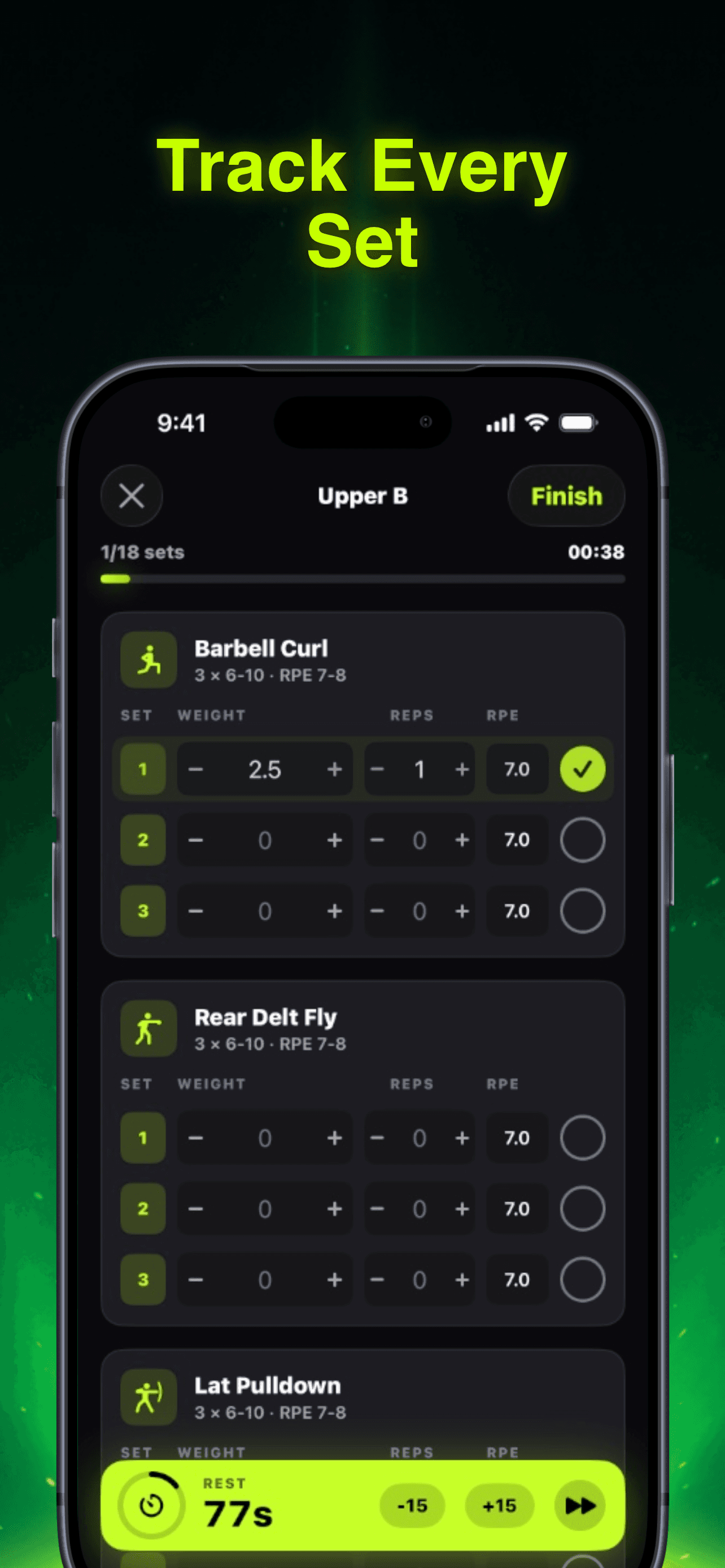
Photo by RepBro.
How Many Sets of Leg Extensions Should You Do Per Week?
Most lifters either do way too few isolation sets (one throwaway set at the end of leg day) or pile on so many they're just accumulating fatigue. Here's the short answer:
For quad hypertrophy, aim for 6–10 direct weekly sets on the leg extension, split across 2–3 sessions. Beginners can grow on the lower end. Intermediate and advanced lifters benefit from pushing toward 10–12 sets as their work capacity increases. Beyond ~15 sets per week for a single isolation movement, recovery costs typically outpace returns for most people.
That number comes from the broader literature on volume and hypertrophy — most notably Schoenfeld et al. (2017) and the volume landmarks framework popularized by Dr. Mike Israetel at Renaissance Periodization, which categorizes training volume into Minimum Effective Volume (MEV), Maximum Adaptive Volume (MAV), and Maximum Recoverable Volume (MRV).
Why Isolation Exercises Need Their Own Volume Logic
Compound lifts like squats and Romanian deadlifts already accumulate substantial quad and hamstring volume. Isolation work sits on top of that. If you're squatting twice a week and doing leg press once, your quads are already getting 6–10 sets of indirect stimulus before you touch the leg extension machine.
This is why "how many sets" is not a one-size answer. It depends on:
- Total weekly volume for that muscle (compounds + isolation combined)
- Training frequency — spreading sets across more sessions improves per-session recovery
- Rep range and intensity — isolation exercises respond well to higher reps (10–20) at RPE 7–9
- Training age — beginners grow on less; advanced lifters need more to keep progressing
A reasonable starting point for most intermediate lifters:
| Muscle | Isolation Exercise | Weekly Sets (Direct) |
|---|---|---|
| Quads | Leg Extension | 6–10 |
| Hamstrings | Leg Curl (seated or lying) | 6–10 |
| Biceps | Dumbbell/Cable Curl | 6–12 |
| Triceps | Pushdown / Overhead Extension | 6–12 |
| Calves | Calf Raise | 8–14 |
| Rear Delts | Face Pull / Reverse Fly | 6–10 |
These are direct sets. Compounds are already covering part of the load.
Set and Rep Ranges That Actually Work for Isolations
Isolation exercises don't require heavy loading to drive hypertrophy. Research consistently shows muscle protein synthesis is similar across a wide load range — 30–80% of 1RM — as long as sets are taken close to failure (Burd et al., 2012, Applied Physiology).
For practical programming:
- Leg extensions: 3–4 sets × 12–20 reps, RPE 8–9. Full range of motion matters here — don't cut the top of the contraction short.
- Seated leg curl: 3–4 sets × 10–15 reps. Seated variation keeps the hamstring under stretch at the bottom, which emerging research suggests may enhance hypertrophy in the lengthened position.
- Bicep curls: 3–4 sets × 10–15 reps. Supinate at the top. Cable curls maintain tension across the full range better than dumbbells.
- Tricep pushdowns: 3 sets × 12–20 reps. Overhead extensions (cable or dumbbell) hit the long head more directly if tricep mass is a priority.
Keep rest periods at 60–90 seconds for most isolation work. Longer rest isn't wrong, but shorter rest with moderate loads keeps the session efficient without sacrificing volume.
Is the Smith Machine Dangerous?
The short answer: no, not inherently. The claim that the Smith machine is gefährlich (dangerous) or wrecks your knees is mostly gym folklore.
The fixed vertical bar path does alter biomechanics compared to a free barbell. A 2009 study in the Journal of Strength and Conditioning Research found that free-weight squats produced greater muscle activation in the gastrocnemius compared to Smith machine squats, while the Smith produced slightly more quad activation in some subjects. Neither version caused excessive joint stress when technique was reasonable.
Where the Smith machine does matter:
- Foot placement is critical. You can place your feet further forward than a free squat, which shifts load toward the quads and away from the lower back. This is actually useful for quad-focused work.
- It's not a substitute for learning the free barbell squat if strength and athletic carry-over are goals.
- For isolation-adjacent work — Smith machine Bulgarian split squats, incline presses, hip thrusts — it's a legitimate and safe tool.
The bottom line: the Smith machine is a tool. Used intentionally, with appropriate foot placement and range of motion, it is not dangerous. Avoid it if you're chasing sport-specific strength. Use it freely for hypertrophy work or if you're training without a spotter.
What Does the Conventional Deadlift Actually Work? (Qué Trabaja el Peso Muerto Convencional)
Since deadlifts frequently appear in lower-body programming alongside isolation exercises, it's worth being precise about the muscles involved — especially for lifters asking qué trabaja el peso muerto convencional (what does the conventional deadlift work).
Primary movers:
- Erector spinae (lower and mid back) — isometric stabilization through the pull
- Glutes (gluteus maximus) — primary hip extensor driving lockout
- Hamstrings — hip extension, particularly in the initial pull from the floor
- Quadriceps — knee extension off the floor
Secondary/stabilizing:
- Lats (keep the bar close and protect the lower back)
- Traps and rhomboids (upper back bracing)
- Forearms and grip
This matters for isolation programming. If you deadlift twice a week, your hamstrings and erectors are already under significant load. Stacking heavy seated leg curls on the same day is a recipe for accumulated fatigue. Spread isolation hamstring work to a separate session or at least a separate day.
How to Structure a Lower-Body Session With Isolation Volume
Here's a practical example for an intermediate lifter on a 4-day upper/lower split:
Lower A (Strength Focus)
- Conventional deadlift — 4 × 4–6
- Romanian deadlift — 3 × 8–10
- Leg press — 3 × 10–12
- Seated leg curl — 3 × 12–15
- Standing calf raise — 3 × 15–20
Lower B (Hypertrophy Focus)
- Barbell or Smith machine squat — 4 × 8–10
- Walking lunges — 3 × 10/leg
- Leg extension — 3–4 × 12–20
- Lying leg curl — 3 × 12–15
- Seated calf raise — 3 × 15–20
This structure gives your quads and hamstrings each ~6–8 direct isolation sets per week on top of compound stimulus. Adjust total sets based on how you recover. If you're consistently sore into the next session, drop a set. If you're recovering fast and progress has stalled, add one.
The One Thing to Try in Your Next Session
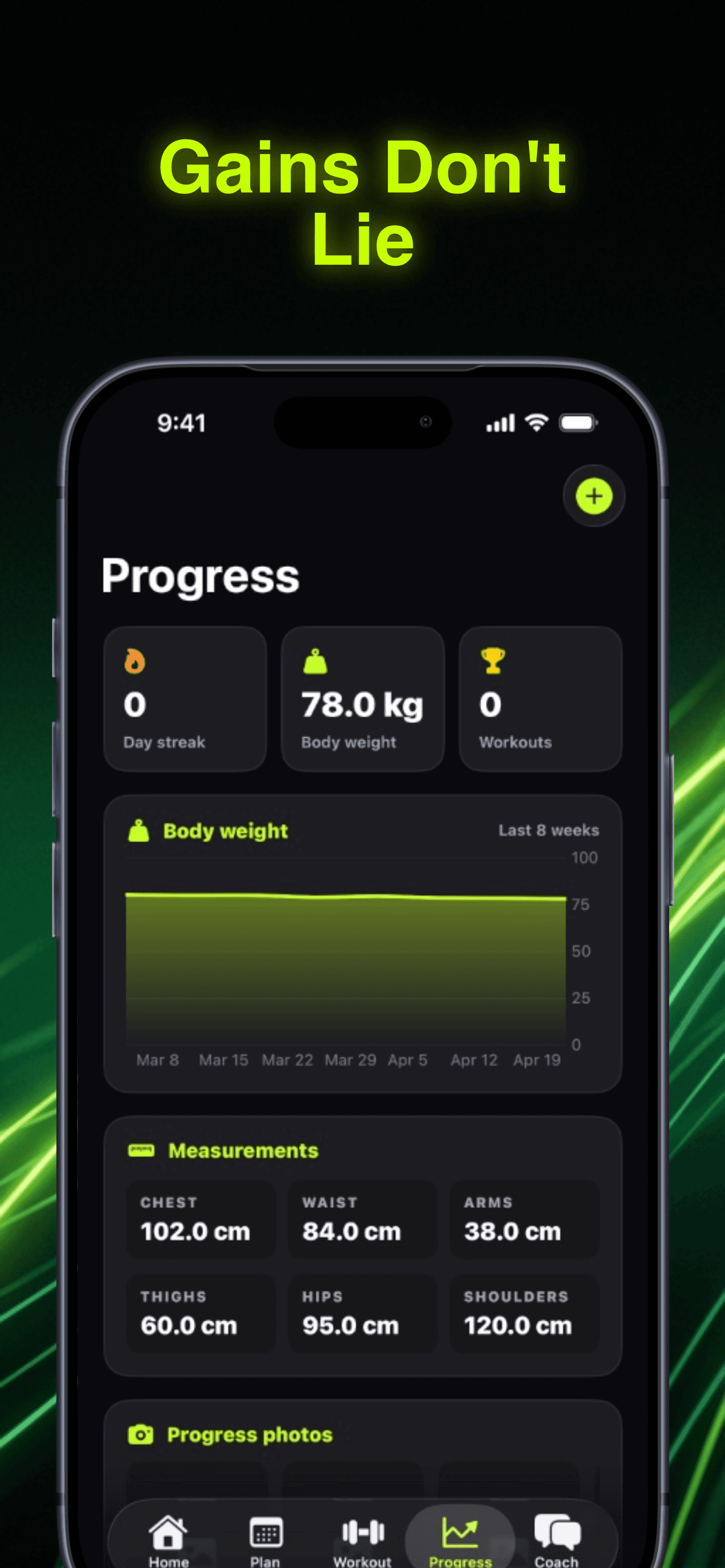
Pick your weakest isolation movement — leg extension, leg curl, or a curl variant — and log every set with weight, reps, and RPE. Most lifters who "do 3 sets" are actually doing 3 sets with wildly inconsistent effort. Tracking RPE forces honest effort and makes progressive overload visible over weeks, not just guesswork.
RepBro's set-by-set logging lets you track weight, reps, and RPE in real time, with an AI coach on call if you want to ask whether your current volume is appropriate for your goal and recovery. It's the fastest way to stop guessing and start accumulating the right kind of volume.
Frequently asked questions
- How many sets of leg extensions should I do per week?
- Most intermediate lifters benefit from 6–10 direct weekly sets of leg extensions, spread across 2–3 sessions. Beginners can grow on 4–6 sets. Advanced lifters may push to 12–15 sets, but recovery cost rises sharply beyond that. Count compound quad work (squats, leg press) toward your total weekly volume.
- What rep range is best for leg extensions?
- 12–20 reps per set at RPE 8–9 works well for leg extensions. Higher reps reduce joint stress at the knee while still driving hypertrophy. Full range of motion — including the peak contraction at the top — is more important than load.
- Is the Smith machine dangerous for your knees?
- No. The Smith machine is not inherently dangerous. The fixed bar path changes biomechanics slightly compared to a free barbell, but research does not show it causes excessive knee stress when foot placement is appropriate. Placing feet further forward shifts load to the quads, which can be intentional for hypertrophy work.
- What muscles does the conventional deadlift work? (Qué trabaja el peso muerto convencional)
- The conventional deadlift primarily trains the glutes, hamstrings, quadriceps, and erector spinae. Secondary muscles include the lats, traps, and forearm flexors. It is a full posterior chain movement with significant quad involvement off the floor.
- Should I do leg extensions before or after squats?
- Do leg extensions after your compound lifts (squats, leg press). Pre-fatiguing the quads with extensions before squats reduces the load you can handle on the main movement, which limits overall stimulus. Save isolation work for the end of the session.
- How many sets of hamstring curls should I do per week?
- 6–10 direct sets per week is a solid target for most lifters. If you deadlift or do Romanian deadlifts regularly, your hamstrings are already getting indirect volume — account for that when planning your curl sets to avoid overreaching.