Skull Crusher Alternatives at Home (Minimal Equipment)
Practical at-home skull crusher substitutes using bodyweight, dumbbells, and bands. What each preserves, what they lose, and when to return to the gym.
Photo by RepBro.
Short answer: You can replicate skull crushers at home using dumbbell lying extensions, overhead dumbbell extensions, band triceps pushdowns, close‑grip push‑ups, or incline bodyweight triceps extensions. Each retains elbow‑dominant triceps loading but differs in leverage, ROM, and loading ceiling; choose by available equipment and training goals.
What does the skull crusher target and why would I replace it at home?
The skull crusher (lying triceps extension) is an elbow‑dominant isolation movement that stresses the triceps, particularly the long head when performed with a supine position and elbow motion behind the head. People look for home alternatives because they lack a barbell/bench, want lower shoulder strain, or prefer equipment-light options.
What to preserve when you swap: consistent elbow flexion/extension under load, controlled tempo (especially the eccentric), and an appropriate range of motion. What you may lose: absolute loading ceiling, small stability advantages of a barbell, and the exact shoulder/elbow angles that emphasize different triceps heads.
Which at-home exercises are practical substitutes for the skull crusher?
Below are five practical substitutions you can do with minimal equipment. For each I list what it preserves compared with the skull crusher, the trade-offs, and when it's an adequate swap.
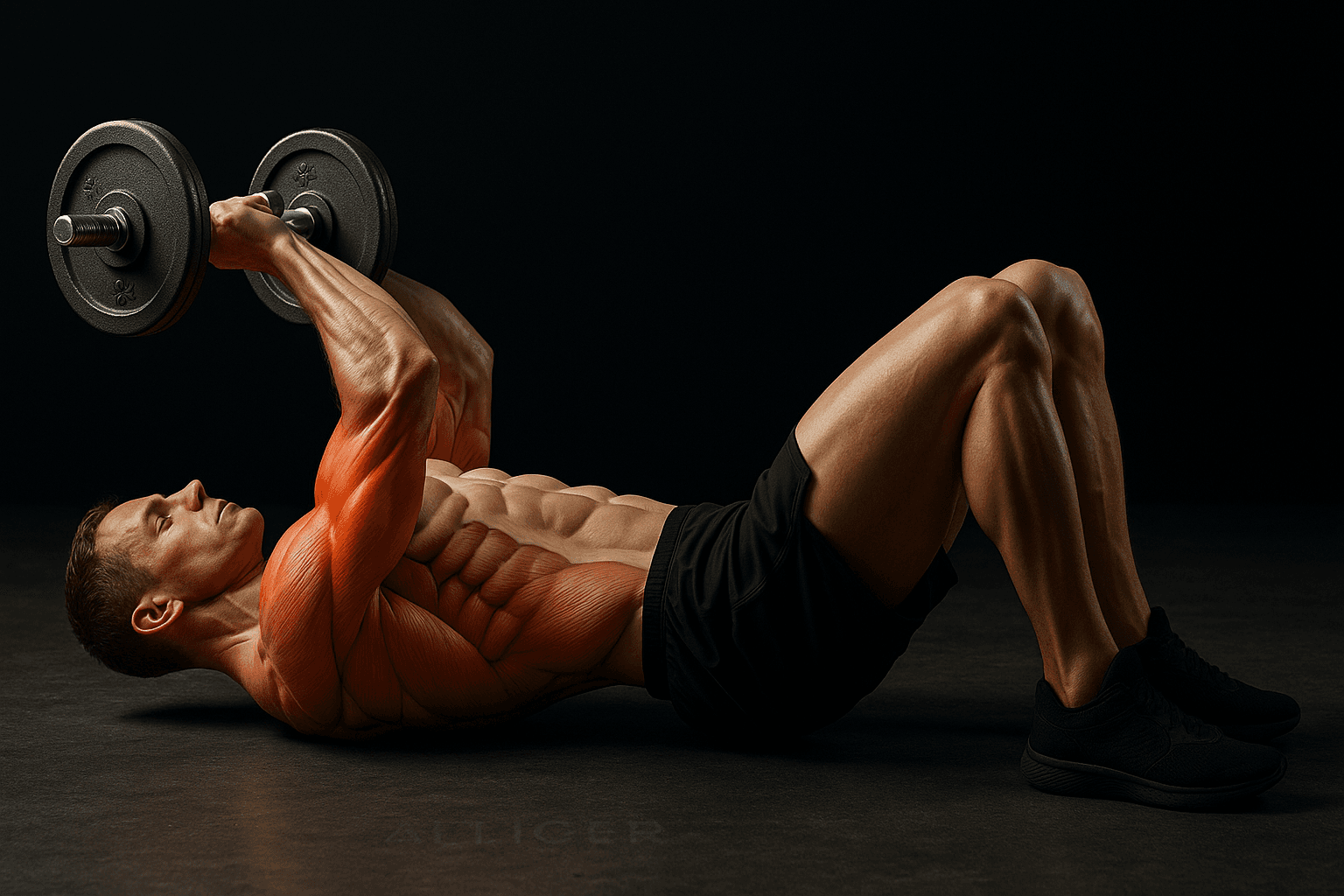
1) Lying dumbbell triceps extension (floor or bench)
- Equipment: pair of dumbbells and a floor or bench.
- What it preserves: supine elbow extension pattern, similar range of motion (especially on a bench), and single‑arm control for imbalance correction.
- What it loses: slightly lower absolute load vs a barbell; on the floor the ROM is reduced at the bottom (elbows hit the floor) which can reduce long‑head stretch.
- When it's adequate: when you have dumbbells up to a challenging weight. Use on the floor if no bench is available, or on a bench to keep full ROM.
2) Overhead dumbbell triceps extension (seated or standing)
- Equipment: one or two dumbbells.
- What it preserves: strong long‑head stretch and elbow extension under load; suitable for high‑rep hypertrophy work.
- What it loses: different leverage (more shoulder involvement), less direct axial stability than lying extensions.
- When it's adequate: when you want a heavier long‑head emphasis or have limited benching space; useful single‑arm to address side differences.
3) Band triceps pushdown
- Equipment: resistance band anchored overhead or looped over a door.
- What it preserves: high time‑under‑tension through the extension at the elbow and good peak contraction; can be used for high‑rep hypertrophy and finishing work.
- What it loses: less eccentric overload (bands decrease load on lowering unless you manage tempo) and a different force curve than free weights.
- When it's adequate: when you want convenient layering of volume, progressive bands, or variable resistance and you lack heavy dumbbells.
4) Close‑grip push‑ups or diamond push‑ups
- Equipment: none or a raised surface for incline/decline.
- What it preserves: compound pressing pattern with strong triceps involvement and practical loading for bodyweight training.
- What it loses: less pure isolation of elbow extension; shoulder and chest contribute more, and it’s harder to isolate the long head.
- When it's adequate: for beginners, bodyweight training phases, or when you want to add functional pressing strength alongside triceps work.
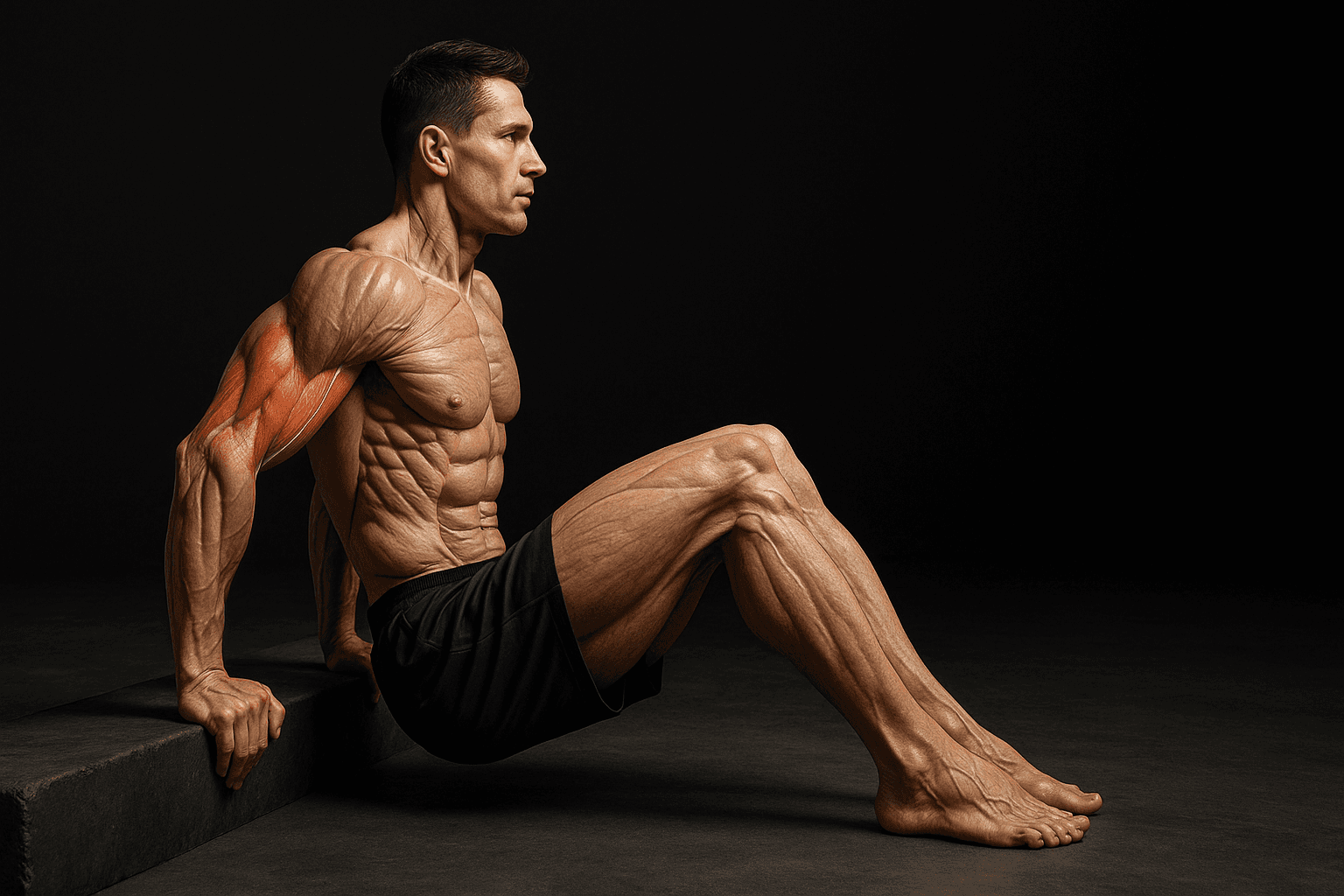
5) Incline bodyweight triceps extension (hands elevated)
- Equipment: a sturdy table, bench, or couch edge.
- What it preserves: similar elbow-axis movement to skull crushers while using bodyweight; easy to scale by stepping feet position.
- What it loses: absolute external load and precise external progression unless you add weight.
- When it's adequate: when you have zero weights and want a closer mechanical match than push‑ups.
How should I program these substitutes for growth and strength?
Aim to train triceps 2–3 times per week and spread your total triceps volume across those sessions. For hypertrophy, most lifters respond to a range of weekly sets; a practical target is to accumulate steady, progressive work and adjust based on recovery. For individual exercises, 3–5 working sets of 6–20 reps is a reasonable starting band — lower reps near maximal loads for strength, higher reps for capacity and metabolic stimulus. Track performance and add load, reps, or sets when you can complete prescribed sets cleanly.
How do these alternatives compare side‑by‑side?
| Exercise | Equipment | Preserves vs skull crusher | Main trade-offs | Good when… |
|---|---|---|---|---|
| Lying dumbbell extension | Dumbbells + floor/bench | Closest movement pattern, similar ROM | Lower absolute load; floor reduces bottom ROM | You have dumbbells and want a direct substitute |
| Overhead DB extension | Dumbbell(s) | Strong long‑head stretch, single‑arm options | More shoulder involvement, different leverage | You want long‑head emphasis or unilateral work |
| Band pushdown | Bands + anchor | Good peak contraction, easy progressions | Different force curve; less eccentric load | You want portable, scalable resistance |
| Close‑grip push‑up | Bodyweight | Good triceps recruitment, functional pressing | Less isolation, shoulder/chest assist | You’re training bodyweight strength or lack equipment |
| Incline bodyweight extension | Bench/table | Similar elbow motion using BW | Harder to progressively overload | You have no weights but want movement similarity |
When is it time to go back to the gym for skull crushers?
If you need to keep increasing absolute load beyond your dumbbell/band capacity, require barbell-specific strength, want precise small load increments (microplates), or are addressing a stubborn hypertrophy plateau despite progressive home training, a gym with bars, heavier dumbbells, and cable machines will let you continue progression more easily.
Safety note
Stop if you feel sharp joint pain. Keep elbows controlled and avoid banging the weight into your forehead. Use a spotter for near‑max loads. If you have existing shoulder or elbow problems, consult a qualified health or rehab professional before loading these movements. This article does not diagnose or treat injuries.
What can apps and AI not do for your triceps training? (Limitations)
No app or AI can reliably watch and correct your form in real time or replace a qualified coach’s hands‑on assessment. An algorithm can suggest sets, reps, and progressions but cannot see subtle position errors, individual anatomy limitations, or provide medical diagnosis. For injuries, rehabilitation, or persistent pain, see a licensed clinician. Also remember a plan only works if you show up consistently — consistency and progressive overload drive most adaptation, not the choice of app.
If you track sets digitally, tools like RepBro can help log progress but won't replace a coach.
Bottom line: With a small set of dumbbells, a band, and creative bodyweight work you can fairly closely replicate the skull crusher’s stimulus. Choose the variant that matches your equipment and goals, prioritize progressive overload and recovery, and use gym access when you need higher absolute loading or more precise equipment.
Frequently asked questions
- Can I build triceps size and strength at home without a skull crusher?
- Yes. You can achieve meaningful triceps hypertrophy and strength with dumbbells, bands, and bodyweight by using progressive overload, 8–20 weekly sets for the triceps spread across 2–3 sessions, and exercises that load the elbow extension movement. Heavier, more specialized loading may need gym equipment.
- Which home substitute most closely mimics the skull crusher movement?
- Lying dumbbell triceps extensions (floor or bench) most closely reproduce the skull crusher’s elbow-dominant, long-head stretch and extension pattern. They preserve the supine position and similar range of motion but usually limit absolute load compared with a barbell setup.
- When should I go back to the gym for triceps work?
- Consider gym access if you need much higher absolute loads for strength progression, precise incremental loading (microplates), or variety such as heavy skull crushers with bars/Smith machines. Also go when you need equipment for rehab or a coach’s hands-on cueing.