Skull Crusher: Muscles Worked and Best Alternatives
Skull crushers primarily target the triceps (long and lateral heads). Learn which muscles are worked, where it fits in a program, safety cues, and 4 solid alternatives.
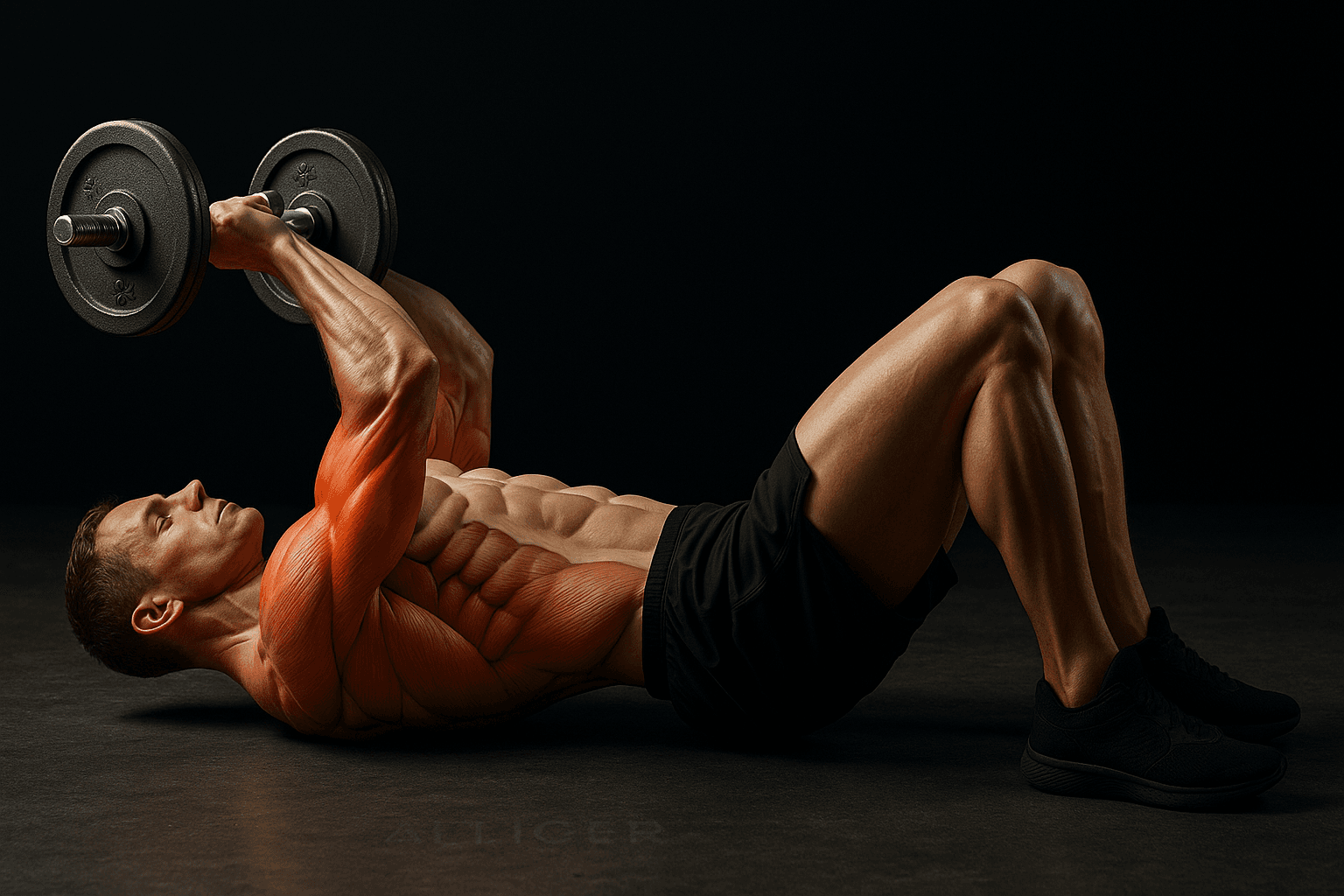
Photo by RepBro.
Skull crushers primarily train the triceps brachii—especially the long and lateral heads—with secondary involvement from the anconeus, forearm stabilizers, and minimal shoulder musculature. They are a direct elbow-extension exercise ideal for adding mass and strength to the back of the upper arm.
What muscles do skull crushers work?
- Primary: Triceps brachii (long head and lateral head). The long head is loaded more when the shoulder is slightly extended or when using an incline bench.
- Secondary: Anconeus (elbow stabilizer), wrist/forearm extensors (stabilization), and to a small extent the posterior deltoid and upper back for stabilization.
Skull crushers are not a shoulder press or chest movement; they isolate elbow extension. How you set the bench angle and your grip (EZ bar vs straight bar vs dumbbells) shifts emphasis across the triceps heads.
How should I place skull crushers in my program?
- When: After heavy compound pressing (bench/overhead) or as a primary triceps accessory on an upper-body/arm day. Doing them too early can pre-fatigue the triceps and reduce compound pressing performance.
- Frequency: 1–2 times per week for most lifters.
- Sets & reps: 3–4 sets of 6–12 reps per session is a practical default. For hypertrophy aim for 8–12 reps; for strength use lower reps with heavier load and fewer sets. Total weekly triceps volume (all exercises combined) is typically 10–20 sets.
- Progression: Increase load or reps slowly while keeping strict form. If range-of-motion control breaks, reduce weight rather than sacrificing form.
What are safe form cues for skull crushers? (exercise form & safety)
- Setup: Lie flat on a bench (or slight incline to bias the long head). Use an EZ bar, straight bar, or dumbbells. Eyes under the bar at the top position.
- Elbow position: Keep elbows tucked ~10–20 degrees from the head (not flared wide). Hinge only at the elbow—avoid excessive shoulder movement.
- Bar path: Lower the implement toward the forehead or just above the forehead in a controlled arc, pause briefly, then extend back to start.
- Control: Use a slow descent (about 2–3 seconds) and an explosive but controlled concentric. Avoid bouncing the bar off the forehead.
- Load: Choose a weight you can control through full range for the target rep range.
Safety note: Stop if you feel sharp or unusual pain around the elbow or shoulder; consult a qualified professional for assessment. These cues are general guidance, not medical or diagnostic advice.
What are the best alternatives and when should I pick each?
- Close-Grip Bench Press — When to pick it:
- Use this if you want a compound lift that loads triceps with heavier absolute loads and also trains lockout strength.
- Good for: strength-focused phases, plateaus where you need to add overload, limited time (more bang-for-buck).
- Equipment: Barbell and bench.
- Trade-offs: Less isolation of the triceps long head; more involvement of chest and shoulders than skull crushers.
- Dumbbell Overhead Triceps Extension — When to pick it:
- Use this if you want to load the long head through a greater stretch, or if barbells bother your wrists/elbows.
- Good for: addressing imbalances (single-arm), training the long head, home workouts with dumbbells.
- Equipment: One or two dumbbells (or kettlebell).
- Trade-offs: Requires decent shoulder mobility; heavier loads are harder to manage than barbell variants.
- Cable Rope Triceps Pushdown — When to pick it:
- Use this if you need constant tension, want a forgiving option for sore elbows, or are working on higher-rep hypertrophy.
- Good for: elbow-friendly loading, fine-tuning triceps after compound work, and progressive overload with microplates.
- Equipment: Cable machine or bands.
- Trade-offs: Less stretch on the long head compared with overhead work; easier to cheat with shoulder extension if form slips.
- Parallel-Bar Dips or Bench Dips — When to pick it:
- Use dips if you want a bodyweight/compound alternative that also builds pressing strength and triceps mass.
- Good for: limited equipment, progressive overload (weighted dips), and strengthcarryover to pressing.
- Equipment: Dip bars or bench.
- Trade-offs: Bench dips can strain shoulders if performed with poor shoulder position; parallel-bar dips load chest and shoulders alongside triceps.
When to choose which alternative:
- Equipment limits: Use dumbbell overhead extensions or banded/cable pushdowns if no EZ bar is available.
- Elbow or wrist irritation: Prefer cables or change range of motion; avoid heavy, uncontrolled skull crushers.
- Plateau on thickness: Add close-grip bench press or weighted dips to progressively overload with heavier loads.
- Want more long-head stretch: Pick overhead extensions or incline skull crushers.
For side-by-side comparisons of different equipment and variations, see the RepBro exercise comparison hub: https://www.repbro.app/vs and track choices and progression with RepBro.
How should I change things if I get elbow irritation?
- Reduce load and range of motion; perform pushdowns or overhead work instead of lying skull crushers.
- Increase warm-up volume and use slower eccentric tempos to control stress.
- Prioritize pain-free movement—stop if pain is sharp; persistent issues warrant professional evaluation.
Skull crushers are a direct and efficient way to train elbow extension but are not the only option—choose the variation that fits your goals, equipment, and tolerance.
Takeaway: Skull crushers are a focused triceps builder (long and lateral heads); switch to cables, overhead extensions, close-grip pressing, or dips if equipment, pain, or plateau issues arise.
Frequently asked questions
- Do skull crushers target all three triceps heads?
- Skull crushers primarily load the long and lateral heads; the medial head contributes but is less emphasized. Angle and grip change the emphasis (incline/overhead shifts bias).
- Why do my elbows hurt during skull crushers?
- Elbow pain often comes from excessive load, poor control, or a wide, flaring elbow position. Reduce load, shorten range, switch to cables or overhead variations, and stop on sharp pain—consult a professional if it persists.
- How often should I do skull crushers?
- Aim for 1–2 sessions per week for direct triceps work and 10–20 total weekly sets for triceps across exercises; a common prescription is 3–4 sets of skull crushers per session.