How Many Sets and Reps for the Reverse Pec Deck?
Evidence-based sets, reps, frequency, and progression for the reverse pec deck by goal (strength, hypertrophy, endurance). Practical progression rules and safety signals.
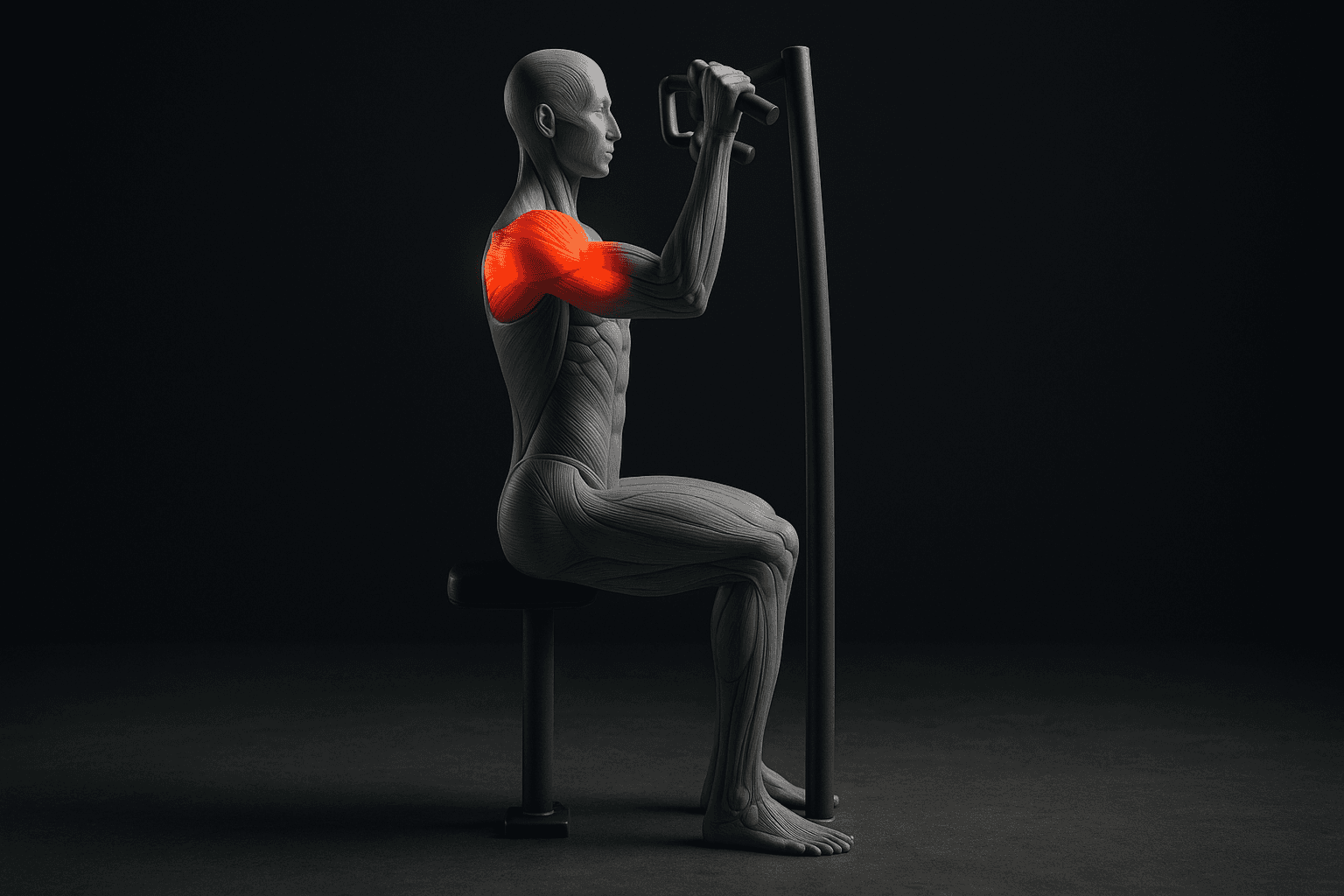
Photo by RepBro.
Do 3–5 sets of 8–15 reps for hypertrophy, 3–5 sets of 4–6 reps if you specifically want strength, or 2–4 sets of 15–25 reps for endurance. Train rear delts 1–2 times per week on the pec-deck, and progress with a double-progression rule.
What is the reverse pec deck good for and how should that affect sets and reps?
The reverse pec deck targets the posterior deltoids and the upper back (rhomboids, lower traps) as an isolation movement. Because it is not a primary strength lift, most lifters use it to: (a) build muscle size and shape in the rear delts, (b) address posture and shoulder balance, and (c) accumulate higher training volume with low spinal loading.
That purpose guides rep/ set choices: higher-to-moderate reps for hypertrophy and endurance, and only moderate-heavy reps if you want local strength. Compound lifts produce bigger whole-body strength improvements, so reserve very heavy, low-rep work for movements like rows, deadlifts, and presses.
How many sets and reps for hypertrophy (muscle growth)?
- Per session: 3–5 sets per exercise.
- Reps per set: 8–15.
- Load: choose a weight that leaves about 1–3 reps in reserve (RPE ~7–9).
- Frequency: 1–2 sessions per week on the machine; total weekly rear-delt volume (all exercises) ~10–20 sets for most lifters.
This follows mainstream resistance-training guidance: moderate reps with moderate sets and enough weekly volume to stimulate growth. Because the reverse pec deck isolates a small muscle, you can recover quickly and place it twice weekly if you want more stimulus.
How many sets and reps if my goal is strength?
- Per session: 3–5 sets.
- Reps per set: 4–6 (lower range).
- Load: heavier, but be realistic — the machine and the small muscle size limit maximum loads.
- Frequency: 1–2 times weekly, but prioritize compound horizontal/vertical pulling for overall strength.
Use heavy reverse-pec sets sparingly. They can improve the ability to produce force in shoulder retraction and external rotation, but they are supplementary to larger lifts.
How many sets and reps for muscular endurance or rehab-style work?
- Per session: 2–4 sets.
- Reps per set: 15–25+.
- Load: light, focused on control, tempo, and high-quality repetitions.
- Frequency: can be 2–3 times per week if the goal is endurance or postural endurance.
Higher reps can be useful during deloads or as part of prehab/rehab protocols, but stop if you feel sharp joint pain.
What tempo and rest should I use for the reverse pec deck?
- Tempo: 1–2 s concentric, 2–3 s eccentric for hypertrophy; slightly faster concentric for strength if safe.
- Rest between sets: 60–120 s for hypertrophy, 2–3+ minutes for heavier strength sets, and 30–60 s for endurance.
Control on the eccentric is especially important for the small shoulder muscles to avoid momentum and ensure clean activation.
How should I progress week to week?
Use a double-progression model:
- Pick a rep range (for example, 8–12).
- Start with a weight you can control for the lower bound on all sets.
- Each session, try to add 1–2 reps to one or more sets until you hit the top of the range on all sets.
- When you can hit the top rep on every set for two consecutive sessions, increase the load slightly and return to the lower end of the rep range.
Practical load increments: 1.25–2.5 kg (2.5–5 lb) plates or the smallest step your gym allows. If you use pin-loaded machines with larger jumps, add small rep improvements before increasing the stack.
Week-to-week targets: aim for small, consistent improvements — an extra rep or two, or a small plate increase every few sessions. Avoid trying to increase both weight and reps simultaneously.
What are clear signals to add weight versus add reps?
Add reps when:
- You complete all planned sets at the lower rep bound with solid form and RPE < 8.
- You want to keep weight constant because increments are large on the machine.
Add weight when:
- You can hit the top rep target on every set for two consecutive workouts with the same weight.
- Form remains strict and you still have a 1–3 rep buffer before failure.
If symptoms like joint pain, grinding, or loss of scapular control appear, do not increase load; address form and mobility first.
Quick comparison table by training goal
| Goal | Sets per session | Reps per set | Load cue | Frequency per week |
|---|---|---|---|---|
| Strength (supplemental) | 3–5 | 4–6 | Heavy, low reps | 1–2 |
| Hypertrophy | 3–5 | 8–15 | Moderate, RPE 7–9 | 1–2 |
| Endurance / Rehab | 2–4 | 15–25+ | Light, control | 2–3 |
Safety note
Stop immediately on sharp joint or nerve pain. Maintain scapular retraction and avoid shrugging; do not hyperextend the spine. If you have shoulder impingement or pain, consult a qualified professional before progressing. This article is guidance, not a diagnosis.
Limitations — what apps and plans cannot do
- No app or AI can see or correct your form in real time; live coaching is needed for technical issues.
- A written plan cannot account for unique injuries or medical conditions — consult a qualified clinician for rehab.
- Consistency, recovery (sleep, nutrition), and overall program design determine long-term results more than a single exercise choice.
If you track sets and progress, using a logging tool like RepBro can make the double-progression model easier to follow, but the key is consistent, gradual overload and pain-free movement.
References and further reading: follow consensus guidelines from major organizations (NSCA, ACSM) about sets, reps, and weekly volume when designing accessory isolation work. Adjust numbers to your experience, recovery, and overall program priorities.
Frequently asked questions
- How many sets and reps should I do on the reverse pec deck for muscle growth?
- Do 3–5 sets of 8–15 reps per set for hypertrophy, using a challenging load that leaves 1–3 reps in reserve. Train rear delts 2× per week and aim for 10–20 weekly sets for the muscle group overall, distributed across exercises.
- Can I use the reverse pec deck to increase strength?
- You can develop strength on the reverse pec deck with 3–5 sets of 4–6 reps at heavier loads, but it's a small, isolation movement. Prioritize compound horizontal/vertical pulls for maximal strength; use the pec-deck for targeted overload and balance.
- When should I add weight versus add reps on the reverse pec deck?
- Use double progression: increase reps first up to the session's top range, then add weight and repeat. Add weight when you can hit the top rep target on all sets for two consecutive sessions while maintaining solid form.