Reverse Pec Deck: Muscles Worked and Effective Alternatives
Clear, evidence-aware guide: which muscles the reverse pec deck trains, how to program it, safe form cues, and 4 practical alternatives with when to choose each.
Photo by RepBro.
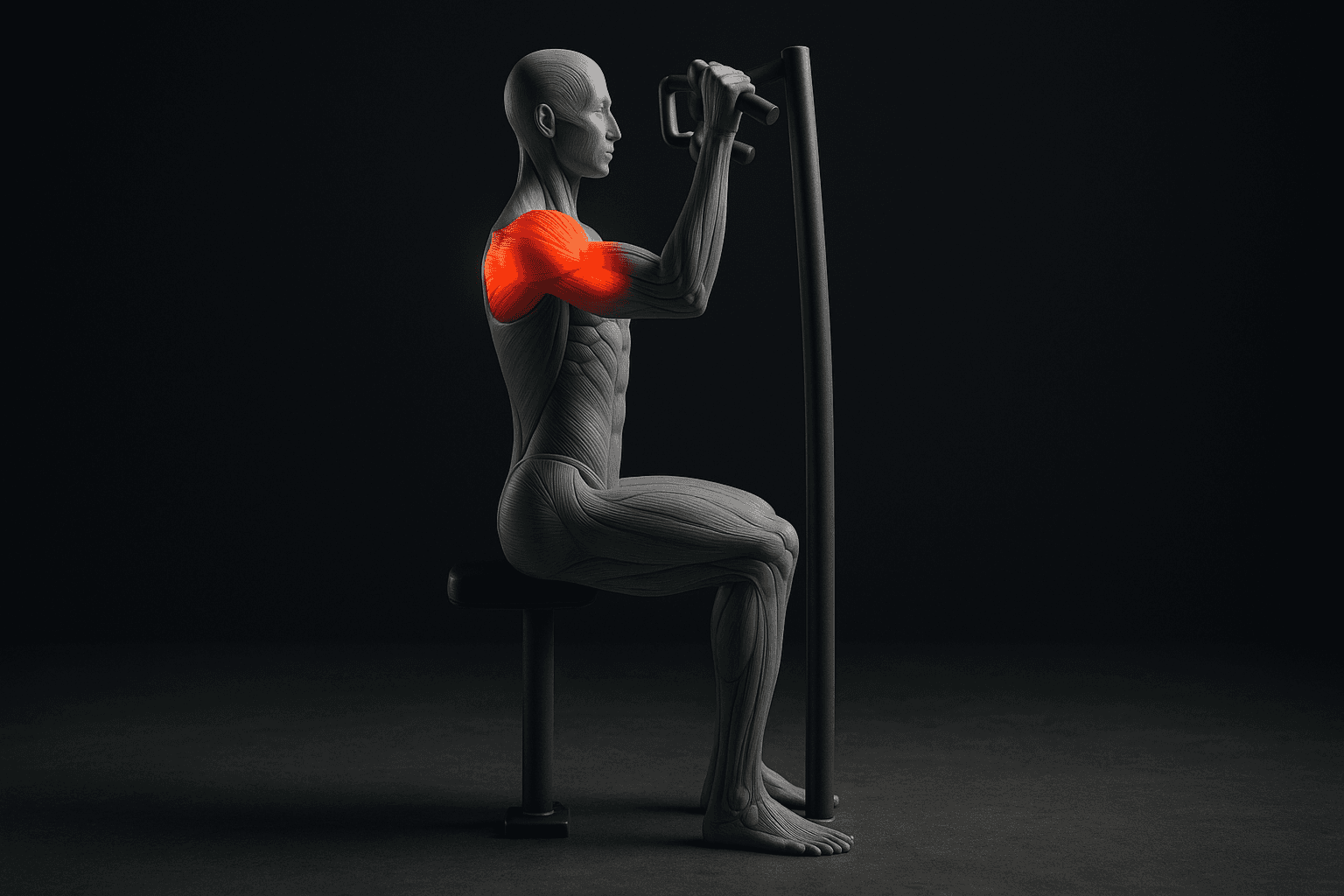
The reverse pec deck primarily trains the posterior (rear) deltoid as the main mover, with meaningful assistance from the middle trapezius and rhomboids; it also lightly engages external rotators. It’s a horizontal-abduction and scapular-retraction movement suited for shoulder-balance work and upper-back hypertrophy.
What exactly does the reverse pec deck train?
The reverse pec deck is a machine-based reverse-fly variant where you sit facing the pads and move the arms into horizontal abduction. Primary muscle: posterior deltoid. Secondary muscles: middle trapezius and rhomboids (scapular retractors), plus some activation of the infraspinatus and teres minor (external rotators). Because the machine stabilizes the torso, the movement isolates the posterior shoulder more than free-weight row variants.
How should I perform the reverse pec deck (form and cues)?
- Seat height so the handles or pads align with the posterior deltoid. Keep a small bend in the elbows.
- Lead with the elbows to horizontally abduct the humerus, not by pulling with the hands.
- Retract the shoulder blades slightly at the end range—think "pinch" the shoulder blades together.
- Control the eccentric (return) for 1.5–3 seconds.
- Use a load that allows clean technique for the target rep range. Stop on any sharp pain and consult a professional if pain persists.
How should I program the reverse pec deck into a routine?
- Frequency: 2–3 sessions per week for rear-delt work fits current recommendations for small muscle groups.
- Weekly volume: aim for roughly 6–12 sets per week for posterior delts, split across sessions. Adjust based on recovery and total upper-back work.
- Reps and sets: 2–4 sets per exercise, 8–15 reps is a practical range for hypertrophy and shoulder health; higher reps are acceptable for endurance or technique emphasis.
- Progression: increase load, increase reps, add sets, or adjust tempo. Track progression consistently.
- Deloads: include a planned lighter phase every 4–12 weeks (reduce volume and/or intensity by roughly 30–50%) when fatigue accumulates.
How does the reverse pec deck fit relative to other rear-delt work?
Use the reverse pec deck when you need a focused, machine-stabilized rear-delt isolation movement—for example, after heavier compound pulls as an accessory. It’s useful when you want consistent positioning and low coordination demand.
What are solid alternatives and when should I pick each?
Below are four practical alternatives with guidance on when to pick them.
| Exercise | Equipment | Primary muscles | When to pick it |
|---|---|---|---|
| Face pull (rope) | Cable or band | Posterior deltoid, external rotators, middle traps | Pick for shoulder health and rotator-cuff emphasis; scalable load, good for rehabilitation-friendly work |
| Bent-over dumbbell reverse fly | Dumbbells | Posterior deltoid, middle traps | Pick when you want freedom of plane and progressive overload via dumbbells; useful if no machine is available |
| Band pull-apart | Resistance band | Posterior deltoid, rhomboids | Pick for warm-ups, high-rep prehab work, minimal equipment, or during travel |
| Prone incline dumbbell reverse fly | Incline bench + dumbbells | Posterior deltoid with less lower-back strain | Pick if you have lower-back issues or want stricter isolation without torso rotation |
When to choose each alternative: equipment, injuries, plateaus
- Equipment limits: use band pull-aparts or face pulls with a band if no cables or machines exist. Bent-over flies need only dumbbells.
- Shoulder pain or rotator-cuff issues: face pulls (emphasizing external rotation at the end range) are often preferred because they strengthen rotator-cuff muscles while training the rear delts; stop on sharp pain and seek professional guidance.
- Lower-back sensitivity: choose prone incline dumbbell reverse flyes to remove lumbar loading compared with bent-over positions.
- Plateauing on machine: switch to free weights (dumbbells) or single-arm cable variations to increase stability demand and expose asymmetries.
How do I progress these exercises without cheating?
Prioritize quality movement first. Progress by increasing load only when you can maintain form for the top of the target rep range. If you can’t add load, add a set or 1–2 reps per set, or slow the eccentric phase. Track weekly volume to ensure gradual overload.
What are the common mistakes and safety notes?
Common errors: using momentum (torso swing), setting seat too high/low, overloading so scapular motion is lost, and letting elbows drop. Safety: stop on any sharp or unusual pain; reduce load and reassess form. This article doesn’t diagnose injuries—consult a qualified clinician for persistent pain.
What limitations should I be aware of when using apps or AI for form and programming?
No app or AI can fully replace a trained coach who observes your movement in person. Apps can help track sets, reps, and progression (for example, RepBro can log accessory work), but they cannot reliably see or correct subtle form faults, assess tissue irritability, or provide a medical diagnosis. Rehabilitation and complex pain patterns require a qualified professional. Finally, even the best program only works if you train consistently and recover appropriately.
Takeaway: the reverse pec deck isolates the posterior deltoid while training scapular retractors in a controlled, machine-stabilized position. Use it as focused accessory work 2–3 times weekly with roughly 6–12 weekly sets for the rear delts, and choose alternatives depending on equipment, shoulder health, and back tolerance. Safety first: prioritize clean technique and consult professionals for pain or rehab needs.
Frequently asked questions
- Which muscles does the reverse pec deck target?
- The reverse pec deck primarily targets the posterior (rear) deltoid. It also trains the middle trapezius and rhomboids as secondary movers, plus the external rotators to a lesser extent. The movement emphasizes horizontal abduction and scapular retraction, making it useful for upper-back balance and posture.
- How often should I include reverse pec deck work in my routine?
- For hypertrophy and shoulder balance, aim to train rear delts 2–3 times per week with a total of about 6–12 weekly sets for that muscle group. Use progressive overload across weeks and include periodic lighter 'deload' weeks every 4–12 weeks to recover.
- What is a good alternative if the pec deck machine isn't available?
- Face pulls (cable or band) are the most versatile substitute because they load posterior delts and external rotators while being scalable and shoulder-friendly. Bands or dumbbells also work: band pull-aparts, bent-over dumbbell reverse flyes, or prone incline reverse flyes are solid choices depending on equipment and back tolerance.