The Most Common Reverse Pec Deck Mistakes (and How to Fix Them)
Learn the 6 most common reverse pec deck technique errors, why they happen, what they cost (lost gains or injury risk), and one concrete fix for each to improve rear-delt training.
Photo by RepBro.
Use light-to-moderate loads, strict scapular retraction, and a controlled arc — not momentum or heavy shrugging — to get true rear-delt work from the reverse pec deck; fixable cues and seat adjustments correct most common errors.
What are the most common reverse pec deck technique mistakes lifters make?
Below are six faults I see most often, why they happen, what they cost (lost gains or injury risk), and one clear fix you can apply immediately.
1) Am I using too much weight and cheating with momentum?
Why it happens: People assume heavier equals better and let the torso or hips rock to move the weight. What it costs: Poor isolation of posterior deltoids, less stimulus per rep, and risk of lower-back strain or shoulder compensation. One concrete fix: Drop the weight 20–40% and perform 3 sets of 8–15 controlled reps with a 1–0–2 tempo (1 s concentric, no pause, 2 s eccentric). Keep the spine neutral and feet planted.
2) Is my seat/arm pivot set incorrectly?
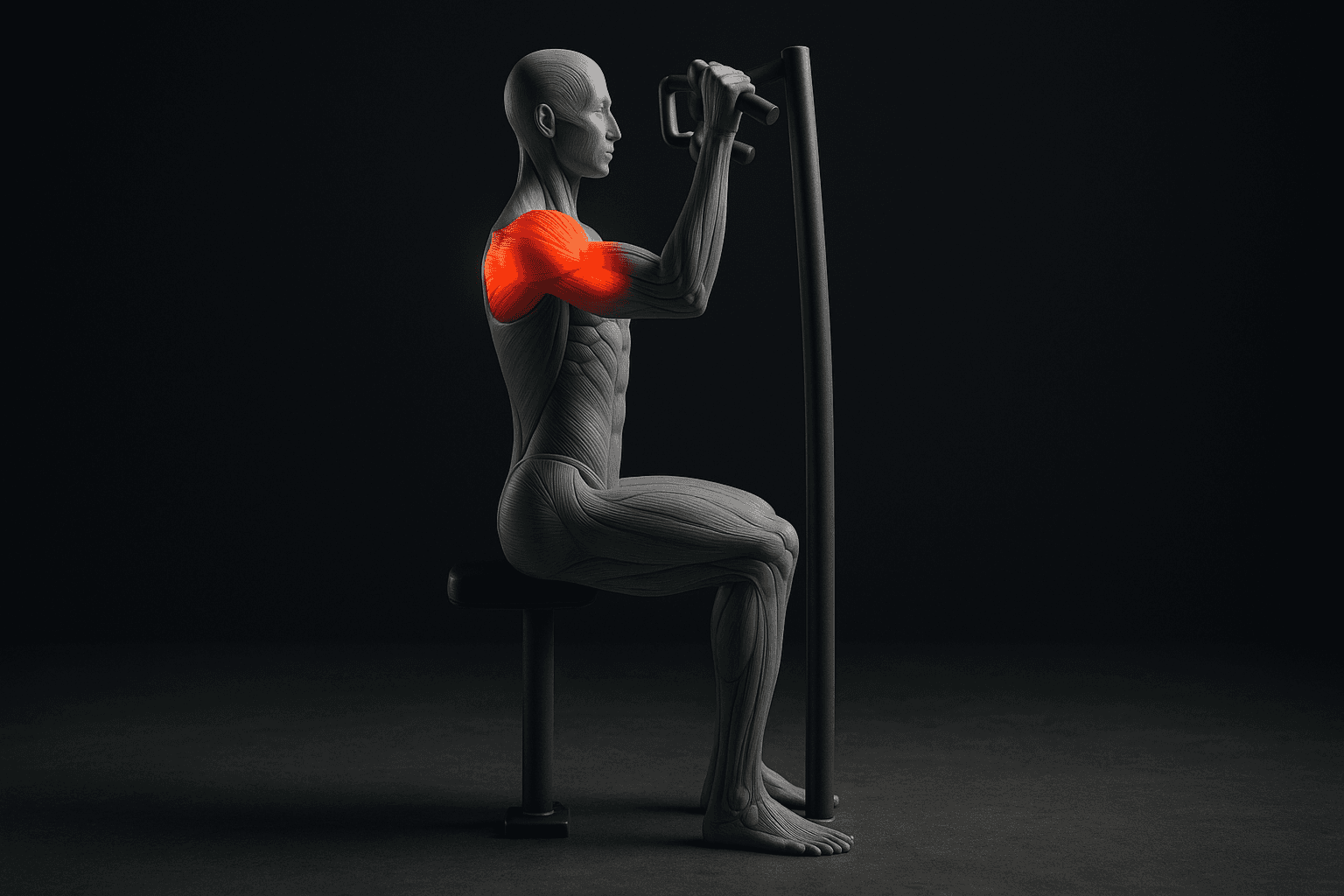
Why it happens: Incorrect pad height or arm pivot point shifts the movement to traps or mid-back instead of the rear delts. What it costs: Reduced rear-delt activation and a tendency to recruit upper trapezius or rhomboids instead. One concrete fix: Align the machine’s pivot with your shoulder joint. Your hands/forearms should move in a horizontal plane roughly parallel to the floor; adjust seat until elbows are at shoulder height at the end range.
3) Am I overusing my traps (shrugging) rather than retracting the scapulae?
Why it happens: Without a cue for scapular control, lifters often pull with the shoulders upward, letting traps dominate. What it costs: Less posterior-deltoid work, neck tension, and potential overdevelopment of upper traps relative to delts. One concrete fix: Cue "down and back" before each rep: depress the shoulders, pinch the shoulder blades together, then initiate the movement from that scapular position. Use a light load to train the pattern.
4) Are my elbows too bent or locked out?
Why it happens: Excessive elbow flexion turns the exercise into a row; a locked elbow reduces tension on the posterior deltoid. What it costs: Loss of mechanical tension on the rear delt and inefficient recruitment of target fibers. One concrete fix: Maintain a slight bend in the elbow (~10–20 degrees) and think about pushing the elbow back rather than pulling the hands. Imagine pulling the elbows into your pockets.
5) Am I stopping short of a full range of motion?
Why it happens: Fear of overstretching the shoulder or wanting to lift heavier leads to abbreviated reps. What it costs: Smaller range reduces overall stimulus and limits strength and hypertrophy gains across the muscle’s length. One concrete fix: Reach a controlled end range where you feel a posterior-delt stretch without pain; pause briefly (0.5–1 s) at full contraction to eliminate momentum and improve time under tension.
6) Is my head, neck, or torso moving during the set?
Why it happens: Tension, fatigue, or poor bracing lets the head and torso move, which changes mechanics. What it costs: Altered line of pull, reduced rear-delt isolation, and added strain to neck and lower back. One concrete fix: Brace your core, keep the chin neutral, and rest your chest lightly on the pad if the machine allows. If not, set a mirror to monitor subtle torso movement.
How do I know which mistake I'm making? (Quick comparison)
| Mistake | Typical cue you feel | What it costs | One-line fix |
|---|---|---|---|
| Too much weight / momentum | Hips/torso swing; last reps are jerky | Poor isolation, spinal stress | Lower load 20–40% and slow the tempo |
| Wrong seat height | Movement feels "off" or traps take over | Less rear-delt activation | Align pivot with shoulder joint |
| Shrugging traps | Neck tension, high shoulders | Trap dominance, neck strain | "Down and back" scapular cue |
| Excess elbow bend/lock | Feels like a row or passive reach | Poor mechanical tension | Keep slight elbow bend, lead with elbows |
| Short ROM | No stretch, quick partial reps | Reduced stimulus | Reach full controlled end range, pause briefly |
| Head/torso movement | Chin pokes or torso leans | Changed mechanics, neck/back strain | Brace core, keep chin neutral |
What rep ranges and tempo should I use to train the rear delts here?
For hypertrophy and technique, aim for 8–15 reps per set with 2–4 working sets. Use controlled tempo (approximately 1 s concentric, optional 0–1 s pause, 2 s eccentric). If you use heavier loads for lower reps, prioritize perfect form and stop if you lose control.
Safety note
Stop if you feel sharp pain in the shoulder, neck, or spine. If you have a history of shoulder injury, consult a qualified healthcare or rehab professional before loading the reverse pec deck. This article does not diagnose injuries or promise prevention.
What limitations should I consider about apps and virtual coaching?
No app or AI can see your subtle movement patterns in real time and reliably fix every individual form issue. A video or in-person coach can pick up small alignment problems and pain signals that remote systems may miss. Also, consistent effort and adherence matter: even the most accurate program is ineffective without consistent training. For injury diagnosis and rehabilitation, see a licensed clinician.
If you use a training app to log form and progress, tools like RepBro can help track sets, but they should complement, not replace, visual feedback from a coach or video review.
Quick checklist to run a perfect set right now
- Set the seat so the pivot aligns with your shoulder.
- Load a modest weight and set tempo to 1–0–2.
- Depress and retract the scapula before each rep.
- Keep a slight elbow bend and lead with the elbows.
- Pause briefly at full contraction; control the return.
Fix these six common errors and the reverse pec deck will deliver cleaner, more effective rear-delt work with lower risk of compensation or pain.
Frequently asked questions
- Is the reverse pec deck good for rear delts?
- Yes. The reverse pec deck isolates the posterior deltoid and scapular retractors in a controlled plane, which helps build shoulder balance when used with proper form, progressive overload, and reasonable frequency as part of a balanced program.
- How much weight should I use on the reverse pec deck?
- Use a weight that allows clean technique for 8–15 reps per set, with the last two reps challenging but not breaking form. If you must swing or shrug to finish reps, reduce load and focus on strict movement quality.
- How often should I train rear delts with the reverse pec deck?
- Train rear delts 2–3 times per week within a balanced program, keeping total weekly volume in line with your overall plan. Monitor recovery: if performance or form deteriorates, reduce volume or frequency.