Reverse Lunge: Muscles Worked, Programming, and Solid Alternatives
Clear, evidence-aware guide to what muscles the reverse lunge trains, where it fits in a program, and 3–4 practical alternatives with when to pick each.
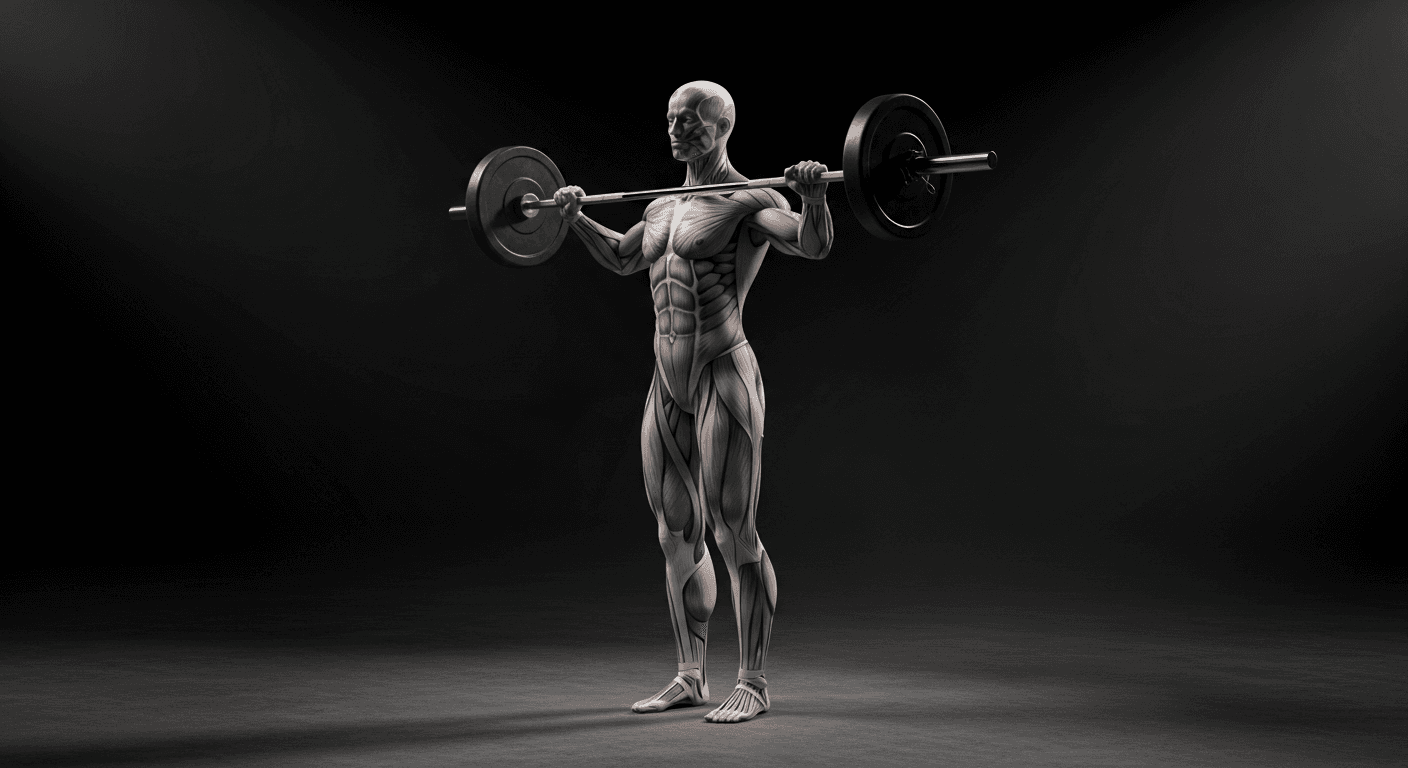
Photo by RepBro.
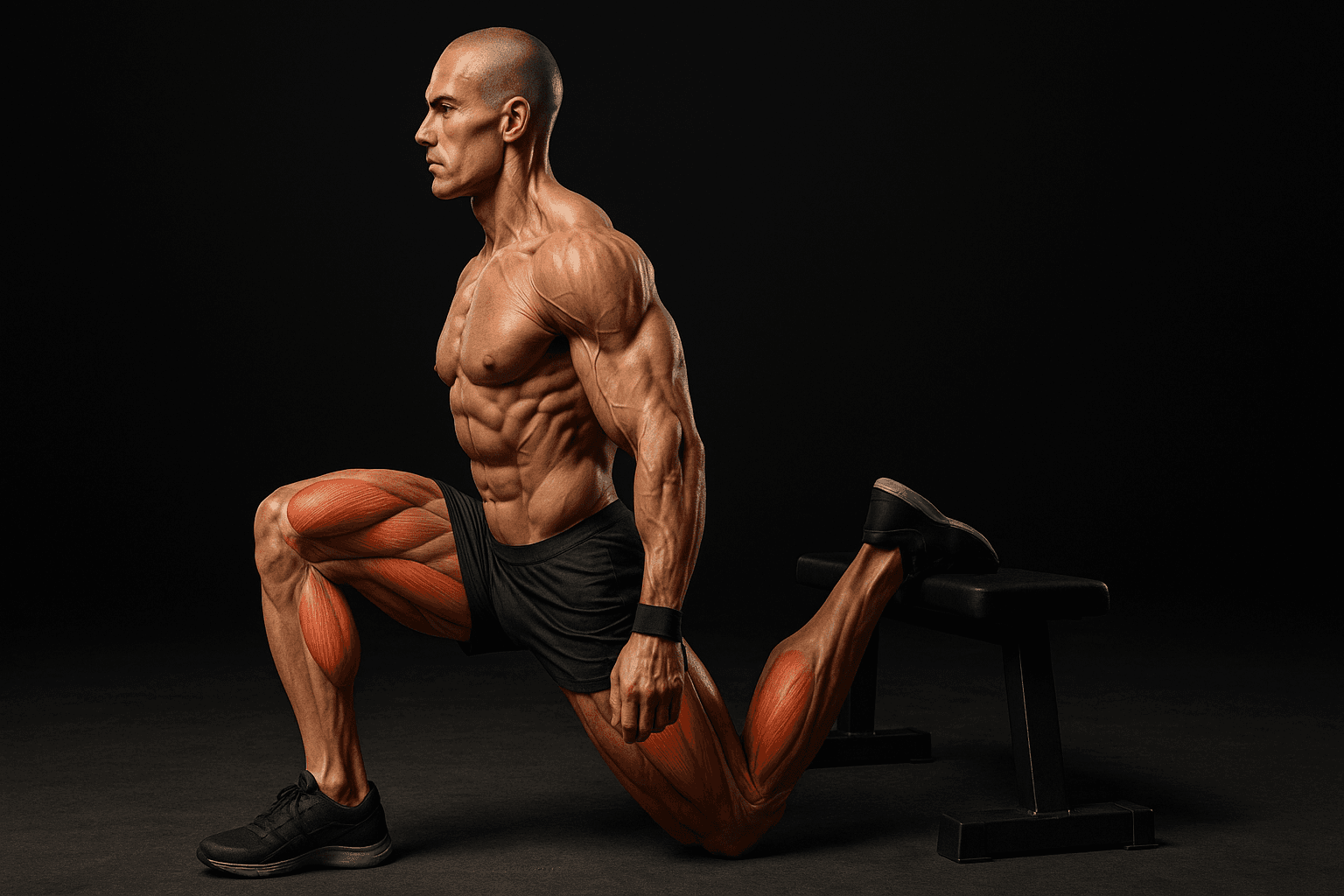
The reverse lunge primarily trains the quadriceps and gluteus maximus while also loading the hamstrings, adductors, and the core for stability. It’s a useful single-leg strength and balance exercise for hypertrophy, strength and carryover to athletic movement patterns.
What primary and secondary muscles does the reverse lunge train?
Primary muscles
- Quadriceps (vastus lateralis/medialis/intermedius, rectus femoris): control knee extension and absorb load on the front leg.
- Gluteus maximus: hip extension on the front leg, especially with a longer step.
Secondary muscles
- Hamstrings: assist hip extension and eccentric control.
- Adductors: stabilize the leg in the frontal plane.
- Erector spinae and core (obliques, transverse abdominis): resist torso flexion and rotation.
- Calves (gastrocnemius, soleus): provide ankle stability and push-off assistance.
Mechanics note: stepping backward reduces forward knee travel compared with a forward lunge, often making it easier on the knee in people who have patellofemoral stress during forward lunges.
How should I program reverse lunges for strength, hypertrophy, and balance?
Where it fits
- Place on lower‑body or single‑leg focused days. Use it as a primary unilateral movement or an accessory to bilateral lifts.
Volume and frequency (evidence-aligned guidance)
- Frequency: 1–3 sessions per week depending on total workload and recovery.
- Sets and reps: 2–4 sets per exercise; 6–12+ reps for hypertrophy/strength endurance, or fewer reps with heavier load for strength focus.
- Progression: increase load, increase reps, add sets, reduce rest, or alter tempo. Track performance across weeks and incrementally increase challenge.
Practical examples
- Hypertrophy session: 3 sets of 8–12 reps each leg, 60–90 seconds rest.
- Strength-oriented set-up: 3–5 sets of 4–6 reps with heavier external load (barbell or dumbbells) and longer rest.
Technique cues
- Step back, plant midfoot, lower until front thigh is near parallel to the floor, keep chest tall and knees aligned. Drive through the front foot to return.
- Adjust step length: shorter step increases quad demand, longer step increases glute/hamstring demand.
Safety
- Stop on sharp pain. If you have joint pain, reduce range of motion or consult a professional. Never use this article to diagnose injuries.
What are solid alternatives and when should I pick each?
Comparison table
| Exercise | Primary target | Equipment & suitability | When to pick it |
|---|---|---|---|
| Reverse lunge | Quads, glutes | Minimal (bodyweight/dumbbells) | Standard unilateral strength work, balance training |
| Bulgarian split squat | Quads, glutes (more hip extension) | Bench/step + dumbbells/barbell | Need more load per leg and range-of-motion; to overcome lunge plateaus |
| Step-up | Glutes, quads (less knee shear) | Box/bench | Knee pain, beginners, easier progression to loaded reps |
| Split squat (stationary) | Quads, glutes | Minimal | Reduce balance demand; good for teaching position control |
| Single-leg Romanian deadlift | Hamstrings, glutes | Dumbbell/kettlebell | Target posterior chain and hip hinge; less knee loading |
When to choose each
- Choose Bulgarian split squat when you want to overload one leg heavily and progress with heavier barbell loads; it usually allows greater absolute loading than walking or reverse lunges.
- Choose step-ups if you or a client has anterior knee discomfort, if balance is a limiting factor, or if you want a higher technical ceiling for power work (fast step-ups).
- Choose stationary split squats when balance is poor or when working within a limited space; they remove the stepping component while preserving unilateral loading.
- Choose single-leg RDLs when the goal is posterior-chain strength, hamstring hypertrophy, or to correct hip-hinge mechanics.
Equipment limits and progression
- No equipment: reverse lunges, split squats, bodyweight step-ups.
- Dumbbells: easy to increase load and symmetry control.
- Barbell: safest for strong athletes when coached; Bulgarian split squat and loaded step-up work well.
How do I correct common form issues with reverse lunges?
- Front knee drifting inward: strengthen glute medius, focus on knees tracking over toes, reduce load.
- Torso collapse: reduce range or load, cue a tall chest, or use lighter dumbbells.
- Excessive pushing off the back leg: emphasize a controlled eccentric descent and focus on the front drive.
What are the safety considerations?
- Stop on sharp or sudden pain. If pain is persistent, see a qualified health professional.
- Warm up with movement-specific rehearsal (bodyweight lunges, ankle/hip mobility). Increase load gradually.
- This article does not diagnose injuries, and no app can reliably replace an in-person movement assessment.
What can I expect from tracking and tools?
- Consistent progressive overload and adequate recovery produce strength and hypertrophy adaptations. Tracking sets, reps, and load supports steady progress. If you use an app to log and plan training, it can help maintain consistency—RepBro is one example of a log that tracks progression.
What are the limitations of apps and AI coaching?
- Apps and AI can program, remind, and log data but cannot see your live form or diagnose complex pain patterns.
- A plan works only if adhered to; consistency and recovery are decisive factors.
- For acute injuries, pain during load, or complex movement retraining, consult a qualified professional (physio or coach).
Limitations: This article summarizes general, evidence-aligned guidance for exercise selection and programming. It does not replace personalized assessment. For persistent pain, recent injury, or medical conditions, seek individualized advice from a qualified practitioner.
Frequently asked questions
- Does the reverse lunge train glutes or quads more?
- The reverse lunge is a compound single-leg movement that trains both quadriceps and gluteus maximus. Load distribution shifts with step length—shorter steps bias the quads, longer steps increase glute and hamstring involvement. It develops strength, balance and unilateral control simultaneously.
- How often should I include reverse lunges in a program?
- Include reverse lunges on lower‑body or split days 1–3 times per week depending on overall volume and goals. Follow established resistance-training guidance: 2–4 sets per exercise and 8–12 reps for general strength/hypertrophy, adjusted to your recovery and total weekly workload.
- Which exercise is a good substitute if I have knee pain?
- Step-ups or split squats are often easier on irritated knees because they reduce backward knee travel and control deceleration. Keep step height low (30–45 cm / 12–18 in), limit range of motion to pain‑free positions, and consult a professional for persistent pain.