Reverse Lunge: Proper Form, Step by Step
Clear, evidence-aware guide to reverse lunge proper form: setup, step-by-step cues, breathing, tempo, progressions, common mistakes and safety notes.
Photo by RepBro.
Reverse lunges are a single-leg step-back movement that emphasize the glutes and quads while reducing forward knee travel. Set up tall, step back with control, drop so both knees bend about 90°, then push through the front heel to return. Use controlled tempo, maintain a neutral spine, and stop on sharp pain.
What is a reverse lunge and why should I use it?
The reverse lunge is a split-stance movement where you step backwards from a standing position and lower into a lunge. It trains unilateral strength, single-leg stability, balance, and hip extension. Because the knee of the front leg travels less forward than in a forward lunge, many lifters report reduced anterior knee stress while still loading the glutes and quads.
How do I set up before the first step?
- Foot position: Stand hip-width or slightly narrower with feet pointing forward or slightly out. Keep weight evenly distributed.
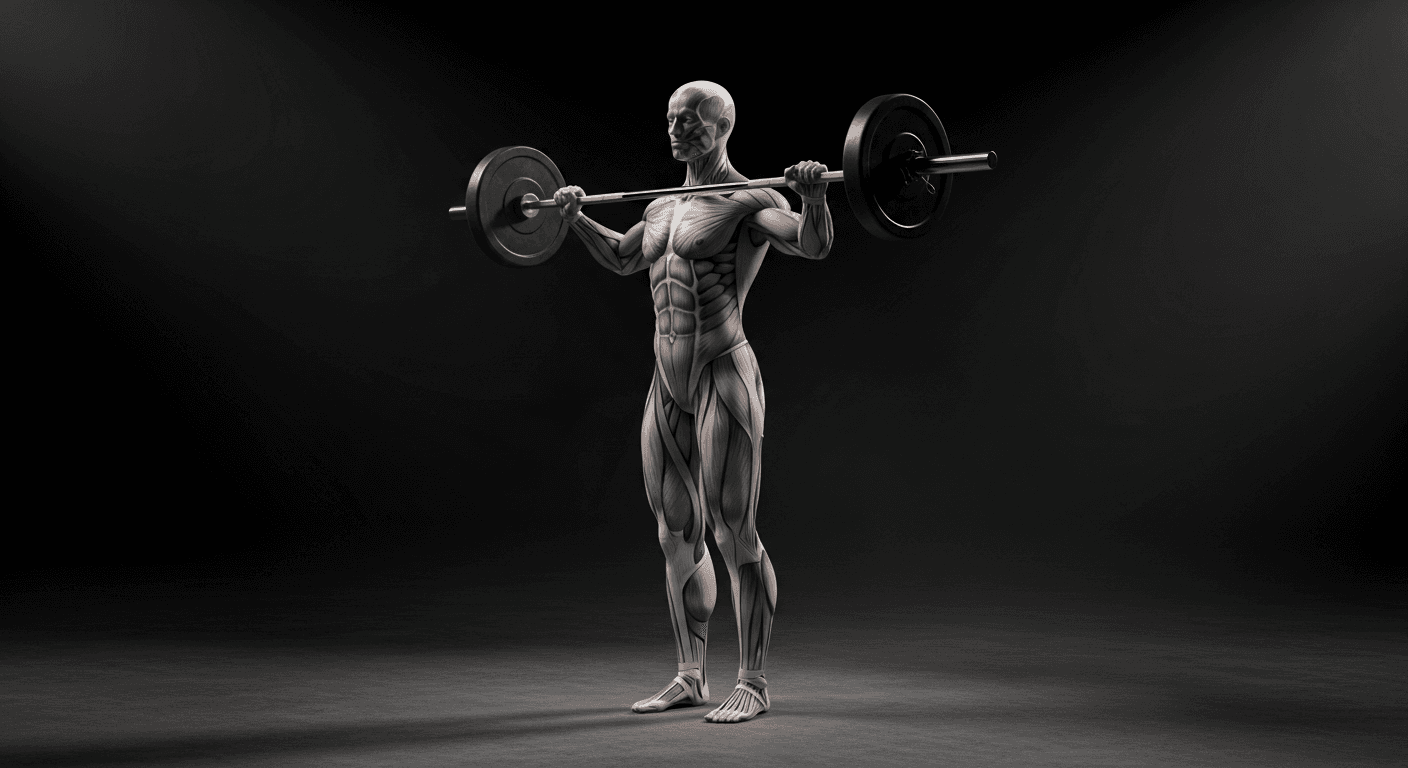
- Hands: Hold dumbbells at your sides, a barbell on your back, or hands on hips for bodyweight work.
- Core and posture: Brace your core, keep ribs down, chest tall, and hips square.
- Step distance: Step back far enough that when you lower, the front shin is near vertical and the rear knee drops toward the floor without hitting it. Adjust distance for your limb lengths and ankle mobility.
What are the step-by-step cues for a correct reverse lunge?
- Stand tall with weight distributed through both feet.
- Take a controlled step backward with one foot—don’t hop. The step should be deliberate, not tiny or overly long.
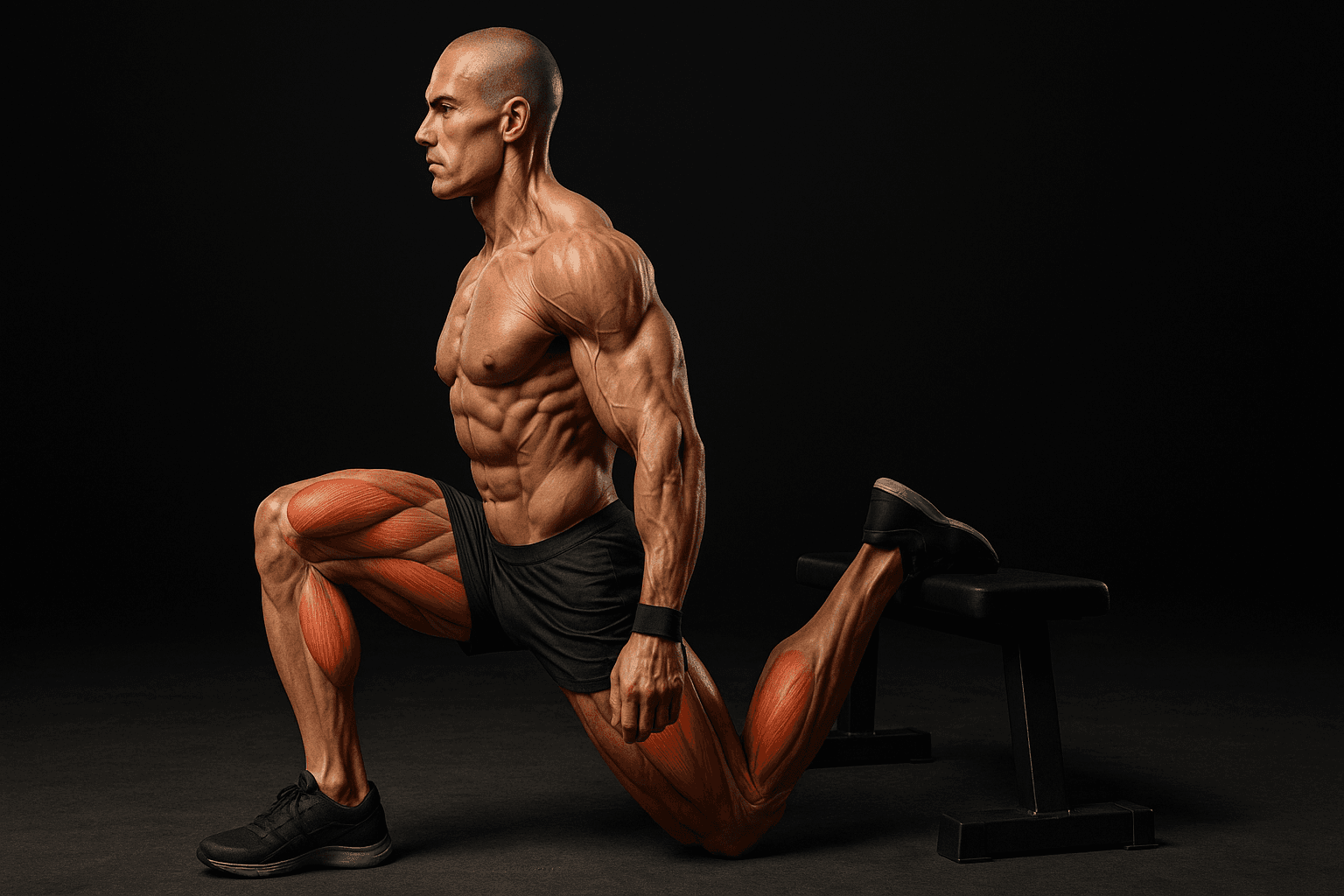
- Bend both knees and lower your hips straight down until the front thigh is near parallel to the floor or the rear knee is just above the floor. Keep the front knee tracking over the middle toes.
- Keep your torso upright; avoid collapsing forward. Imagine a line from your head down through your hips.
- Press the front heel into the floor and drive upward to return to standing. Step the rear foot forward to meet the front, or return to your starting stance.
- Complete desired reps on one leg, or alternate legs each rep depending on programming.
Execution cues: "Big step back," "Chest tall," "Weight in front heel," "Knee tracks toes," "Hips square."
What breathing and tempo should I use?
- Breathing: Inhale during the controlled descent (eccentric), brace the core, then exhale as you press up (concentric). A brief exhale or continuation of the brace on the concentric is appropriate.
- Tempo: Common effective tempos are 2–3 seconds down, optional 0–1 second pause at the bottom, and 1 second up (for example, 2-0-1). Slower eccentrics improve control and hypertrophic stimulus; faster concentrics prioritize power. Choose a tempo aligned with your training goal.
How many reps, sets, and how often should I train reverse lunges?
- Strength: heavier loads, 3–6 reps per leg, 3–5 sets.
- Hypertrophy: moderate loads, 6–12 reps per leg, 2–4 sets.
- Muscular endurance: lighter loads, 12–20+ reps per leg, 2–3 sets. Train unilateral lower-body movements 1–3 times per week depending on overall program volume and recovery. Progress by adding load, increasing reps, or reducing rest—consistent progressive overload is key.
How do I progress or regress the reverse lunge?
- Regress: Bodyweight only, hold onto support, reduce depth, or perform static split squats.
- Progress: Add dumbbells or barbell, perform walking reverse lunges, increase range, slow the eccentric, or add instability challenges once base strength is solid.
How does the reverse lunge compare to other lunge variations?
| Variation | Balance demand | Knee travel | Primary emphasis | Good for beginners? |
|---|---|---|---|---|
| Reverse lunge | Moderate | Low | Glutes and quads, hip control | Yes, often easier on knees |
| Forward lunge | Moderate-High | Higher | Quads, balance and deceleration | Requires more knee travel |
| Split squat (static) | Lower | Low | Hip & knee strength without stepping | Very beginner-friendly |
What are common mistakes and how do I fix them?
- Mistake: Step too short or too long. Fix: Adjust step so front shin is near vertical at the bottom.
- Mistake: Torso leans forward. Fix: Brace core, lift chest, imagine keeping a proud chest while hinging at the hips slightly.
- Mistake: Front knee collapses inward (valgus). Fix: Cue to push the knee slightly out toward the second toe; strengthen glute med with accessory work.
- Mistake: Pushing off the rear toe instead of pressing through front heel. Fix: Think "drive through the front heel" and practice slow eccentrics.
- Mistake: Dropping depth due to poor hip mobility. Fix: Limit depth until mobility and strength improve; add hip flexor and ankle mobility drills.
What safety notes should I follow?
Stop if you feel sharp or unusual pain. If you have existing joint pain or an injury, consult a qualified health or movement professional before loading the exercise. Never diagnose from sensations—get an in-person assessment for persistent pain. Use appropriate load and maintain control over momentum.
What can't apps or AI coaching do for my reverse lunge practice?
- They cannot see your body in real time and reliably correct subtle faults from every angle.
- They cannot replace a qualified professional for injury diagnosis or rehabilitation programming.
- A program or cue only helps if you consistently train and recover; adherence and load management are personal responsibilities.
Limitations No article or app can fully replace hands-on coaching: video feedback from a qualified coach, mobility or manual therapy when required, and individualized medical assessment are sometimes necessary. A program’s effectiveness depends on consistent application and proper recovery; technology can assist tracking but not guarantee results.
If you need extra structure, consider recording simple videos and seeking in-person feedback from a coach or clinician. For tracking sets, reps, and progression you may find tools and logging helpful, but they’re supplementary to consistent practice and expert input.
Safety reminder: Stop on sharp pain and consult a qualified professional for persistent or severe issues. This article is educational and not a medical diagnosis or personalized rehab plan.
Frequently asked questions
- Are reverse lunges better for my knees than forward lunges?
- Reverse lunges often feel easier on the knee because the back step reduces forward knee travel and peak shear. Individual responses vary; if you have knee pain consult a clinician. Use a controlled tempo and avoid painful ranges rather than assuming one variation fixes every problem.
- How many reverse lunges should I do for muscle growth?
- For hypertrophy, aim for moderate loads and 6–12 reps per leg across 2–4 sets, 1–3 times per week per muscle group. Adjust load so the last reps are challenging but performed with good form. Progress by adding load, reps, or sets over time.
- Can I do reverse lunges every workout?
- You can include reverse lunges frequently if you manage intensity and recovery. For most lifters, 2–3 sessions per week for lower-body work is appropriate. Vary volume and intensity across the week and use a deload or lower-volume week periodically to avoid excessive fatigue.