Overhead Tricep Extension Alternatives at Home (Minimal Equipment)
Practical, evidence-aware at-home alternatives to the overhead tricep extension using bodyweight, dumbbells, or bands. What each preserves, what it loses, and when to return to a gym.
Photo by RepBro.
Direct answer
If you can’t do an overhead tricep extension at home, you can substitute with band overhead extensions, single-arm dumbbell extensions, close-grip/diamond push-ups, lying dumbbell "skull crushers," or triceps dips. Each choice preserves elbow-extension overload but changes shoulder angle, stability demand, and tension curve—match the swap to your goal.
What does the overhead tricep extension actually train?
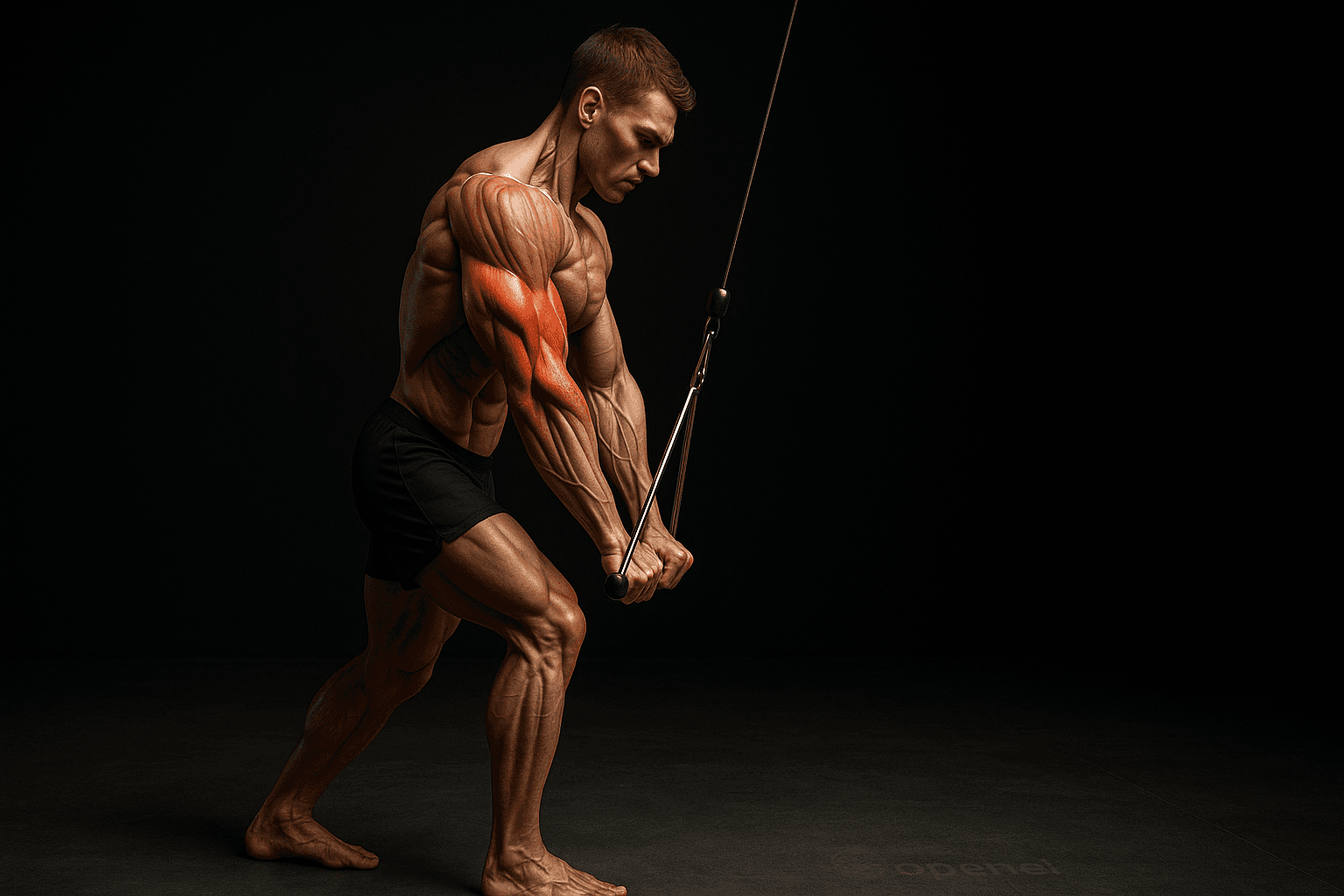
The overhead tricep extension primarily loads elbow extension with the shoulder in flexion, which biases the long head of the triceps because that head crosses the shoulder. The movement emphasizes extension torque through a long muscle length and typically produces high time under tension for the long head when performed with good range of motion.
Which at-home alternatives work, and how similar are they to the original?
Below are 4–5 practical substitutes you can do with minimal equipment. For each I list what it preserves versus what it loses compared with a classic overhead extension.
- Band overhead tricep extension (single- or double-arm)
- Equipment: resistance band anchored low or stepped on with one foot.
- Preserves: shoulder-flexed start, long-head length, continuous tension through the range.
- Loses: absolute heavy load if your bands are light; can have variable resistance curve (more tension near lockout).
- When it’s adequate: when you need the long-head stretch and continuous tension but don’t need heavy absolute loads.
- Single-arm seated/standing dumbbell overhead extension
- Equipment: one dumbbell (or kettlebell), 6–20+ kg (15–45+ lb) depending on strength.
- Preserves: shoulder flexion position and long-head emphasis; easy progressive overload by adding weight.
- Loses: may require more shoulder stability and can be awkward for very heavy single-arm loads without a spotter.
- When it’s adequate: most lifters can reach similar stimulus to the gym version if they have sufficient dumbbell weight.
- Lying dumbbell tricep extension (skullcrusher) or barbell/hex press variation
- Equipment: dumbbells, bench or floor.
- Preserves: high elbow extension load and ability to use heavier absolute loads (especially barbell).
- Loses: less shoulder flexion—shorter long-head stretch compared with overhead positions.
- When it’s adequate: good for building elbow-extension strength and mass when overhead positions aren’t practical.
- Close-grip/diamond push-ups (bodyweight)
- Equipment: none (can add weight via backpack or plate).
- Preserves: elbow-extension overload and high time under tension variants; convenient and scalable by progression (elevate feet, add weight).
- Loses: less isolation of triceps versus single-joint work; shoulder and chest contribute more.
- When it’s adequate: useful for beginners, conditioning phases, or when equipment is absent.
- Bench or chair dips (bodyweight or weighted)
- Equipment: stable surface (bench, chair).
- Preserves: strong triceps loading, especially medial and lateral heads; scalable with added weight.
- Loses: increased shoulder compression and potential stress at the anterior shoulder; long-head emphasis depends on torso angle and range.
- When it’s adequate: practical mass-builder, but be cautious with pre-existing shoulder issues.
How do these alternatives compare side-by-side?
| Exercise | Preserves long-head length? | Load progression | Stability demand | When to choose |
|---|---|---|---|---|
| Band overhead extension | Yes | Moderate (band selection) | Low–moderate | No heavy equipment; continuous tension |
| Single-arm DB overhead | Yes | High (dumbbell weight) | Moderate–high | Closest home replication if you have sufficient dumbbells |
| Lying DB skullcrusher | Partial | High | Low–moderate | Better absolute load, less long-head stretch |
| Close-grip push-up | Partial | Moderate (bodyweight + add) | Moderate | No equipment; multiplanar strength |
| Bench dips | Partial | High (add weight) | Low–moderate | Strong mass stimulus; watch shoulder comfort |
How should I program these alternatives for hypertrophy and strength?
Follow standard resistance-training principles: progressive overload, 2–3 sessions per week for the muscle group, and enough weekly volume for your experience level. For hypertrophy, use moderate rep ranges and multiple sets; for strength, prioritize lower-rep heavier sets on compound variations. Monitor recovery and increase load, reps, or sets when performance plateaus.
Evidence-based practice recommends collecting enough weekly volume (sets per muscle group) and progressing load over time. Use 48–72 hours of recovery between sessions for the same muscle group and include periodic lighter weeks or deloads as part of a multi-week plan.
When should I go back to the gym for the overhead extension?
Go to the gym if:
- You need heavy, stable vertical loading that home dumbbells/bands can’t match.
- You want cable or machine variations that provide a consistent tension curve throughout the range (useful for precise overload).
- Your progress stalls after 4–8 weeks and you’ve already optimized load, volume, and technique.
If your goal is practical hypertrophy and you can increase tension at home (heavier dumbbells, stronger bands, added weight to bodyweight moves), a gym visit isn’t strictly necessary.
What safety checks should I follow?
- Stop if you feel sharp or unusual pain; mild muscle burn and delayed soreness are normal.
- Keep the elbow joint safe: avoid excessive flaring or uncontrolled extension.
- For weighted overhead work, maintain a neutral spine and stable shoulder girdle.
- If you have shoulder or elbow pain, consult a qualified professional before continuing.
What limitations should I be aware of (apps and AI included)?
Apps and AI can provide guidance, progress tracking, and exercise selection, but they cannot see or correct your live form reliably. They can’t diagnose injuries or provide individualized medical rehabilitation. A training plan only works if you follow it consistently; consistency and appropriate recovery are the dominant factors for progress.
If you want guided sets, rep targets, and tracking on your phone, consider using an app like RepBro alongside coach feedback or a physical therapist when needed.
Closing note
Home alternatives to the overhead tricep extension can be highly effective if you match the movement to the goal: use overhead-band or single-arm dumbbell work for long-head emphasis, skullcrushers or dips for heavier elbow-extension loading, and close-grip push-ups for accessibility and practicality. Progress sensibly, monitor recovery, and consult a professional for persistent pain or complex programming.
Safety reminder: this article doesn’t diagnose injuries or replace professional advice. If you have a current injury, see a qualified clinician before attempting new loading patterns.
Frequently asked questions
- Can I build the long head of the triceps at home without overhead extensions?
- Yes. Exercises that put the shoulder into flexion (arm overhead or forward) and let the elbow extend load the long head. If you can replicate that lengthened position with bands, single-arm dumbbells, or bodyweight variations, you can stimulate the long head. Progress with load, reps, or time under tension.
- How often should I train triceps when using these alternatives?
- Train triceps 2–3 times per week as part of an upper-body or push-focused routine, allowing 48–72 hours recovery between sessions for the same muscle group. Choose set and rep ranges consistent with your goal (strength vs hypertrophy) and increase load or volume progressively.
- When is it worth going back to the gym for overhead extensions?
- Choose the gym when you need heavier, stable vertical load (heavy barbell/dumbbell overhead work), precise progressive overload, or access to cables for consistent tension throughout the range. If home alternatives stop producing progress after several weeks, consider gym equipment to continue loading safely.