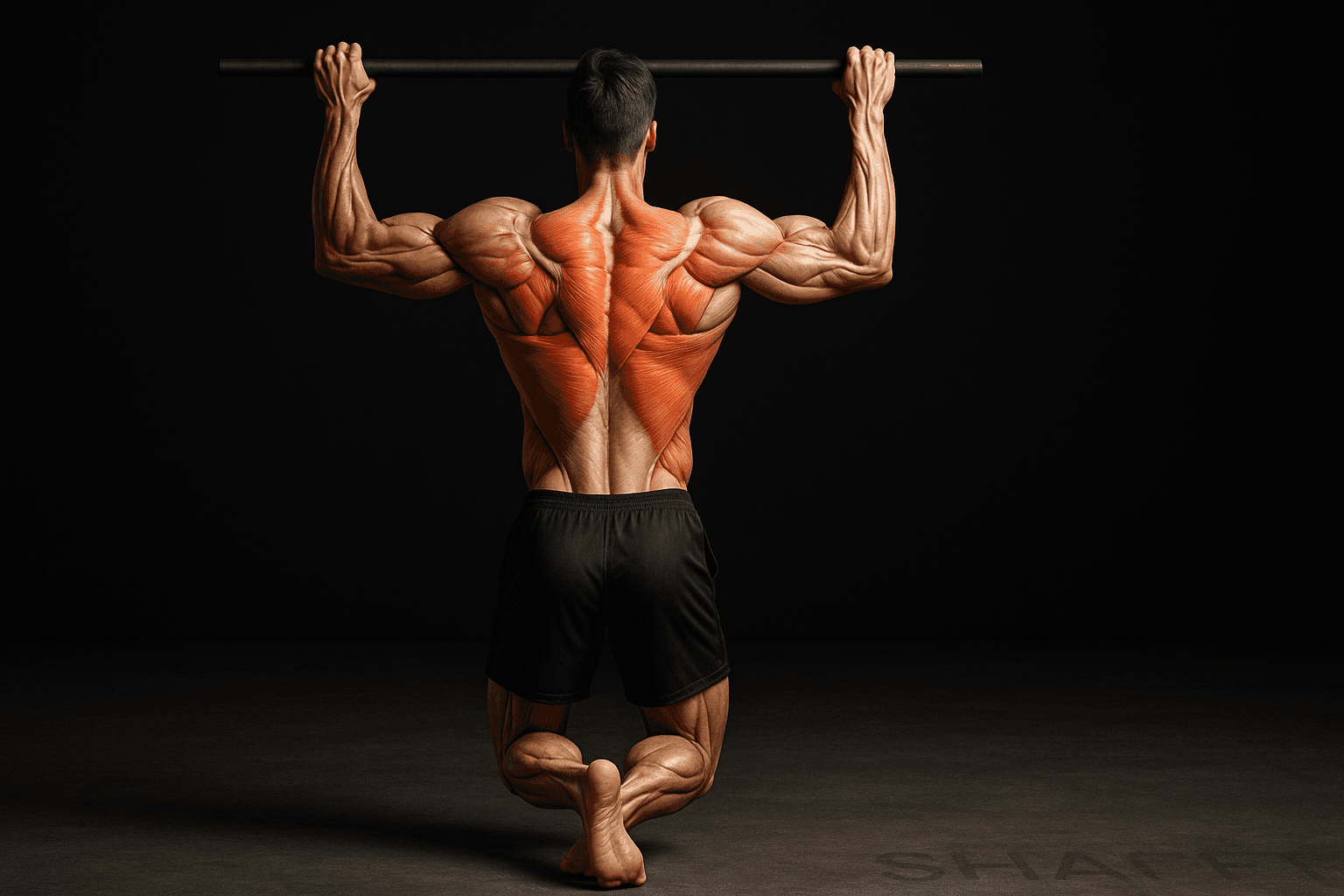
Overhead Cable Extension: Proper Form, Step by Step
Step-by-step guide to overhead cable extensions: setup, execution cues, breathing, tempo, common mistakes, and safety. Evidence-aware and practical for lifters.
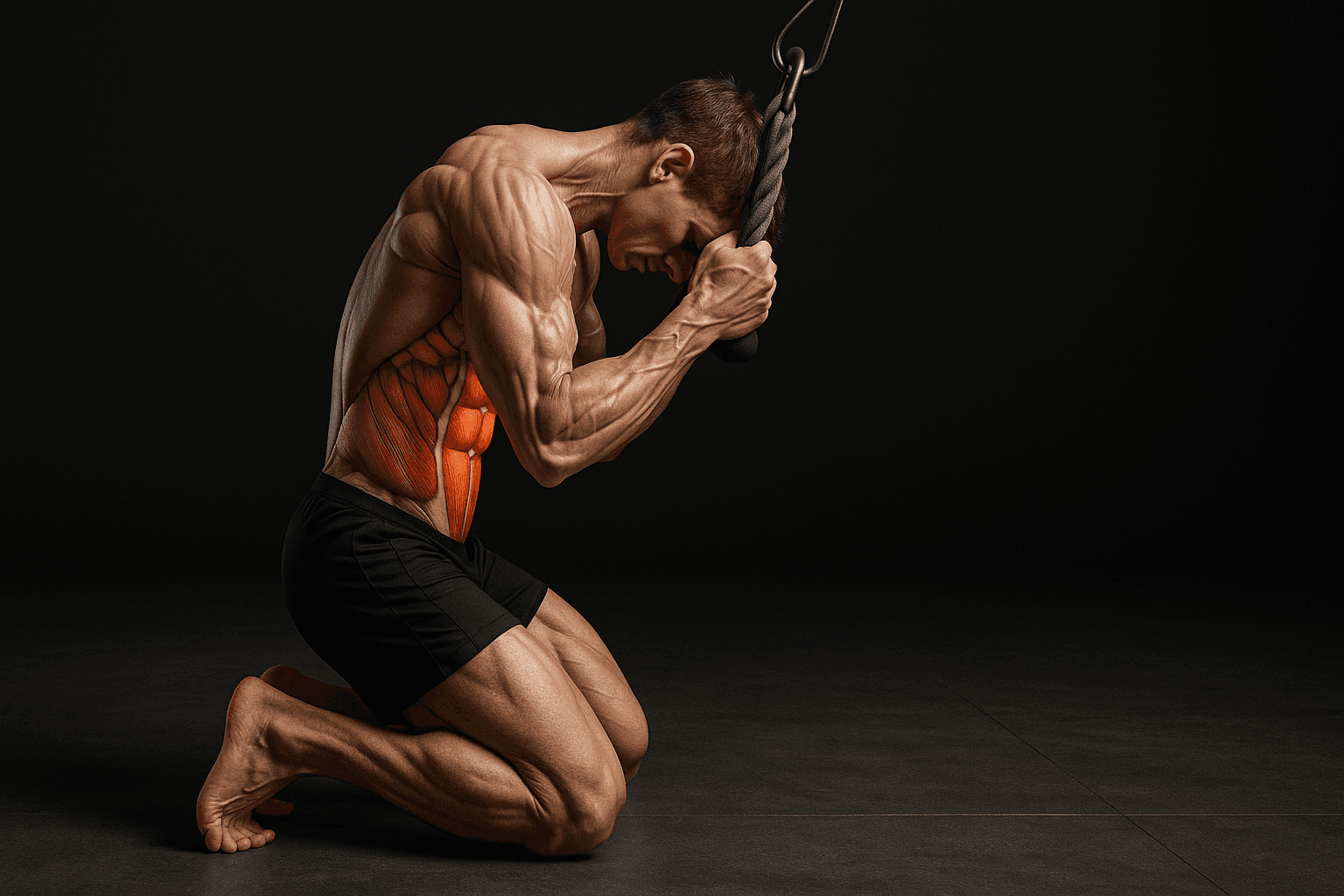
Photo by RepBro.
The overhead cable extension is an isolation exercise for elbow extension that stresses the triceps, especially the long head. Set a stable base, keep upper arms vertical, use a controlled tempo (slow eccentric), breathe with the lift, and stop if you feel sharp pain.
How do I set up the overhead cable extension correctly?
- Machine and handle: Use a high pulley with a single handle, rope, or straight bar. Attach a handle that lets you keep wrists neutral.
- Footing: Stand with feet hip-width, staggered stance optional for balance. Keep a slight knee bend and a neutral spine.
- Starting position: Face away from the machine, grab the handle with both hands or use one arm if single-arm. Step forward so cable is overhead and taut. Tuck your ribs down and pull shoulders slightly back.
- Elbow position: Raise your upper arms so the triceps are roughly vertical or slightly behind the head; elbows should be close to the head and fixed through the set.
What is the exact step-by-step execution cue list?
- Brace: Take a breath, brace the core, and stabilize the shoulder girdle. Avoid shrugging.
- Lower into stretch: With elbows fixed, slowly allow the forearms to come behind the head by flexing the elbows until you feel a controlled stretch in the triceps.
- Pause briefly: Pause 0–1 second at the bottom to remove momentum.
- Drive the extension: Exhale as you extend the elbows until arms are near full extension, without locking aggressively.
- Reset tension: Keep tension on the cable; do not relax the shoulders or let the upper arm move forward between reps.
- Repeat: Maintain rhythm and control each rep.
Execution cues in short: upper arms vertical, elbows fixed, slow lower, controlled press, breathe out on concentric.
What breathing and tempo should I use?
- Breathing: Inhale on the eccentric (lowering into stretch), brace core, and exhale during the concentric (pressing to extension). This pattern supports intra-abdominal pressure and stability.
- Tempo: A practical tempo is 2–4 seconds eccentric, 0–1 second pause, and 0.5–1 second concentric. Slower eccentrics increase time under tension; avoid excessive speed on the concentric.
How should I choose load and progression?
- Choose a load that allows full control of the upper arm and correct tempo for your target rep range. Progress by small increments of load, or by adding a rep or two, and prioritize clean form over heavy weight.
- Consider adding the exercise 1–3 times per week depending on your overall program and recovery.
How does overhead cable extension compare to other triceps extensions?
| Movement | Tension profile | Shoulder involvement | Practical notes |
|---|---|---|---|
| Overhead cable extension | Constant tension through range | High (long head stretch) | Good for long-head emphasis and controlled tension |
| Dumbbell overhead extension | Variable tension, gravity-dependent | High | Greater freedom but less constant tension |
| Rope pressdown | Tension at different joint angle, lower shoulder involvement | Low | Easier for high volume and finishers |
What are common mistakes and how do I fix them?
- Elbows flaring outward
- Fix: Cue elbows to point up/forward; use a mirror or video to track alignment. Lighten the load until you can hold elbow position.
- Moving the upper arm or leaning back to cheat
- Fix: Anchor torso, brace core, and shorten the range until form is clean. Use single-arm variations to learn stability.
- Using wrist extension or bending wrists
- Fix: Use a neutral grip and maintain straight wrists; switch to a handle that keeps wrists neutral.
- Letting momentum carry the concentric
- Fix: Slow the eccentric and pause briefly at the bottom. Use a tempo that enforces control.
- Overloading and pain in shoulder or elbow
- Fix: Decrease weight, reduce range, and consult a qualified clinician if pain persists. Do not push through sharp pain.
When should I not do overhead cable extensions?
Avoid this variation if shoulder flexion or overhead positions cause sharp pain, or if you have an unstable shoulder without guidance from a clinician. Substitute low-risk triceps options like cable pressdowns or lying extensions until mobility and pain issues are addressed.
What are simple progressions and regressions?
- Regression: Lower the load, perform single-arm seated behind-the-head dumbbell extensions, or use a band with less tension.
- Progression: Increase load in small steps, use slower eccentrics, add a pause at near-full extension, or include single-arm eccentric overloads.
Safety note: Stop immediately on sharp or unusual joint pain. This guide does not diagnose injuries. Consult a qualified health or strength professional for persistent pain, acute injuries, or rehab advice.
What limitations should I be aware of with apps and AI coaching?
- No app or AI can visually inspect every rep in real time or feel your joint mechanics; they cannot replace an in-person assessment for complex movement faults.
- For injuries, persistent pain, or post-surgical rehab, a licensed clinician or physical therapist is necessary; do not rely solely on remote programming.
- A training plan is only effective if it is followed consistently and adjusted based on results and recovery; technology helps track but cannot substitute consistency and professional judgement.
Closing practical tip: Record a set from the side to inspect elbow position and upper-arm stability. Small changes in grip, handle, and stance make this exercise easier to perform pain-free and more effective for long-head emphasis.
References and further reading: Look for evidence summaries on resistance training frequency and hypertrophy programming from trusted sports-science sources and textbooks. For individual pain or rehab, consult a licensed clinician.
Frequently asked questions
- How many reps and sets should I use for overhead cable extensions?
- For hypertrophy focus, use moderate loads with controlled tempo and rep ranges commonly used in research for muscle growth. Pair this exercise with total weekly triceps volume that fits your overall program and progressively increase load or reps as you adapt.
- Can overhead cable extensions build the long head of the triceps?
- Yes. Overhead triceps work puts the long head on stretch because the shoulder is flexed, which can help target that portion. Include varied elbow-extension angles across sessions for more complete triceps development rather than relying on one movement.
- Is the cable version better than dumbbells for overhead triceps extensions?
- Cables provide constant tension and allow incremental load adjustment, while dumbbells offer more freedom of wrist and elbow path. Both can be effective; choose based on equipment, shoulder comfort, and ability to maintain strict elbow position.