Farmer Carry Alternatives at Home (Minimal Equipment)
Practical at-home substitutes for the farmer carry using dumbbells, bands, backpacks, and bodyweight. What each preserves, what it loses, and when a gym is needed.
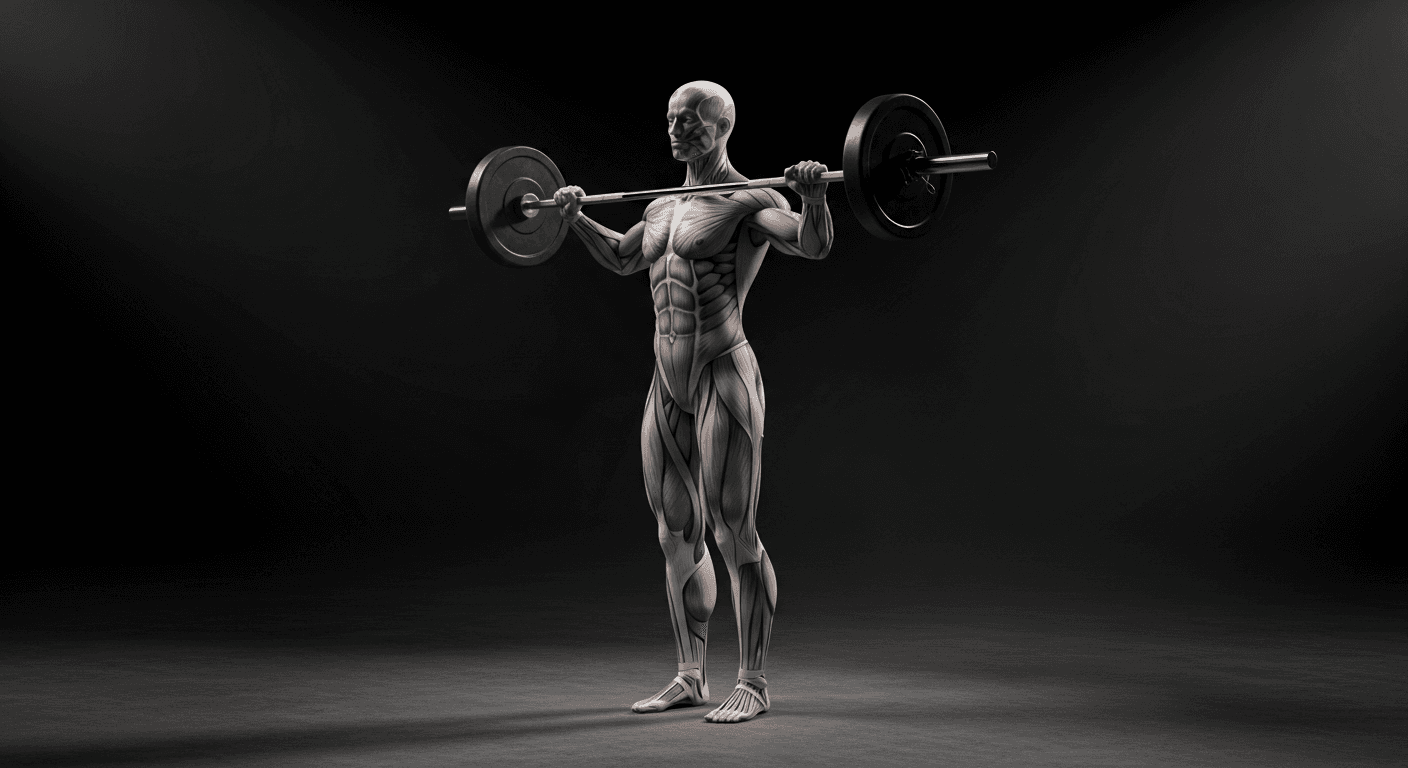
Photo by RepBro.
Yes — you can replicate most of the farmer carry's practical benefits at home with minimal gear. Backpack carries, single-arm suitcase walks, overhead walks, band-resisted anti-rotation, and double-dumbbell holds preserve grip, core bracing, and carry conditioning; each also sacrifices some load, balance, or specificity compared with gym implements.
What does a farmer carry actually train that I should try to preserve?
The farmer carry is a loaded walk emphasizing: grip strength and local forearm endurance; anti-lateral-flexion and overall core tension; postural control and scapular stability; and low-back and hip extension under load while moving. It is simple but combines maximal intent, isometric control, and aerobic/anaerobic work depending on duration.
When you pick a home substitute, aim to preserve: a heavy, vertically loaded implement in your hands (for grip), progressive overload, and walking while stabilizing the torso. If one of those elements is missing, choose a complementary drill to cover the gap.
Which at-home substitutes actually work and what equipment do they need?
- Double heavy backpack carry (equipment: two backpacks or one large backpack with even loading)
- What it preserves: Bilateral loading, spine compression, conditioning, and some grip work if carried by straps. Closest to a farmer carry when backpacks are evenly loaded.
- What it loses: Handles/shape are not ideal for maximal grip; hard to reach gym-level absolute loads safely.
- When it's adequate: Daily strength work and general conditioning at home; good for progression until you outgrow load capacity or handle durability.
- Dumbbell farmer hold/walk (equipment: one or two dumbbells)
- What it preserves: Grip, balanced bilateral load, correct hand position and spinal loading. Two dumbbells equal the gym farmer carry stimulus.
- What it loses: If you only have one dumbbell, you lose bilateral symmetry and some load distribution; if dumbbells are light, you lose overload potential.
- When it's adequate: If you own a pair of moderately heavy dumbbells, this is essentially equivalent to a gym farmer carry for most lifters.
- Single-arm suitcase carry (equipment: single dumbbell, kettlebell, or loaded bag)
- What it preserves: Anti-lateral-flexion core demand, unilateral grip strength, and walking pattern under asymmetrical load.
- What it loses: Total bilateral load and balanced carry-specific conditioning of handling two heavy implements.
- When it's adequate: To address unilateral imbalances, core work, and when you do not have two equal loads. Supplement with contralateral core anti-rotation work.
- Overhead carry / waiter walk (equipment: dumbbell or kettlebell)
- What it preserves: Full-body tension, shoulder and scapular stability, and a different core demand (anti-extension/rotation). Also builds conditioning when walked for distance or time.
- What it loses: Grip intensity is lower and the load is more limited by shoulder stability than by grip; it shifts stimulus from lateral-bracing to anti-extension/rotation.
- When it's adequate: If your goal is shoulder stability and core anti-extension, or as a variation when grip equipment is limited.
- Band-resisted Pallof press + loaded carry combo (equipment: resistance band and any portable load)
- What it preserves: Core anti-rotation and bracing specificity. When paired with carries, it compensates for less absolute load by improving trunk stiffness.
- What it loses: Direct heavy grip stress and the metabolic demand of continuous heavy walking.
- When it's adequate: When you lack heavy free weights but want specific trunk-bracing carry transfer. Combine with loaded backpack walks for better overall stimulus.
How should I program home carries to progress sensibly?
- Frequency: 2–3 sessions per week as part of your strength or conditioning plan. This aligns with common resistance-training frequency recommendations.
- Volume: Use multiple short sets (for example, 2–6 sets). For walks, progress by increasing distance or time, or by adding load. For holds, increase hold time or objective load.
- Progression: Prioritize load first, then time/distance. If load is limited, increase density (less rest) or total duration. Track progression consistently.
- Deloads: Follow your overall program deload rules (reduce intensity or volume for a week every 4–8 weeks depending on overall training stress).
How do these alternatives compare side-by-side?
| Exercise | Equipment | Preserves | Loses | When home swap is adequate |
|---|---|---|---|---|
| Double backpack carry | Two backpacks or one heavy pack | Bilateral load, conditioning, spinal compression | Grip handle ergonomics, very high absolute load | Good for general home training until you need heavier loads |
| Double dumbbell farmer walk | Pair of dumbbells | Grip, balanced load, carry specificity | Limited by dumbbell max weight | Very close to gym carry if weights are heavy enough |
| Single-arm suitcase carry | One dumbbell/kettlebell/loaded bag | Unilateral core, grip | Bilateral carry stimulus, symmetry | For imbalance work or when only one implement available |
| Overhead carry | Dumbbell/kettlebell | Shoulder stability, anti-extension core | Grip emphasis, bilateral loading | Use for core variety or when grip-limited |
| Band Pallof + carries | Resistance band + any load | Anti-rotation core, bracing | Maximal grip stress and absolute load | When weights are light; pairs well with loaded walks |
When is it time to stop improvising and go to a gym?
Go to a gym when: you need substantially heavier, balanced loads for progressive overload; you want maximal grip work with thick bars or farmer handles; you require more precise loading increments for strength-focused phases; or you need supervised, specialized equipment for rehabilitation. If your home implements limit your ability to increase load over months, gym access will simplify steady progression.
What safety considerations should I follow?
Stop immediately if you feel sharp or unusual pain. Keep posture upright: tall chest, neutral spine, braced core, and controlled breathing. Use handles and handles that allow a secure grip; if using backpacks, carry straps across your palms to avoid hand skin failure. Consult a qualified professional if you have pre-existing joint or spine issues. Never rely on online advice for medical diagnosis.
What can't an app or AI coaching do for my carries?
- No app can reliably see or correct your real-time form; video review by a coach is superior for technical issues.
- Apps and AI cannot diagnose injuries or prescribe individualized rehab protocols; a licensed clinician must handle that.
- Any program only works if you show up—consistency and recovery determine results more than app choice.
You can log carry sets, track weight/time progression, and compare sessions in an app like RepBro to keep objective records, but use recorded videos and occasional coach feedback to refine technique.
Limitations: this article gives evidence-aligned programming guidance and practical swaps but cannot substitute for hands-on coaching, medical advice, or individualized rehabilitation. If you have pain or injury, see a qualified health professional.
References and further reading: consult general strength-and-conditioning consensus (textbooks and position stands) for detailed programming and progression rules. Keep carries consistent with your broader training goals and recovery plan.
Frequently asked questions
- Can I replace the farmer carry at home with common household items?
- Yes. Carrying heavy backpacks, single dumbbells, or loaded grocery bags can substitute key farmer-carry benefits (grip, core anti-lateral flexion, conditioning). Prioritize even loading and progressive overload; switch to gym equipment when you need heavier, balanced loads or to train maximal grip strength.
- How often should I do loaded carries if training at home?
- Train loaded carries 2–3 times per week within a broader strength or conditioning plan. Use multiple short carries (e.g., 2–6 sets) and progress by adding time, distance, or load. Reduce intensity during planned deload weeks and avoid daily maximal loading to allow recovery.
- What minimal equipment gives the closest stimulus to a true farmer carry?
- A pair of heavy dumbbells (or two equally loaded backpack-style bags) gives the closest stimulus because they allow bilateral, balanced loading and higher absolute weight. If you only have one implement, supplement with unilateral carries plus contralateral anti-rotation work.