Zottman Curl: Muscles Worked and Solid Alternatives
Clear, evidence-aware guide to which muscles the Zottman curl trains, how to program it, and practical alternatives for equipment limits, injuries, or plateaus.
Photo by RepBro.
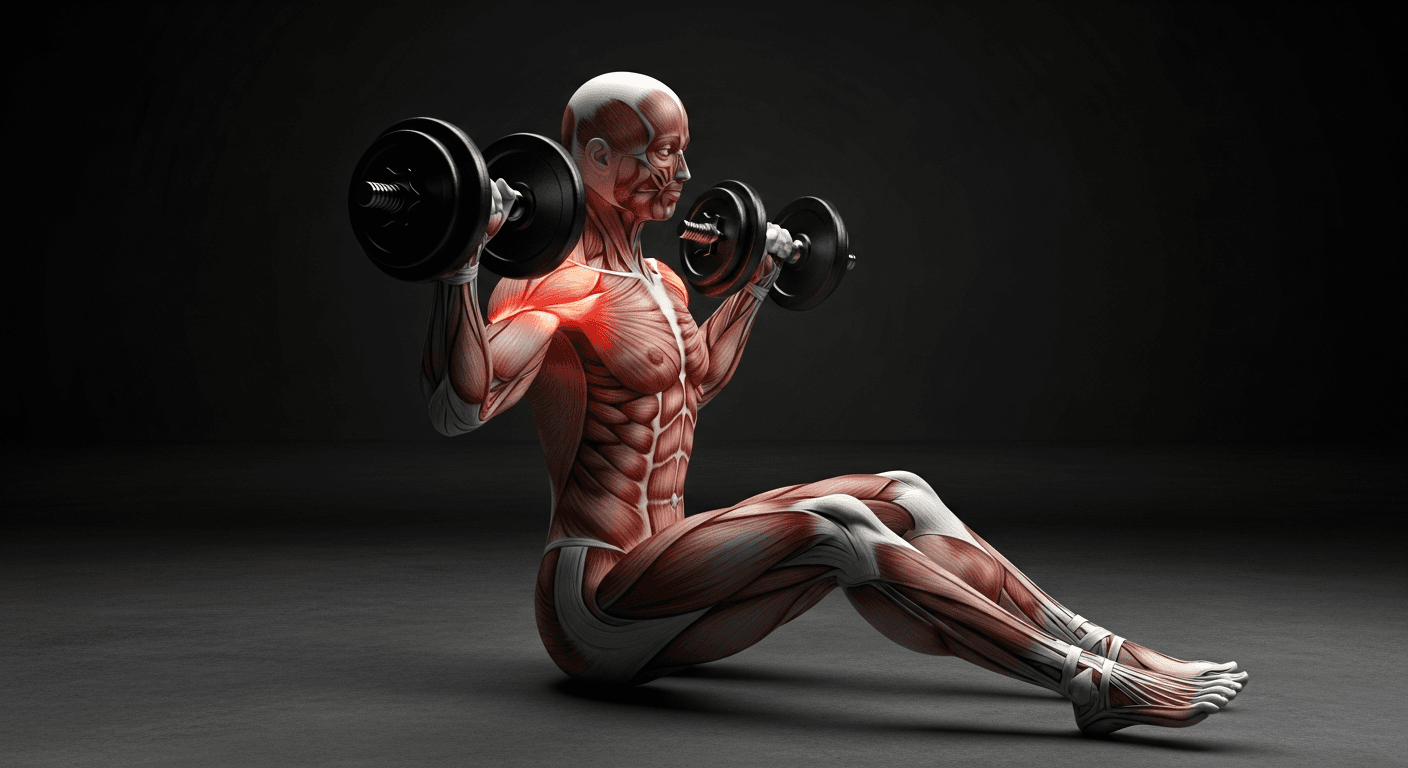
The Zottman curl primarily trains elbow flexors (biceps brachii and brachialis) on the concentric supinated phase and the brachioradialis plus wrist/forearm extensors during the pronated eccentric. Use it as an accessory curl for balanced upper-arm and forearm development; alternatives cover equipment limits, wrist pain, or overload plateaus.
What muscles does the Zottman curl train?
Primary:
- Biceps brachii — concentric elbow flexion with supination.
- Brachialis — elbow flexion regardless of forearm rotation, often heavily involved on heavier loads.
Secondary:
- Brachioradialis — emphasized during neutral/pronated positions and the eccentric pronated lower phase.
- Wrist extensors and finger extensors — they stabilize and resist wrist flexion during the pronated descent.
- Shoulder stabilizers and core — to control the arm path when performed strict.
Why it hits both areas: the Zottman combines a supinated curl up (biceps emphasis) with a pronated slow descent (forearm extensor and brachioradialis emphasis), giving concentric focus to the biceps and eccentric focus to forearms.
How should I program the Zottman curl into a routine?
- Role: accessory isolation exercise. Place it after compound upper-body lifts (pulls, presses) or after heavier biceps-focused moves if you need extra forearm stimulus.
- Frequency: 1–3 sessions per week depending on overall arm volume and recovery.
- Volume and reps: align with general hypertrophy guidance—accumulate consistent weekly sets for the biceps/braschialis group while monitoring recovery. Use moderate rep ranges (6–15) depending on load and goal: lower reps for strength focus, moderate reps for hypertrophy.
- Sets: a typical approach is 2–4 sets per session when used as an accessory; increase weekly sets if arms are the limiting growth target.
- Tempo and focus: control the eccentric (3+ seconds) on the pronated descent to emphasize forearm extensors; avoid swinging. Progressive overload still applies — increase reps, sets, or load over time.
Evidence-aware note: current resistance training consensus emphasizes progressive overload, sufficient weekly volume, and recovery. Match Zottman use to those principles rather than treating it as a standalone solution.
When might I choose an alternative to the Zottman curl?
Choose an alternative if:
- You lack dumbbells or want constant tension from a cable.
- Wrist pain or elbow issues make pronated eccentrics uncomfortable.
- You need a stronger brachialis or biceps-only stimulus, or you’ve plateaued and need different mechanics or loading patterns.
Here are 4 solid alternatives with when to pick each.
1) Dumbbell supinated (classic) curl
When to pick: you want maximum biceps brachii concentric loading and simple progression. Good for beginners and when wrist/forearm discomfort makes the pronated eccentric of the Zottman awkward. Drawbacks: less direct brachioradialis/forearm extensor emphasis.
2) Hammer curl (neutral grip)
When to pick: you want more brachialis and brachioradialis emphasis with less forearm pronation stress. Useful for elbow-friendly forearm/arm thickness work and when wrists dislike full pronation. Drawbacks: less direct biceps supination emphasis.
3) Reverse curl (pronated throughout)
When to pick: you need targeted brachioradialis and wrist extensor development, or you’re addressing forearm weakness. Suitable when you want a single-phase pronated load rather than a supinate/ pronate transition. Drawbacks: biceps contribution is reduced; wrist pain can increase for some.
4) Cable curl (rope or single-arm)
When to pick: you want constant tension, easy load micro-adjustments, or more consistent tempo. Cables are useful when gym layout or equipment limits dumbbells, or to keep tension at the top. Drawbacks: slightly different loading curve; less eccentric overload compared to heavy dumbbells.
How do these options compare at a glance?
| Exercise | Equipment | Primary emphasis | Useful if... | Drawbacks |
|---|---|---|---|---|
| Zottman curl | Dumbbells | Biceps concentric + brachioradialis/forearm eccentric | You want combined biceps and forearm stimulus | Requires controlled tempo and wrist mobility |
| Supinated dumbbell curl | Dumbbells | Biceps brachii | You want straightforward biceps overload | Less forearm emphasis |
| Hammer curl | Dumbbells | Brachialis, brachioradialis | Wrist-friendly brachialis focus | Less supination work |
| Reverse curl | Barbell/dumbbell | Brachioradialis, wrist extensors | Target forearm extensors | Can stress wrists |
| Cable curl (rope/single) | Cable machine | Biceps with constant tension | Want steady tension and micro loading | Different eccentric characteristics |
How should the Zottman curl be sequenced with other arm work?
- If your priority is heavy biceps strength, do heavy supinated curls or rows first, then Zottmans for additional volume and forearm emphasis.
- If forearm development is a priority, consider Zottmans or reverse/hammer variants earlier or as a targeted second movement.
- Keep total weekly arm volume consistent with your recovery; progression matters more than exercise novelty.
What are the main safety and form cues?
- Keep the torso stable; avoid swinging. Use controlled motion rather than momentum.
- Supinate as you lift; rotate to pronation smoothly at the top and lower under control.
- Avoid heavy weights that force you to cheat; a moderate load with clean technique is preferable.
- Stop on sharp or unusual pain and consult a qualified professional. This guidance is educational and not a medical diagnosis.
What can't an app or AI do for you? (Limitations)
- No app or AI can reliably see your live form or give hands-on corrections; video feedback from a coach is better for form fixes.
- Online programs and general templates cannot diagnose injuries or replace a qualified clinician for rehabilitation.
- Consistency, progressive overload, nutrition, and sleep are human behaviors — no tool will produce results without you following the plan.
Safety reminder: stop if you feel sharp pain; consult a qualified health or strength professional for persistent issues. Instruction here is informational and not medical advice.
If you want to test Zottman mechanics safely: start light, practice the rotation, keep a long eccentric, and monitor forearm/wrist comfort. Swap to hammer, reverse, or cable variations if mobility or pain limits you.
Frequently asked questions
- Does the Zottman curl work the biceps?
- Yes. The Zottman curl targets the biceps brachii on the supinated (up) phase and the brachioradialis and forearm extensors more on the pronated (down) phase. It combines elbow flexion and controlled pronation/eccentric work to hit both upper-arm and forearm muscles.
- How often should I include Zottman curls in my routine?
- Include Zottman curls 1–3 times per week as an accessory exercise. Use multiple weekly sessions for arm growth while keeping total weekly volume for biceps and brachialis consistent with hypertrophy guidelines and allow recovery between sessions.
- Are Zottman curls good for forearm development?
- They can be effective because the pronated eccentric emphasizes the brachioradialis and wrist extensors. For dedicated forearm growth, pair them with focused forearm exercises and progressive overload over several weeks.