Zottman Curl: Proper Form, Step by Step
Step-by-step, evidence-aware guide to Zottman curl form: setup, execution cues, tempo, breathing, common mistakes and fixes, plus safety and limitations.
Photo by RepBro.
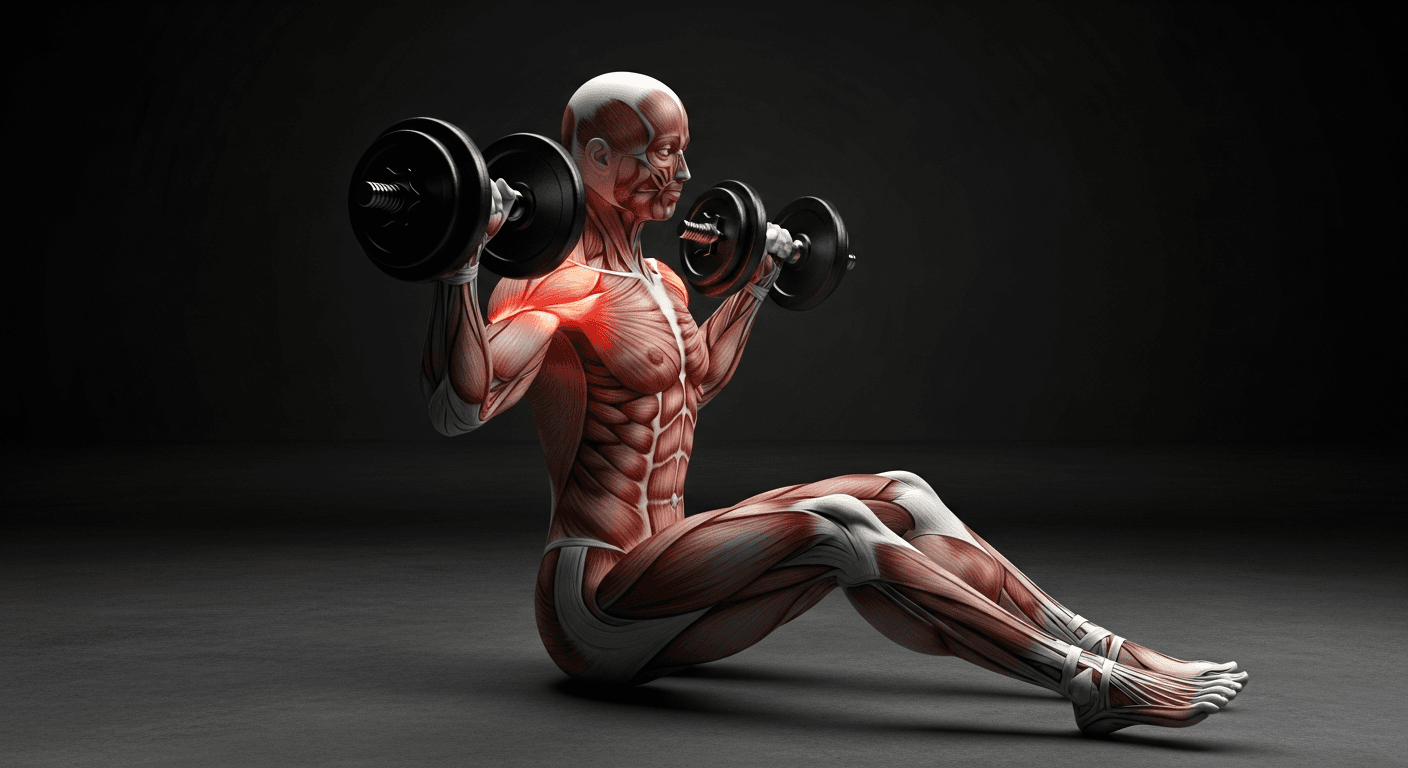
The Zottman curl is a combined biceps/forearm exercise: curl up with a supinated grip, rotate at the top, then lower with a pronated grip. Use controlled tempo—strong concentric, slow eccentric—and keep the torso still. Stop on sharp pain and consult a professional if symptoms persist.
What is a Zottman curl and why would I choose it?
The Zottman curl is a dumbbell exercise that pairs a standard curl (palms-up/supination) concentric phase with a palms-down (pronation) eccentric phase. This dual-grip pattern emphasizes elbow flexors on the lift and forearm extensors during the lowering, making it useful when you want combined biceps and forearm stimulus in one movement.
How do I set up for the Zottman curl?
- Equipment: a pair of dumbbells that let you complete your chosen reps with strict form (examples: light beginners 4–8 kg / 10–18 lb; intermediate use heavier—pick progressive increments that challenge you).
- Stance: stand tall with feet hip-width, knees soft, core braced.
- Starting grip: hold dumbbells at your sides, palms facing inward (neutral). Re-rack and begin with a short hinge to set shoulder blades neutral if needed.
- Posture cues: chest up, shoulders down (not shrugged), elbows close to the torso and fixed in place horizontally throughout the lift.
What is the step-by-step execution for the Zottman curl?
- Begin standing, arms fully extended, palms facing inward.
- Curl the dumbbells up while simultaneously supinating so your palms face your shoulders at the top. Keep elbows glued to your sides; avoid letting them travel forward.
- Pause briefly (0–0.5 s) at the top with palms supinated and biceps contracted. Breathe out during the concentric effort.
- Rotate your wrists to pronation (palms face down) in a controlled manner — about 0.5–1 second.
- Lower the weights slowly and under control in the pronated position, resisting gravity with a deliberate eccentric (breathe in during the descent).
- At the bottom, rotate back to neutral/supinated and repeat.
Execution cues: move from the elbow, not the shoulder; think about “pulling” the weight with the biceps on the way up and “controlling” it with the forearms on the way down.
What tempo and breathing should I use?
Recommended tempo for controlled, effective reps:
- Concentric (curl up): 1–2 seconds, exhale.
- Transition (supination at top): 0.5–1 second, hold breath briefly only if needed for stability.
- Eccentric (lower in pronation): 2.5–4 seconds, inhale.
This tempo preserves tension, improves eccentric control (important for strength and hypertrophy), and reduces momentum. Adjust eccentric speed slower when the goal is time-under-tension; keep concentric reasonably controlled to avoid bouncing.
How many sets, reps, and how often should I do Zottman curls?
Use standard resistance-training principles: choose set/rep ranges that match your goal. For muscle growth and strength, most evidence-based programs use moderate to high effort across a spectrum of 6–20 reps and multiple sets. For most lifters, 2–4 sets per session, 1–3 sessions per week are reasonable when integrated into a balanced program. Progression should be gradual and based on adding reps, sets, or load over weeks while preserving form.
How does the Zottman curl compare to other curl variations?
| Exercise | Primary grip | Primary emphasis | Typical use |
|---|---|---|---|
| Zottman curl | Supinated up, pronated down | Biceps concentric + forearm eccentric | Combined arm development, forearm focus on lowering |
| Dumbbell (standard) curl | Supinated | Biceps brachii | Pure biceps isolation concentric and eccentric |
| Reverse curl (pronated) | Pronated | Brachioradialis, forearms | Forearm/neutral elbow flexor emphasis |
Use the Zottman when you want one exercise to target both biceps and forearms without switching implements.
What are common mistakes and how do I fix them?
- Mistake: Swinging the torso or using hip drive.
- Fix: Reduce weight, brace core, slightly bend knees, and keep chest up. Perform slow tempo sets.
- Mistake: Rotating the wrists too quickly or with excessive force.
- Fix: Practice slow 0.5–1 second rotations; think smooth transitions to keep tension and protect joints.
- Mistake: Letting elbows move forward or out.
- Fix: Tuck elbows to the sides; imagine the elbows are hinges glued to your ribcage.
- Mistake: Dropping the eccentric quickly.
- Fix: Count 3–4 seconds on the descent to increase control and muscle stimulus.
- Mistake: Using excessively heavy dumbbells that force cheating.
- Fix: Lower the weight. Quality of contraction and control is more important than load for this complex movement.
What are the risks and a brief safety note?
Stop immediately if you feel sharp or unusual pain in the elbow, wrist, or shoulder. The twisting action places torque on the wrist and forearm—progress gradually and avoid heavy, uncontrolled rotations. If pain persists, consult a qualified clinician or physical therapist. This article does not diagnose or treat injuries.
What can't an app or AI coaching do for my Zottman curl form?
Limitations: no app or AI can see your body in real time with the full context of your injury history, mobility, or subtle movement faults. They can't palpate tissue, provide hands-on corrections, or make clinical diagnoses. A programmed plan only works if you follow it consistently; showing up and executing is the essential part.
Quick practice drill to learn the motion
- Start with very light dumbbells or even no weight. Practice the curl up (supinate), hold at the top, then pronate and lower slowly. Once the rotation feels smooth, add weight in small increments.
Safety-first closing reminder: prioritize controlled movement, stop on sharp pain, and consult a qualified professional for persistent pain or rehab guidance. This guide explains technique but does not replace in-person coaching or medical advice.
References and further reading: follow established resistance training guidelines for set/repetition ranges and progressive overload principles. If you want a coaching tool to log sets and tempos, consider tracking your work so you can progress methodically.
Frequently asked questions
- Does the Zottman curl build biceps or forearms better?
- The Zottman curl trains both: the concentric (curl) phase mainly targets the biceps brachii with a supinated grip, while the eccentric (lowering) phase with a pronated grip increases load on the brachioradialis and forearm extensors. Use it as a complementary movement for balanced arm development.
- How much weight and repetition range should I use for Zottman curls?
- Choose a weight that lets you complete recommended sets with strict form: typically work in a hypertrophy range of about 6–12 reps for strength/hypertrophy or 8–20 for endurance-oriented work. Start lighter to master the twist and slow eccentric control before increasing load.
- Should I rotate my wrists quickly or slowly during the Zottman curl?
- Rotate deliberately — the transition should be controlled, not ballistic. A smooth 0.5–1 second supination/pronation keeps tension on the target muscles and reduces wrist/forearm strain. Avoid jerky or rushed rotations that shift load to momentum.