Upright Row Alternatives at Home (Minimal Equipment)
Four to five minimal-equipment upright row substitutes you can do at home with dumbbells, bands, or bodyweight; what each keeps and loses versus the upright row.
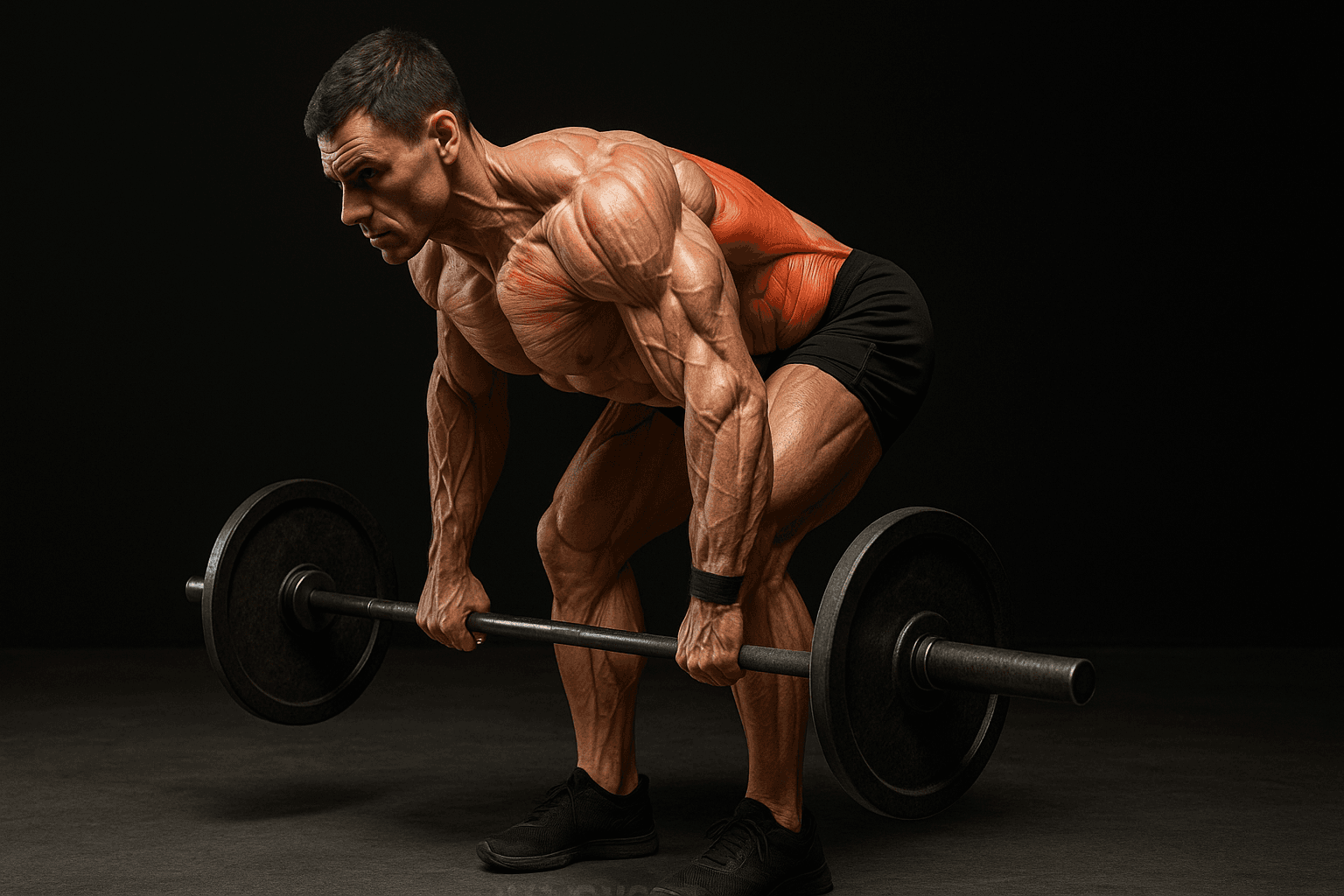
Photo by RepBro.
You can replace the upright row at home with several minimal-equipment options that keep the vertical pull and trap/delt stimulus while reducing impingement risk or allowing different load progressions. Choose band face pulls, dumbbell high pulls, wide-grip dumbbell upright rows, inverted rows, or lateral-raise + shrug combos depending on pain, load, and goals.
What exactly does the upright row train and why might I want an alternative?
The upright row lifts the elbows in a vertical plane, loading the upper traps, lateral deltoids, and to a lesser extent the rotator cuff and biceps. Some lifters swap it because of shoulder discomfort at end range, limited shoulder external rotation, or a desire to target rear delts and scapular control more deliberately.
What at-home alternatives mimic the upright row with simple equipment?
Below are 5 practical substitutes using dumbbells, bands, or bodyweight. Each block lists what it preserves from the upright row, what it loses, and programming notes.
- Dumbbell high pull
- How: Stand hip-width, hinge slightly, swing dumbbells from mid-thigh to chest level using hips and a high pull, finish with elbows above wrists. Use light-to-moderate loads until technique is clean.
- Preserves: Vertical pull action, trap and lateral deltoid emphasis, ability to load progressively.
- Loses: Exact barbell upright row elbow path; unilateral control may reduce axial compression on the spine.
- Programming: 3–5 sets of 4–8 reps for power/strength; 6–12 for hypertrophy. Increase load before increasing reps.
- Band face pull (high anchor)
- How: Anchor band at head height, pull toward face with elbows high and externally rotate so hands end near ears.
- Preserves: Upper-trap activation, strong posterior-delt and external rotation emphasis, excellent scapular control.
- Loses: Vertical compression load and heavy absolute load potential compared with barbells.
- Programming: 3–5 sets of 8–20 reps; use denser bands or shorten lever to progress.
- Wide-grip or neutral-grip dumbbell upright row (pain-free range)
- How: Hold dumbbells with neutral grip or a wider grip, lift elbows to chest height, stop if shoulder pinching occurs.
- Preserves: Similar movement pattern and trap/delt stimulus, but neutral or wide grip lowers impingement risk.
- Loses: Ability to load as massively as a heavy barbell upright row unless you have heavy dumbbells.
- Programming: 3–5 sets of 6–15 reps; prioritize range-of-motion and controlled tempo.
- Inverted row (feet on floor or raised)
- How: Use a sturdy table, a low bar, or TRX if available. Pull chest toward bar with elbows driving down and back.
- Preserves: Upper-back and scapular-retraction demand; trains traps and posterior delts indirectly.
- Loses: Vertical elbow elevation of the upright row; more horizontal pull orientation recruits lats more and traps differently.
- Programming: 3–5 sets of 6–15 reps; alter foot height to change load.
- Lateral raise + dumbbell shrug combo
- How: Perform lateral raises for the deltoid sweep then follow with shrugs for trap emphasis.
- Preserves: Separately targets the lateral deltoid and upper trap stimuli the upright row combines.
- Loses: The integrated vertical pull pattern and single-movement timing, plus less power transfer.
- Programming: 3–4 sets of 8–15 reps for laterals, 3–5 sets of 6–12 reps for shrugs.
How do these alternatives compare to the upright row in practice?
| Movement | Equipment | Muscles emphasized | Preserves vs upright row | Load potential | Impingement risk |
|---|---|---|---|---|---|
| Barbell upright row | Barbell | Upper traps, lat delts, biceps | Direct vertical pull, integrated pattern | Very high | Higher at end-range internal rotation |
| Dumbbell high pull | Dumbbells | Traps, delts, posterior chain | Vertical pull, power | Moderate–high | Moderate |
| Band face pull | Bands | Rear delts, traps, rotator cuff | Scapular control, trap activation | Low–moderate | Low |
| Wide/neutral DB upright | Dumbbells | Traps, delts | Vertical pull with safer rotation | Moderate | Lower than barbell |
| Inverted row | Bodyweight | Mid/lower traps, lats | Upper-back strength, scapular control | Bodyweight ± feet | Low |
Use this table to pick the variant that fits your equipment, pain history, and goal.
When is an at-home swap adequate and when should I go to a gym?
Swap is adequate if: you want trap/delt hypertrophy or balanced shoulder development, you have no need for very heavy single-movement loading, and you can manage progressive overload through heavier dumbbells, stronger bands, or higher volume.
Consider the gym if: you need maximal heavy loading for strength or power development, your programming requires barbell-specific carryover, or you need equipment such as heavy hex bars, loaded barbells, or a power rack to safely progress beyond what you can achieve at home.
How should I program these alternatives for progress and recovery?
- Frequency: 2–3 sessions per week for shoulder/trap-focused work. Split volume across sessions to maintain quality.
- Volume: Aim to accumulate progressive weekly sets for the target muscles; typical hypertrophy guidance supports multiple sets per week per muscle. Adjust upward if you recover well.
- Progression: Add reps, sets, tempo control, or increase band resistance/dumbbell weight. Prioritize technique before load.
- Deloads: Plan recovery weeks when you notice persistent fatigue, strength drops, or worsening sleep/stress. Frequency of deloads depends on workload and individual recovery.
These guidelines reflect standard sports-science consensus on frequency, volume ranges, and progressive overload; adjust for experience and recovery.
What safety checks should I follow?
- Stop on sharp or shooting pain. Mild soreness is expected; sharp pain is not.
- Maintain scapular control and avoid forcing end-range internal rotation under load.
- Start light and prioritize technique, especially with dynamic pulls.
- Consult a qualified clinician for persistent pain or if you have a shoulder injury.
What can apps and AI coaching not do?
- Apps or AI cannot visually assess your movement in real time or give a qualified medical diagnosis. They can guide programming and track workouts, but no app replaces an in-person assessment for complex pain or rehabilitation. A plan only works if you show up consistently; compliance and recovery decisions still rely on you and a qualified coach.
Limitations
This article summarizes practical alternatives and programming principles based on consensus training guidance. It does not replace a medical exam, personalized rehabilitation, or an in-person coach. If you have specific pain, prior surgery, or complex biomechanics, seek a qualified health professional.
Safety note: This information is educational. Stop any exercise producing sharp pain and consult a qualified professional. Nothing here is a diagnosis or personalized medical advice.
If you want structured workout templates or progress tracking for these at-home variations, consider using a training app that supports custom exercises, programming, and load tracking such as RepBro (link embedded).
Frequently asked questions
- Can I replace upright rows with bands or dumbbells at home?
- Yes. Bands and dumbbells let you reproduce the vertical pull and shoulder elevation stimulus of the upright row while offering easier range-of-motion control and options for external rotation. Pick the variant based on pain, available load, and your goal (strength vs hypertrophy).
- How often should I train shoulders and traps if I swap out the upright row?
- Train shoulders and traps 2–3 times per week, distributing 8–20 weekly sets per muscle group depending on experience and recovery. Use heavier loads and lower reps for strength, moderate loads and higher reps for hypertrophy, and include regular deloading based on fatigue.
- Which alternative is safest if I have shoulder impingement issues?
- Band face pulls and wide-grip or neutral-grip dumbbell high pulls are generally lower-risk because they promote external rotation and scapular control. Stop if you get sharp pain and consult a qualified professional for assessment.