Straight‑Arm Pulldown Alternatives at Home (Minimal Equipment)
Practical at‑home substitutes for the straight‑arm pulldown using bands, dumbbells, or bodyweight. What each preserves, what it loses, and when to use the gym.
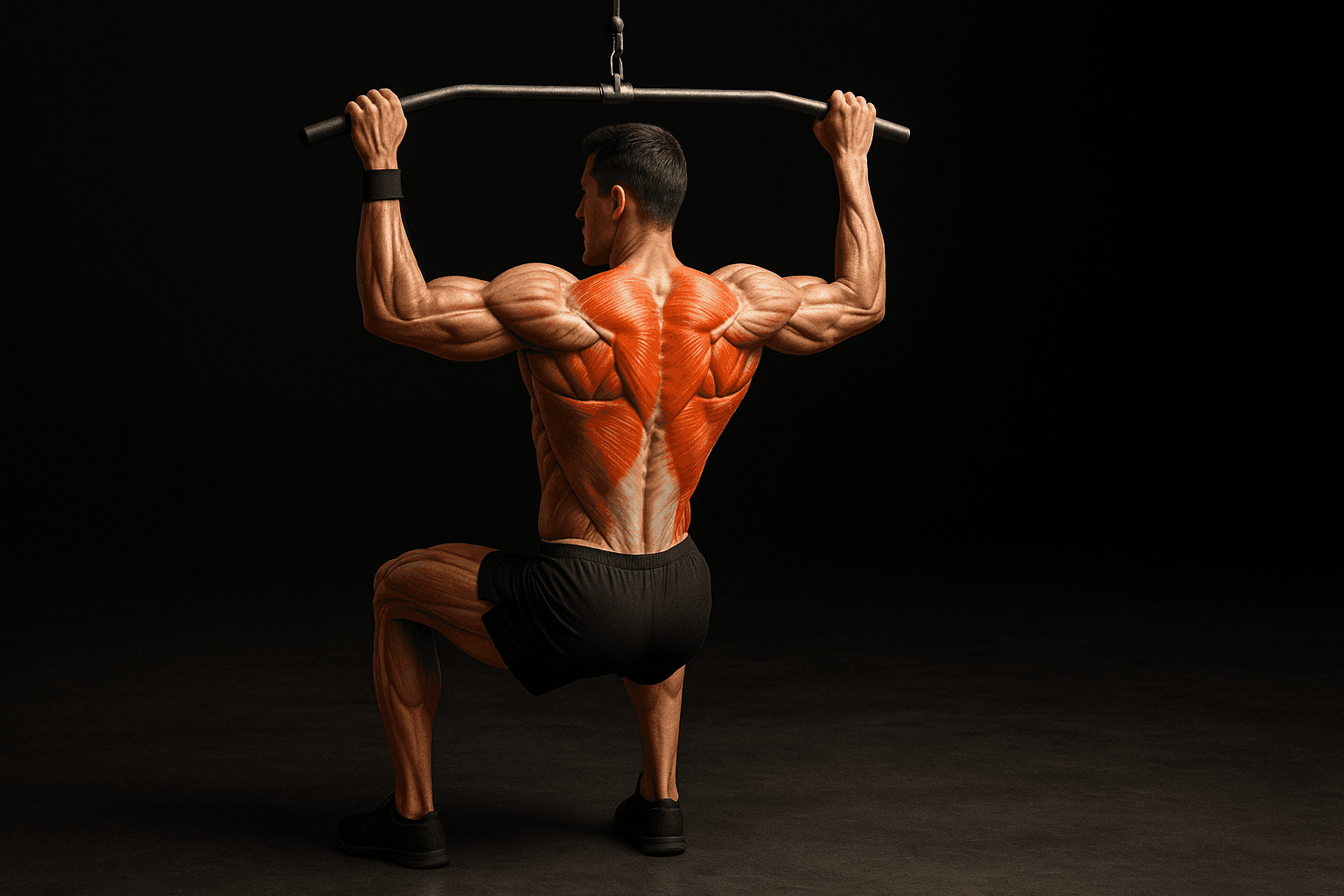
Photo by RepBro.
A high‑anchored resistance band straight‑arm pulldown is the closest at‑home substitute; single‑arm band pullovers and dumbbell pullovers are useful secondary options, and scapular pull‑ups or bent‑over straight‑arm rows can partially replicate the pattern. Each option preserves different elements—use bands for tension, dumbbells for depth, and a gym when you need exact loading.
What does the straight‑arm pulldown primarily train, and what should a substitute reproduce?
The straight‑arm pulldown is a shoulder‑extension–dominant lat exercise with an emphasis on latissimus dorsi lengthening through the top of the range and controlled scapular depression. Key features to reproduce are: vertical/near‑vertical line of pull, minimal elbow flexion (shoulder extension focus), continuous tension through the range, and scapular control. A good substitute will approximate most of these features depending on equipment.
Which minimal‑equipment exercises can replace the straight‑arm pulldown at home?
Below are five practical substitutes using bands, dumbbells, or bodyweight. For each I note what it preserves and what it loses versus the cable straight‑arm pulldown, plus when the swap is adequate and when a gym visit is justified.
- Resistance‑band straight‑arm pulldown (high anchor)
- How: Anchor a band high (door anchor or beam), kneel or stand, keep arms straight or slightly bent, and pull bands down to thighs while depressing the scapula.
- Preserves: Vertical pull vector, continuous tension, shoulder extension pattern, scapular control.
- Loses: Precise incremental loading and possibly very heavy loads; band resistance curve (low to high tension) differs from cable constant feel.
- When adequate: For most hypertrophy and general strength work; excellent for progressive overload if you own multiple band tensions.
- When to get to a gym: When you need very fine load increments or maximal heavy sets beyond band capacity.
- Single‑arm high‑band pullover (kneeling or standing)
- How: Anchor band overhead to one side, keep arm long, pull through a long arc toward the hip to emphasize shoulder extension.
- Preserves: Unilateral control, full ROM, lat emphasis and scapular control.
- Loses: Symmetrical cable feel and exact constant tension; possibly less ability to go very heavy.
- When adequate: Great for correcting side imbalances and working full ROM at home.
- When to get to a gym: When you want very high loads or to do heavy bilateral work with fine progression.
- Dumbbell pullover (on bench or floor)
- How: Lie perpendicular on a bench (or flat on floor), hold one dumbbell with both hands, lower behind the head and pull back up focusing on shoulder extension.
- Preserves: Long ROM shoulder extension and stretch under load; good lat and serratus involvement.
- Loses: Vertical line of pull and continuous vertical tension; elbow angle can vary and chest/serratus involvement increases.
- When adequate: Useful when you have moderate dumbbells and want depth of ROM and stretch‑mediated stimulus.
- When to get to a gym: If you need vertical resistance and the cable feel to load the top of the ROM specifically.
- Scapular pull‑ups / assisted pull‑up negatives (pull‑up bar required)
- How: From a dead hang, actively depress and pull the scapulae down/up slightly (scapular pull) or do slow eccentric pull‑ups focusing on scapular and lat engagement.
- Preserves: Scapular control and lat activation in a vertical pull context.
- Loses: The movement includes more elbow flexion and is less purely shoulder‑extension focused.
- When adequate: Good for strength and neuromuscular training of the lats and scapula if you have a bar and need bodyweight work.
- When to get to a gym: If you need strict straight‑arm shoulder extension with external load; also if you need variable assistance levels beyond what you can set up at home.
- Bent‑over straight‑arm row with band or light dumbbell
- How: Hinge at hips, arms mostly straight, pull the band or dumbbell in an arc toward the hip, focusing on shoulder extension rather than elbow flexion.
- Preserves: Hip hinge pattern that keeps tension on the lats and allows a different angle of shoulder extension.
- Loses: Vertical pull vector and exact cable tension; different torso angle changes muscle emphasis.
- When adequate: Useful to add variety and when vertical options aren’t available.
- When to get to a gym: If you want the exact vertical line and loading characteristics of the cable machine.
How should I program these replacements (sets, reps, frequency)?
Follow standard resistance‑training guidelines: 2–3 sessions per week for the back/lats, 2–4 sets per exercise, and rep ranges matched to your goal (lower reps for strength, moderate reps for hypertrophy). Progress load, sets, or reps over weeks; if bands feel light, increase tension or do more repetitions and slower eccentrics. Track weekly volume (sets × reps × load) and progress one variable at a time.
How do these alternatives compare side‑by‑side?
| Exercise | Equipment | Primary target | Preserves vs cable | Typical use |
|---|---|---|---|---|
| Band straight‑arm pulldown | High‑anchored band | Lats, scapular depression | Closest match; vertical line, continuous tension | General substitute for hypertrophy and control |
| Single‑arm band pullover | Band, anchor | Lats, unilateral control | ROM and lat emphasis; less constant load | Fix imbalances, ROM focus |
| Dumbbell pullover | Dumbbell, bench/floor | Lats, serratus, chest | Preserves ROM and stretch; loses vertical tension | Depth/stretch stimulus, moderate loads |
| Scapular pull‑ups | Pull‑up bar | Lats, scapular control | Scapular work in vertical pull; more elbow flexion | Bodyweight strength and control |
| Bent‑over straight‑arm row | Band/dumbbell | Lats, posterior chain | Different angle; less vertical tension | Variation when vertical pull not possible |
What safety cues should I follow?
Stop if you feel sharp or radiating pain. Keep a neutral spine, avoid excessive shoulder hyperextension, and control eccentrics. Emphasize scapular depression before the pull and avoid letting elbows take over the motion. Consult a qualified professional for persistent pain or complex form issues.
What are the limitations of this advice and of apps/AI coaching?
This guide gives evidence‑informed substitutions and programming guidance but cannot see your form, diagnose injuries, or design a fully individualized rehab plan. No app or AI can replace in‑person assessment for structural issues or acute pain. A plan only works if you consistently apply progressive overload and recovery principles. For injury management or persistent niggles, see a qualified clinician. If you want to track sets, reps, and weekly volume consistently, consider an app like RepBro to log and measure progression.
Safety reminder: never train through sharp pain; seek a trained professional for injury concerns. This article does not provide medical advice.
If you have specific equipment options at home (band types, dumbbell max weight, pull‑up bar), I can recommend the best single substitute and a short 4‑week progression to match your goals.
Frequently asked questions
- Can I get the same lat activation at home without a cable machine?
- Yes. A high‑anchored resistance band straight‑arm pulldown or single‑arm band pullover reproduces the shoulder‑extension pattern and can provide similar lat activation when loaded and performed with controlled tempo; it’s important to maintain scapular control and a full range of motion.
- How often should I train lats if I replace straight‑arm pulldowns with band or dumbbell options?
- Train the lats 2–3 times per week, using progressive overload and 2–4 sets per exercise. Use rep ranges appropriate to your goal (lower reps with heavier load for strength, moderate reps for hypertrophy) and adjust volume over weeks per standard progression principles.
- When is it worth returning to a gym to do the cable straight‑arm pulldown?
- Return to the gym if you need a specific resistance curve (constant tension through the whole ROM), heavy loading beyond band/dumbbell capacity, or precise loading increments for a plateau. For most general strength and hypertrophy goals, band and dumbbell options remain adequate.