Step-up Alternatives at Home (Minimal Equipment)
Practical at-home substitutes for the step-up using bodyweight, dumbbells, or bands; what each keeps or loses versus the exercise and when to return to the gym.
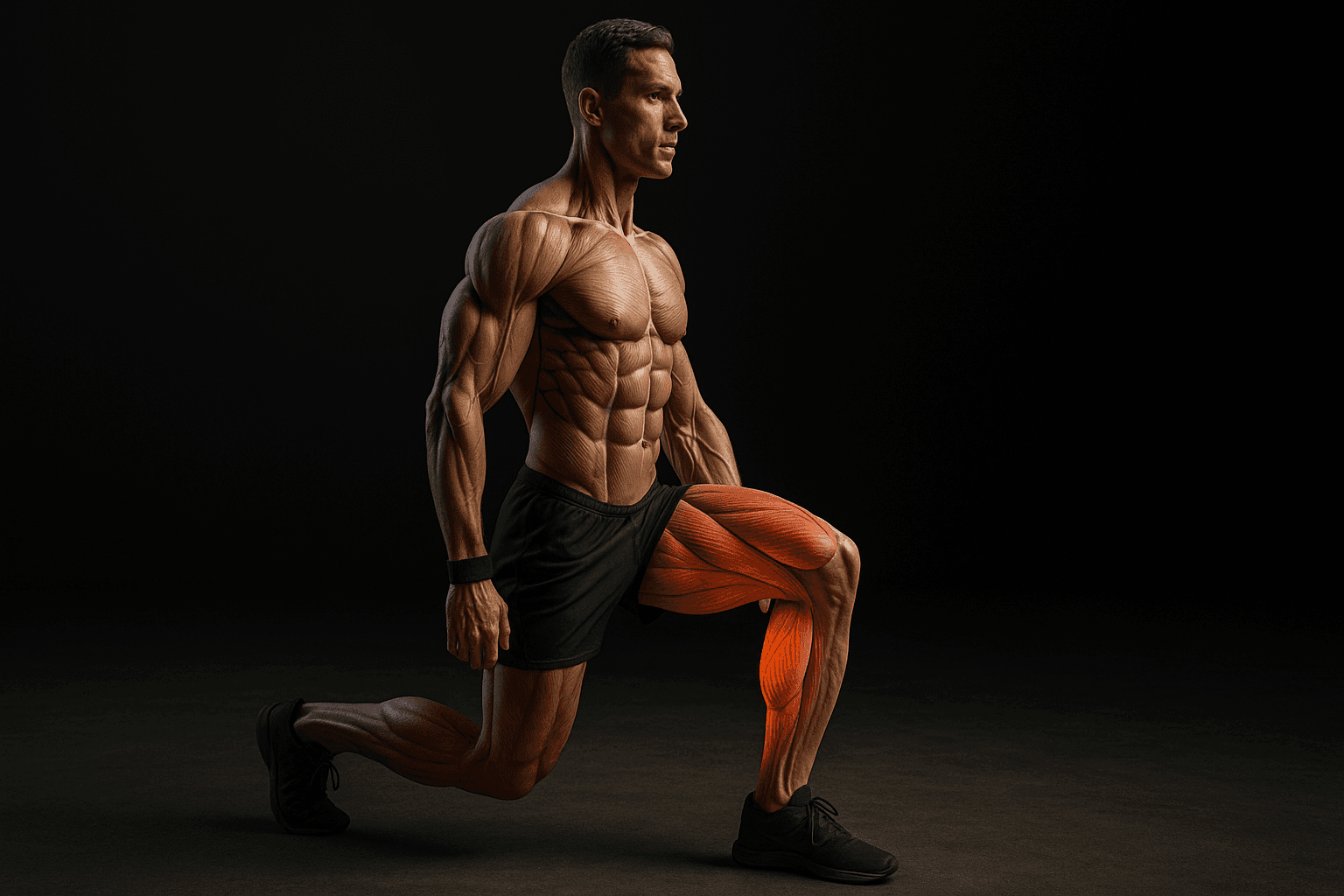
Photo by RepBro.
Short direct answer: You can replace step-ups at home with Bulgarian split squats, reverse lunges to a raised target, single-leg Romanian deadlifts, elevated single-leg hip hinges (box-supported), or band-resisted step-throughs. Each preserves single-leg loading and balance differently; some lose the vertical stepping pattern and peak hip extension—details below.
What does a step-up train and why does it matter?
A step-up is a unilateral, predominantly concentric hip- and knee-extension movement with a strong vertical force component and a balance/coordination demand. It trains single-leg strength, glute and quadriceps development, and stepping mechanics useful for stairs and many sports. If the goal is those exact mechanics, the exact movement matters; if the goal is general single-leg strength and hypertrophy, good alternatives can be adequate.
What at-home alternatives work with minimal equipment?
Here are five practical substitutes that require only bodyweight, a pair of dumbbells, or resistance bands.
-
Bulgarian split squat (rear foot elevated)
- Equipment: bench/chair (30–50 cm / 12–20 in), dumbbell optional
- Why use it: Strong single-leg knee/hip extension stimulus, large range of motion, easy to load with dumbbells.
-
Reverse lunge to a raised target (step or low box)
- Equipment: low, stable object ~15–30 cm (6–12 in)
- Why use it: Recreates stepping-up finishing height and eccentric control; easier to scale than forward lunges.
-
Single-leg Romanian deadlift (RDL)
- Equipment: dumbbells or backpack, or bodyweight
- Why use it: Emphasizes hip extension and hamstrings; improves balance and posterior chain strength lacking in step-ups.
-
Elevated single-leg hip hinge (single-leg glute bridge on a bench/box)
- Equipment: bench or sofa edge
- Why use it: Targets hip extension under a single-leg position; good for glute strength without vertical stepping.
-
Banded step-through / resisted lateral step ups
- Equipment: loop band anchored low or under foot
- Why use it: Adds progressive resistance and horizontal-to-vertical vector stress; portable and adjustable.
What does each substitute preserve and what does it lose compared with the step-up?
| Exercise | Preserves (vs step-up) | Loses or reduces |
|---|---|---|
| Bulgarian split squat | Single-leg loading, hip/knee extension, large ROM, easy overload | Less vertical step pattern and less concentric emphasis from a lower initial pull |
| Reverse lunge to raised target | Stepping/final height, eccentric control, unilateral strength | Different center-of-mass path; less purely concentric vertical push |
| Single-leg RDL | Hip-extension strength, posterior chain emphasis, balance | Less knee-extensor demand and less vertical lift |
| Elevated single-leg hip hinge | Peak hip extension and glute load | Minimal knee extension and stepping pattern |
| Banded step-through | Variable resistance, some stepping pattern, portable | Limited absolute load compared with heavy dumbbells/barbells |
Use this table to match the substitute to your priority: if you need vertical pushing strength and stairs-specific carryover, choose reverse lunges to raised targets or single-leg steps with added load; if you need posterior chain work, choose single-leg RDLs.
How should I program and progress these alternatives at home?
Frequency: train unilateral leg work 2–3 times per week. Volume: aim for approximately 8–20 sets per muscle group per week depending on experience (beginners at the lower end, intermediates/advanced at the higher end). Reps and loading: use rep ranges that match the goal—4–8 for strength with heavier loads, 8–15 for hypertrophy with moderate loads, 15+ for endurance or conditioning.
Progression methods (use one or combine):
- Increase external load (dumbbells, backpack, heavier band resistance)
- Add repetitions or additional sets
- Manipulate tempo: slower eccentrics (2–4 seconds) increase time under tension
- Increase range of motion (e.g., higher rear foot elevation on Bulgarian split squats)
- Reduce stability (stand on a slightly unstable surface) only after solid baseline control
Keep one lighter recovery week every 3–8 weeks depending on fatigue and progress.
When is the swap adequate, and when should I go back to the gym?
Adequate at home when:
- Your goal is general unilateral strength, hypertrophy, or improving balance.
- You can progressively overload with available tools (heavier dumbbells, bands, extra reps).
- You don’t require highly specific vertical stepping power for sport.
Consider the gym when:
- You need much greater external load than you can safely create at home.
- Your sport or job requires the specific step-up pattern with heavy loads (e.g., hiking with a pack, certain athletics drills).
- You require machine or barbell setups for precise progressive overload, or supervised heavy training for competitive goals.
How should I pick exercises for common goals?
- Strength if you have dumbbells: Bulgarian split squats or heavy reverse lunges (4–8 reps).
- Hypertrophy: moderate loads, 8–15 reps, 2–4 sets per exercise, several unilateral exercises across the week.
- Posterior chain focus: single-leg RDLs and elevated hip hinges.
- Balance and stepping practice: reverse lunges to a raised target and slow banded step-throughs.
How should I manage safety and pain?
Stop or modify any exercise that causes sharp or joint pain. General soreness (DOMS) is normal, but persistent pain or swelling needs assessment by a qualified clinician. Warm up with 5–10 minutes of light cardio and dynamic movement, and start with lighter loads to establish control.
What can't this article, apps, or AI do for you?
- No app or AI can reliably see and correct your movement in real time. Video feedback from a qualified coach is the substitute for automated instruction.
- This guide cannot diagnose injuries, prescribe rehabilitation, or guarantee results; only a licensed professional can make safe, individualized rehab and return-to-play plans.
- A program only works if you follow it consistently; consistency and progressive overload drive adaptation more than the particular app you use.
Safety note: never ignore sharp pain. For persistent pain, recent injury, or medical conditions, consult a qualified medical professional before changing your training.
If you track training, apps like RepBro can help log sets and progression, but they don’t replace coach feedback.
Limitations: This article summarizes practical substitutions and programming principles based on consensus training guidance. It is not individualized coaching, medical advice, or a substitute for supervised rehab. If you have a history of knee, hip, or back injury, seek personalised assessment before applying heavier or high-range-of-motion variations.
Frequently asked questions
- Can I replace step-ups with other exercises at home?
- Yes. Several single-leg and unilateral split variations (Bulgarian split squats, reverse lunges to a raised target, single-leg deadlifts, band-resisted step-throughs) replicate key features of step-ups. Each preserves different elements—vertical force, balance challenge, hip extension—so choose based on your goal and available equipment.
- How often should I train these alternatives?
- Train lower-body strength 2–3 times per week, splitting 8–20 sets per muscle group across the week depending on experience and recovery. Use progressive overload (add load, reps, range, or tempo) and include lighter recovery weeks as needed.
- When should I go back to the gym to do weighted step-ups?
- Return to gym step-ups when you need higher external load or a specific vertical stepping pattern for sport transfer that home alternatives can’t match. If you’ve outgrown available home resistance (unable to progress reps or difficulty), a gym visit is reasonable.