How Many Sets and Reps for the Step-up?
Practical, evidence-aligned set/rep/frequency ranges for the step-up by goal (strength, hypertrophy, endurance), progression week-to-week, and clear signals for when to add weight or reps.

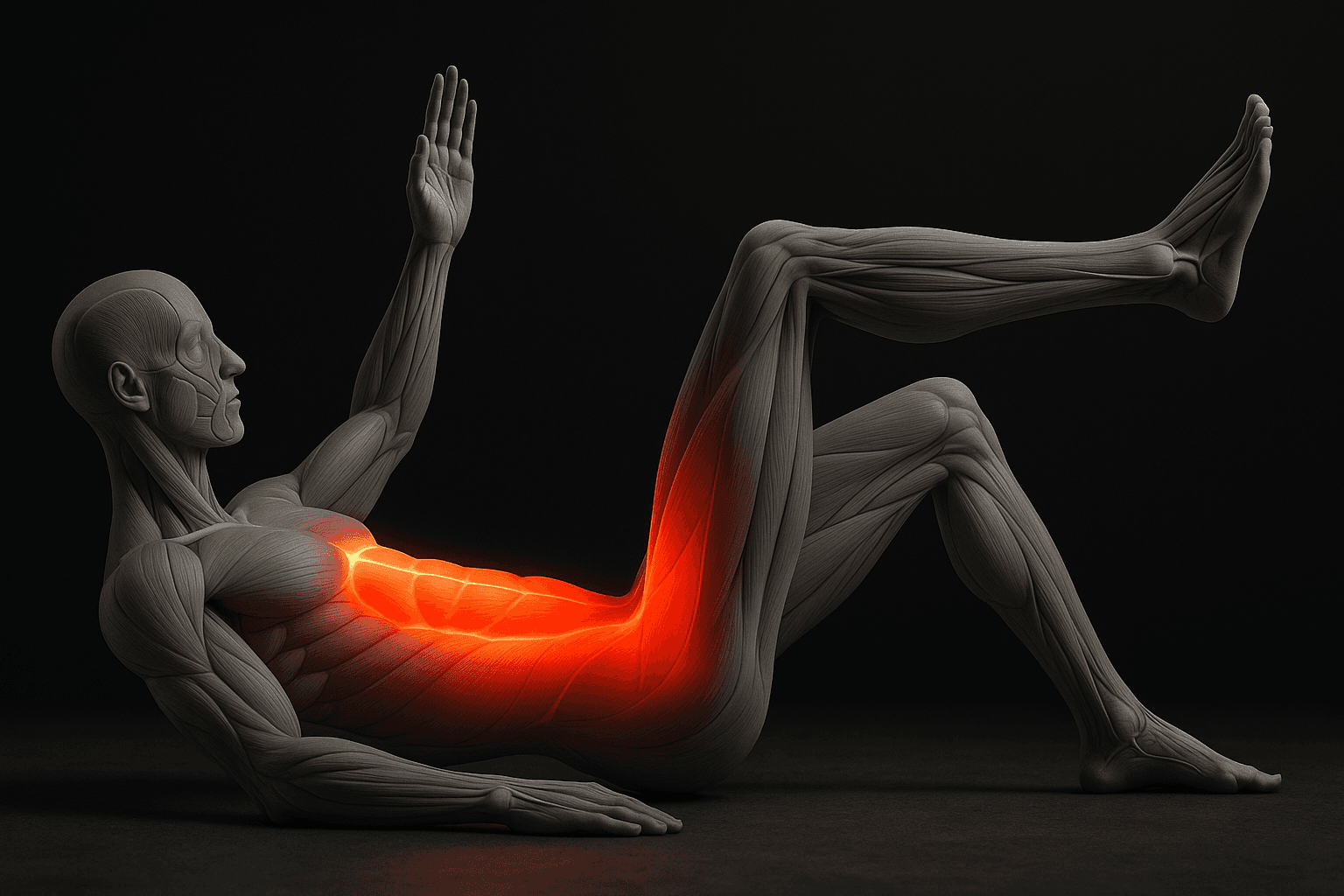
Photo by RepBro.
For the step-up, aim 3–6 sets of 1–6 reps per leg for strength; 3–6 sets of 6–12 reps per leg for hypertrophy; 2–4 sets of 15–30+ reps for endurance. Train each leg roughly twice per week, progress by adding reps then weight, and add weight once you can exceed the top of the rep range while keeping form.
How many sets and reps should I use for strength-focused step-ups?
Strength-oriented step-ups use low reps and heavy loads. Practical guidance:
- Sets and reps per session (per leg): 3–6 sets of 1–6 reps.
- Intensity: generally in the neighborhood of 75–90% of a one-rep-max equivalent (heavy enough that sets are close to maximal effort).
- Frequency: train each leg about 2 times per week for best transfer of strength gains.
- Rest: 2–3 minutes between sets to restore high-force capacity.
Because step-ups are unilateral, each set is relatively more taxing on balance and stability than bilateral lifts. Keep technique strict and favour slightly fewer sets if you also do heavy squats or deadlifts the same week.
How many sets and reps for hypertrophy (muscle growth)?
For hypertrophy you want moderate loads, moderate reps, and higher weekly volume.
- Sets and reps per session (per leg): 3–6 sets of 6–12 reps.
- Intensity: roughly 60–80% 1RM or a load that leaves you 1–3 reps shy of failure on target sets.
- Weekly volume: most lifters respond well to roughly 10–20 sets per major muscle group per week; treat unilateral step-ups as contributing to quadriceps and glute volume for the working leg.
- Frequency: 1–3 sessions per week per leg, with 2 sessions being common for many trainees.
If you want more emphasis on glute development, use a taller step and focus on driving through the heel and extending the hip.
How many sets and reps for muscular endurance with step-ups?
Endurance work uses higher reps and lower loads.
- Sets and reps per session (per leg): 2–4 sets of 15–30+ reps.
- Intensity: lighter loads (substantially less than 60% 1RM); sets should be challenging without collapsing technique.
- Use shorter rest (30–90 seconds) to build local muscular endurance and conditioning.
Endurance step-ups are useful as conditioning or rehabilitation work but produce less raw strength or hypertrophy than heavier ranges.
How should I progress week-to-week on step-ups?
Use progressive overload with a simple priority order:
- Add reps first. Increase 1–2 reps per working set each week until you hit the top of your target rep range.
- When you can perform the top rep across your planned sets with good form, increase the load and drop reps back into the lower part of the range.
- If you can’t increase load easily (small gym increments), add an extra set or slow down tempo to increase time under tension.
Practical example (hypertrophy): start with 3 sets of 8 reps per leg using 10 kg dumbbells. Week 1 → 3x9, Week 2 → 3x10. When you can do 3x12, increase weight by 2.5–5 kg and return to 3x6–8.
Track effort with RPE or reps-in-reserve (RIR). If your working sets average RPE 7–9 (1–3 RIR) and you finish all sets as planned, you are progressing appropriately.
Tip: for unilateral lifts, small weekly increases in reps are often more practical than jumps in load because balance and coordination improve alongside strength.
When should I add weight versus add reps?
Use these clear signals:
- Add reps if you complete all prescribed sets and reps with the target difficulty and could have done one or two more repetitions (you’re below or at the top of the range but not comfortably over it).
- Add weight when you can complete the top of your rep range for all sets with good technique and without an excessive increase in RPE (i.e., not grinding every rep).
- If your technique breaks (torso collapse, knee valgus, stepping foot instability), reduce load or reps until form is retrained.
A simple rule: if you can add 2 repetitions across all sets for two consecutive workouts, increase load on the next session.
How should I choose step height and load?
- Step height: choose a box/step that allows about 70–90 degrees of knee flexion at the bottom for a controlled range; many lifters use 20–30 cm (8–12 in), but adjust for limb length and mobility.
- Load options: bodyweight for beginners; dumbbells, kettlebell, or barbell for added load. Change load in small increments (2.5–5 kg / 5–10 lb) to preserve progression.
- Technique cue: drive through the lead foot, keep torso upright (or deliberately lean slightly forward for more glute activation), and avoid pushing off the trailing leg.
Comparison: sets, reps, frequency, and intensity by goal
| Goal | Sets per session (per leg) | Reps per set | Frequency per week | Intensity (approx.) |
|---|---|---|---|---|
| Strength | 3–6 | 1–6 | ~2 | ~75–90% 1RM |
| Hypertrophy | 3–6 | 6–12 | 1–3 (commonly 2) | ~60–80% 1RM |
| Endurance | 2–4 | 15–30+ | 1–3 | <60% 1RM |
What are the safety signals and limits?
- Stop if you feel sharp or unusual pain; soreness and burn are different from acute joint pain.
- Regress if technique breaks or if balance fails consistently: reduce load, reduce step height, or use a support hand on a rail.
- Consult a qualified professional for persistent pain or if you’re rehabbing an injury.
Safety note: never use this article to self-diagnose. If in doubt about an exercise or pain, seek an in-person assessment from a qualified clinician or coach.
Limitations — what apps and AI coaching cannot do
- No app or AI can watch your form live and correct subtle technical faults; video review with a coach or in-person feedback is necessary for detailed technical correction.
- Programs cannot replace individualized medical advice for injuries or rehabilitation — work with a qualified health professional for those issues.
- A plan only works if you consistently train and recover; adherence, sleep, nutrition, and stress all determine results more than micro-optimizations in programming.
Track simple metrics (sets, reps, load, RPE) and adjust logically: add reps, then load, prioritize consistency. If you use a training log app, logging these values will make progression decisions clearer — for example, RepBro and similar trackers let you monitor rep and load trends over weeks.
Safety reminder: stop on sharp pain, progress conservatively, and consult a qualified professional for persistent issues. This guidance summarizes common, evidence-aligned practice but is not a substitute for individualized coaching.
Frequently asked questions
- How many sets and reps for step-ups if my goal is strength?
- For strength-focused step-ups, use 3–6 sets of 1–6 reps per leg, with heavy loading (roughly 75–90% of a one-rep max equivalent). Train each leg about twice per week and keep rest long (2–3 minutes) so each set is high-quality and near maximal effort.
- What rep range is best for muscle growth with step-ups?
- For hypertrophy, aim for 3–6 sets of 6–12 reps per leg per session, using a load that reaches near failure in that range. Weekly leg volume for most lifters is roughly 10–20 sets per muscle group; split step-ups across 2 sessions if needed.
- How do I progress step-ups week to week safely?
- Progress by adding 1–2 reps per set week-to-week until you reach the top of your rep range, then increase load and drop reps back into the range. If using dumbbells, typical jumps are 2.5–5 kg (5–10 lb). Prioritize clean technique and track RPE or reps-in-reserve.