Spider Curl Alternatives at Home (Minimal Equipment)
Four to five practical at-home substitutes for the spider curl using dumbbells, bands, or bodyweight, with trade-offs, programming tips, and when to return to the gym.
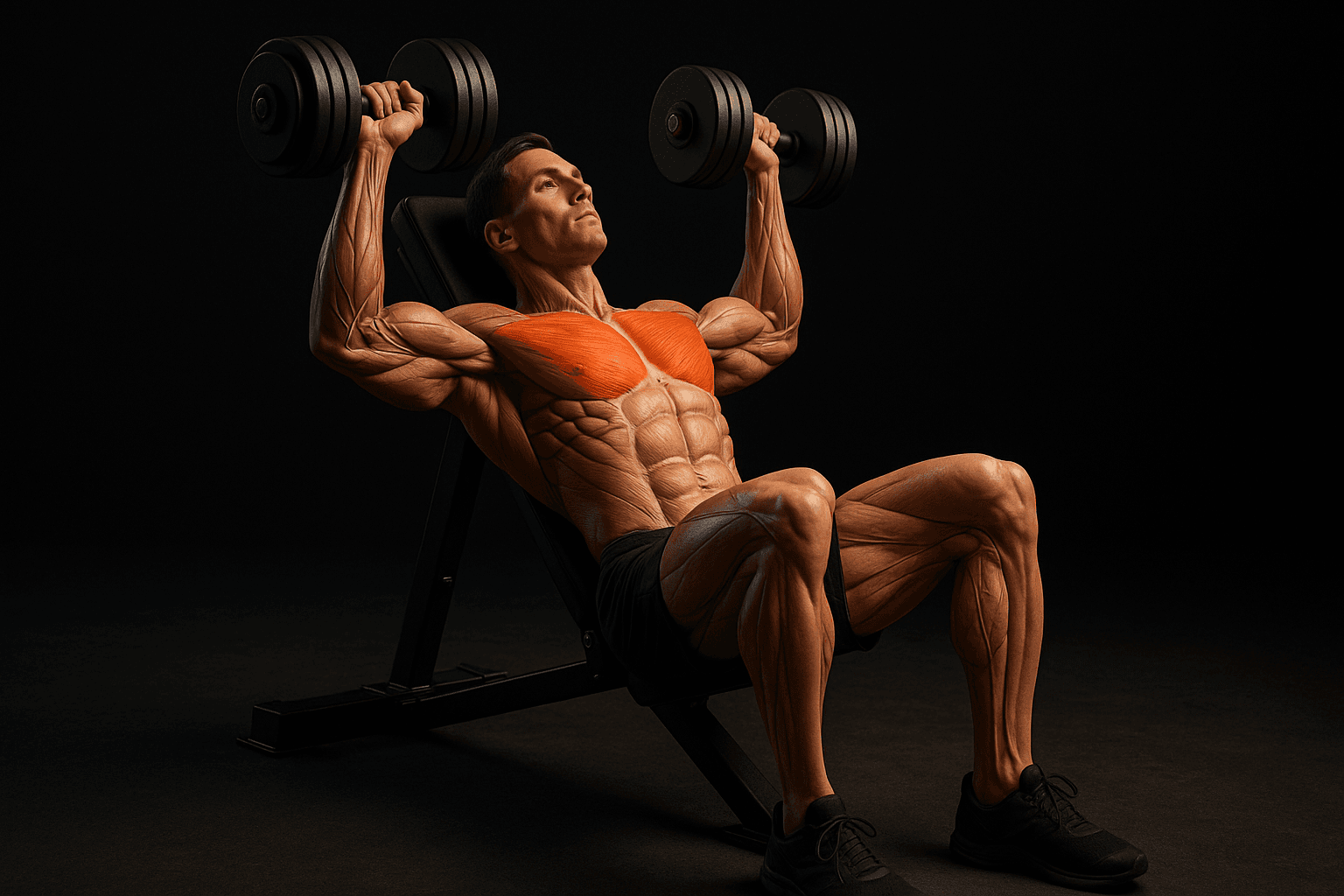
Photo by RepBro.
If you don’t have a bench or curl bar, do chest-supported incline dumbbell curls (use a sofa or steep chair back), single-arm concentration curls, high-anchored band spider curls, strict seated dumbbell curls, or isometric top holds. Each preserves some spider-curl benefits (reduced momentum, vertical force) but loses others (peak loading, exact angle).
What exactly does a spider curl train and why do people value it?
The spider curl is performed with the chest supported on an incline and the arms hanging vertically, so the forearms pull straight up against gravity. That position removes shoulder/torso cheating, places emphasis on the short-head biceps and brachialis, and gives a long time-under-tension at the top of the movement. The key training features are strictness (low momentum), a vertical load path, and a fixed elbow position that isolates the elbow flexors.
Which at-home exercises most closely mimic the spider curl and what do they preserve or lose?
Below are practical options that require only dumbbells, resistance bands, or bodyweight. After each exercise I note what it preserves vs what it loses compared with a traditional spider curl.
-
Incline (chest-supported) dumbbell curl — equipment: adjustable bench or a sofa/angled chair back
- Preserves: chest support, reduced momentum, similar vertical forearm path when done prone/face-down on a steep surface.
- Loses: exact bench angle and stability if using improvised furniture; absolute loading if you only have light dumbbells.
- When adequate: Use this whenever you can stabilize the chest; it’s the closest home substitute for pure isolation.
-
High-anchored band spider curl — equipment: resistance band anchored high or draped over a door
- Preserves: continuous tension throughout the range and an upward pull when you lie prone against a chair/couch edge.
- Loses: limited peak resistance if the band isn’t heavy; slightly different force curve (bands increase resistance near the top).
- When adequate: Good for steady hypertrophy cycles and for disrupting momentum; ideal when dumbbells are light.
-
Single-arm concentration curl (elbow braced on inner thigh) — equipment: dumbbell
- Preserves: strict elbow position, single-arm focus, limited cheating.
- Loses: vertical forearm orientation is less extreme; chest support is absent so torso posture must be controlled.
- When adequate: Useful when you have only one moderate dumbbell and need to emphasize peak contraction.
-
Seated strict dumbbell curl (slow tempo, no body swing) — equipment: dumbbells
- Preserves: ability to control tempo, focus on concentric and eccentric phases, low impulse cheating.
- Loses: less isolation than chest-supported curls and more opportunity for subtle momentum unless you lock the elbows.
- When adequate: Good default when furniture or bands aren’t available; pair with strict elbows and slow eccentrics.
-
Isometric top-hold or 'static peak' curl (press the palm against a fixed object or hold at peak contraction) — equipment: wall, doorframe, or towel around a pole
- Preserves: peak contraction and time under tension, can target short-head activation.
- Loses: no full dynamic range or eccentric loading.
- When adequate: Useful as a finisher or when equipment is minimal; not a long-term replacement for progressive dynamic loading.
How do these alternatives compare side-by-side?
| Exercise | Equipment | Preserves vs spider curl | Loses vs spider curl | When adequate |
|---|---|---|---|---|
| Incline chest-supported dumbbell curl | Dumbbells + sofa/bench | Chest support, vertical pull | Exact bench stability, heavy loading | Most similar; use at home if stable support exists |
| High-anchored band spider curl | Resistance band | Continuous tension, upward pull | Peak heavy load, force curve differs | Good when dumbbells are light |
| Concentration curl | Dumbbell | Single-arm isolation, low momentum | Vertical forearm angle | When only one dumbbell available |
| Seated strict dumbbell curl | Dumbbells | Tempo control, eccentrics | Full isolation if posture slips | Solid default option |
| Isometric peak hold | Body/towel | Peak contraction, TUT | Dynamic eccentric overload | Useful as finisher or on no-equipment days |
How should I program these substitutions? Frequency, sets, and progression
Evidence-based practice for hypertrophy stresses progressive overload and adequate weekly volume. Train biceps 2–3 times per week, distribute your sets across sessions, and progress by increasing weight, reps, sets, time under tension, or resistance band tension. Use a mix of moderate reps for hypertrophy and occasional heavier or slower sets for mechanical tension. Rotate exercises every 4–8 weeks if you stop progressing.
Programming example (home): choose two exercises per session, 2–4 sets each, 6–15 effective reps or 20–40 seconds time under tension per set, 2 sessions per week targeted at biceps. Adjust based on recovery and overall training program.
When is an at-home swap adequate vs when should I go to a gym?
Use at-home alternatives when: you need strict isolation without cheating, you can progress load (or band tension), or you’re in a maintenance or build phase using moderate loads. Consider returning to a gym when: you need substantially heavier loading for continued strength gains, you want precise bench setups (for advanced lifters), or you require specialized equipment (EZ bar, very heavy bands/dumbbells) to continue progressive overload.
What safety cues should I follow?
Stop if you feel sharp or radiating pain. Keep the elbow fixed; avoid shoulder authentication or swinging the torso. Control the eccentric phase to protect tendons. If you have persistent joint pain, consult a qualified professional. This guidance does not diagnose or guarantee injury prevention.
What can't an app or AI coach do for you?
Apps and AI can track sets, suggest progressions, and display demonstrations, but they can’t see your exact movement, correct subtle form breakdowns in real time, or diagnose an injury. Rehabilitation and individualized medical advice require a qualified clinician. Also, no plan works without consistent effort.
Limitations: This article summarizes practical alternatives and evidence-informed programming guidance but does not replace personalized assessment. If you’re rehabbing or have a painful elbow or shoulder, seek an in-person evaluation. If you track workouts, apps like RepBro can help log progress, but they can’t replace a coach’s eye.
If you want a quick at-home starter: pick the chest-supported incline dumbbell curl and a band spider curl, train biceps 2x/week, and focus on strict reps and progressive tension. Consistency and gradual overload are the primary drivers of progress — the exact exercise matters less than steady progression.
Frequently asked questions
- Can I build biceps size at home without spider curls?
- Yes. You can stimulate biceps growth at home with strict curls, band variations, and chest-supported incline curls that reproduce the spider curl’s limited momentum and range. Progressive overload and adequate weekly volume matter most; heavy absolute loading is only necessary when you’ve adapted to lighter tools.
- Is a resistance band a good replacement for a spider curl?
- A band can be a very good substitute because it keeps continuous tension and can mimic the vertical pulling angle if anchored correctly. Bands are limited by peak resistance and can be less precise for heavy progressive overload compared with barbells or heavy dumbbells in a gym.
- How often should I do these spider curl alternatives?
- Train biceps two to three times per week, distributing work across sessions. Use progressive overload (more reps, sets, or tension) and change exercises every few weeks if progress stalls. Recovery and total weekly volume, not a single exercise, determine improvement.