Sled Push: Muscles Worked and Practical Alternatives
Which muscles the sled push trains, how to program it, and four practical alternatives — when to pick each for equipment limits, injuries, or plateaus.
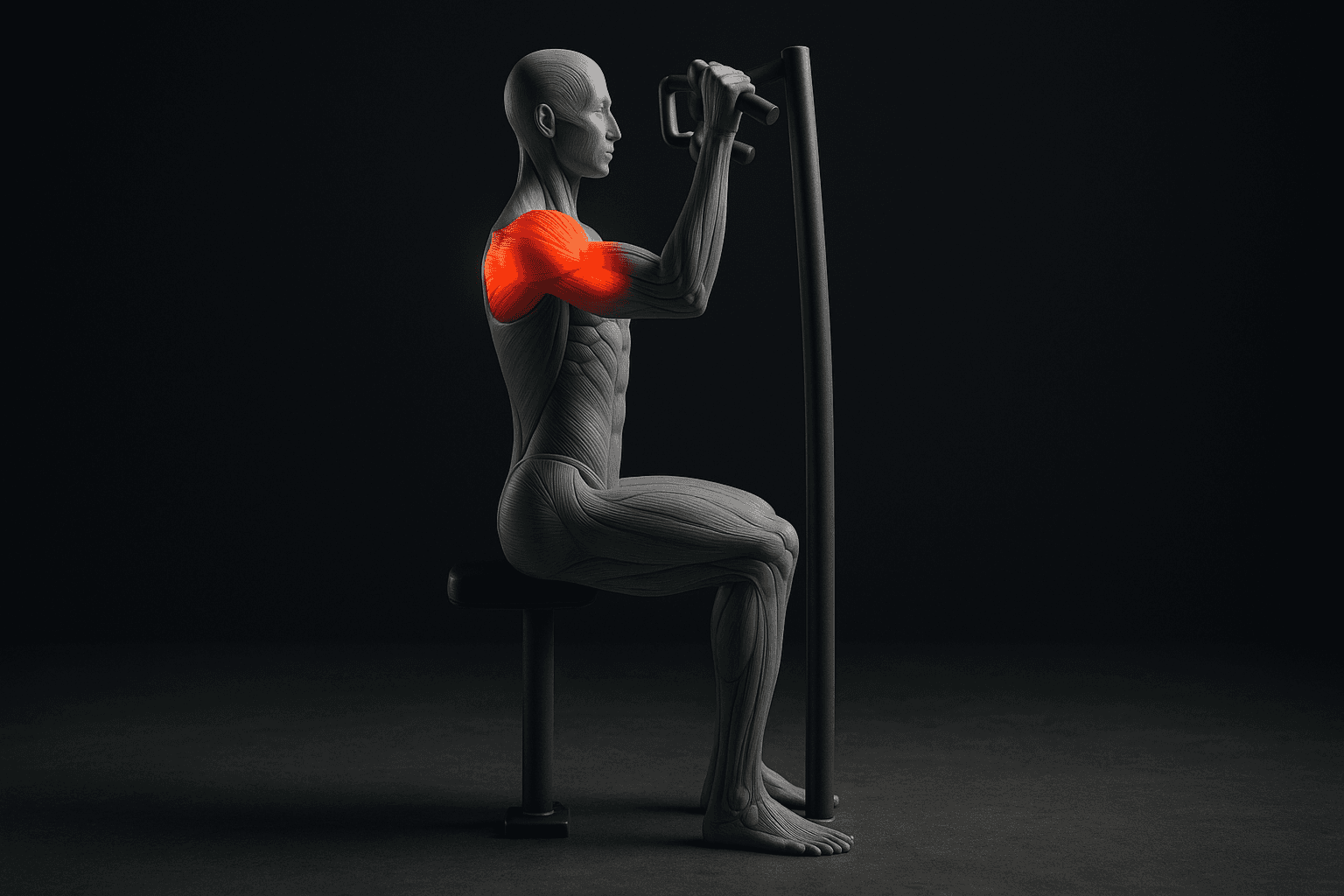
Photo by RepBro.
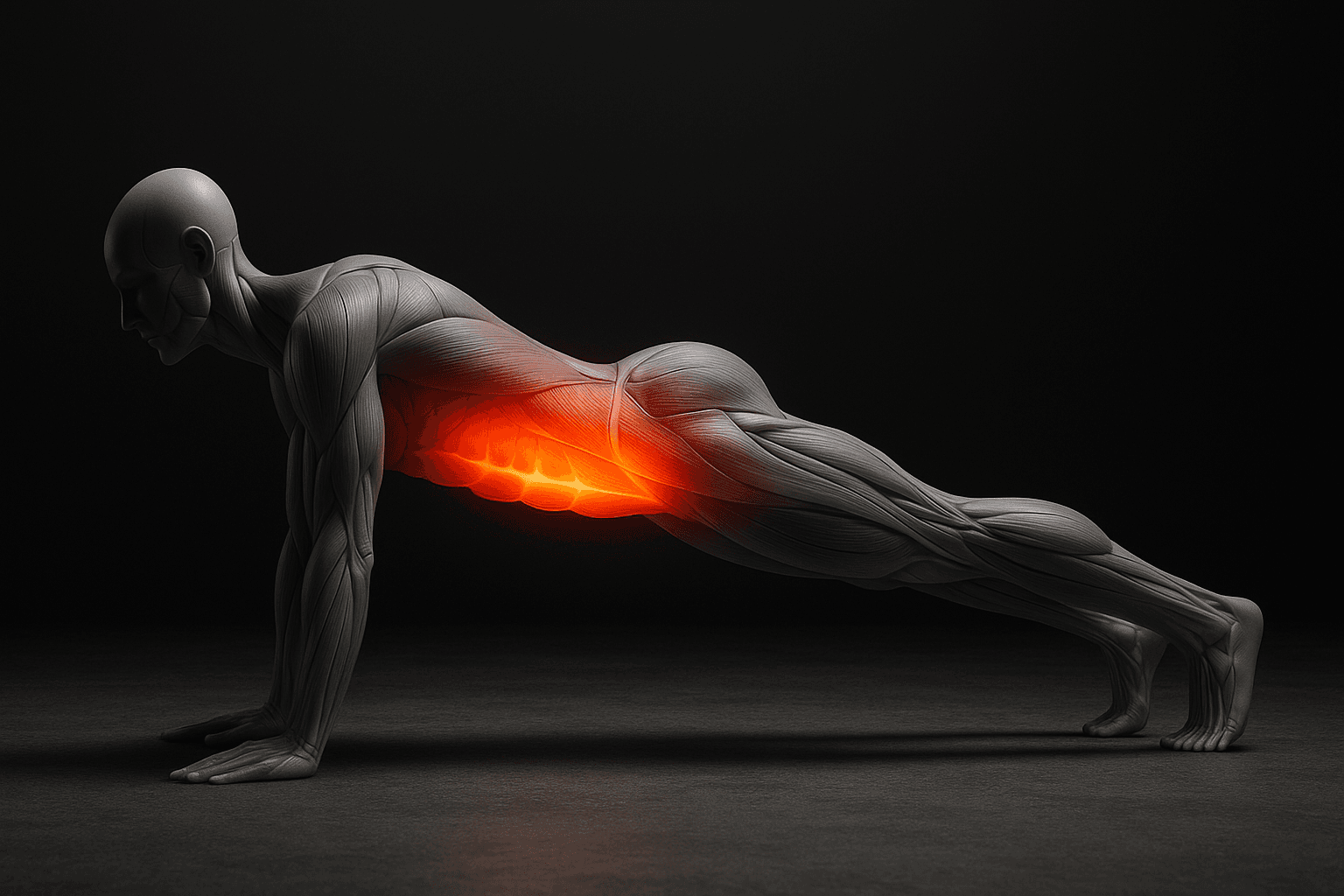
The sled push primarily trains the lower body—quadriceps, glutes, hamstrings and calves—while also stressing the hip extensors. Secondary systems include the anterior core, spinal erectors, upper back and shoulder/arm stabilizers. It develops force production, acceleration and conditioning depending on load and distance.
What muscles does the sled push train?
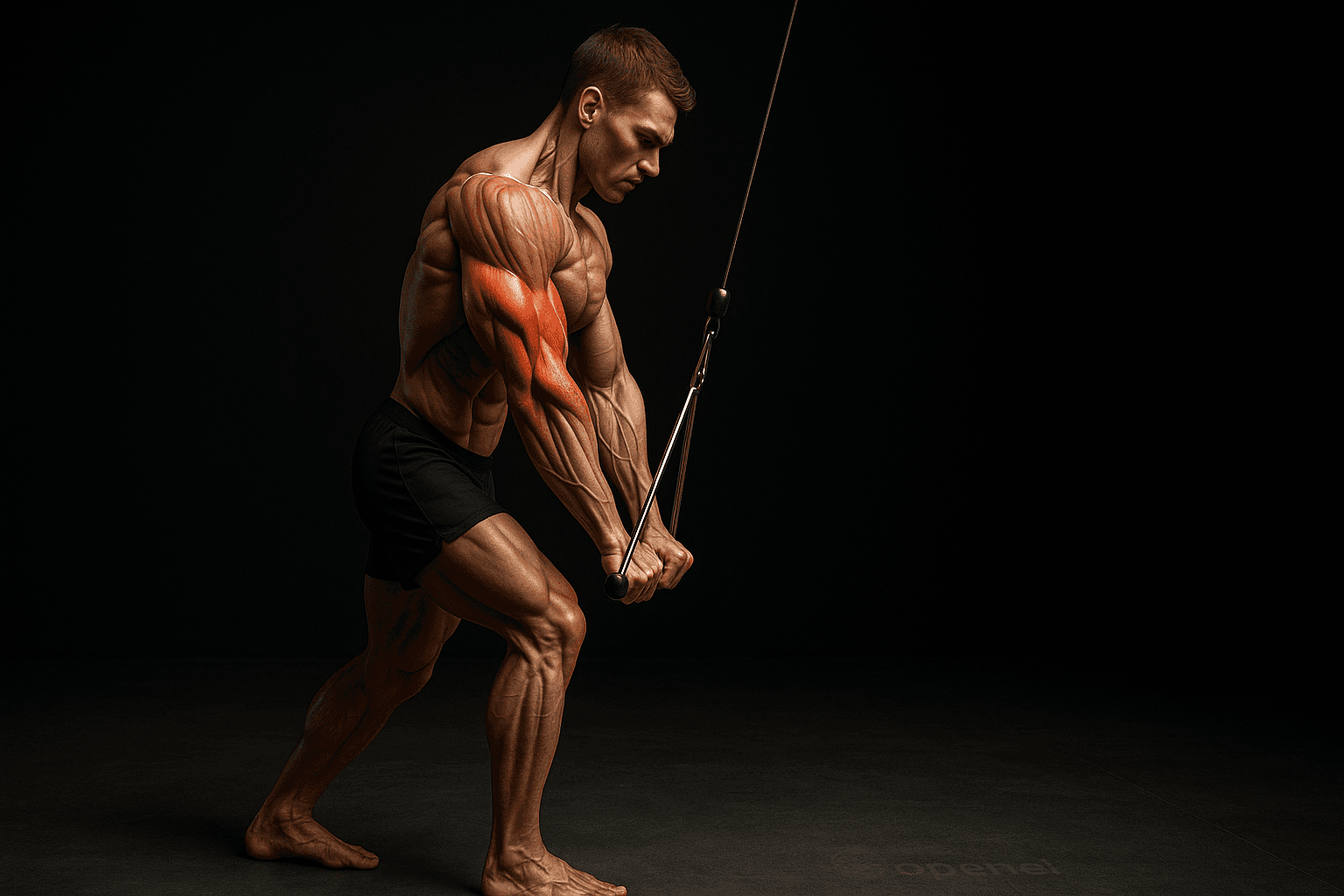
The sled push is a multi‑joint, horizontal force task. Primary movers are the quadriceps (knee extension) and hip extensors (gluteus maximus and hamstrings) with calves contributing to ground‑reaction force. Secondary contributors are the anterior core (bracing and resisting extension), lumbar erectors (postural control), and the upper back and shoulders for handle stabilization and force transfer. The arms and triceps help maintain push force when hands are on handles.
Beyond muscle recruitment, the sled push also stresses the neuromuscular system for force application and has a cardiovascular component when used for conditioning.
How does load, stance and tempo change what I train?
- Load: Light loads pushed fast emphasize power and acceleration (rate of force development). Heavy loads pushed slowly emphasize maximal strength and force production at low velocity.
- Stance and foot placement: Wider stance and more upright torso shift work slightly toward quad dominance; a more hip‑dominant pattern (forward lean, longer stride) increases glute and hamstring demand.
- Tempo and distance: Short, maximal efforts (brief distances or short times) train sprint power; longer, steady pushes create metabolic conditioning and muscular endurance.
Coaches commonly manipulate these variables to target power, strength, or conditioning rather than treating the sled push as a one‑size‑fits‑all movement.
Where does the sled push fit in a program?
- Power/Speed Block: Early in the session after warm‑up. Use lighter loads and short distances to prioritize speed and neural quality.
- Strength Block: As an accessory on lower‑body days when heavy, slower pushes complement squat/deadlift work for horizontal force transfer.
- Conditioning Block: Later in sessions or on separate conditioning days. Use moderate loads with repeated bouts or longer distances.
Frequency depends on goals and recovery. Many athletes use 1–3 sessions per week, reducing volume in deload weeks and coordinating with heavy squat or sprint days to avoid excessive fatigue.
What are solid alternatives to the sled push and when should I pick each?
Below are four practical alternatives with context for when to choose them.
| Exercise | Primary benefits | When to pick it |
|---|---|---|
| Trap‑bar deadlift | High horizontal/vertical force, posterior chain strength | Gym access only; pick for raw force production, if you need a heavy alternative to break plateaus in strength |
| Hill sprints / resisted sprints | Acceleration, motor patterning, power | No sled available or you need sport‑specific sprint transfer; avoid during acute joint pain |
| Farmer's carries / loaded carries | Core/bracing, grip, force transfer across torso | Limited plate storage but have dumbbells/KBs; good for post‑injury return when pushing is painful |
| Leg press or split squats | Isolated quad/glute hypertrophy with controlled loading | Use when sled access is unavailable or you need targeted hypertrophy and lower impact |
When choosing an alternative, match what you want from the sled push: force direction (horizontal vs. vertical), energy system (short power bursts vs. endurance), and joint loading.
How should I program sled pushes (sets, frequency, progression)?
Programming depends on your intent:
- Power/acceleration: Short efforts with full recovery. Use multiple brief reps (coach choice varies) and prioritize quality. Progress by increasing speed, reducing rest only when form is maintained, or modestly increasing load.
- Strength: Heavier pushes with fewer reps/shorter distances and longer rest. Progress by adding load or sets once you can complete all reps with sound technique.
- Conditioning: Longer pushes or repeated intervals with shorter rests. Progress by increasing total work (distance or number of intervals) or shortening rest.
Keep overall lower‑body volume consistent with established strength training guidelines: avoid piling sled volume on top of already high squat/deadlift loads without adjusting elsewhere. Use a deload week every few weeks when overall fatigue accumulates.
What safety cues and form checks should I use?
- Set a braced neutral spine: do not let the lower back sag or hyperextend.
- Push through the whole foot, drive with the heels and midfoot rather than just the toes.
- Keep shoulders packed and elbows slightly bent—avoid locking out or shrugging.
- Breathe braced; avoid Valsalva on very long conditioning pushes if you're inexperienced.
Stop if you feel sharp pain and consult a qualified professional. This article does not diagnose or treat injury.
What are practical signs it’s time to change or substitute the sled push?
- Equipment limits: No sled access—pick a gym alternative like trap‑bar deadlifts or leg press.
- Injury or pain: If pushing on handles irritates shoulders, consider harnessed sled towing, loaded carries, or unilateral leg work prescribed by a clinician.
- Plateau: Vary load, distance, or choose an exercise that overloads a weak link (e.g., heavy trap‑bar pulls for low‑speed force; hill sprints for RFD).
What can't apps or AI coaching do for my sled training? (Limitations)
Apps and AI can provide sets, suggested loads, and progression ideas, but they can't reliably see or correct your form, feel your pain, or make medical diagnoses. They also don't replace an in‑person assessment for movement dysfunction or a tailored rehab plan from a qualified professional. Ultimately, a plan only works if you execute it consistently; consistency is the primary driver of progress.
Safety note: if you experience sharp or unusual pain, stop and seek evaluation from a qualified clinician. The guidance here is instructional and not a medical diagnosis.
If you want to log sled sessions and track progression, many training apps can help with records and simple progressions, but pair that with video review or coach feedback when possible.
Frequently asked questions
- What muscles does the sled push primarily train?
- The sled push primarily targets the lower body: quadriceps, glutes, hamstrings and calves while loading the hip extensors. It also demands the anterior core, spinal erectors and upper‑body stabilizers (shoulders, triceps) for force transfer and posture, so it serves as a mixed strength/conditioning exercise.
- How often should I include sled pushes in my training?
- Include sled pushes one to three times per week depending on goal and recovery. Use fewer high‑intensity sprints when chasing power and more moderate-load longer pushes for conditioning. Align volume with your overall lower‑body work and reduce frequency during deload weeks.
- What are simple alternatives to sled pushes if I don't have a sled?
- Good alternatives are trap‑bar deadlifts for horizontal force and posterior chain strength, hill sprints or resisted sprinting for acceleration, heavy loaded carries (farmer's walks) for core and force transfer, and leg press or split squats for gym hypertrophy without horizontal load.