Single‑Arm Dumbbell Row Alternatives at Home (Minimal Equipment)
Practical at-home substitutes for the single-arm dumbbell row using bodyweight, dumbbells, or bands. What each keeps or loses, how to program, and when to use a gym.
Photo by RepBro.
Answer-first
Single‑arm dumbbell row alternatives at home: inverted rows (table or rings), single‑arm band rows, two‑arm bent‑over dumbbell rows (support variations), renegade rows, and weighted backpack rows. Each keeps the horizontal pull pattern but differs in load profile, unilateral cueing, and core demand. Choose by goals and equipment.
What practical alternatives can I do at home for the single‑arm dumbbell row?
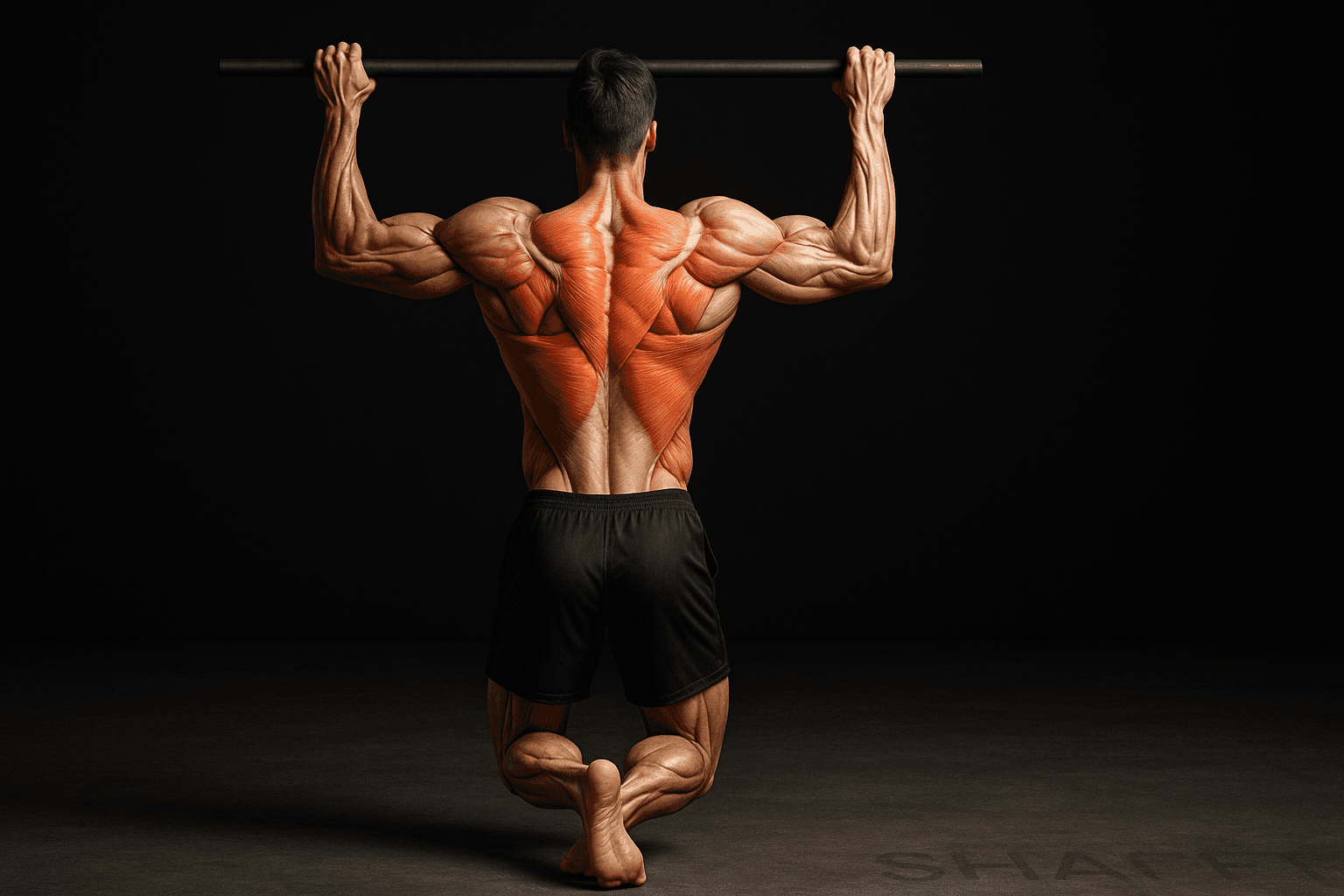
- Inverted row (under a sturdy table, broom between chairs, or suspension trainer/TRX): horizontal bodyweight pull.
- Single‑arm band row: one‑handed pull using a door anchor or post; emulate unilateral pull and scapular motion.
- Two‑arm bent‑over dumbbell row (both hands): can be done with a hip hinge and two dumbbells or a heavy backpack.
- Renegade row: alternating single‑arm dumbbell row from a plank position; adds anti‑rotation core demand.
- Backpack or suitcase row: load a backpack or duffel and perform single‑arm or two‑arm rows when dumbbells aren’t available.
What does each alternative preserve and what does it lose compared to the single‑arm dumbbell row?
| Exercise | Equipment | Preserves | Loses |
|---|---|---|---|
| Inverted row | Table/TRX | Horizontal pulling pattern, full scapular retraction, high rep capacity | Maximal absolute load, unilateral isolation (unless single‑arm version), different torque curve |
| Single‑arm band row | Band, anchor | Unilateral pull, continuous tension, scapular control | Peak external load, consistent linear loading at end range |
| Two‑arm bent‑over row | Dumbbells/backpack | Loading on lats, ability to use heavier absolute loads, simpler setup | Unilateral isolation, some core anti‑rotation demand |
| Renegade row | Dumbbells | Unilateral pull + core anti‑rotation, loading variability | Reduced pure pulling load if core limits; risk of hip/rotation leakage |
| Backpack/suitcase row | Pack or bag | Practical progressive loading, unilateral option | Load distribution less precise, grip and strap comfort issues |
When is a swap adequate and when should I go to a gym for the real thing?
Adequate at home
- You’re working on hypertrophy or general strength and can progressively overload with bands, packs, or bodyweight variations. Most lifters make steady progress with these tools for months to years.
- You value scapular control, unilateral balance, or core stability; many alternatives replicate these features.
Time to consider a gym
- You need high absolute loads for strength-specific phases (e.g., low‑rep maximal strength work) and have hit a long stall that only heavier dumbbells/barbells can fix.
- You require precise increments (small weight jumps) or heavy, chest‑supported options to isolate and overload without core limits.
How should I program these alternatives for size and strength?
- Frequency: train back 2–3 times per week. Spreading volume produces better recovery and stimulus distribution.
- Weekly volume: aim for roughly 10–20 working sets per muscle group per week, adjusted by experience, recovery, and individual response.
- Rep ranges: use 6–12+ reps for hypertrophy and 3–6 for strength when load allows. With bands and bodyweight, higher reps and more sets are appropriate if load is limited.
- Progression rules: increase load when you can complete the prescribed reps with good form; otherwise add sets, reps, reduce rest, or slow tempo. Track numbers — progressive overload is the consistent predictor of long‑term gains.
Example sessions (home, minimal equipment):
- Session A: Inverted rows 4x8–12, Single‑arm band rows 3x10 each, Face pulls (band) 3x15.
- Session B: Renegade rows 4x6–10 (each arm), Two‑arm bent‑over rows with backpack 3x8–12, Rear delt flyes 3x12.
Adjust load or reps each week. Deload every 4–8 weeks by reducing volume by ~40–60% or taking a week of easier sessions if progress stalls or fatigue accumulates.
Which alternative most closely matches unilateral mechanics and core demand?
Renegade rows and single‑arm band rows keep unilateral mechanics best. Renegade rows add anti‑rotation core demand similar to unsupported single‑arm dumbbell rows, while single‑arm band rows better replicate scapular mobility and can be less demanding on the lower back.
What safety points should I follow?
- Stop if you feel sharp or unusual pain; mild muscle soreness is normal but sharp pain is not.
- Keep a neutral spine during bent‑over work; hinge at the hips, not the lower back.
- For inverted rows, ensure anchor points (table, straps) are secure and rated for your weight.
- Consult a qualified professional for persistent pain, recent injuries, or exercise modifications.
What can’t apps or AI do for my rowing form and progress?
- No app can fully replace a trained coach observing your live technique; apps can guide programming and tracking but can’t watch subtle joint angles, breathing patterns, or compensate for movement faults on the spot.
- Injuries, clinical rehab, and medical advice require in‑person assessment from a clinician or physical therapist.
- A program only works if you follow it consistently; logging progress and honest auto‑regulation are necessary.
Limitations
- This guide summarizes practical substitutes but doesn’t replace individualized coaching. Progression ranges and set counts are consensus‑based guidance rather than guaranteed prescriptions. If you have a specific injury or rehab goal, seek a qualified professional. Tracking tools such as RepBro can help track progressive overload but can’t correct technique.
Summary
Home alternatives for the single‑arm dumbbell row let you maintain horizontal pulling stimulus, unilateral balance, and scapular control. Choose based on the load you need, your core tolerance, and equipment. Use progressive overload, 2–3 weekly sessions, and 10–20 weekly sets for best outcomes. Prioritize safe form and consult a professional for pain or complex needs.
Frequently asked questions
- Can resistance bands replace a single‑arm dumbbell row at home?
- Yes. A single‑arm band row preserves unilateral pull mechanics and decent constant tension; it loses maximal absolute load and some end‑range peak force. Progress by increasing band tension, reps, sets, or slower tempo; it’s adequate for most strength and hypertrophy goals until heavier, gym loads are needed.
- How often should I train back with these at‑home substitutes?
- Train back 2–3 times per week using total weekly volume of roughly 10–20 working sets for the muscle group, spread across sessions. Use heavier, lower‑rep work for strength and moderate reps for size. Adjust volume based on recovery and progress rather than fixed daily rules.
- Which home alternative keeps unilateral loading and core demand closest to the single‑arm row?
- Renegade rows (dumbbells) preserve unilateral loading and add significant anti‑rotation core demand similar to an unsupported single‑arm row. One‑arm band rows also retain unilateral pull and scapular mobility, but typically provide less absolute load and different tension curve.