Single‑arm Dumbbell Row: Proper Form, Step‑by‑Step
Step‑by‑step single‑arm dumbbell row form guide: setup, execution cues, breathing, tempo, common mistakes with fixes, programming tips, and safety notes for lifters.

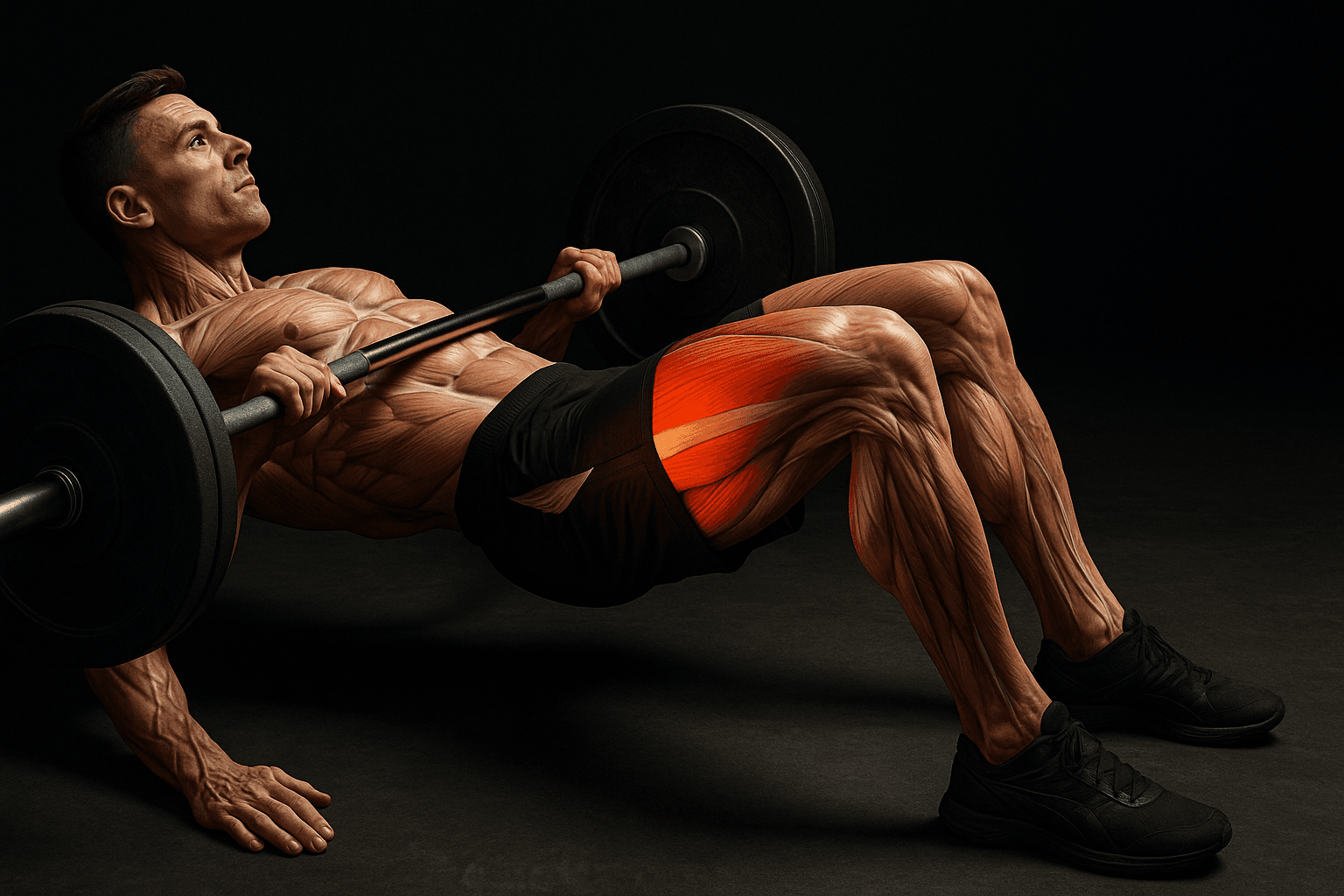
Photo by RepBro.
The single‑arm dumbbell row builds the lats, mid‑back, and scapular stabilizers. Set your chest supported or hinge at the hips, brace your core, lead the pull with the elbow to the hip, retract the shoulder blade, control the descent, and breathe out on the pull.
How should I set up the single‑arm dumbbell row?
Two common setups: bench‑supported and free‑standing hinge.
- Bench‑supported: place one knee and same‑side hand on a flat bench (bench height such that your torso is roughly parallel to the floor). Keep the non‑lifting foot planted, spine neutral, and the free hand gripping a dumbbell on the floor.
- Free‑standing hinge: feet hip‑width, hinge at the hips until torso is ~30–45° to the floor (not fully horizontal), slight knee bend, dumbbell in one hand. Use a staggered stance if you need more stability.
Key setup points (both versions):
- Neutral spine and neck (gaze down at ~1–2 m in front of you). Avoid rounding the lower back.
- Shoulder blades slightly protracted at the start, not shrugged up.
- Wrist neutral (avoid flexion), elbow tracking toward the hip.
- Choose a weight you can control through full range.
What are the step‑by‑step execution cues for each rep?
- Start: hold the dumbbell with a neutral grip, shoulder relaxed. Brace your core as if preparing for a light punch to the gut.
- Initiate the lift by pulling the elbow backward and upward, aiming to bring it to or slightly past the hip. Think “elbow to hip” rather than “hand to chest.”
- Mid‑rep: squeeze the scapula toward the spine for a brief 0.5–1 second without shrugging. Keep the torso stable — avoid rotation.
- Lower: slowly extend the arm until the shoulder blade reaches a neutral or slightly protracted position. Resist letting the weight pull you into rounded posture.
- Repeat for the prescribed reps, then switch sides.
Execution cues: “elbow to hip,” “lead with the elbow,” “control the descent,” “keep the ribs down.”
What breathing and tempo should I use?
- Breathing: inhale during the eccentric (lowering) phase; exhale during the concentric (pull). For many lifters the cue that feels natural is exhale as you pull the weight up.
- Tempo: for most goals, use a controlled tempo. Try a 1–2 s concentric (pull), 0–1 s squeeze at top, and 2–3 s eccentric (lower). Slower eccentrics increase time‑under‑tension but don’t sacrifice technique.
Evidence note: tempo influences time‑under‑tension, but total volume and progressive overload drive most strength and hypertrophy adaptations.
How many sets, reps, and how often should I do them?
Follow standard resistance‑training guidance: train each muscle group 2–3 times per week and accumulate roughly 10–20 sets weekly for most intermediate lifters depending on goals. Use these rep ranges: 6–12 reps for hypertrophy and 3–6 for strength work with heavier loads. Progress by adding reps, sets, or weight when form remains intact.
How do single‑arm dumbbell rows compare to other rows?
| Feature | Single‑arm DB row | Barbell row | Seated/pin‑loaded row |
|---|---|---|---|
| Unilateral stability | High (corrects imbalances) | Lower | Moderate |
| Max load potential | Moderate (dumbbell limits) | High | Moderate–High |
| Core/anti‑rotation demand | High | High | Low |
| Range of motion control | High | Moderate | Moderate |
| Easier to isolate one side | Yes | No | Can, with single‑handle variations |
Choose based on goals: single‑arm rows are valuable for unilateral strength and teaching good scapular mechanics; barbell rows allow heavier loading.
What common mistakes happen and how do I fix them?
- Torso rotation (twisting to help the lift): fix by reducing weight, bracing core, and thinking "elbow straight back". Use bench support if needed.
- Shrugging the shoulder instead of retracting the scapula: cue a scap squeeze at the top; pause 0.5–1 s and focus on mid‑back muscles.
- Using momentum or jerking: slow the eccentric and reduce load. A controlled tempo solves most momentum issues.
- Elbow flared too wide: aim elbow toward the hip to load lats more and reduce shoulder stress.
- Excessive neck extension: look down at the bench or floor to keep the cervical spine neutral.
How should I progress the single‑arm row?
Progress when you can complete all sets and reps with perfect form for two sessions in a row. Options: increase weight (smallest increment available), add 1–3 reps per set, add a set, or slow the tempo to increase intensity. Track load and reps across sessions to ensure progressive overload.
If you want objective tracking, apps like RepBro can log sets, weights, and tempo cues.
What safety notes should I follow?
Stop if you feel sharp or unusual pain. If you have persistent joint pain, a history of shoulder or lower‑back injury, or uncertainty about form, consult a qualified clinician or coach before continuing. Never diagnose injuries via text or apps.
What can't apps or AI coaching do for this lift?
Limitations: an app cannot reliably see and correct your real‑time movement, feel your tension, or diagnose aches and structural issues. Only an in‑person qualified coach or clinician can perform a proper movement assessment, hands‑on correction, or medical evaluation. Also, a plan works only with consistent effort — adherence matters more than the app name.
Limitations (mandatory): no app or AI can replace on‑site physical assessment, hands‑on cues, or medical diagnosis. If you have pain or a complex injury history, seek a qualified professional. Training plans require consistency and recovery to work.
Final practical checklist before you row:
- Warm up thoracic mobility and the posterior chain.
- Use a weight that allows precise scapular control.
- Breathe out on the pull; control the lowering phase.
- Track load and progress slowly to avoid technical breakdown.
Safety reminder: stop on sharp pain and consult a qualified professional. This guide is instructional, not diagnostic or medical advice.
Frequently asked questions
- Can I train single‑arm dumbbell rows every workout?
- You can include single‑arm rows multiple times per week, but follow resistance‑training guidelines: hit each muscle group 2–3 times weekly and accumulate 10–20 sets per week for most goals. Vary intensity, watch recovery, and reduce frequency when fatigue or soreness limits quality.
- Should my elbow stay close to my body during the row?
- Yes. Keep the elbow tracking near the ribcage (roughly 10–30° from the torso) to emphasize lat and mid‑back activation. Allow a slight outward angle for the rear deltoid on purpose, but avoid dramatic flaring or winging of the shoulder.
- How heavy should I go on single‑arm rows?
- Choose a weight you can control for your target rep range with perfect form: typically 6–12 reps for hypertrophy, lower reps for strength. Increase weight only when you can perform all sets with clean technique; prioritize tempo and scapular control over load.