Seal Row Alternatives at Home (Minimal Equipment)
Four practical at-home substitutes for the seal row using dumbbells, bands, or bodyweight. What each keeps, what each sacrifices, and when you need a gym.

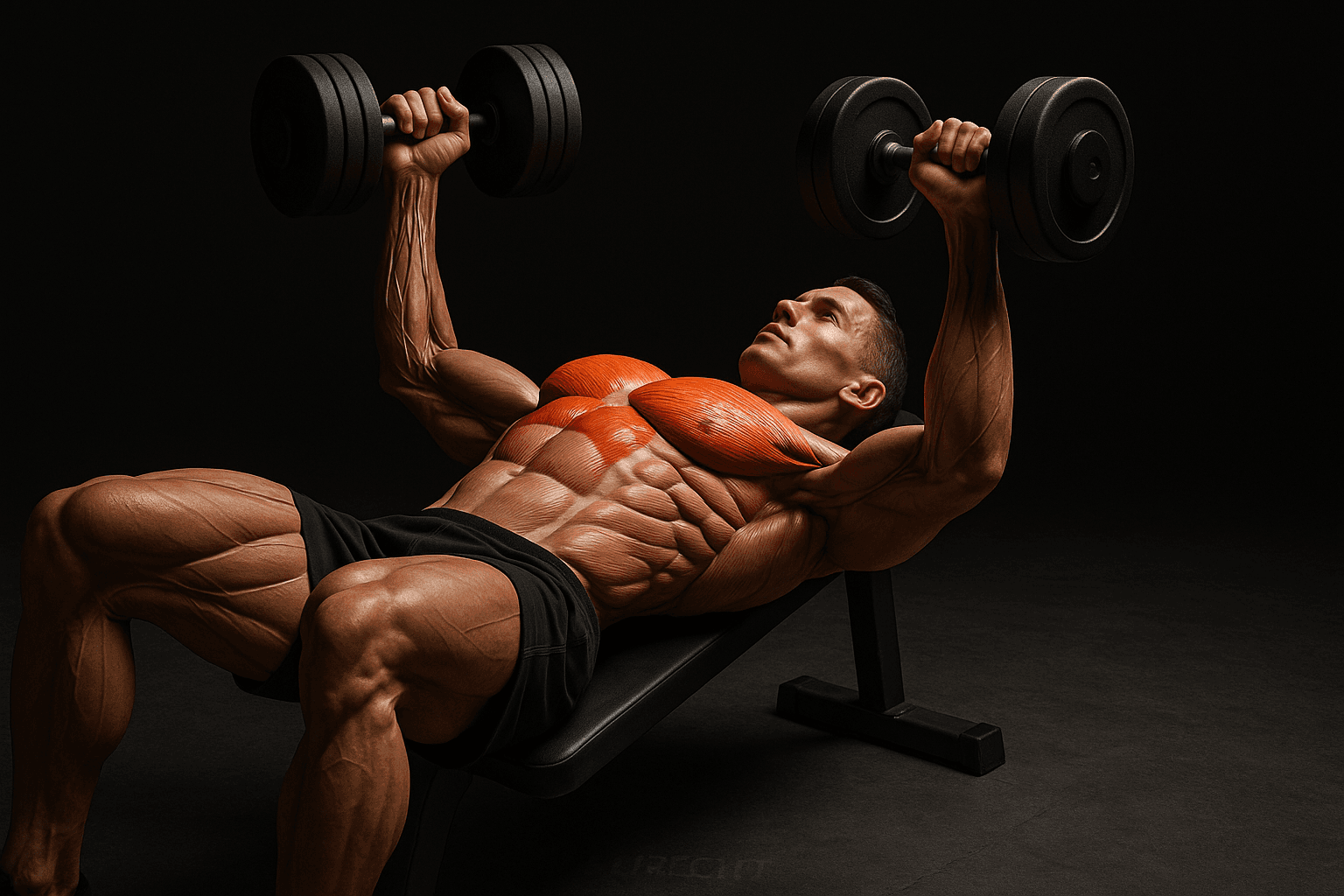
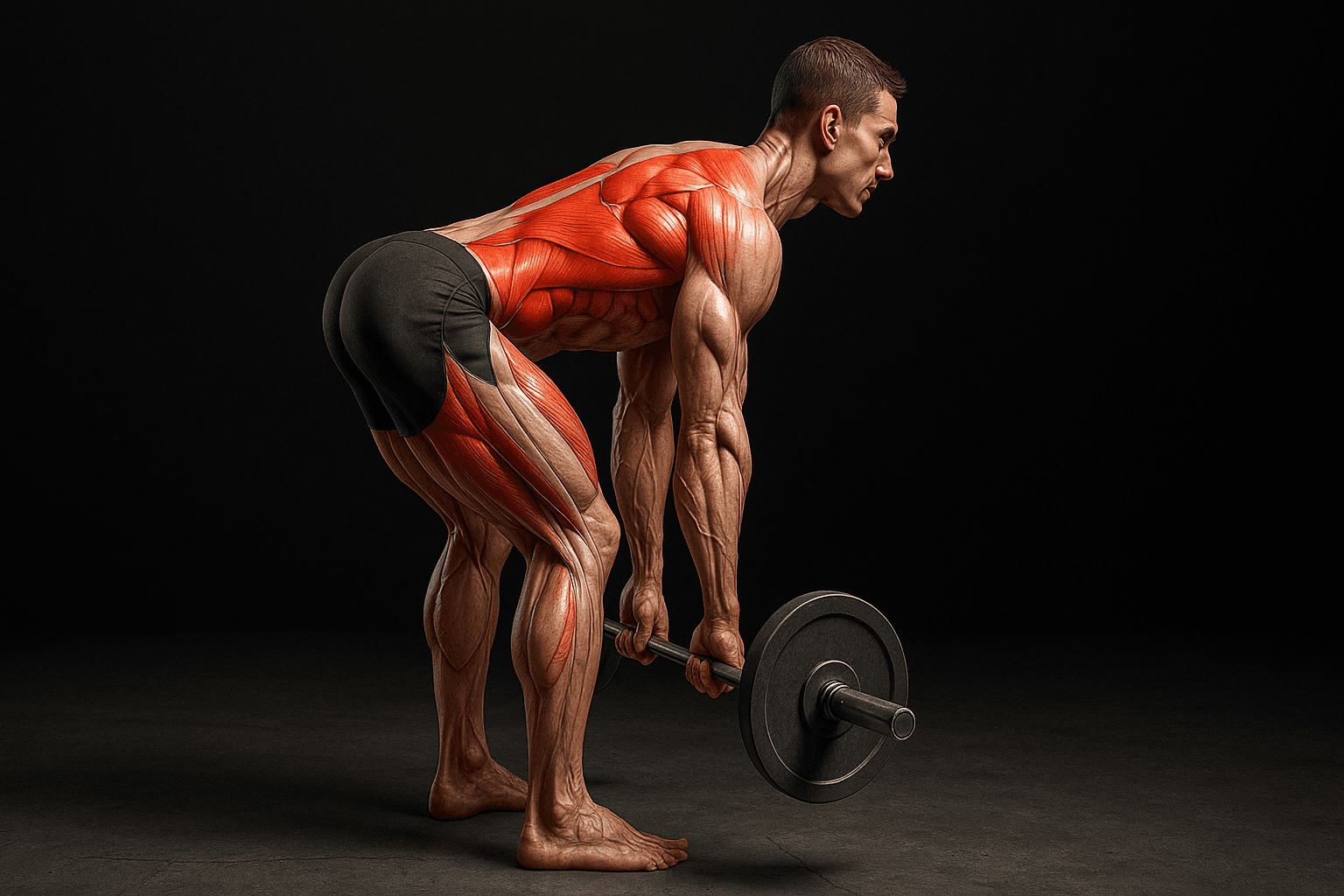
Photo by RepBro.
If you don’t have a barbell bench, four practical at-home substitutes for the seal row are: chest-supported incline dumbbell row, single-arm prone dumbbell row, band chest-supported row, and inverted/bodyweight rows. Each preserves strict horizontal pulling and scapular control to varying degrees; only a gym gives maximal absolute loading.
What does a seal row do that matters?
The seal row is a chest-supported, prone barbell row performed on a bench so the torso can't cheat. That removes hip drive and lower-back loading, forcing the upper-back and lats to do the pull. Key qualities: strict horizontal pulling path, high scapular retraction demand, and the ability to load bilaterally with heavy absolute weight.
Which home alternatives reproduce that quality most closely?
Below are four options that require minimal equipment (dumbbells, resistance bands, a bench or incline surface, or a sturdy bar/TRX):
- Chest-supported incline dumbbell row
- How: Lie face-down on an incline bench (30–45°) and row dumbbells to the ribcage.
- What it preserves: Chest support, strict torso position, good scapular retraction, and independent unilateral work.
- What it loses: Maximum bilateral loading compared with a heavy barbell; dumbbell weight increments can limit progressions.
- When it’s adequate: For hypertrophy, technique practice, and avoiding low‑back fatigue.
- Single-arm prone dumbbell row on floor or low bench
- How: Lie face-down on a flat bench or the floor, row a single dumbbell in a controlled arc.
- What it preserves: Prone position and limited torso involvement; unilateral focus helps balance.
- What it loses: Full range of motion if done on the floor, and bilateral heavy loading.
- When it’s adequate: When you have at least one moderately heavy dumbbell and want strict rows without a bench.
- Band chest-supported row
- How: Anchor a band behind an incline surface; lie face-down on the incline and row the band handles to your ribs.
- What it preserves: Chest support and strict pulling plane; variable resistance emphasizes end range.
- What it loses: Absolute top-end loading (band strength is limited) and consistent tension across the whole motion if the anchor/setup is poor.
- When it’s adequate: When you need a light, portable option or smoother end-range emphasis.
- Inverted (bodyweight) rows using a low bar, table edge, or TRX
- How: Set a bar or suspension trainer at hip height, hang underneath with feet on the floor and pull your chest to the bar.
- What it preserves: Horizontal pull pattern and scapular retraction; easily progressed by foot elevation or weighted vest.
- What it loses: The pure chest-supported feel — you’ll recruit more core, glutes, and hamstrings for body tension.
- When it’s adequate: For general strength and hypertrophy when you lack heavy dumbbells; good for progressive overload with makeshift weight.
How should I program these alternatives compared to seal rows?
- Frequency: Train horizontal pulling 2–3 times per week, consistent with standard resistance training recommendations to accumulate volume across the week.
- Volume: Use multiple sets per session (e.g., 2–4 sets) depending on your total program. For hypertrophy, select a rep range that allows quality repetitions and moderate fatigue (typical hypertrophy ranges are commonly used in practice).
- Progression: Increase resistance, add reps, improve technique, or shorten rest as you adapt. Bands and bodyweight can be progressed by changing leverage, band thickness, or adding external load.
Do not fabricate progress timelines—track performance and adjust based on consistent improvements in reps or resistance.
Quick comparison table: what each keeps vs loses
| Alternative | Preserves (vs seal row) | Loses (vs seal row) |
|---|---|---|
| Incline dumbbell row | Chest support, strict pull, unilateral control | Max bilateral load; smaller weight increments |
| Single-arm prone dumbbell row | Prone position, strict torso | Full ROM on floor; absolute load |
| Band chest-supported row | Chest support, end-range tension | Top-end absolute load; consistent resistance curve |
| Inverted row / TRX | Horizontal pull pattern, scalable bodyweight | Chest support; more core/hip involvement |
When is a home swap adequate and when should you visit a gym?
Swap is adequate when your goals are hypertrophy, technique refinement, balanced upper-back development, or reducing low-back stress. Home alternatives can deliver progressive overload for most lifters through creative loading.
Consider a gym when you need: very heavy bilateral loading for maximal strength, precise barbell technique transfer to heavy deadlifts/rows, or progressive jumps that exceed your available dumbbells/bands. A gym gives access to heavy plates, a barbell capable of very high loads, and specific bench setups.
Short safety note
Stop any exercise that causes sharp joint pain. Maintain controlled tempo and full scapular control on pulls. If you have pre-existing shoulder or spine issues, consult a qualified clinician or physiotherapist before changing exercise selection.
Limitations: what apps and guides can’t do
An article or app cannot see or correct your form in real time. No app can replace a hands-on assessment for an injury or personalized rehabilitation—see a qualified professional for those needs. A plan only works if you follow it consistently; tracking helps, but consistency and progressive overload are the real drivers of change.
If you track lifts and progressions digitally, tools such as RepBro can help record sets, weights, and trends, but they don’t substitute for in-person coaching.
Practical example mini-program (sample progression)
- Day A: Chest-supported incline dumbbell rows — 3 sets of 8–12 reps
- Day B: Inverted rows (feet elevated) — 3 sets of 6–10 reps
- Day C: Band chest-supported rows — 3 sets of 10–15 reps
Progress by adding reps first, then more resistance (heavier dumbbell, stronger band) while keeping clean technique. Schedule horizontal pulling twice per week if you also train vertical pulls.
Final note: home alternatives reliably develop upper-back strength and hypertrophy if you manage volume and progression sensibly. Use the method that lets you add resistance progressively without compromising form, and consult a professional for pain, major strength goals, or rehab guidance.
Frequently asked questions
- Can I get the same muscle stimulus as a seal row at home?
- Yes for hypertrophy and scapular control in most cases: chest-supported and band-resisted horizontal rows reproduce the strict horizontal pull and high lat/trap activation. Heavy absolute loading for maximal strength may be harder to match without a barbell and heavy plates.
- How often should I train horizontal pulls if I switch to home alternatives?
- Aim to hit horizontal-pull muscles 2–3 times per week and use progressive overload (more reps, sets, or resistance over time). Adjust recovery based on overall volume and soreness; include deloads when performance stalls.
- Is an inverted row a good long-term replacement for the seal row?
- An inverted row is a valid long-term tool for horizontal pulling because it trains similar movement patterns and can be progressed. It recruits more core and posterior chain than a chest-supported seal row, so it changes transfer to very strict barbell rows.