Reverse Curl Alternatives at Home (Minimal Equipment)
Four practical reverse-curl substitutes you can do at home with dumbbells, bands, or bodyweight. What each preserves and loses, programming tips, and when to go to a gym.
Photo by RepBro.
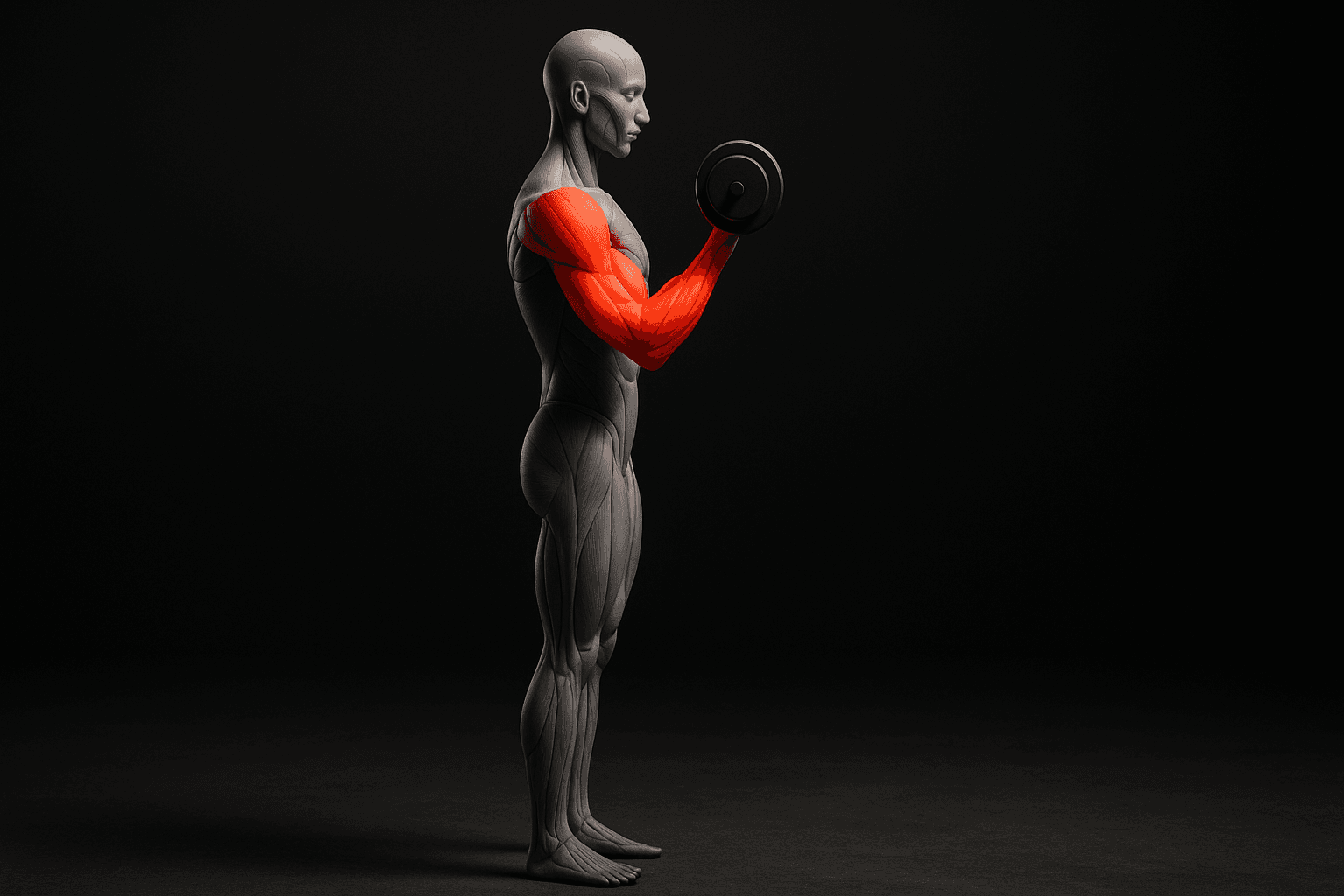
If you don’t have a barbell, use pronated/neutral dumbbell curls, Zottman curls, band reverse curls, hammer curls, and reverse wrist curls. Each preserves some brachioradialis and wrist-extensor work but trades off loading, stability, or pure pronated mechanics; choose based on goals and available load.
What exactly does a reverse curl target and why does that matter at home?
Reverse curls (palms-down grip) bias the brachioradialis plus wrist extensors while reducing biceps short-head dominance compared with supinated curls. The pronated grip also challenges grip and forearm extensors. At home, the main limitation is load and comfortable grip position — heavier barbell options aren’t always available.
Which at-home substitutes preserve the most of the reverse curl’s benefits?
- Pronated dumbbell curl (palms down)
- Equipment: pair of dumbbells (even 5–20 kg / 10–45 lb).
- What it preserves: pronated hand position, brachioradialis and wrist-extensor activation, elbow flexion mechanics.
- What it loses: single-bar symmetry and often maximum loading if dumbbells are light.
- When adequate: for hypertrophy and general strength when you can keep tension and progressively load.
- Zottman curl
- Equipment: dumbbells.
- What it preserves: combines supinated concentric strength with pronated eccentric control — good for brachioradialis and wrist extensors.
- What it loses: slightly more complex technique and less pure pronation under maximal load.
- When adequate: if you want elbow flexion plus forearm eccentric emphasis without a barbell.
- Band reverse curl
- Equipment: resistance band anchored under feet or door anchor.
- What it preserves: pronated resistance, long eccentric tension curve, minimal equipment.
- What it loses: top-end load compared with heavy free weights, and band resistance varies through range.
- When adequate: good for high-rep work, rehab-friendly progression, or when no dumbbells are available.
- Hammer curl (neutral grip)
- Equipment: dumbbells or bands.
- What it preserves: strong brachioradialis activation and grip carryover.
- What it loses: it doesn’t use pronation, so wrist-extensor emphasis is reduced versus reverse curl.
- When adequate: when your goal is thicker forearms and grip strength rather than strict pronated work.
- Reverse wrist curl (forearm extension)
- Equipment: dumbbell or band; seated forearm-supported or standing.
- What it preserves: isolates wrist extensors that contribute to the reverse-curl feel.
- What it loses: minimal elbow flexion — not a substitute for elbow-flexion strength.
- When adequate: to correct specific weak points or for higher-rep endurance work.
How should I program these alternatives (sets, reps, frequency, progression)?
- Frequency: 2–3 times per week is appropriate for forearm-specific work.
- Volume: aim for roughly 6–12 total forearm-specific sets per week for most lifters; increase slowly if you recover well.
- Rep ranges: 8–15 for heavier work (Dumbbells/Zottman); 12–25 for bands and wrist-specific work. Forearms tolerate higher reps, but keep some moderate-load sets for strength.
- Progression: increase load first; if load is limited, add reps, reduce rest, slow the eccentric (2–4 second eccentric), or add tempo pauses. Track weekly increases in total reps or load.
These are practical program numbers consistent with general sports-science recommendations for small muscle groups and hypertrophy-focused training. Adjust based on recovery and overall training load.
What should I expect to lose compared with a barbell reverse curl at a gym?
- Peak load: home dumbbells or bands may cap maximal load and progressive overload.
- Symmetry/stability: a barbell or EZ-bar keeps wrists aligned and often allows heavier training.
- Simplicity: barbell reverse curls are mechanically simple to load heavy; some home alternatives require greater motor control.
If you’re training for size and general strength, home alternatives are often sufficient. If you need maximal barbell-specific carryover (e.g., competition or testing), the gym is useful.
How do these options compare side-by-side?
| Exercise | Equipment | Primary muscles | Preserves vs reverse curl | Recommended sets/reps | When go to gym |
|---|---|---|---|---|---|
| Pronated DB curl | Dumbbells | Brachioradialis, wrist extensors | Preserves pronation; less max load | 3–6 sets × 8–15 reps | If need heavier progressive overload |
| Zottman curl | Dumbbells | Brachioradialis, biceps, extensors | Preserves eccentric pronation emphasis | 3–5 × 8–12 | If you need very heavy pure pronated eccentrics |
| Band reverse curl | Bands | Brachioradialis, extensors | Preserves pronation & tension curve; lower peak load | 3–6 × 12–25 | When bands can’t match required heavy load |
| Hammer curl | Dumbbells/bands | Brachioradialis, brachialis | Preserves brachioradialis but not pronation | 3–6 × 8–15 | If pronation specificity is required |
| Reverse wrist curl | Dumbbell/band | Wrist extensors | Isolates wrist extensors; little elbow flexion | 3–5 × 12–20 | If you need combined elbow flexion overload |
What safety cues and common mistakes should I watch for?
- Form: keep the elbow stable; avoid shoulder swing or using body momentum.
- Wrist position: control the wrist — don’t let it snap under load.
- Load selection: pick a weight that lets you complete reps with control.
- Stop if you feel sharp pain; consult a qualified professional for persistent pain.
Safety note: this article does not diagnose injuries. If you’re rehabbing or have pain, consult a physical therapist or qualified coach before training.
Limitations — what apps or AI coaching can’t do for you
No app or AI can reliably see and correct your real-time technique, feel your pain, or replace hands-on assessment from a qualified professional. Apps and programs can track sets, suggest progressions, and remind you to train, but they can’t detect subtle compensations, diagnose injuries, or guarantee adherence — consistency, recovery, and professional input matter most.
If tracking helps you stay consistent, consider using a logging tool to record load and reps; some users pair that with RepBro for structured sessions.
If home alternatives stop producing progress despite consistent effort, consider gym access for heavier loading, different equipment, or a coach’s assessment.
Frequently asked questions
- Can I build forearms at home without a reverse curl?
- Yes. A mix of pronated/neutral curls, Zottman curls, band reverse curls, and reverse wrist exercises can grow the brachioradialis and wrist extensors if you consistently overload them. Progress by increasing load, reps, sets, or time under tension over weeks.
- How often should I train forearms if I only have bands and dumbbells?
- Train forearms 2–3 times per week, spreading 6–12 total sets for forearm-specific work across those sessions. Use a mix of heavier lower-rep sets and higher-rep sets; allow 48 hours between intense forearm sessions for recovery.
- When should I return to barbell or gym reverse curls?
- Return when you need heavier progressive overload, stricter isolation, or are preparing for strength competitions. If home progress stalls despite consistent effort, a barbell or EZ-bar reverse curl at a gym gives more loading and stability options.