How Many Sets and Reps for the Machine Chest Press?
Clear, evidence-aware set/rep/frequency ranges for the machine chest press by goal (strength, hypertrophy, endurance), plus week-to-week progression and when to add weight vs reps.

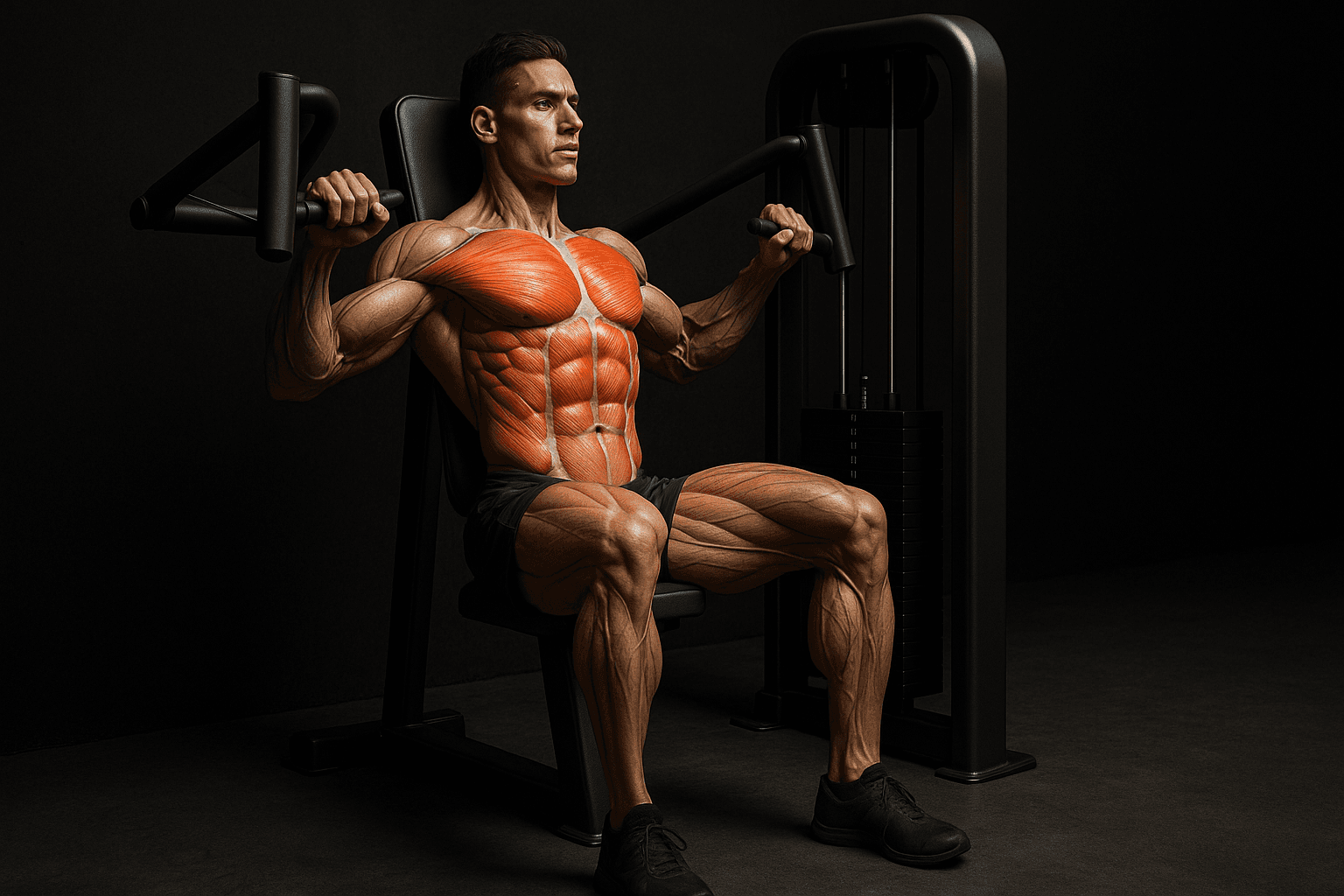
Photo by RepBro.
For strength: 3–6 reps, 3–6 sets; for hypertrophy: 6–12 reps, 3–5 sets (aim 10–20 weekly sets per chest); for endurance: 15–25 reps, 2–4 sets. Use 2–3 sessions/week; progress with double progression: add reps first, then add weight when you hit the top rep target across sets.
What rep and set ranges should I use on the machine chest press for strength?
Strength-focused machine pressing works best with low reps and higher loads. Use 3–6 reps per set and 3–6 sets per session, with longer rests (2–3+ minutes) between sets. Train the chest 2–3 times per week if you want to prioritize strength while keeping recovery in check. Machines can let you load more safely, but aim for high effort (close to but not necessarily to technical failure) and track performance with a consistent metric (loads or RPE).
What rep and set ranges should I use for hypertrophy (muscle growth)?
For hypertrophy, use 6–12 reps per set most of the time and 3–5 sets per session for the machine chest press. Recent evidence indicates muscle growth happens across a broad rep range, so prioritize total weekly volume: target roughly 10–20 working sets per week for the chest. Split that across 2–3 sessions (for example, 4–6 sets/session over three days or 5–8 sets/session over two days).
What about muscular endurance—what should reps and sets look like?
For endurance or conditioning, use higher repetitions: 15–25 reps per set and 2–4 sets, with shorter rest intervals (30–90 seconds). Keep loads lighter so you maintain good technique through the set. This is useful for metabolic conditioning or sport-specific prep rather than maximal strength or maximal hypertrophy.
How should I structure weekly frequency and volume for the machine chest press?
Aim for 2–3 sessions per week targeting the chest. Example weekly volumes by goal:
| Goal | Reps per set | Sets per session | Sessions/week | Weekly working sets |
|---|---|---|---|---|
| Strength | 3–6 | 3–6 | 2–3 | 6–18 |
| Hypertrophy | 6–12 | 3–5 | 2–3 | 10–20 |
| Endurance | 15–25 | 2–4 | 2–3 | 4–12 |
Adjust within these ranges based on experience, recovery, and how the rest of your program stresses pressing (barbell bench, dips, flyes).
How do I progress the machine chest press week to week?
Use a double-progression approach: aim to increase reps within the set rep range first, and once you can hit the top of the range for all working sets in two consecutive sessions, increase load and drop reps back toward the lower end of the range. Example progression for hypertrophy (6–12 rep target):
- Week 1: 3 sets x 6–8 reps at 70 kg (working to RPE ~7–8)
- Week 2: 3 sets x 8–9 reps at 70 kg
- Week 3: 3 sets x 10–12 reps at 70 kg
- Week 4: Increase to ~72.5–75 kg, drop to 3 sets x 6–8 reps
Repeat the cycle. For strength, follow the same logic but with smaller rep jumps and slightly larger increases in load when appropriate.
Progression tips:
- Add 1–2 reps to a couple of sets each session; spread increases so you don’t chase failure every set.
- When adding weight for upper-body machines, a 2.5–5% increase is typical; smaller increments preserve technical work.
- Track either absolute load or RPE; consistency makes progression reliable.
What are clear signals for when to add weight vs add reps?
- Add reps first: if you can complete all prescribed sets at the lower-to-mid end of your range without approaching failure, add reps in subsequent workouts.
- Add weight when: you can reach the top of the rep range for every working set for two consecutive workouts with good form and moderate effort (RPE around 7–8).
- Hold or reduce load when: you miss reps on multiple sets, experience consistently rising RPE for the same load, or your technique deteriorates.
This approach—adding reps until you ‘max out’ the rep range, then increasing load—is called double progression and reflects consensus coaching practice.
How hard should sets feel? Can I train to failure on the machine chest press?
Most sets should be in the 6–9 RPE range (1–4 reps shy of failure) for sustainable progress. Occasional sets to failure can be useful, but frequent failure raises recovery demands. Machines make controlled failure less risky than free weights, but fatigue still accumulates.
What safety points should I follow?
Maintain controlled tempo and full, safe range of motion for your shoulder and scapular mechanics. Stop immediately on sharp or unusual pain and consult a qualified professional if symptoms persist. Machines reduce some technical demand but do not remove injury risk—never push through clear joint pain.
What can't an app or AI do for my machine chest press programming?
- No app or AI can reliably see or correct your form in real time; only an informed coach or clinician can do that.
- Apps can suggest numbers, but they cannot diagnose injuries or manage medical rehab—see a licensed professional for persistent pain or post-injury work.
- A plan or tracker only works if you train consistently; adherence and recovery (sleep, nutrition) are critical and personal.
If you log sets and want simple double-progression tracking, tools like RepBro can help record reps/loads across sessions.
Limitations
- The ranges above reflect broad, evidence-aware consensus but must be tailored to your training age, recovery, and other program elements.
- Individual response varies: some lifters do well with higher or lower volumes within those bands. Use objective tracking and small, steady increments rather than dramatic jumps.
Final note: consistent, progressively overloaded sets and careful recording of reps, weight, and perceived effort are the practical keys to improvement on the machine chest press. If pain or persistent issues arise, consult a qualified clinician or experienced coach.
Frequently asked questions
- How many sets and reps should I use on the machine chest press for hypertrophy?
- For hypertrophy, aim for 6–12 reps per set, 3–5 sets per session, and a weekly chest volume of about 10–20 working sets. Train the chest 2–3 times per week and use a double-progression model: add reps until you reach the top of the range, then increase weight.
- How should I progress week to week on the machine chest press?
- Use double progression: add 1–2 reps to your working sets each session while staying within the target range. When you can complete the top reps for all sets for two sessions, increase weight (around 2.5–5% upper-body increment) and drop reps back toward the lower end of the range.
- When should I add weight vs add reps on the machine chest press?
- Prioritize adding reps until you hit the upper bound of your rep range across all prescribed sets. Only add weight when you can do that for two consecutive workouts with clean form. If sets feel easy before top reps, add weight; if you miss reps, keep the weight and add reps instead.