Leg Curl: Proper Form, Step by Step
A clear, safety-first guide to leg curl proper form: setup, execution cues, breathing, tempo, common mistakes and fixes for lying, seated, and standing variations.
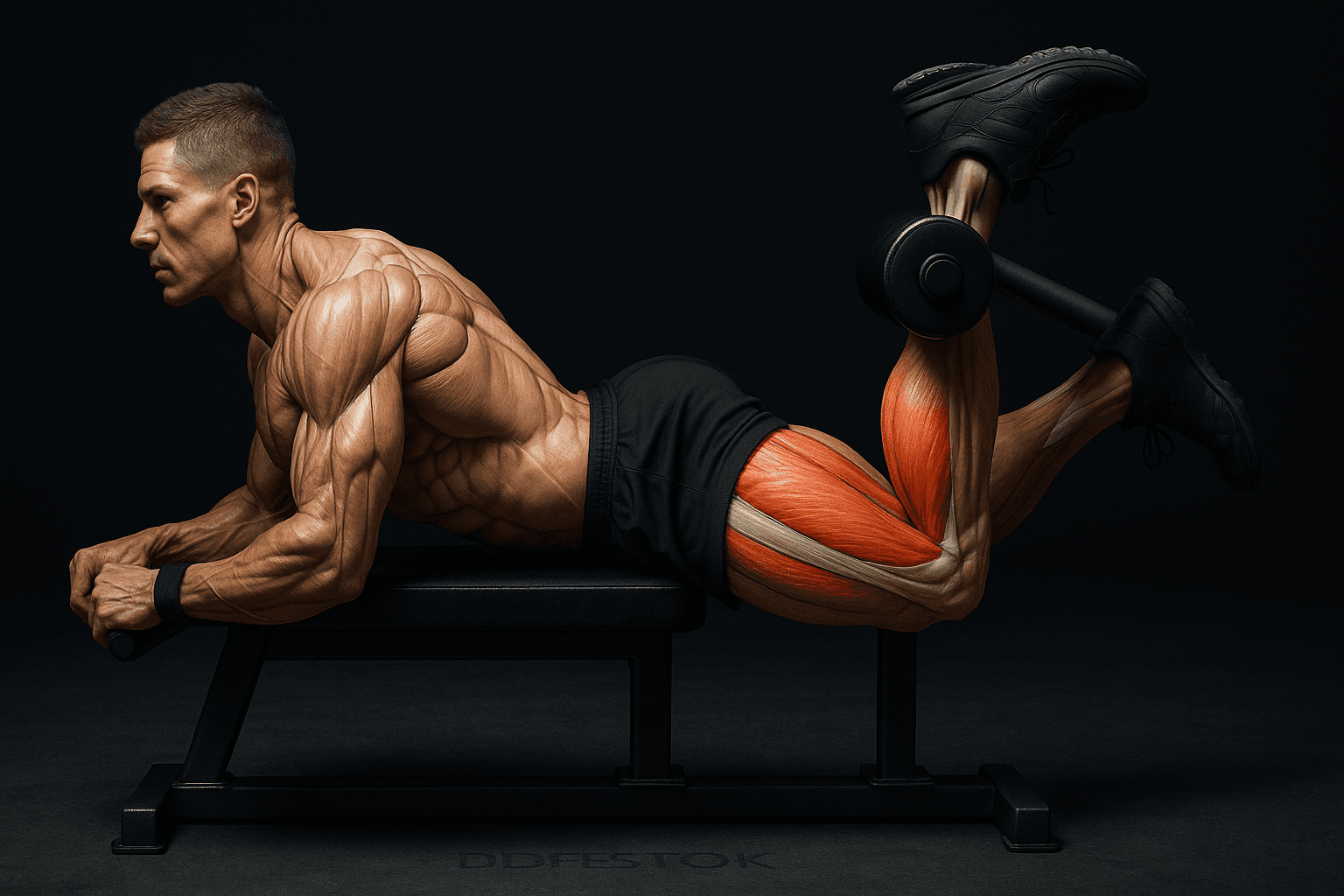
Photo by RepBro.
Leg Curl: Proper Form, Step by Step
The proper leg curl controls the movement from start to finish: set the pad just above the Achilles, keep hips and pelvis stable, curl with a 1-second concentric squeeze, then lower slowly for 2–3 seconds; exhale on the curl, inhale on the lowering. This applies to lying, seated, and standing variations with small setup adjustments described below.
What is the leg curl and which muscles does it work?
The leg curl is an isolation exercise that flexes the knee against resistance, primarily targeting the hamstrings (biceps femoris, semitendinosus, semimembranosus) and the calf to a lesser degree. It’s useful for developing posterior-chain muscle balance, strengthening knee flexion, and improving single-joint hamstring capacity.
How do I set up for a lying (prone) leg curl?
- Adjust the bench so your hips lie flat on the pad and your knees align near the machine’s axis.
- Place the lower pad on the back of your lower legs just above the Achilles tendon; toes should hang off the end comfortably.
- Grip the handles or bench to prevent your torso from rising.
- Feet position: neutral (toes pointing forward) is the standard; slight dorsiflexion is fine if comfortable.
Checklist: hips down, knees aligned, pad above Achilles, grip stable.
How do I perform the lying leg curl step-by-step?
- Start with legs extended and a slight bend in the knees (not locked). Breathe in to prepare.
- Exhale and drive the heels toward the glutes by flexing the knees—aim for a controlled 0.5–1 second concentric contraction and a visible squeeze at the top. Do not jerk.
- Pause 0.25–1 second at the top if you need a cue to control range; do not hyperflex if it causes the hips to lift.
- Inhale and lower the weight back to the start in 2–3 seconds (eccentric). Control the descent; don’t let the weight crash.
- Repeat for your target reps.
Tempo examples: 2-0-1 (2s eccentric, no pause, 1s concentric) is a solid default. For more eccentric emphasis use 3-0-1; for strength use 3-0-1 with heavier load and 4–6 reps. For hypertrophy 2-3 sets of 6–12 reps; endurance 12–20 reps.
How does the seated leg curl differ in setup and execution?
Setup differences: sit with your back flat against the pad, hips pressed down, and the thigh pad sitting against your lower thighs. The lower pad should rest just above the heels. Keep your chest up and hands on the grips. Execution cues are the same: exhale on curl, inhale on the return, control the eccentric.
Why choose seated? Seated leg curls put the hamstrings in a more lengthened position at the hip, which can change the sensation and slightly alter muscle emphasis.
What about standing or single-leg leg curls?
Standing single-leg leg curl machines allow unilateral work and reduce compensation from the stronger side. Set the pad behind the ankle, stabilize your hips, and curl one leg at a time. Use lighter weight and strict tempo to address imbalances.
What breathing pattern should I use?
- Exhale during the concentric (curling) phase.
- Inhale during the eccentric (lowering) phase.
This simple pattern helps core stability and prevents breath-holding, especially on heavier sets.
What are common mistakes and how do I fix them?
- Hips lifting off the bench: Fix by lowering the load 10–30% and cue “keep hips pinned.” Use your hands to brace the bench if the machine allows.
- Using momentum/fast reps: Slow the eccentric to 2–3 seconds and pause 0.25–1s at the top. Reduce load until strict tempo is possible.
- Pad too high or too low: The pad should sit above the Achilles. If it’s on the calf muscle the movement feels awkward; if too low it restricts range. Re-adjust until you feel hamstring engagement without ankle discomfort.
- Shortening the range: Aim for near-full knee flexion without forcing hip rise. If full range causes compensation, reduce load and work toward greater range over weeks.
- Toes pointed or overly flexed: Keep feet neutral. Excess toe position shifts emphasis and can unnaturally load the calf or tendon.
- Excessive lumbar extension: If your lower back arches to lift heavier loads, reduce weight and focus on glute/hamstring control.
When should I stop and seek professional help?
Stop immediately for sharp joint pain, sudden swelling, or nerve-like symptoms (numbness/tingling). If you have persistent discomfort around the hamstring tendons or knees that doesn't improve after a few sessions, consult a qualified physiotherapist or physician—do not self-diagnose. This guide is technique-focused, not a medical assessment.
Safety note: stop on sharp pain and consult a professional; never diagnose injuries yourself.
How does the leg curl fit into a program?
Use leg curls as an accessory or isolation movement after compound lifts (squats, deadlifts, Romanian deadlifts). Frequency: 1–3 times per week depending on volume and recovery. If you're tracking tempo and sets, consider using RepBro to log control-oriented reps. For comparisons of variations or how they stack up against other hamstring work see https://www.repbro.app/vs.
Short FAQ
Q: How many reps and sets are best?
A: Strength 3–5 sets of 4–6 reps; hypertrophy 2–4 sets of 6–12 reps; endurance 2–3 sets of 12–20 reps. Adjust load so tempo stays strict.
Q: Can I train leg curls every day?
A: Not recommended for most—allow 48 hours between high-intensity sessions. Light technique work can be done more frequently.
Q: Do leg curls prevent hamstring injuries?
A: Leg curls strengthen knee flexion but are one part of a wider program; include eccentric and multi-joint hamstring work too. If you have a history of hamstring issues, consult a professional
One-sentence takeaway: Master the setup (pad placement, hips down), control the eccentric for 2–3 seconds, and prioritize strict tempo over heavy weight to get the most from leg curls safely.
Frequently asked questions
- Should I use heavy weight on the leg curl?
- Use a load you can control for the full eccentric and concentric tempo; heavy is fine if form stays strict—aim for 6–12 reps for hypertrophy, 12–20 for endurance.
- Do leg curls hurt knees?
- Leg curls shouldn't cause sharp knee pain; mild discomfort at the musculotendinous junction can occur. Stop for sharp pain and consult a professional.
- Are single-leg leg curls necessary?
- Single-leg curls help fix side-to-side strength imbalances and improve control; include them 1–2x/week if you have asymmetry or coordination goals.