The Most Common Lat Pulldown Mistakes (and How to Fix Them)
Stop wasting reps: 6 common lat pulldown mistakes, why they happen, what you lose (or risk), and one concrete fix for each—clear, practical, no hype.
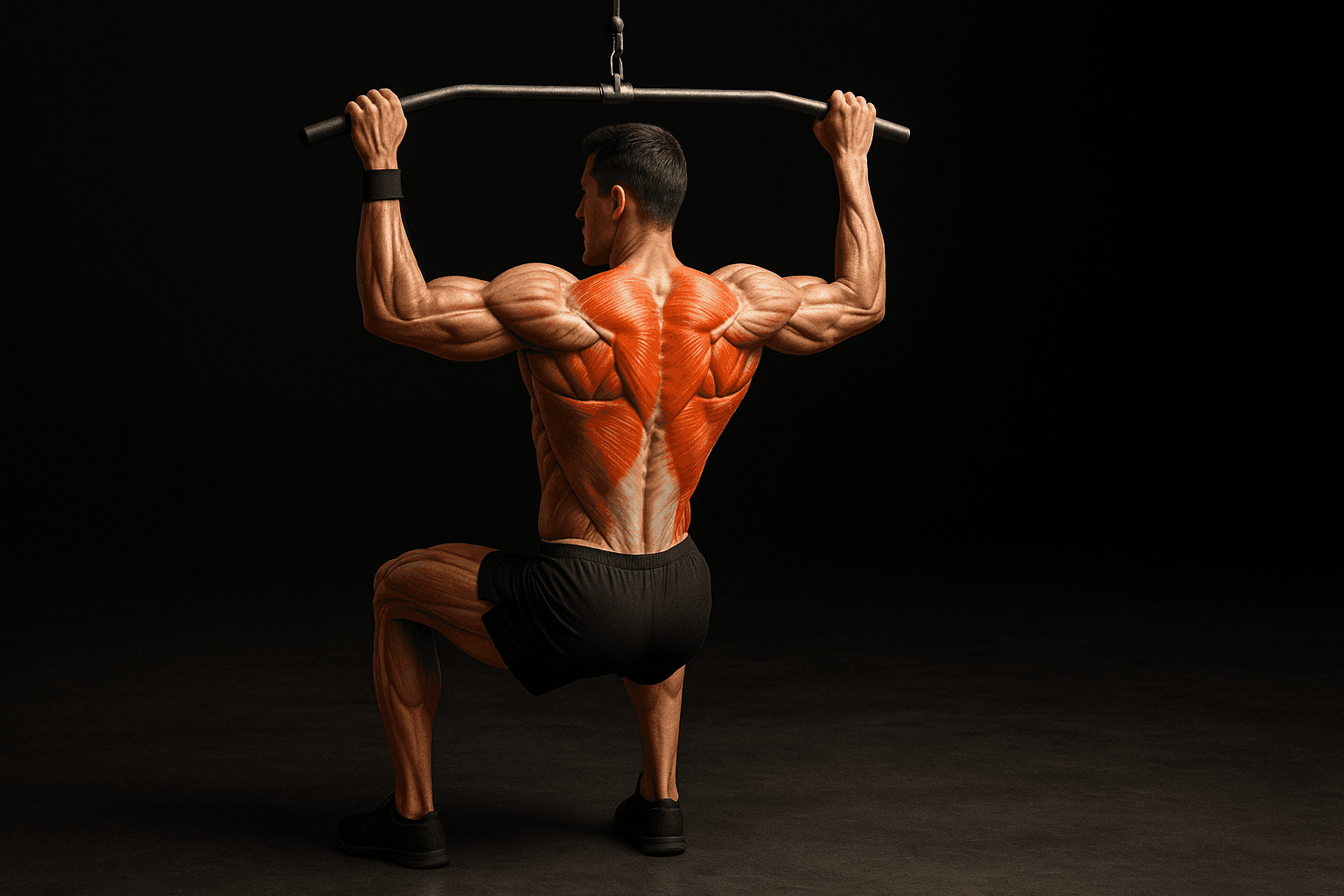
Photo by RepBro.
The most common lat pulldown mistakes are: using too much torso lean, pulling behind the neck, letting the shoulders shrug, using momentum, flaring the elbows out, and picking weight that's too heavy. Fix these six and you'll get more lat work per rep with less shoulder risk.
Why is my lat pulldown leaning or turning into a row?
Why it happens: People lean back to shorten the distance the bar has to travel or to recruit the bigger muscles of the back and legs when the weight gets heavy. It's an easy way to lift more weight without improving lat strength.
What it costs: Excessive lean turns the movement into a torso-driven row. That reduces targeted lat loading and increases lower-back shear—so you lose lat-specific gains and increase injury risk.
One fix: Keep a 10–15° recline (a small backward lean). Sit upright with chest proud and lower ribs down. Think "drive elbows to my ribs" not "pull with my hands." If you can touch your upper chest with the bar without tipping back more than ~15° you're in the right range.
Why am I pulling the bar behind my neck?
Why it happens: Behind-the-neck pulldowns feel like they let you get a longer range of motion and make the shoulders feel more stretched. Many lifters learned it from older gym routines.
What it costs: This variant puts the shoulder joint in extreme external rotation and elevation, increasing risk of impingement and rotator cuff irritation—especially if you lack shoulder mobility.
One fix: Pull the bar to the top of your chest (sternal notch area). Cue "lead with the elbows, finish with the chest." If you want a bigger stretch, do controlled straight-arm pulldowns or lat-focused rows instead. For comparisons between vertical pulling options see https://www.repbro.app/vs
Why are my shoulders shrugging and chest rising?
Why it happens: Shrugging happens when the traps and upper back try to handle load that the lats should manage. It often comes from weak lats or a grip/arm position that favors the traps.
What it costs: Shrugging shifts emphasis away from the lats to the upper traps and neck, which limits lat development and can create neck discomfort.
One fix: Depress the scapula before each rep. Start each rep with a 0.5–1 second cue: "set the shoulders down and back," then pull. Practice 2–3 sets of 10 controlled scapular pull-ups or banded scapular depressions to learn the position.
Why am I kipping, swinging, or using momentum?
Why it happens: Momentum lets you move heavier loads without the muscular capacity to control them. Fatigue, ego, or bad programming drive this.
What it costs: The eccentric (lowering) phase and end range—where muscles get the most stimulus—get short-changed. Momentum also raises injury risk because you lose control of the load.
One fix: Slow the eccentric to 2–3 seconds and pause 0.5–1 second at the bottom (bar at chest). Use a weight you can control for 6–12 reps with strict tempo; if you must swing to finish reps, drop weight by 10–25%.
Why are my elbows flaring out like wings?
Why it happens: Wide elbows or a very wide grip shift work toward the posterior deltoids and upper back instead of the lats. Sometimes it's a habit from wide-grip lat pulldowns or a perception that wider is better.
What it costs: Lats are designed to pull the humerus down and back. Excessive elbow flare reduces this line of pull and limits lat activation—so you build less width.
One fix: Tuck the elbows to a ~45° angle to the torso during the pull (not pinned to the sides, not directly out). Use a grip around shoulder-width to 1.5× shoulder-width (roughly 50–90 cm / 20–35 in). Think "elbows slide to hips" rather than "hands to chest."
Why is my weight selection stopping progress?
Why it happens: Choosing heavy loads feels productive because the numbers go up, but it often leads to partial reps, cheating, or excessive recruitment of non-target muscles.
What it costs: You get less targeted hypertrophy and less strength carryover. You also reinforce poor mechanics under heavier loads.
One fix: Pick a weight you can control for 6–12 clean reps on every set. If your last two reps require kipping, reduce weight by 10–20%. Track sets and tempo; if you want automated tracking, consider tools like RepBro.
Bonus: Grip problems and hand position
Why it happens: Too narrow a grip turns the movement into a biceps-friendly curl; too wide shifts emphasis away from the lats. Wrist break or weak grip can alter pulling mechanics.
What it costs: Suboptimal grip wastes reps and limits lat loading.
One fix: Use a neutral cue—palms facing away for standard pulldown, hands slightly wider than shoulder-width. Use straps if grip fails before the lats on heavy sets, or practice farmer holds to build grip endurance.
Safety note: Stop if you feel a sharp or unusual pain in the shoulders, neck, or spine. This guide isn't a diagnosis—if pain persists, get an assessment from a qualified clinician or coach.
Summary
Fix torso angle, stop behind-the-neck pulls, depress the shoulder blades, control the tempo, keep elbows from flaring, and pick a load you can control—those six corrections yield more lat stimulus per rep and lower injury risk.
Takeaway: Small, specific technique fixes give bigger returns than lifting heavier with bad form.
Frequently asked questions
- Should I pull the bar behind my neck?
- No—pulling behind the neck increases shoulder strain and provides no clear strength benefit over chest-height pulldowns; aim for the bar to touch your upper chest.
- What grip width is best for lats?
- Use a grip around shoulder-width to 1.5× shoulder-width (roughly 50–90 cm / 20–35 in depending on your build) for balanced lat recruitment and joint comfort.
- How heavy should I go?
- Choose a weight you can control for 6–12 clean reps with the last 1–2 reps challenging; avoid using momentum to complete reps.