Lat Pulldown: Proper Form, Step by Step
Learn lat pulldown proper form: setup, step-by-step execution, breathing, tempo, common mistakes and fixes, plus a short safety note and FAQ.
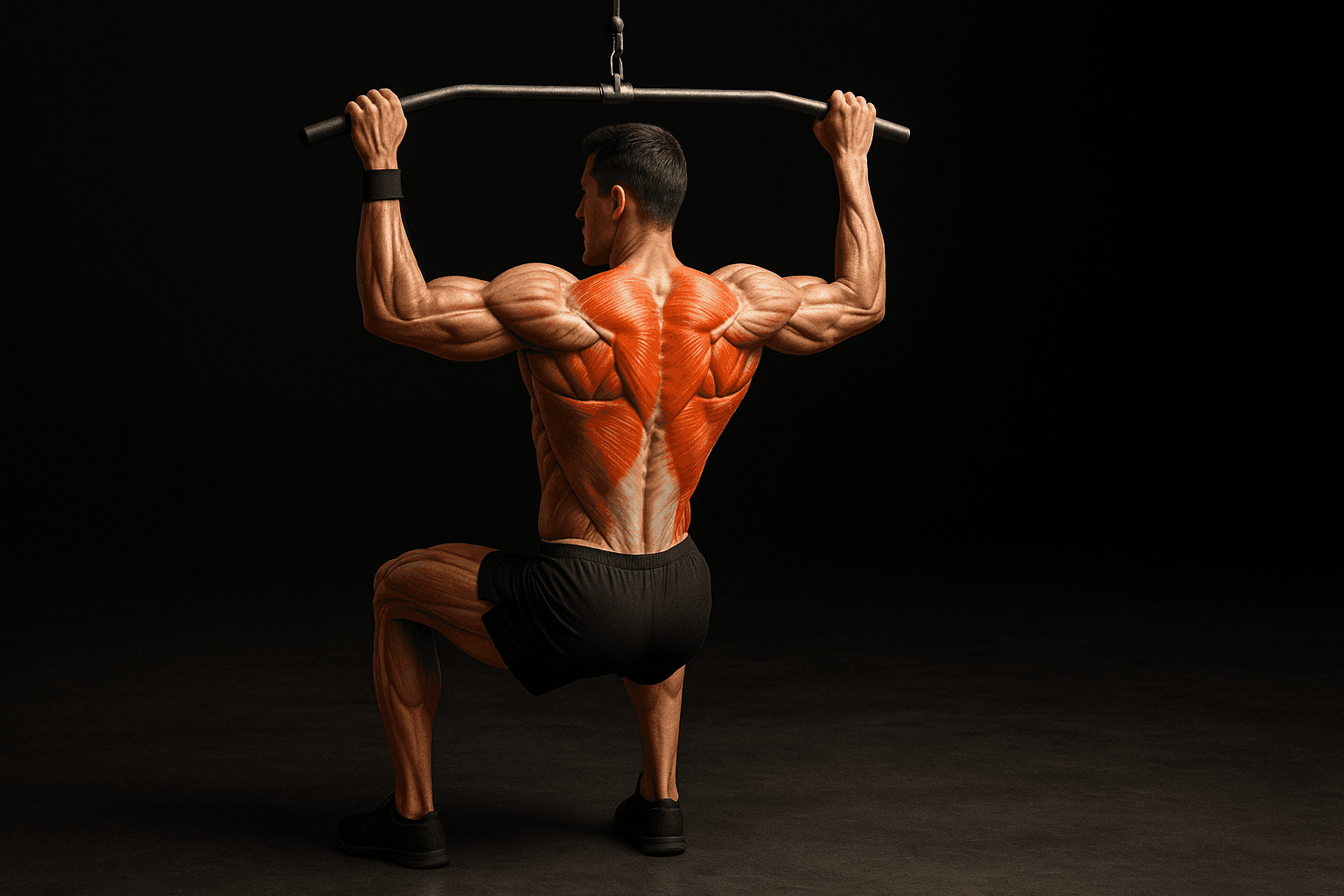
Photo by RepBro.
The shortest answer to "lat pulldown proper form" is: sit with thighs secured, set a grip about 10–20 cm (4–8 in) wider than shoulder width, depress and retract your scapulae, pull the bar to the upper chest with elbows driving down and back, control the bar back up for the eccentric phase, and avoid excessive torso lean or pulling the bar behind the neck.
How should I set up for a lat pulldown?
- Machine and seat: Adjust the seat so your feet are flat and your thighs fit snugly under the thigh pads. Your knees should be at roughly 90 degrees when seated. Thigh pads should press firmly down to anchor your hips.
- Grip and bar choice: Use a straight bar for a standard wide grip or a V/neutral handle for a close grip. For a standard wide-grip lat pulldown, place hands pronated (palms away) about 10–20 cm (4–8 in) wider than shoulder width.
- Starting torso angle: Sit tall with a slight lean back of 10–20 degrees. Do not hinge at the hips into a deep arch; the torso should be stable and used only minimally to assist heavy loads.
- Weight selection: Pick a load you can control for the planned reps. Expect to use lighter loads than you can pull with momentum; the goal is clean scapular control and full range of motion.
What are the step-by-step execution cues?
- Setup position: Reach up, grasp the bar, and pull your shoulders down and back so the scapulae are depressed and slightly retracted. Think "scapula down before the pull." Keep chest up and ribcage neutral.
- Initiate the pull: Lead with the elbows, not the hands. Pull the elbows down toward your ribs while keeping the bar path vertical. Aim for the bar to meet the upper chest (clavicle/upper sternum area).
- Peak contraction: At the bottom of the concentric, hold a brief, firm squeeze of the lats — 0 to 1 second — with ribs down and scapulae fully retracted. Avoid shrugging or tucking the chin aggressively.
- Controlled return: Extend your arms under control, allowing the shoulder blades to protract and the lats to lengthen fully. Do not let the weight stack slam; maintain tension.
- Repetition rhythm: Reset scapular position as needed between reps. Keep the core braced to prevent the torso swinging.
How should I breathe and what tempo should I use?
- Breathing: Exhale during the concentric pull and inhale during the eccentric return. For example, breathe out as you pull the bar down and breathe in as you let it rise back up.
- Tempo: Use a 1-0-2 tempo for most working sets: 1 second concentric (pull), 0 second pause, 2 seconds eccentric (return). For beginners or when focusing on control, use 2-1-2. For strength-focused work, a slower eccentric up to 3 seconds is acceptable but keep form strict.
- Rest between sets: 60–120 seconds depending on set intensity and goals.
What are the top form cues to remember?
- Scapula first: Depress and retract the shoulder blades before pulling.
- Elbows lead: Visualize driving the elbows toward your hips rather than pulling with the hands.
- Chest up: Maintain a proud chest to keep lats engaged and torso stable.
- Bar path: Pull vertically to the upper chest; avoid pulling behind the head.
- Controlled eccentric: Return the bar slowly to maintain tension and protect the shoulder complex.
What safety precautions should I follow?
Stop any set immediately if you feel sharp or sudden pain. If pain persists, consult a qualified health professional. Do not perform pulldowns behind the neck; that variation increases the risk of shoulder strain and is unnecessary for most people. If you track workouts, consider using RepBro to log technique notes and weights for progressive, consistent practice.
What are common mistakes and how do I fix them?
- Mistake: Pulling the bar behind the neck. Fix: Move the bar to the upper chest. Cue chest up and tuck the chin slightly. If you see the elbows drive too far back, shorten your range.
- Mistake: Excessive leaning or swinging the torso. Fix: Reduce weight, brace the core, and keep a 10–20 degree recline max. Think vertical elbow drive, not whole-body momentum.
- Mistake: Letting the shoulders shrug toward the ears. Fix: Start each rep from a depressed scapula. Imagine pulling your shoulder blades into your back pockets before you pull.
- Mistake: Biceps-dominant pull (forearms take over). Fix: Focus on elbow drive and chest-up position. Use a slightly wider grip and squeeze the lats on each rep; reduce weight if the biceps fatigue first.
- Mistake: Fast, uncontrolled return phase. Fix: Use a 1-0-2 tempo and deliberately control the eccentric to preserve tension and reduce joint stress.
- Mistake: Seat or thigh pad misadjustment causing hips to rise. Fix: Re-adjust seat and pads so thighs are held firmly; feet flat on the floor. If hips still lift, lower the weight.
Where does lat pulldown fit in a program?
Include the lat pulldown as a primary vertical pulling movement alongside rows and pull-up work. For hypertrophy, 3–4 sets of 6–12 reps is common; for technique practice, 3 sets of 8–12 with lighter loads and strict tempo helps engrain form. If you are comparing exercise choices, you may find it useful to read exercise comparison content at https://www.repbro.app/vs.
What about progressions and variations?
- Progression: Reduce assistance, increase time under tension, or move to weighted pull-ups once you can perform controlled pull-ups.
- Variations: Close-grip V-handle pulldown for lower lats and greater biceps involvement, or single-arm pulldowns for unilateral balance. Always maintain the core cues.
One-sentence takeaway: Treat the lat pulldown as a controlled, scapula-driven vertical pull—set up firmly, lead with the elbows, pull to the upper chest, and control the return while stopping for any sharp pain and consulting a professional if needed.
Frequently asked questions
- How low should the bar come on a lat pulldown?
- Pull the bar to the upper chest, around clavicle to upper sternum level. Stop when your elbows pass behind the torso and scapulae are fully retracted; never pull behind the neck.
- Can lat pulldowns replace pull-ups?
- Lat pulldowns can develop similar muscles and are a suitable progression or alternative, but vertical pulling with your own bodyweight and the specific motor pattern of pull-ups are unique benefits not identically replicated.
- Should I use a wide grip or underhand grip?
- A grip slightly wider than shoulder width emphasizes the lats with a pronated grip; a close underhand grip shifts load to the lower lats and biceps. Choose based on goals and keep technical cues consistent.