The Most Common Incline Bench Press Mistakes (and How to Fix Them)
Learn the 6 most common incline bench press mistakes, why they happen, what they cost (gains or injury risk), and one concrete fix for each.
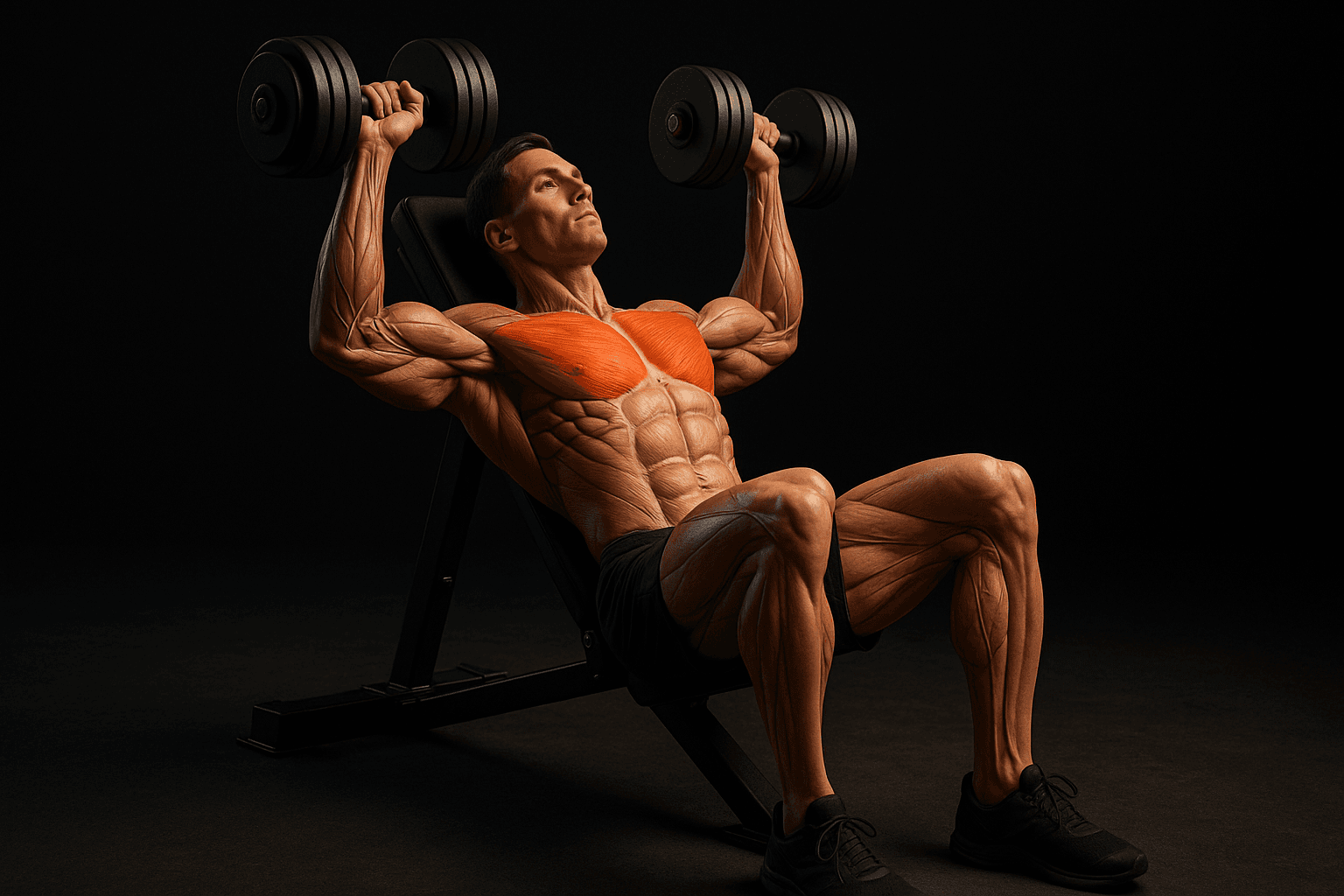
Photo by RepBro.
The most common incline bench press mistakes are: bench set too steep, elbows flared, poor shoulder/scapular position, weak leg drive or unstable feet, bar path too far forward, and excessive range (touching neck/chest). Each costs either lost chest development or increased shoulder injury risk — this article lists why each happens, what it costs, and one concrete fix you can apply today.
Is your bench set too steep?
Why it happens: Lifters often assume “incline = steep” to hit upper chest, so they set the bench at 45°–60°. That can feel like it targets the upper pecs more, but it shifts work to the anterior deltoids. What it costs: Reduced upper-pec activation and higher shoulder strain; heavier loads become limited by shoulder strength, not chest strength. Concrete fix: Set the bench to 30°–35°. Use a protractor app or the bench index marks. If you want slightly more upper-chest emphasis, try 15°–30°. If you feel more shoulder burning than chest within 2–3 reps, lower the angle by 5° next session.
Are your elbows flared out like wings?
Why it happens: Flared elbows (≈90° from torso) are an instinctive path of least resistance for many lifters and often the result of copying flat-bench groove. What it costs: Higher compressive and shear forces on the shoulder joint and less pec recruitment; increases risk of painful impingement over time. Concrete fix: Tuck elbows to about 45° from the torso on the descent. Cue “elbow toward the hip” and practice with 50% of usual load for 6–8 reps to build the new groove.
Are you neglecting shoulder and scapular positioning?
Why it happens: People assume pressing starts from the arms; however, a stable base requires thoracic extension and scapular retraction. Many sit with rounded shoulders or an unsupported upper back. What it costs: Energy leaks, reduced force transfer, and a higher chance of shoulder irritation. Concrete fix: Before unracking, retract and depress your shoulder blades and create a slight, supported arch in the upper back (not lumbar hyperextension). Hold that position through the set and unrack only once stable. If you can’t maintain it, reduce weight or take longer rest between sets.
Are your feet unstable or absent from the equation?
Why it happens: Incline benches raise the torso, making foot placement awkward; some lifters let feet hover or use a small stagger that offers no push-off. What it costs: Loss of drive and total pressing force, reduced stability under heavy loads, and increased stress on shoulders. Concrete fix: Plant both feet flat and drive them into the floor to create full-body tension. If your feet don’t reach comfortably, lower the bench height or place a 20–40 cm (8–16 in) stable platform under them—don’t thrust hips upward to compensate.
Is your bar path too far forward (toward the face)?
Why it happens: A forward bar path is common when bench angle is too steep, the shoulders are rounded, or the lifter tries to “aim for the chest” without coordinating scapula and elbow path. What it costs: Increased shoulder torque and reduced mechanical advantage for the pecs; can also lead to missed reps. Concrete fix: Lower the bar to mid-to-upper chest (just below the clavicle line) on a slightly diagonal path, then press back up toward the shoulder plane. Think “down to mid chest, up slightly backward.” Film a set from the side to check the path.
Are you letting the bar travel too far (or touching the wrong spot)?
Why it happens: To increase range-of-motion many lifters touch too high (near neck/clavicle) or bounce the bar off the lower chest, often because they lack confidence or are chasing ego reps. What it costs: Excessive shear on the AC joint or sternum, inconsistent technique, and wasted mechanical tension on the chest. Concrete fix: Touch the bar to the mid-to-upper chest—just below the clavicles—and pause 0.5–1.0 seconds to remove momentum. Use controlled descent; if you can’t control the weight to the same touch point on every rep, drop 5%–10% load and rebuild consistency.
Is your tempo all fast reps and no control?
Why it happens: Incline pressing is tough; chasing sets and short rest, many lifters skip tempo and rely on momentum. What it costs: Reduced time under tension for the pecs, sloppy bar path, and higher injury risk under heavy loads. Concrete fix: Use a 2–1–1 tempo (2 s eccentric, 1 s pause at the bottom, 1 s concentric) for working sets twice a week for 4–6 weeks to ingrain control. Reduce load so you can maintain this tempo for your prescribed reps.
Safety note: Stop any set immediately if you feel sharp or unusual joint pain. This guide is technique-focused and not medical advice—consult a qualified professional for persistent pain or an acute injury.
Where to practice: Film sets from the side and a 45° angle, compare repeats, and track the bench angle (30° is a reliable start). If you track workouts or import programs, tools like RepBro help log technique notes and load progress so fixes don’t get forgotten.
One-sentence takeaway: Small technique changes—bench angle, elbow tuck, scapular stability, foot drive, bar path, consistent touch, and controlled tempo—deliver bigger gains and far less shoulder trouble than simply adding weight.
Frequently asked questions
- What's the ideal incline bench angle?
- Most lifters get the upper-chest focus without excessive shoulder strain at 30°–35° (some use 15°–45° depending on goal), so start at 30° and adjust if you feel too much front delt involvement.
- Should feet be flat and planted during the incline bench?
- Yes—plant both feet and drive through the floor for stability; if your feet can’t reach comfortably, lower the bench or place plates under your feet rather than hitching your hips.
- How do I know if my incline bench press is shoulder-dominant?
- Symptoms include burning at the front of the shoulder before chest fatigue, a short pressing path, and a bar path that moves strongly forward; reduce bench angle, retract the shoulders, and cue chest squeeze to shift load to pecs.