Good Morning: Muscles Worked and Best Alternatives
Clear, evidence-based guide to the muscles the good morning trains, where it fits in a program, and 3–4 practical alternatives with when to choose each.
Photo by RepBro.
Good mornings primarily train the hip extensors — the glutes and hamstrings — with significant spinal erector (lower back) activation as a stabilizer. They’re an accessory hip-hinge useful for strength and posterior-chain development when performed with strict technique and conservative loading.
Which muscles does the good morning train?
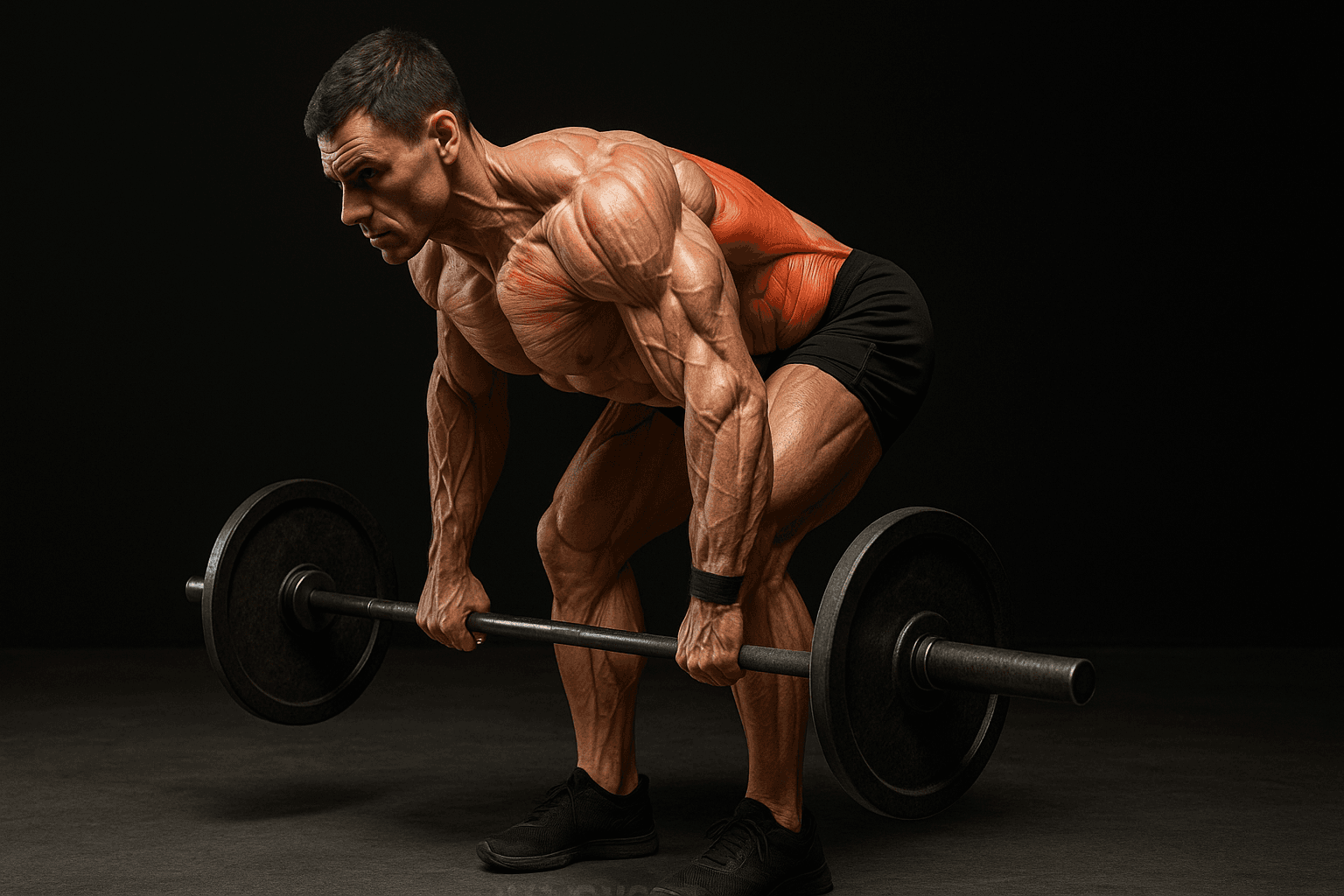
The good morning is a hip-hinge movement. Primary muscles: gluteus maximus and hamstrings (biceps femoris, semitendinosus, semimembranosus). Secondary muscles: spinal erectors (erector spinae), upper back and traps for bar positioning, and to a lesser degree the adductors and core. Knee angle and torso angle change the emphasis: a straighter knee increases hamstring stretch; more hip flexion and torso lean increases glute and spinal erector demand.
Where does the good morning fit in a weekly program?
Think of good mornings as an accessory lift to increase hip-hinge strength and posterior-chain resilience. Use them:
- After main lower-body strength work (e.g., squats, deadlifts) if you want a specific posterior-chain focus, or as a primary hip-hinge in lighter sessions.
- Frequency: 1–3 sessions per week depending on total posterior-chain volume and recovery.
- Volume: keep sets moderate; treat them like an intensive accessory rather than a high-volume isolation move. Adjust sets and load based on your main goals (strength vs hypertrophy) and how the lumbar spine tolerates the movement.
- Progression: prioritize technique, then increase load in small increments; use lighter weeks or deloads when technique degrades or fatigue accumulates.
How should I perform a safe good morning?
Basic cues: bar rests on your traps/upper back (or use a safety bar), feet roughly hip-width, soft knees (small bend), hinge from the hips keeping a neutral spine, push hips back until torso is near parallel (or to a depth you can control), then drive hips forward to stand. Keep the gaze neutral and core braced. Common errors: rounding the lumbar spine, bending excessively at the knees (turns it into a squat), and letting the bar drift forward. Stop if you feel sharp pain in the spine; mild muscle soreness is different from acute pain. Safety note: stop on sharp pain and consult a qualified professional if you have a history of spine issues. This is general guidance, not a diagnosis.
What are solid alternatives to the good morning and when should I pick each?
Below are four practical alternatives with when to prefer them.
| Exercise | Primary emphasis | Equipment | When to pick it |
|---|---|---|---|
| Romanian deadlift (RDL) | Hamstrings and glutes; more vertical torso than good morning | Barbell or dumbbells | Choose when you want a safer loaded hinge that reduces shear on the lumbar spine and allows heavier loads for posterior-chain hypertrophy or strength. Ideal if you want a balance between hamstring stretch and load capacity. |
| Barbell hip thrust | Glute-dominant hip extension | Barbell, bench | Choose when your goal is maximal glute activation with less spinal loading. Good for hypertrophy phases and for lifters with low-back sensitivity. |
| Single-leg RDL | Unilateral hamstring/glute focus + balance/core | Dumbbell or kettlebell | Pick for correcting side-to-side asymmetry, improving unilateral strength, and when equipment is limited. Uses lighter loads but transfers well to stability and athleticism. |
| Back extension / Glute-ham raise | Spinal erectors and hamstrings, bodyweight to loaded | Roman chair or GHD | Use when you want posterior-chain conditioning with a movement that isolates back/hamstring control. Good substitution for load management and rehabilitation phases under guidance. |
When to pick each: if you have lower-back pain or poor tolerance to torso flexion, prefer hip thrusts or RDLs. If you have limited equipment, single-leg RDLs or kettlebell RDLs give good stimulus. Use back extensions and GHD work for control and posterior-chain endurance.
How do good mornings compare to other hip-hinge lifts?
Good mornings bias a more horizontal torso and put higher moment demands on the lumbar spine compared with RDLs and deadlifts. That increases erector activity and requires stricter bracing. Hip thrusts reduce spinal shear and shift load onto the glutes. For hypertrophy, all can work if volume and progressive overload are applied; choose the lift that fits your spine tolerance and transfer needs.
How should I program sets, reps, and frequency for good mornings?
Use good mornings as a heavy-ish accessory: typical rep ranges are 3–8 for strength-focused sets and 6–12 for hypertrophy-focused sets. Keep total weekly sets moderate and avoid piling excessive posterior-chain volume on the same days as very heavy deadlifts or squats. Frequency of 1–3 times per week is appropriate; prioritize recovery, and include lighter technique sessions or reduced volume during deload weeks.
What practical progressions and variations help if I hit a plateau?
- Reduce range of motion or use bands for accommodating resistance to improve lockout strength.
- Use a safety bar or cambered bar to change bar position and comfort.
- Cycle between RDLs and good mornings to manage spinal stress while keeping progressive overload on the hips.
- Add unilateral variants and tempo changes (slow eccentric) to increase tension without huge load jumps.
What can't an app or AI do for my good mornings?
No app or AI can physically observe and correct your real-time technique, feel your pain, or manage medical issues. They cannot fully replace hands-on coaching, individualized physical assessment, or the judgement of a clinician for injury management. A program only works if you consistently follow it and adjust based on real-world feedback.
Limitations
- This article gives general, evidence-aligned guidance but cannot diagnose injuries or provide individualized rehab. If you have back pain, recent spine injury, or surgery, consult a qualified clinician before attempting heavy hip-hinge variations. - Apps and AI can offer program structure and cues but cannot replace in-person movement screening and manual correction. - Progress depends on consistent training, recovery, nutrition, and sleep — no single exercise guarantees outcomes.
Safety reminder Stop immediately with sharp or surprising pain. Use conservative load progression, maintain a neutral spine, and consult a qualified coach or medical professional if you have known spine issues or persistent pain. This guidance is educational and not a medical diagnosis.
References and further reading For practical programming, consult established resistance-training consensus statements and guidance from accredited sports science organizations on frequency, volume, and progression for strength and hypertrophy. If you want structured coaching and tracking, consider using reputable training apps and consult a qualified coach to individualize technique and load.
Frequently asked questions
- How often should I program good mornings?
- Use good mornings as a targeted hip-hinge accessory 1–3 times per week depending on load, recovery, and overall hamstring/glute volume. Keep them low to moderate in weekly volume and avoid doing heavy variations on consecutive days to protect the lumbar spine.
- Do good mornings build glutes or hamstrings more?
- Good mornings load the posterior chain with a primary emphasis on the hip extensors: glutes and hamstrings. Depending on stance, depth, and knee bend, you can bias glute (more hip flexion) or hamstring (more stretch) involvement, but both muscle groups are worked.
- Are good mornings safe for a sore lower back?
- If your lower back is sore, avoid heavy good mornings until a clinician clears you. Substitute lighter, more spine-friendly hip-hinge options (e.g., hip thrusts or kettlebell deadlifts) and focus on technique, progressive loading, and load management under professional guidance.