Goblet Squat Alternatives at Home (Minimal Equipment)
Practical at-home substitutes for the goblet squat using bodyweight, dumbbells, or bands. What each option keeps, what it loses, and when to head to a gym.
Photo by RepBro.
You can replicate most of what a goblet squat does at home with bodyweight, dumbbell, and band options. Each substitute preserves aspects like upright torso or knee drive while losing others (e.g., simple progressive loading or symmetric anterior load). Pick the swap based on your goal: technique, hypertrophy, unilateral strength, or convenience.
What does a goblet squat train and why is it useful?
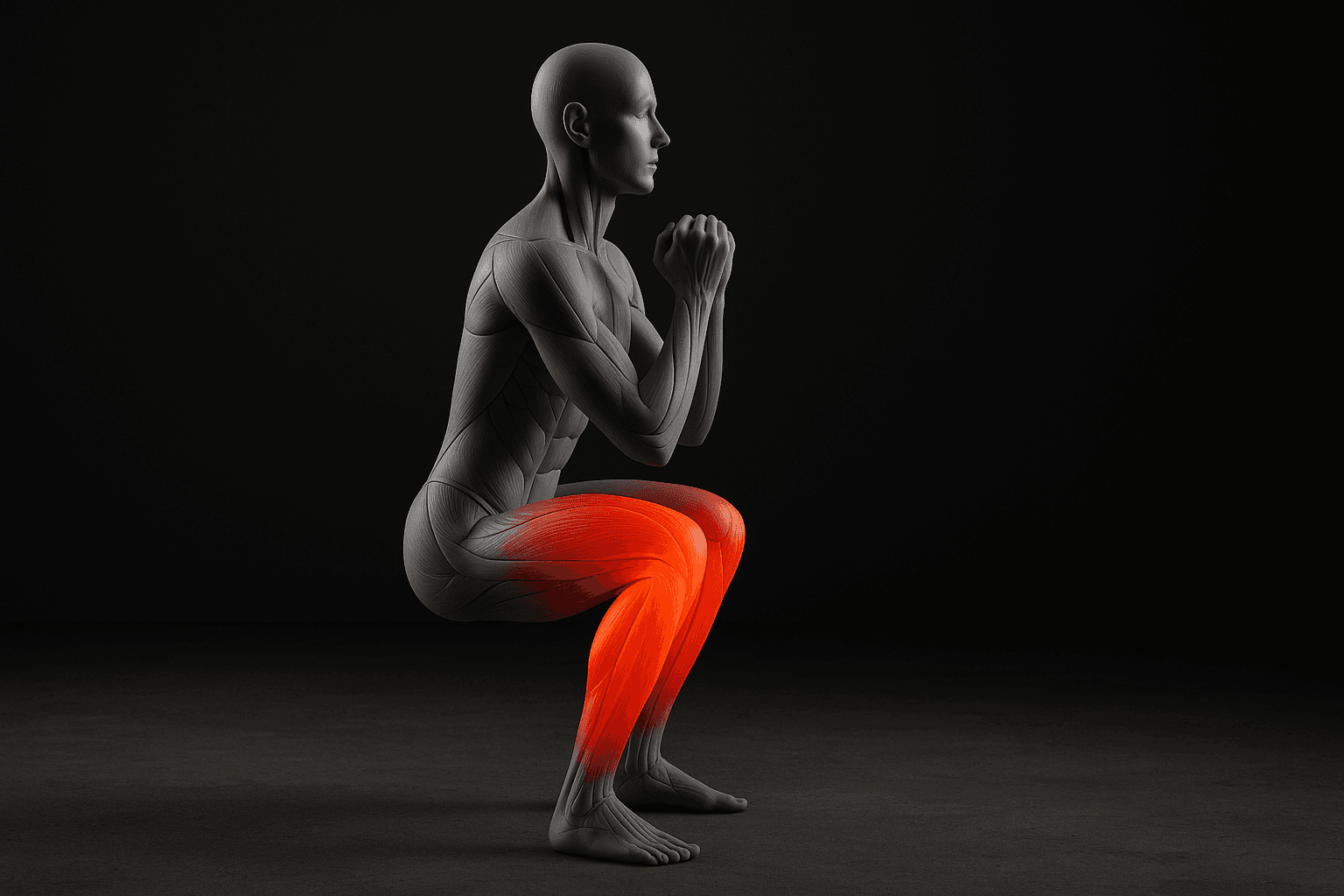
The goblet squat is a compact, front-loaded squat that encourages an upright torso, good squat depth, and strong knee extension—so it emphasizes quads, glutes, and core anti-flexion. It’s easy to teach, loads the movement in a way that helps posture, and is scalable by increasing dumbbell or kettlebell weight.
What at-home substitutes work with minimal equipment?
Below are 4–5 practical alternatives using bodyweight, a single pair of dumbbells (or one heavy dumbbell), or resistance bands. For each I list what it preserves from the goblet and what it loses.
- Deep bodyweight squat (with tempo or box)
- Equipment: none (optional box/chair)
- Preserves: movement pattern, ankle/knee mobility, depth and upright torso if done correctly
- Loses: external loading capacity and straightforward progressive overload
- When to use: teaching squat mechanics, conditioning, mobility work, or when you lack weight
- How to make it harder: add slow eccentric (3–5 s down), pause at bottom, increase reps, or progress to pistol prep
- Dumbbell front-hold or double dumbbell front squat
- Equipment: one or two dumbbells
- Preserves: anterior load that encourages upright torso and similar quad emphasis to goblet
- Loses: depending on single vs double dumbbell, stability demands may change; two dumbbells allow higher load but require space
- When to use: you want scalable loading at home and a closer approximation of gym front-squat mechanics
- Progression: increase dumbbell weight, raise set density, or switch to slower tempos
- Bulgarian split squat (rear-foot elevated)
- Equipment: dumbbell or bodyweight
- Preserves: strong knee drive, single-leg strength and hypertrophy stimulus, core stability
- Loses: symmetric frontal load and exact trunk posture of a goblet; hip mechanics are more unilateral
- When to use: to fix side-to-side imbalances or when you can’t load a bilateral squat sufficiently at home
- Progression: add weight, increase range of motion, shorten rest
- Band-resisted squat (loop band under feet or anchored)
- Equipment: loop band or long resistance band
- Preserves: usable progressive resistance, trunk positioning options, and variable resistance through range
- Loses: absolute heavy-load potential compared with heavy dumbbells/barbell unless bands are strong or anchored creatively
- When to use: limited equipment, travel, or to add accommodating resistance to bodyweight squats
- Progression: use thicker bands, double band, or increase sets/reps
- Tempo/paused squat or wall-sit for time
- Equipment: none
- Preserves: time under tension and quad focus
- Loses: external load and typical repetition structure for progressive strength gains
- When to use: increasing metabolic stress, conditioning, or when recovering from heavier training
How do these options compare at a glance?
| Exercise | Equipment | What it preserves vs goblet | What it loses vs goblet |
|---|---|---|---|
| Bodyweight deep squat | None | Movement pattern, depth, mobility | Progressive external loading |
| Dumbbell front-hold / double dumbbell front squat | 1–2 dumbbells | Anterior loading, upright torso, scalable load | Slightly different balance/stability vs a single goblet hold |
| Bulgarian split squat | 1 dumbbell/none | Unilateral load, quad/glute strength, core stability | Bilateral loading symmetry, exact trunk mechanics |
| Band-resisted squat | Bands | Variable resistance, can mimic loading curve | Max heavy load unless very strong bands used |
| Tempo/paused squat / wall-sit | None | Time under tension, quad emphasis | External progressive load and dynamic movement intensity |
When is a swap adequate and when should I go to a gym?
Use at-home swaps when: you want to maintain technique and general strength, you lack access to heavy weights, or you’re training for general fitness. Bulgarian split squats and double dumbbell front squats can produce substantial stimulus.
Consider a gym when: you need very heavy, balanced bilateral loading for maximal strength progression (e.g., chasing heavy back/front squats), need specialized equipment (heavy kettlebells, squat rack, calibrated plates), or when progress stalls because you can’t incrementally add meaningful load at home.
How should I program these alternatives (frequency, volume, progression)?
- Frequency: train lower body 2–3 times per week, adjusting intensity and volume across sessions. This aligns with common sports-science recommendations for hypertrophy and strength.
- Volume: use 2–4 working sets per exercise; choose rep ranges based on goal (lower reps with heavier load for strength, mid-range reps for hypertrophy).
- Progression: increase load when you can complete target reps with good form; otherwise increase reps, sets, or time under tension. Use planned lighter weeks (deloads) after several weeks of hard training.
These are broad guidelines that fit most home setups; tailor details to your experience level and recovery.
What about safety and form cues?
Stop immediately on sharp joint pain. Keep chest up, knees tracking over toes, and hinge at hips before collapsing forward. For unilateral work, control descent and avoid letting the knee cave inward. If uncertain about technique or rehabbing an injury, consult a qualified coach or clinician. No online guide can diagnose or guarantee injury prevention.
What can apps and AI not do for my squat?
Limitations: an app or AI can’t reliably see or correct nuanced form, detect pain signals, or prescribe manual therapy when needed. They can suggest progressions and log volume, but they can’t replace a trained coach’s eyes or a clinician for injury diagnosis and rehab. Also, any plan only works if you show up consistently.
Limitations specific to this article: individual biomechanics, mobility restrictions, and medical history affect exercise choice. If you have past knee, hip, or back injuries, check with a qualified professional before trying loaded variations.
Note: brief tool mention — if you use a training log, apps like RepBro can help track sets, reps, and progressive overload.
Safety reminder: nothing here is a medical diagnosis. Stop on sharp pain and consult a qualified professional for persistent pain or injury.
If you want, tell me what equipment you have (weights, bands, space) and I’ll sketch a 2–3x/week lower-body session using the best alternatives for your setup.
Frequently asked questions
- Can I replace goblet squats with bodyweight moves at home?
- Yes. Bodyweight squats and variations (tempo, paused, box squat) can maintain movement pattern, mobility, and conditioning, but they’re limited for progressive loading. Use them when you lack weight or to build technique; add external load once you need strength or hypertrophy stimulus beyond bodyweight capacity.
- Are Bulgarian split squats a fair substitute for goblet squats?
- Bulgarian split squats preserve unilateral strength, hip extension demand, and can be loaded with a single dumbbell or band. They shift emphasis more toward balance and single-leg strength and can produce equal or greater per-leg overload than goblets, making them a good alternative for strength or hypertrophy.
- How often should I train these at-home squat alternatives?
- Train lower-body exercises 2–3 times per week depending on volume and intensity, following progressive overload. Use 2–4 sets per exercise and adjust reps to your goal (lower reps for strength, higher for hypertrophy). Include periodic lighter weeks or a deload after several hard training weeks.