Goblet Squat: Proper Form, Step by Step
Goblet squat proper form: step-by-step setup, execution cues, breathing, tempo, and common mistakes with clear fixes — a safe, practical guide to squatting well.
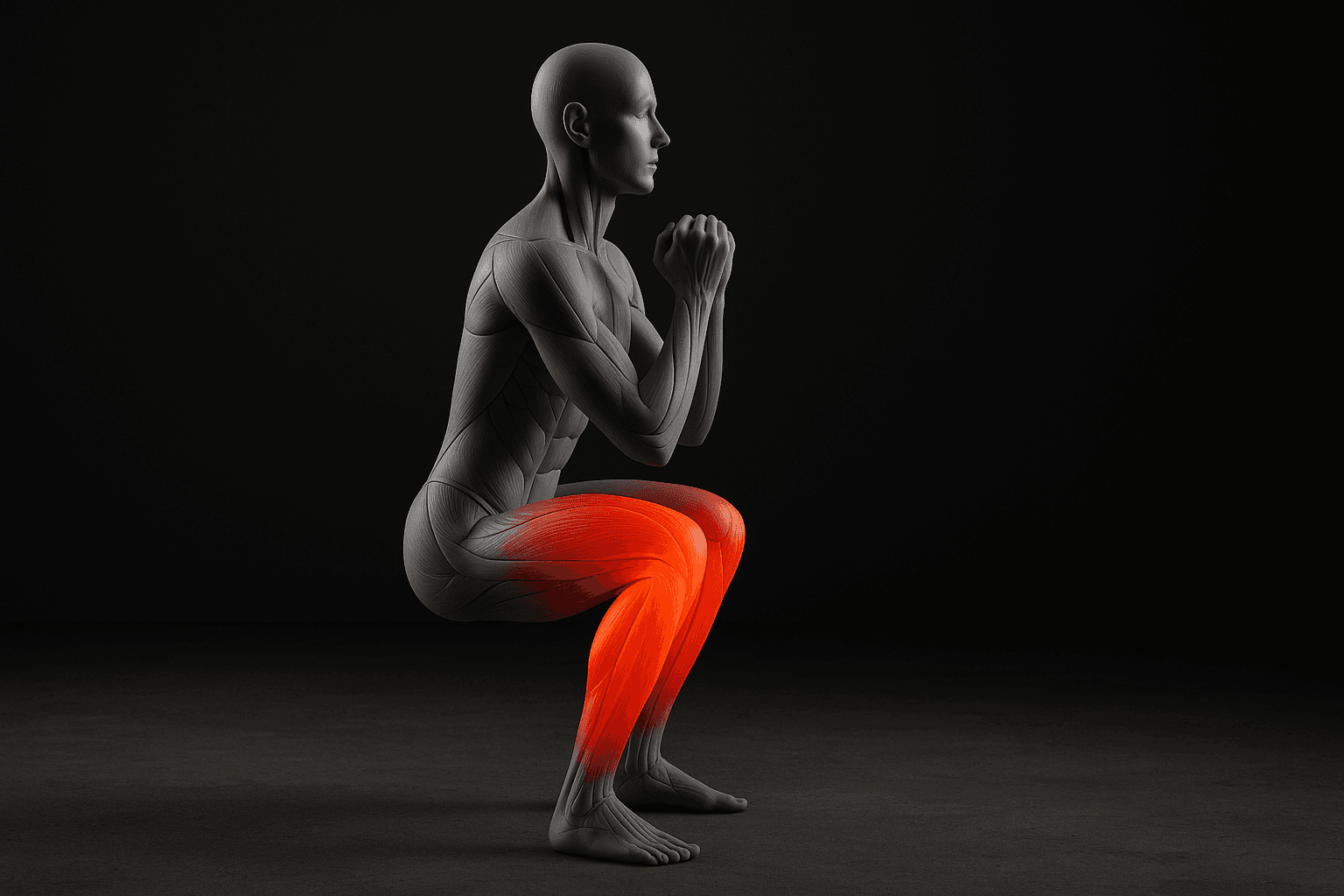
Photo by RepBro.
Goblet squat proper form is a front-loaded squat performed holding a weight at chest height that encourages an upright torso, full hip and knee flexion, and strong core bracing. The essential cues: feet shoulder-width with toes slightly out, weight held close to the sternum, chest up, sit back between your heels, and drive through heels to stand.
What is the goblet squat and why use it?
A goblet squat is a squat variation where you hold a kettlebell or dumbbell vertically at chest level. It teaches squat depth, upright torso posture, and hip-knee coordination without needing a barbell. Use it for learning squatting mechanics, higher-rep conditioning, and as a programmable accessory in strength or hypertrophy cycles. For a direct comparison with other squat variations see the RepBro comparison hub at https://www.repbro.app/vs.
How do I set up the goblet squat?
- Choose the right weight: pick something you can control for 8 to 15 reps. Beginners often start 8–16 kg (20–35 lb). Increase load as form permits.
- Stance: feet about shoulder-width apart, toes pointed 5–20 degrees out depending on hip anatomy. A slightly wider stance helps deeper squats for some people.
- Grip: cradle the weight vertical by the horns of a kettlebell or hold one end of a dumbbell under your chin. Keep the weight close to your sternum.
- Core and upper back: take a breath and brace the core as if you expect a light punch to the stomach. Pull your shoulder blades back and down to create a stable shelf for the weight.
How do I execute the goblet squat, step by step?
- Unrack position: stand tall with the weight close to your chest, elbows pointing down between your knees. Neutral spine.
- Breath and brace: inhale into the belly and brace the core. This increases intra-abdominal pressure and stabilizes the spine.
- Initiate the descent: push hips back as if sitting onto a chair, then bend knees. Keep chest up and weight over mid-foot rather than toes.
- Knees and feet: track knees in line with toes. Do not let knees collapse inward. Aim for knees to travel over toes but not excessively forward if you have ankle limitations.
- Depth: descend until hip crease is at or below the top of the knee if mobility allows. If depth is limited, descend to a comfortable depth and work mobility separately.
- Drive to stand: press through the whole foot, especially the heels, extend hips and knees together, and exhale steadily as you power back to standing. Keep the weight close to your chest throughout.
- Reset: brief reset breath if needed, then repeat.
How should I breathe and what tempo should I use?
- Breathing: inhale and brace on the descent, hold that brace until you pass the sticking point, then exhale as you finish the ascent. For heavier sets or near-max effort, a short Valsalva can be used with caution and only if you have no cardiovascular concerns; consult a professional first.
- Tempo recommendations:
- General technique and beginners: 2 seconds down, 0–1 second pause at the bottom, explosive 1 second up (2-0-1).
- Strength emphasis: 3–4 seconds eccentric, 0–1 second pause, 1 second concentric (3-0-1 or 4-0-1).
- Hypertrophy: 2 seconds down, 1 second pause, 1 second up (2-1-1), 60–90 seconds rest.
- Reps and sets: 3–4 sets of 6–15 reps depending on goal. Lower reps for strength, higher reps for conditioning and muscle endurance.
What common mistakes happen and how do I fix them?
- Knees caving (valgus): cause often weak glutes or poor motor pattern. Fix: cue knees out, perform banded lateral walks or glute bridges, and practice light sets focusing on tracking knees over toes.
- Torso collapsing forward: cause weak upper back or too heavy a weight. Fix: lower the weight, squeeze shoulder blades, imagine chest proud, and practice goblet holds and rows.
- Heels lifting off the floor: cause tight calves or forward weight shift. Fix: wider stance, point toes slightly out, work ankle dorsiflexion stretches, and practice slowing the descent while keeping weight over mid-foot.
- Holding the weight too high or too far from chest: increases forward lean. Fix: bring weight close to sternum; elbows should track down between knees at the bottom.
- Not reaching depth: cause mobility limits in hips, ankles, or thoracic spine. Fix: use a box or bench and sit-to-box depth work, mobility drills for ankles and hips, and goblet squat partials progressively increasing range.
- Rounded lower back: cause bracing failure or too much forward lean. Fix: brace core before descent, reduce load, and practice hip-hinge drills and planks.
Is the goblet squat safe?
When performed with good form and appropriate load, the goblet squat is one of the safer squat variations because the front-loaded weight encourages an upright posture and it is easy to bail by dropping the weight. Stop immediately if you feel sharp or unusual pain and consult a qualified professional for assessment; this guide is educational, not diagnostic. If you lift heavy, consider a coach to review technique and a health professional if you have cardiovascular concerns.
Quick programming tips
- Use goblet squats as a main mover for beginners, as a technique primer before barbell squats, or as an accessory for higher-rep leg work.
- Progress by increasing reps, load, or adding a slow eccentric phase. When you can perform 3 sets of 15 with perfect form, increase weight.
- If you use the RepBro app for programming or tracking, link your workouts for consistent progression and coaching cues at RepBro.
Short FAQ
Q: Can I do goblet squats every workout?
A: Yes for light to moderate loads, but vary intensity and volume. Allow 48 hours between intense leg sessions.
Q: Are heels elevated acceptable?
A: Slight heel elevation can help ankle-limited lifters temporarily, but address ankle mobility for long-term improvement.
Q: What if my elbows hit my knees?
A: That often indicates a narrow stance. Widen stance or point toes slightly more outward to create space.
One-sentence takeaway: Use the goblet squat to learn and reinforce safe squat mechanics — set a controlled tempo, brace your core, keep the weight close, and fix errors with specific mobility and strength drills.
Frequently asked questions
- How deep should I go in a goblet squat?
- Aim for your hip crease below or level with your knee when possible. If mobility prevents this, work progressively with a box or partial range while improving ankle and hip mobility.
- What weight should I start with for goblet squats?
- Begin with a kettlebell or dumbbell you can control for 8 to 15 reps with good form. Rough starting ranges: beginners 8–16 kg (20–35 lb), intermediates 12–24 kg (25–55 lb). Increase when you can hit the top of your rep range with solid technique.
- Can goblet squats replace back squats?
- Goblet squats are a lower-skill, safety-friendly alternative that trains squat mechanics and quad strength. For heavy loading, barbell back squats are more efficient, but goblet squats remain valuable for technique, hypertrophy, and conditioning.