The Most Common Front Squat Mistakes (and How to Fix Them)
Spot the top front squat mistakes, why they happen, what they cost you, and one practical fix per error—clear, evidence-aware cues to improve technique safely.
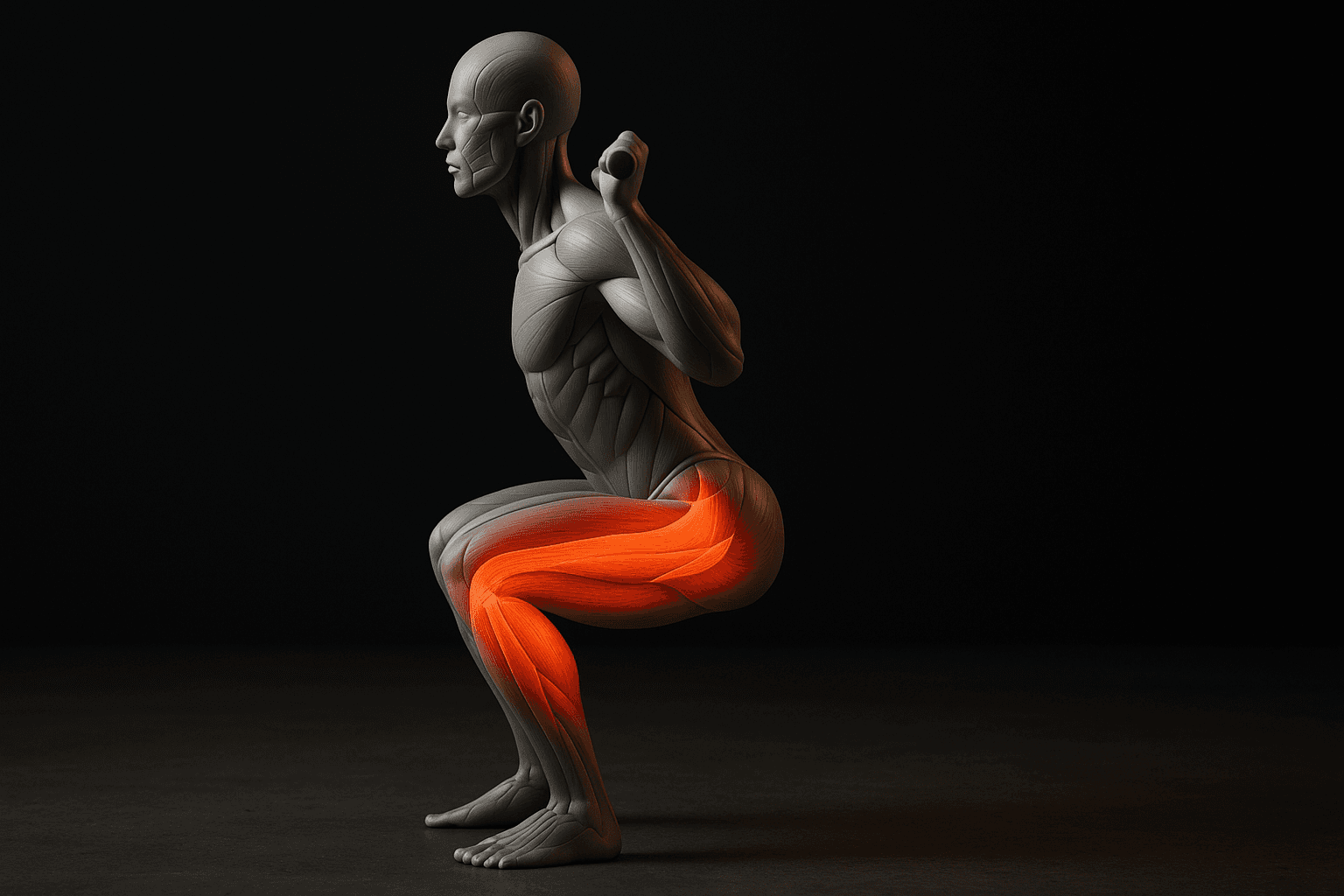
Photo by RepBro.
The most common front squat mistakes are: incorrect bar/rack position, low elbows, chest collapse, heels lifting, knees caving, and excessive butt-wink or too-shallow squats. Each costs you strength, increases injury risk, or both. Below are why each happens, what it costs, and one concrete, practice-friendly fix.
Is the bar sitting too low or too high on your shoulders?
Why it happens: People either let the bar sit on the collarbones or up at the throat because of poor rack setup or weak upper-back tension. A poor setup forces compensations in the neck, wrists, or torso. What it costs: Loss of upright torso, wrist pain, and reduced load capacity. A bar too low converts the front squat into a poor lever, reducing quadriceps demand and increasing lumbar stress. Fix: Place the bar on the anterior deltoids at the groove where collarbones meet shoulders. When using the clean grip, keep fingers relaxed and wrists neutral; with the cross-arm grip, keep elbows high. Adjust rack height so the bar is at shoulder level when you step under; this should mean one small ankle/knee bend to unrack, not a deep dip.
Are your elbows dropping during the set?
Why it happens: Weak upper back, tight thoracic spine, or trying to avoid wrist discomfort causes elbows to fall. The lower the elbows, the more the torso folds forward. What it costs: Power leaks—bar slides forward, knees travel too far, and the quads don't get full stimulus. Repeated forward collapse increases risk to the low back. Fix: Cue 'elbows high and outside'. Consciously raise elbows so the forearms are roughly parallel to the floor. Practice holding an empty bar or 40–60% of normal working load for 3 sets of 6–8 pauses: descend, hold 2 seconds at the bottom with elbows up, then stand. Do this twice per week for 4 weeks to ingrain the position.
Is your chest falling and upper back rounding?
Why it happens: Losing the upright torso is usually mobility-related (thoracic flexion), bracing-related (weak core/upper back), or load-related (too heavy). It often starts subtly and becomes pronounced when fatigue sets in. What it costs: Shift of load to lower back, inefficient force transfer, and higher shear on the spine. Progress stalls because inefficient positions limit safe loading. Fix: Strengthen the upper back and practice bracing. Do 3 sets of 8–12 seated band pull-aparts or face pulls twice weekly, and add 3 sets of 5 front squats at 60% 1RM focusing on an upright chest and a tight brace. If needed, reduce depth by 10–20% until you can keep the chest up.
Are your heels coming off the floor?
Why it happens: Limited ankle dorsiflexion, narrow foot stance, or shifting weight too far forward. Heels rising is common when trying to go deep without the required ankle ROM. What it costs: Reduced force production through the ground, unstable base, knee and forefoot overload, and higher likelihood of losing balance forward. Fix: Test ankle mobility and add a quick warm-up: 2 sets of 8–10 ankle dorsiflexion drills per leg (knee-to-wall test aiming for 10 cm/4 in from the wall). Use a slight heel wedge (2–6 mm initially) or raise heels on small plates for working sets if mobility improvement is mid-term—keep wedges minimal and temporary while improving ankle ROM with daily 3-minute calf stretches and 2 weekly mobility sessions.
Are your knees caving inward (valgus) as you descend?
Why it happens: Weak hip abductors and external rotators, poor cueing, or trying to lift too heavy without control. It also comes from putting weight on the toes instead of midfoot. What it costs: Increased strain on the MCL and patellofemoral joint and lost force from inefficient knee tracking. Chronic valgus can lead to pain and inconsistent progress. Fix: Improve hip control with 3 sets of 8–12 banded lateral walks or single-leg Romanian deadlifts twice weekly. During squats, cue 'knees out' and place a 1–2 cm marker under the shoelace area to help you push midfoot into the ground. For 3–6 weeks, drop load by 15–25% and make knee tracking a primary focus for every rep.
Are you going too deep and tucking the pelvis (butt-wink), or stopping too shallow?
Why it happens: Lack of hip or hamstring mobility causes posterior pelvic tilt (butt-wink) at end ROM; staying too shallow is often fear or trying to avoid the butt-wink. What it costs: Butt-wink increases lumbar flexion under load; shallow squats limit quad and glute development and carryover to other lifts. Fix: Find the deepest position you can maintain with a neutral spine. Use a box or bench set 4–8 cm (1.5–3 in) below target depth for box front squats—do 3 sets of 5 at 60–75% while pausing 1 second sitting tall to learn the hinge and pelvic position. Improve hip flexion with 2 minutes of targeted mobility per day (90/90 drills, hip CARs). If butt-wink persists after 4 weeks of mobility work, reduce depth by 10–15% and prioritize control over range.
Safety note: Stop on sharp pain and consult a qualified professional; this article does not diagnose injuries or give medical advice.
If you track and program your lifts, digital logging and auto-adjusted progress can help cement technical gains—consider tools like RepBro to record sessions and compare variants, and check the differences between back and front squat mechanics in this comparison if you need to decide which to emphasize: https://www.repbro.app/vs. For plan imports or structured programs, see how to bring plans into your tracker at https://www.repbro.app/import.
One-sentence takeaway: Fixing a single front-squat fault at a time with measurable drills and modest load reductions will protect your spine, build consistent strength, and speed progress more than chasing heavier weights while falling apart.
Frequently asked questions
- How often should I front squat to improve form?
- Practice the front squat 2–3 times per week with at least 48 hours between heavy sessions; use 3–5 technique-focused sets per session at 50–70% of your 1RM.
- Should I use the clean grip or crossed-arm grip?
- Choose the clean grip if you have enough wrist and shoulder mobility; use the crossed-arm grip if not—both work, but prioritize elbow height and torso uprightness over grip style.
- Is a weightlifting belt useful for front squats?
- A belt can help when you approach near-max loads, but don’t rely on it to mask poor bracing; learn to brace your core and only add a belt when sets exceed ~85% of 1RM.