The Most Common Dumbbell Shoulder Press Mistakes (and How to Fix Them)
Learn the 6 most common dumbbell shoulder press mistakes, why they happen, what they cost (lost gains or risk), and one concrete fix for each—no fluff, just practice.
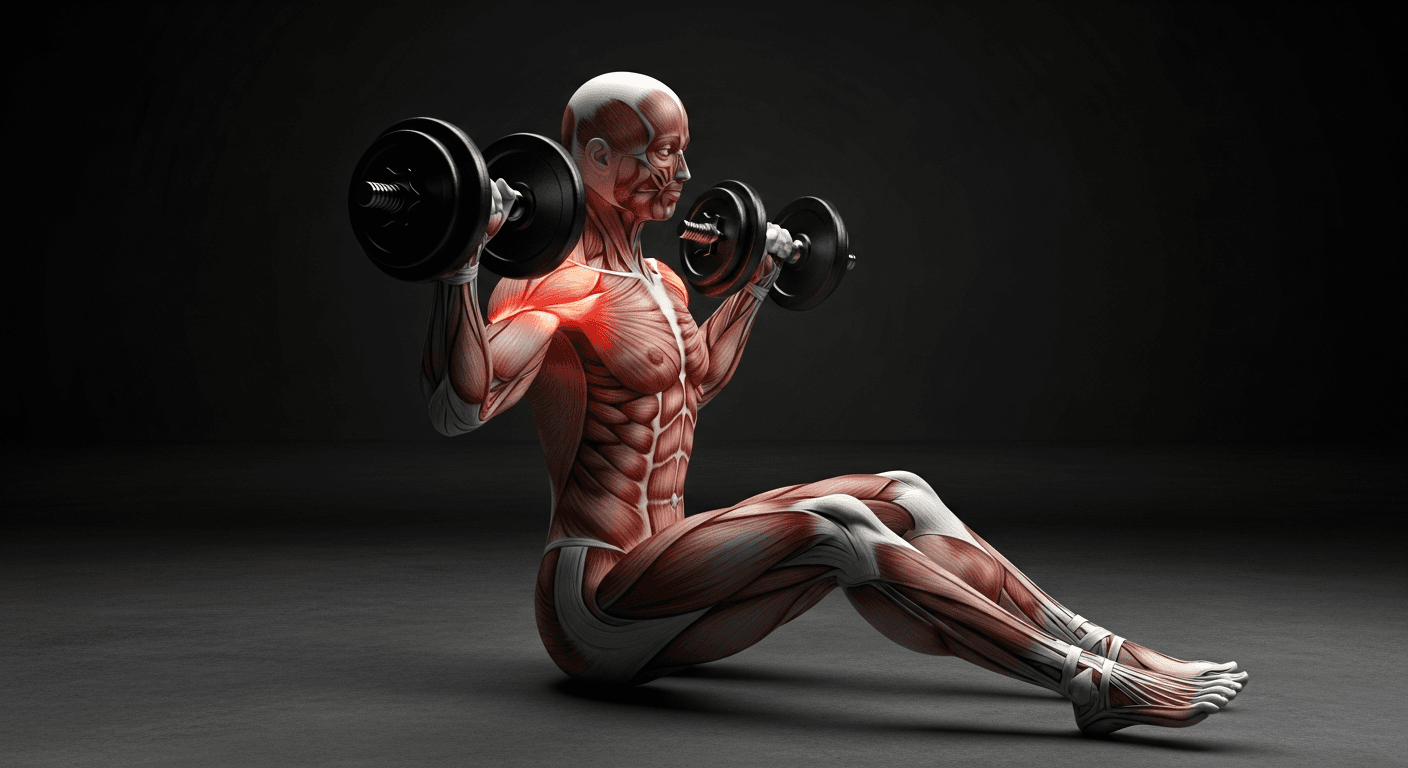
Photo by RepBro.
The most common dumbbell shoulder press mistakes are: excessive lower-back arch, elbows flaring wide, pressing the weights too far forward, using too much weight/momentum, letting the wrists collapse, and dropping the weights too fast (poor control). Each of these costs you strength or increases injury risk — below are why they happen, what they cost, and a single concrete fix for each.
Why am I over‑arching my lower back when I press?
Why it happens: You’re trying to move more weight and the body cheats by extending the lumbar spine. Weak glutes/core or setting up with the ribcage lifted makes it easier to arch. What it costs: Reduced deltoid engagement, more lumbar compression and strain risk, and slower progress on pressing strength. Fix: Brace your core and tuck your ribs. Before each set take a full breath, exhale halfway, pull your belly button toward your spine, and imagine a 2–3 cm posterior pelvic tilt. If arch persists, drop weight by 10–25% and do 3 sets of 8–10 with a strict focus on neutral spine.
Why are my elbows flaring out to the side (90°) during the press?
Why it happens: Many lifters copy bench-press cues or have tight lats/pecs pulling the elbows wide. Flaring often appears under fatigue or heavy loads. What it costs: Higher shoulder impingement risk, less front-deltoid activation, and weaker pressing mechanics. Fix: Aim for a 10–30° elbow tuck (elbows slightly in front of the plane of your torso). Picture pressing into pockets at the top. Use a mirror or phone video and set a tactile cue: lightly touch your thumbs to your sternum at the bottom to find the correct angle, then press.
Why do my dumbbells travel forward instead of straight up?
Why it happens: Starting position too far forward, chest lifted, or pressing path aimed toward front of head — often a compensation for weak upper traps or to avoid elbow pain. What it costs: Increased shoulder torque and anterior shoulder stress, plus less efficient force transfer (lost reps and slower gains). Fix: Start with the dumbbells in line with the mid-clavicle and press slightly back toward the top of your head — imagine pressing the weights up and slightly back so they finish roughly over your ears. Practice 3–4 sets of 6–8 reps with lighter load and slow tempo (2 seconds up, 2 seconds down) until the path is vertical.
Why am I using momentum or jerking the weights up?
Why it happens: The load is too heavy for strict pressing strength, or the lifter is chasing reps near failure and uses leg drive/hip thrusts. What it costs: Less muscle work per rep (wasted volume), poor motor patterning, and higher risk of shoulder/joint strain. Fix: Remove the momentum by slowing the tempo: 1–2 seconds concentric, 2–3 seconds eccentric. If you still cheat, reduce weight by 15–30% and focus on sets of 6–10 strict reps. For standing presses, eliminate leg drive intentionally by keeping feet planted and squeezing glutes.
Why do my wrists bend backward when I press?
Why it happens: Weak grip or holding the dumbbells too high in the palm causes the wrist to extend; some lifters also lack shoulder mobility and shift load to the wrist. What it costs: Wrist strain and less force transfer to the deltoids; unstable top position reducing load capacity. Fix: Hold the dumbbells with the handle closer to the base of the fingers, thumbs wrapped, and keep a neutral wrist (knuckles in line with forearm). Use a 1–2 cm cue: imagine keeping the knuckles stacked over the elbow throughout the press. If necessary, lower weight and practice 3 sets of 10 strict presses focusing on wrist alignment.
Why do I let the dumbbells drop fast on the way down?
Why it happens: Ego training (more reps) and confusion about the eccentric’s value; fatigue also causes lazy negatives. What it costs: Missed strength and hypertrophy stimulus (eccentrics produce 30–40% more tension per rep) and higher risk of losing control and banging the shoulder joint. Fix: Control the descent with a 2–3 second eccentric. Count it out loud or use a metronome app. If you can’t maintain tempo for the last 1–2 reps of a set, stop the set — don’t rage-drop the weights.
When should I stop or seek help?
Stop immediately and remove load if you feel sharp or shooting pain during any part of the press. Persistent joint soreness beyond 48–72 hours, numbness, or pins-and-needles are signs to consult a qualified coach or clinician — I can’t diagnose, only recommend stopping and seeking professional advice.
Safety note: Stop on sharp pain; never push through acute joint pain. If you’re unsure about persistent pain or a suspected injury, consult a licensed healthcare professional or an accredited coach.
Practical drill: Film 2–3 sets from the side and front once per week. Compare your elbow angle and press path, and aim for 2–5% weekly improvements in tempo and control rather than big jumps in weight. If you track sessions, consider using RepBro to log strict sets and spot trends.
One-sentence takeaway: Fixing these six common faults—arch, flare, forward press, momentum, wrist collapse, and uncontrolled eccentrics—adds safety and ensures each rep actually trains your shoulders rather than your compensations.
Frequently asked questions
- How heavy should my dumbbells be for shoulder presses?
- Choose a weight you can press for 6–12 controlled reps with good form; if you need momentum or your elbows flare on rep 3, drop 5–20% and retest.
- Should I press standing or seated?
- Both work: seated reduces lower-back demand, standing trains core/stability; pick the variation that lets you maintain a neutral spine and controlled reps.
- How far should I lower the dumbbells?
- Lower until elbows are roughly at shoulder level (upper arm parallel to the floor) or slightly below without pinching the shoulders—avoid forcing deeper range if it causes pain.