Copenhagen Plank: Muscles Worked and Best Alternatives
Clear, evidence-aware guide to which muscles the Copenhagen plank trains, how to program it, and 3–4 practical alternatives depending on equipment, injuries, and plateaus.
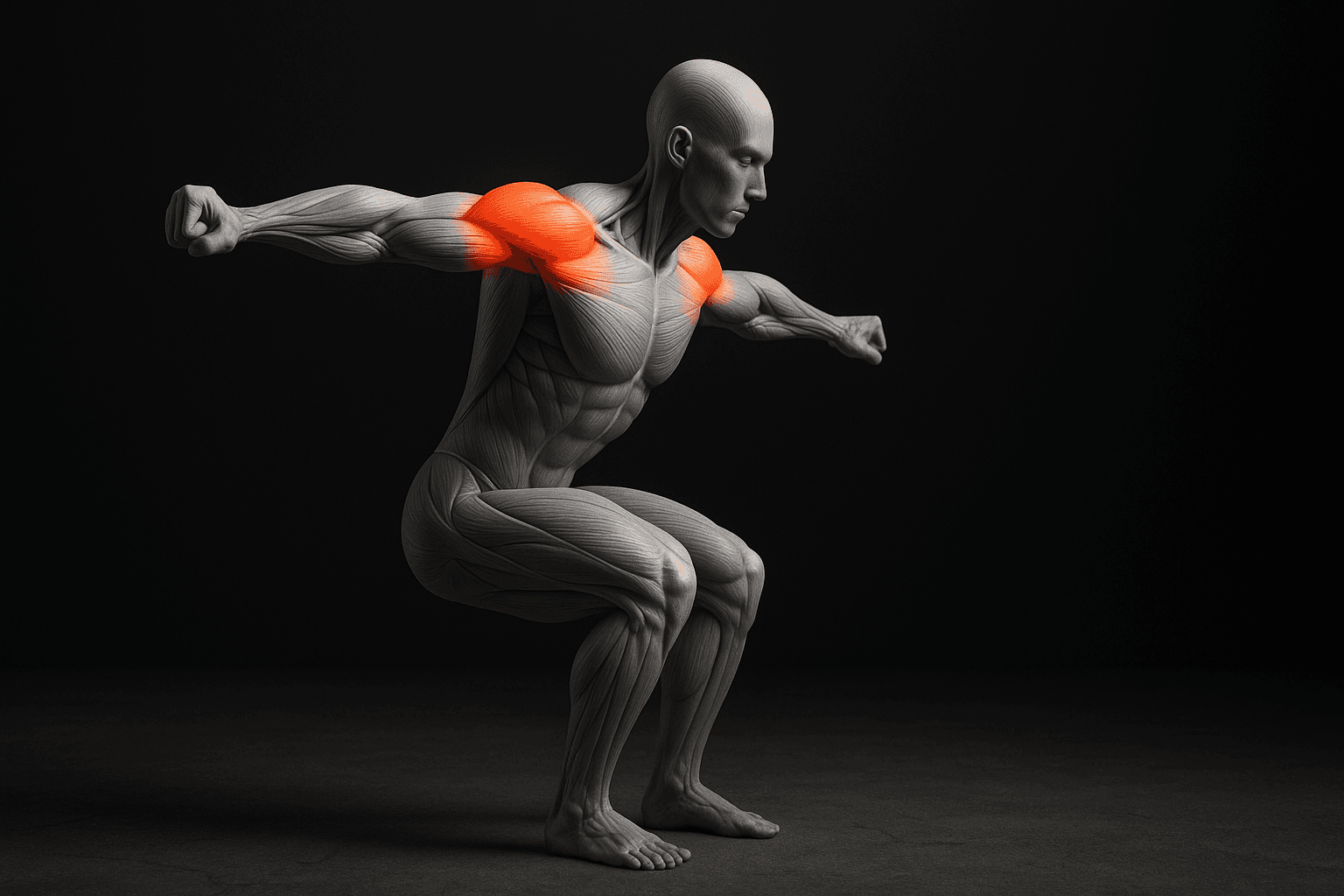
Photo by RepBro.
The Copenhagen plank primarily targets the hip adductor complex of the top leg through a strong isometric contraction, while also loading the lateral core (obliques), glute medius/minimus, and shoulder/stabilizers to maintain a plank position. It’s an adductor-focused hybrid: core plus hip stabilizer work.
What muscles does the Copenhagen plank train?
The Copenhagen plank is a side‑plank variant with your top leg supported (often on a bench) and your bottom leg suspended. Primary and secondary muscle targets:
- Primary: hip adductors of the top leg (deep and superficial adductor muscles) — these generate the main isometric force keeping the top leg elevated and pressing into the support.
- Secondary: lateral core (external and internal obliques) for resisting lateral flexion; glute medius/minimus on the top and bottom sides for pelvic stability; adductor longus and brevis contribute; shoulder girdle and scapular stabilizers on the supporting arm hold the plank frame.
EMG and biomechanical analyses of Copenhagen-like positions generally show high adductor activation relative to many other core and hip exercises, so it’s a practical choice when you want adductor loading plus a core stability challenge.
How should it fit into a training program?
Treat the Copenhagen plank as targeted adductor and lateral‑stability work. Programming guidelines consistent with strength and conditioning consensus:
- Frequency: 2–3 sessions per week is a reasonable starting point for most lifters when adductor strength or groin injury prevention/recovery is the goal.
- Volume: 2–4 sets per side. Use equal work on both sides even if one feels stronger.
- Intensity: start with shorter holds (for example under 30 s) and emphasis on clean technique; progress by longer holds, more sets, increased lever (straight leg vs bent), or added load.
- Progression and monitoring: progress slowly and only when form remains strict (no pelvic sagging, no pronounced rotation). If strength or pain limits the top leg, use regressions.
This exercise complements compound lifts and single‑leg strength work (bulgarian split squats, lunges) rather than replacing them.
How to perform a standard Copenhagen plank (brief cues)
- Set up beside a bench or elevated surface and place your top leg on the support from knee to ankle.
- Position the lower leg hanging beneath, body in a straight line from head to heel.
- Support yourself on your forearm or extended arm on the floor; press the top leg into the support to maintain the elevated position.
- Hold with a braced core and neutral pelvis; avoid hiking the hips or rotating the torso.
Safety: stop on sharp groin, knee, or shoulder pain. Consult a qualified professional for persistent pain or if you’re returning from injury.
What are practical alternatives and when to pick each?
Below are four solid alternatives, with when to choose them.
| Exercise | Equipment | Muscles emphasized | When to pick it |
|---|---|---|---|
| Side plank (no leg support) | None | Lateral core, glute medius | Beginner or limited equipment; reduces direct adductor load while still training lateral stability |
| Supine adductor squeeze (ball or plate between knees/ankles) | Small ball or plate | Isolated adductors | Rehab or early return-to-load when you need focused, low‑risk adductor strengthening |
| Standing band/cable hip adduction | Band or cable column | Adductors with progressive external load | When you need precise progressive overload and graduated resistance; good for strength phases |
| Bulgarian split squat / lateral lunge | Dumbbells/barbell or bodyweight | Adductors, glutes, quads; more functional, larger loads | When you want multi‑joint strength and transfer to sport/strength goals; not ideal if isolating adductors or with acute groin pain |
When to pick each in plain terms:
- Use side planks if you lack equipment or are a beginner who needs safer lateral core work without high adductor stress.
- Use supine squeezes (ball/plate) if rehabbing a groin strain or wanting to isolate and monitor adductor load with minimal pelvic strain.
- Use standing cable/band adduction if you want measurable progressive overload and strength adaptations with controlled range of motion.
- Use split squats or lateral lunges when your goal is bigger, functional loading of the legs and hips and you can tolerate compound stress.
How to progress the Copenhagen plank safely?
Progress by one variable at a time: increase hold time, increase sets, move from bent-knee to straight-leg support, raise the support height to increase leverage, or add external load (weighted vest or ankle weight) only after mastering strict technique. Monitor fatigue and decreases in form — regress if your pelvis drops or you begin rotating.
What safety precautions should I follow?
- Stop immediately for sharp pain in the groin, medial knee, or shoulder.
- If you have a recent groin strain, hip pathology, or knee instability, consult a qualified clinician before loading the Copenhagen or similar adductor exercises.
- Never force length or load that causes compensation (hip hike, lumbar lateral flexion). Pain-free, gradual exposure is key.
What limitations should I be aware of?
- No app or AI can reliably see and correct your form through a screen; video feedback from a qualified coach or clinician is best for technique errors.
- If you have an active injury or persistent pain, work with a medical professional and a rehabilitative strength coach — exercises should be individualized.
- A template or single exercise won’t produce results without consistency, appropriate progressive overload, and integration into a broader program (nutrition, recovery, overall training).
- EMG and lab measures show muscle activation but don’t guarantee transfer to strength or performance; pick exercises that match your movement and loading goals.
If you want to track progress quantitatively, many lifters log minutes/holds per week and regress to easier variants when fatigue compromises form. For evidence‑based programming, integrate Copenhagen variations alongside hip and leg strengthening, and reassess every 4–8 weeks.
Safety reminder: this article provides general guidance, not medical advice. Consult a qualified professional for diagnosis, individualized rehabilitation, or exercise prescription if you have pain or special medical considerations.
Frequently asked questions
- Does the Copenhagen plank train the adductors?
- Yes. The Copenhagen plank loads the hip adductors heavily through an isometric contraction of the top leg while the body is held in a lateral plank position. EMG research generally reports high adductor activation in Copenhagen variations compared with many other core or hip exercises.
- How often should I do Copenhagen planks?
- Program Copenhagen planks like other targeted hip/adductor work: include them 2–3 times per week, 2–4 sets per side. Start with shorter holds and lighter progressions, then increase hold times, sets, or load once you can maintain clean technique without compensations.
- What if I have a groin or knee issue?
- If you feel sharp groin or medial knee pain during the Copenhagen plank, stop. Use lower-load alternatives (supine adductor squeeze, banded standing adduction) and consult a qualified clinician. Progress only when pain-free and with graded exposure under professional guidance.