Conventional Deadlift Alternatives at Home (Minimal Equipment)
Practical at-home substitutes for the conventional deadlift using bodyweight, dumbbells, or bands — what each preserves and loses, programming tips, and when to return to a gym.
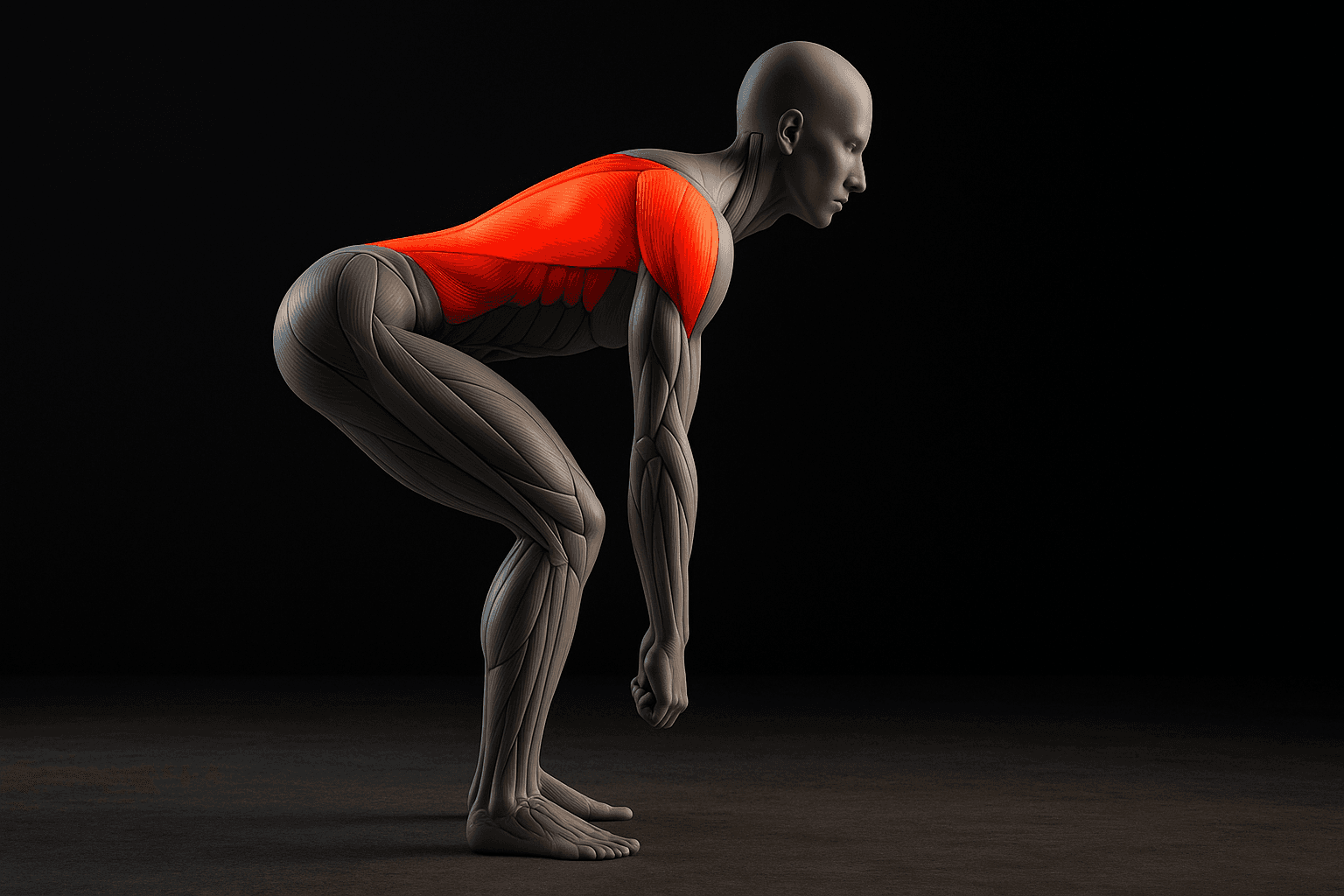
Photo by RepBro.
If you can’t conventional deadlift at home, use hip‑hinge and posterior‑chain exercises with dumbbells, bands, or bodyweight to preserve strength and hypertrophy. They cover most movement patterns and muscle work; what you lose is the absolute heavy load, barbell neural adaptations, and competition‑specific practice.
What at-home exercises truly replace the deadlift’s movement demands?
Five practical alternatives with minimal equipment:
- Dumbbell Romanian Deadlift (RDL)
- Single‑Leg RDL (dumbbell or bodyweight)
- Dumbbell/Goblet Sumo Deadlift
- Banded Good Mornings or Banded RDLs
- Glute Bridge / Hip Thrust (bodyweight to loaded)
Each preserves the hip hinge and posterior chain emphasis to varying degrees; details follow.
How does each alternative compare to the conventional deadlift (what it preserves and what it loses)?
| Exercise | Equipment | Preserves (vs conventional deadlift) | Loses (vs conventional deadlift) | Best for when... |
|---|---|---|---|---|
| Dumbbell RDL | Dumbbells | Hip hinge, hamstrings, glutes, trunk bracing | Absolute load ceiling, symmetrical heavy carry, floor-to-lockout pattern | You want heavy-ish hinge work without a barbell |
| Single‑Leg RDL | Dumbbell or bodyweight | Hip hinge, unilateral strength, balance, hamstring length-tension | Max bilateral load, identical loading stimulus to heavy barbell | You need unilateral work or have limited load |
| Dumbbell/Goblet Sumo Deadlift | Dumbbell | Hip and knee drive, more glute/quadriceps than RDL, easier setup | Narrow bar path and max heavy load are limited | You want a standing lift similar to deadlift mechanics |
| Banded Good Morning / RDL | Bands | Progressive resistance at lockout, posterior-chain tension | Constant heavy linear loading and absolute max load | You need variable tension and light equipment portability |
| Glute Bridge / Hip Thrust | Bodyweight/dumbbell/band | Max glute activation, hip extension strength | Less hamstring/upper-back demand and no large axial load | You target glute hypertrophy or lockout strength |
How should I program these alternatives to make real progress?
Principles: progressive overload, recovery, and specificity. For hypertrophy use moderate loads and higher reps; for maximal strength use heavier loads and lower reps. A practical weekly pattern for the posterior chain at home:
- Frequency: 2–3 sessions/week.
- Strength focus: 3–6 sets of 3–6 reps on heavier compound hinge (dumbbell RDL or goblet sumo).
- Hypertrophy focus: 3–5 sets of 6–12 reps (RDLs, hip thrusts, single‑leg work).
- Unilateral work: 2–4 sets of 6–10 reps per leg for single‑leg RDLs.
- Accessory: hamstring curls (sliders or Swiss ball), back extensions or band pull‑aparts.
Progression methods without heavy plates: increase reps then sets, slow the eccentric (3–4s), reduce rest, increase band tension, move to heavier dumbbells, or add tempo pauses at bottom/top.
Deloads and recovery: include a lighter week, reduced volume, or lower intensity after several weeks of accumulation; how often depends on your fatigue, not a fixed number for all lifters.
When is swapping deadlifts at home adequate vs when should I return to a gym?
Adequate at home when your goals are:
- General strength and muscular development of the posterior chain
- Improving hip-hinge mechanics and movement control
- Managing time or access constraints
Return to a gym or use a barbell when:
- You aim to maximize 1‑rep strength (powerlifting or heavy singles)
- You need to practice the conventional deadlift pattern for competition
- You want higher absolute loads for neural and bone adaptations
If competition or maximal strength is not a goal, home alternatives will satisfy most strength and hypertrophy needs for months or years if progressed consistently.
How do I pick which alternative fits my current weakness or injury history?
- Weak lockout/glutes: prioritize hip thrusts and heavy RDLs.
- Weak hamstrings: include single‑leg RDLs and controlled eccentrics.
- Low‑back discomfort with heavy loads: reduce range (partial RDLs), increase glute focus, use bands, and get form checked.
If you have current pain or prior injuries, consult a qualified professional before loading progressions.
What are practical sets, reps, and examples for a single session?
Example balanced posterior‑chain session (home):
- Warm up: 5–10 minutes hip mobility, light band pull‑throughs
- Main: Dumbbell RDL — 4 sets of 6–8 reps (focus hinge, progressive load)
- Accessory: Single‑leg RDL — 3 sets of 8–10 per leg
- Hypertrophy: Hip thrust (dumbbell on lap) — 3 sets of 10–12 reps
- Core: Plank variations 2–3 sets of 30–60s
Adjust volume and intensity by goal: fewer reps and more load for strength, more reps for size.
Safety note
Stop any exercise that causes sharp pain. This guide isn’t a diagnosis tool. If you have acute or persistent pain, or complex medical issues, consult a qualified clinician or coach. Proper technique, controlled progression, and sensible loading reduce risk but do not guarantee injury prevention.
What apps and AI can’t do — limitations (honest)
No app or AI can watch your lift live and correct form reliably from every angle. They cannot replace hands‑on assessment for injuries or personalized rehab. A plan only works if you follow it consistently; technological tools can assist tracking and structure but can’t show up for you. If you log sets and progress, tools like RepBro can help store data and track progression, but form checks require a coach or clinician.
Summary: Home deadlift alternatives with dumbbells, bands, and bodyweight preserve the hip hinge and posterior‑chain stimulus and serve most strength and hypertrophy goals. They fall short at matching maximal barbell loads and competition specificity — return to a gym when those priorities matter, otherwise progress steadily at home with structured overload and recovery.
Frequently asked questions
- Can I build strength at home without conventional deadlifts?
- Yes. With progressive loading, consistent practice of hinge-based moves (RDLs, single-leg RDLs, hip thrusts) and 2–3 weekly sessions you can increase posterior-chain strength and muscle. Heavy barbell-specific maximal strength and nervous-system adaptations are harder to match at home without heavy load.
- Which at-home alternative most closely mimics a conventional deadlift?
- A two‑handed dumbbell Romanian deadlift (or banded RDL) preserves the hip hinge, hamstring and glute emphasis, and required trunk bracing. It lacks the same absolute load and axial compression capacity of a heavy barbell deadlift, so it’s best for hypertrophy and general strength.
- How often should I train these deadlift alternatives?
- Train posterior-chain alternatives 2–3 times per week, varying intensity and volume across sessions. Use heavier, lower‑rep work on one day and higher‑rep or unilateral work on another. Include planned lighter weeks or reduced volume every few weeks depending on accumulated fatigue.