How Many Sets and Reps for the Conventional Deadlift?
Evidence-aligned set, rep, intensity and frequency ranges for conventional deadlifts by goal (strength, hypertrophy, endurance), week-to-week progression, and clear signals to add weight or reps.

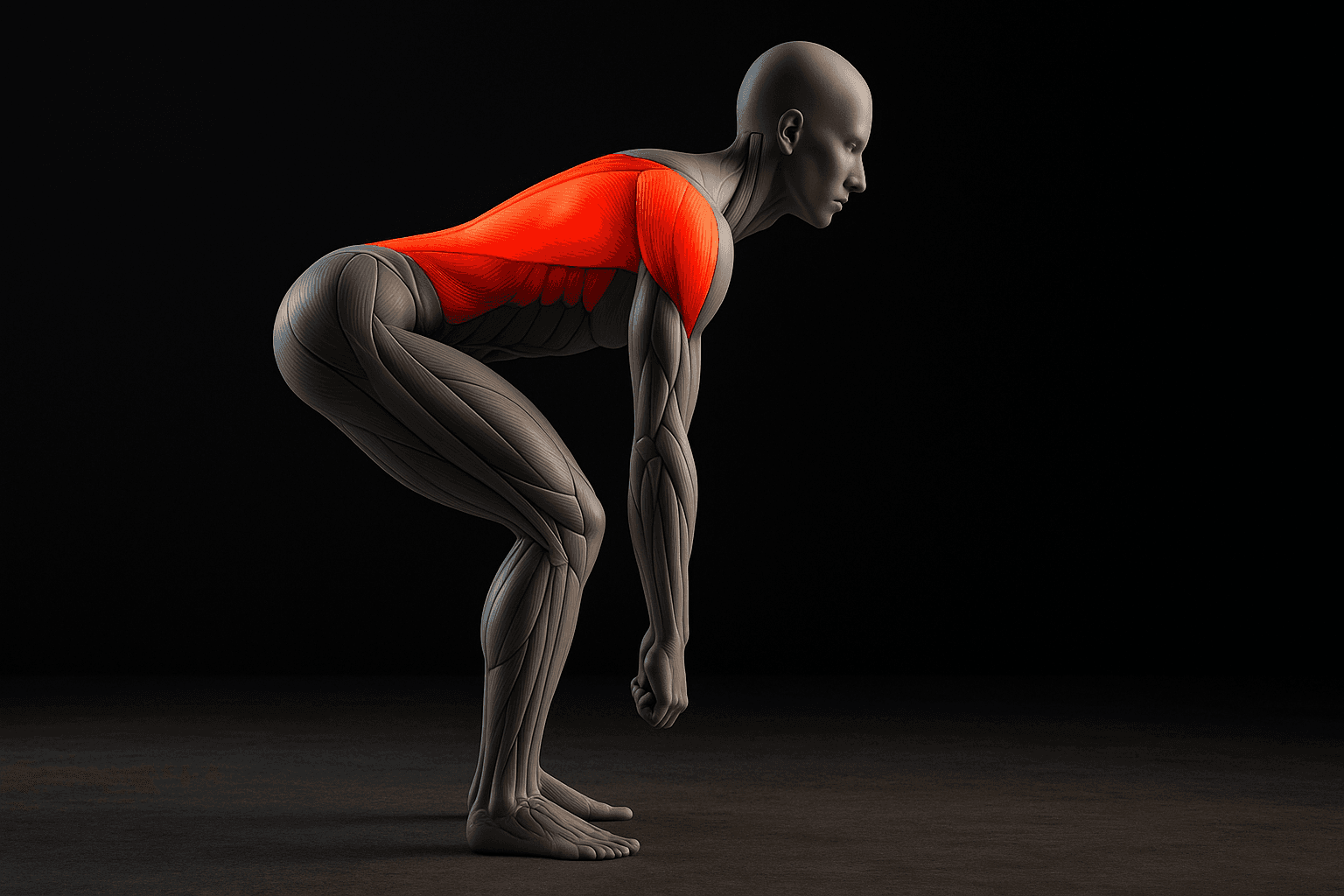
Photo by RepBro.
For the conventional deadlift: strength — 3–6 sets of 1–6 reps, heavy (≈85%+ 1RM), 1–3 times/week; hypertrophy — 3–5 sets of 6–12 reps at moderate loads (≈67–85% 1RM), 1–2 times/week; endurance — 2–4 sets of 12–20+ reps at lighter loads (<67% 1RM). Progress by small weekly load or reps, guided by RPE.
What are evidence-consensus set/rep ranges for deadlifts by goal?
Sports-science consensus (ACSM/NSCA-style) gives practical intensity and rep bands that apply to compound lifts like the conventional deadlift. Translate them into realistic deadlift programming as follows:
- Strength: 3–6 sets of 1–6 reps. Intensity: generally heavy (roughly ≥85% 1RM). Frequency: 1–3 times/week depending on recovery and overall program.
- Hypertrophy: 3–5 sets of 6–12 reps. Intensity: moderate (roughly 67–85% 1RM). Frequency: 1–2 times/week for the deadlift specifically; total weekly posterior-chain volume matters more than single-session load.
- Muscular endurance: 2–4 sets of 12–20+ reps. Intensity: lower (<67% 1RM). Frequency: 1–3 times/week depending on conditioning goals.
These ranges reflect broad, evidence-aligned guidelines. Individual responses vary; use the ranges as a starting point and adjust for recovery, technique, and goal specificity.
How often should I deadlift each week for each goal?
- Strength: 1 heavy session per week is minimal; 2 sessions (one heavy, one lighter/variation) suits many intermediate lifters. Novices can progress with more frequent practice using submaximal intensity.
- Hypertrophy: 1–2 deadlift sessions per week, or one heavy plus one lighter or variation (Romanian, trap-bar, deficit) to increase weekly mechanical tension without accumulating maximal CNS fatigue.
- Endurance/conditioning: 1–3 lighter-volume sessions per week works, usually with higher reps or lighter variations.
Practical note: deadlifts are CNS-taxing. If your program also includes heavy squats and heavy pulls, prioritize recovery and consider limiting maximal-deadlift sessions to once per week.
What does a practical set/rep table look like?
| Goal | Sets per session | Reps per set | Intensity guideline | Frequency |
|---|---|---|---|---|
| Strength | 3–6 | 1–6 | ≈85%+ 1RM | 1–3 / week |
| Hypertrophy | 3–5 | 6–12 | ≈67–85% 1RM | 1–2 / week |
| Endurance | 2–4 | 12–20+ | <67% 1RM | 1–3 / week |
Use this table as a concise program template. Accessory work (RDLs, good mornings, hamstring curls, rows) complements deadlift-specific sets for hypertrophy and injury resilience.
How should I progress the deadlift week to week?
Progression approaches depend on training age:
- Novice linear progression: add small weight increments each session (for example 1.25–2.5 kg / 2.5–5 lb per side, total 2.5–5 kg / 5–10 lb) while technique remains solid. This works until progress stalls.
- Intermediate: move to weekly or biweekly planned increases, using periodization blocks (heavy, volume, peaking) and autoregulation (RPE or %1RM adjusted based on recent performance).
- Advanced: use structured periodization (blocks of 3–6 weeks), heavier singles/doubles at low volume and higher-volume accumulation phases; small jumps in load and planned deloads.
General progression rules:
- Increase load if you complete all programmed sets and reps at the intended RPE (you had ~1–2 reps left in reserve less often). Small, consistent jumps are safer than large jumps.
- If you miss sets or form breaks down, reduce load or repeat the last successful workload before increasing again.
- Track weekly training volume (sets × reps × load) and avoid sudden >10–20% weekly increases in total load to reduce excessive fatigue.
When should I add weight versus add reps?
Clear signals:
- Add weight when you hit all programmed sets/reps at the target RPE and you feel you could have done 1–2 more reps on the final set (i.e., low RPE drift). Increase by the smallest practical increment.
- Add reps (or an extra set) when you can’t safely increase bar weight due to jumps being too large, or when you want to build volume without maximal CNS stress. Use rep progression to build work capacity before increasing top-end load.
- Don’t add weight if form deteriorates, bar speed slows substantially, or RPE increases notably session-to-session on submaximal sets.
A practical autoregulation rule: if you can do the prescribed reps for all sets plus 1–2 extra on the final set, add weight next time. If you fail or pace slows, repeat the same load and aim for quality.
How to structure a sample week for each goal?
- Strength (intermediate): Day 1 heavy conventional 5×3 at high intensity; Day 4 lighter variation 3×5 (RDL/trap bar) focusing on speed and volume.
- Hypertrophy: Day 1 deadlift 4×8 moderate load; Day 3 accessory posterior-chain work (RDLs, lunges, hamstring curls) totaling more weekly volume.
- Conditioning: 3 sessions of lighter deadlift variations 3×12–15 with short rests or circuit-style work integrated.
Safety and practical cautions
Stop on sharp or unusual pain and consult a qualified professional. Never self-diagnose injuries from sensation alone. Maintain technique, use appropriate warm-ups, and avoid ego-loading. If learning form, use lighter loads and consider coaching or video feedback.
What apps and AI coaching can and cannot do (Limitations)
Apps and AI can track sets, reps, RPE, and suggest progressions based on logged data. They cannot see your bar path, joint angles, subtle compensation patterns, or diagnose injuries. Nothing replaces a qualified coach or clinician for technical correction, rehab, or hands-on assessment. Finally, no program works unless you are consistent — adherence is the strongest predictor of progress.
For logging and consistent progression tracking, tools such as RepBro can help record sets, weights, and RPE.
Limit training if you’re ill, highly sleep-deprived, or dealing with acute pain. Plan periodic deloads (for many lifters every 4–8 weeks, adjusted individually) to manage fatigue.
This guidance summarizes consensus set/rep/intensity ranges and practical progression rules. Use RPE, technique quality, and recovery as your primary decision rules—add weight when performance and form are good, add reps or volume when you need to build capacity before increasing maximal loads.
Frequently asked questions
- How many sets and reps should I do for deadlift strength?
- For strength, aim for 3–6 sets of 1–6 reps per session with heavy loads (generally the higher end of intensity). Train the deadlift 1–3 times per week depending on recovery. Use conservative, progressive loading (small weekly increases) and monitor fatigue with RPE or reps-in-reserve.
- How often should I deadlift if my goal is muscle growth (hypertrophy)?
- For hypertrophy, 3–5 sets of 6–12 reps per session is typical, with 1–2 deadlift sessions per week. That balances intensity and volume for the posterior chain; supplement with accessory work. Track weekly deadlift volume (sets × reps × load) and adjust if you’re not recovering or progressing.
- When should I add weight versus add reps on the deadlift?
- If you hit your programmed reps across all sets at the target RPE and felt capable of more, add weight next session (small increments). If form or RPE deteriorates or you miss reps, add reps (or sets) at the same weight first, or reduce load and build back up. Use RPE as a guide.