Close‑Grip Bench Press Alternatives at Home (Minimal Equipment)
Four to five at-home substitutes for the close‑grip bench press using bodyweight, dumbbells, or bands — what each keeps, what it loses, and when to go to a gym.
Photo by RepBro.
Close‑grip bench press can be approximated at home with close‑hand push‑ups, diamond or ring push‑ups, dumbbell floor or close‑grip presses, banded close‑grip presses, and controlled dips. Each preserves the horizontal press and triceps emphasis but loses the same heavy, symmetric barbell loading and simple incremental overload of a gym barbell setup.
What effective at‑home options mimic the close‑grip bench press?
- Diamond/close‑hand push‑ups (progressions): Hands close under sternum, elbows tucked. Workable with feet elevated to increase load or knees/tempo to reduce it.
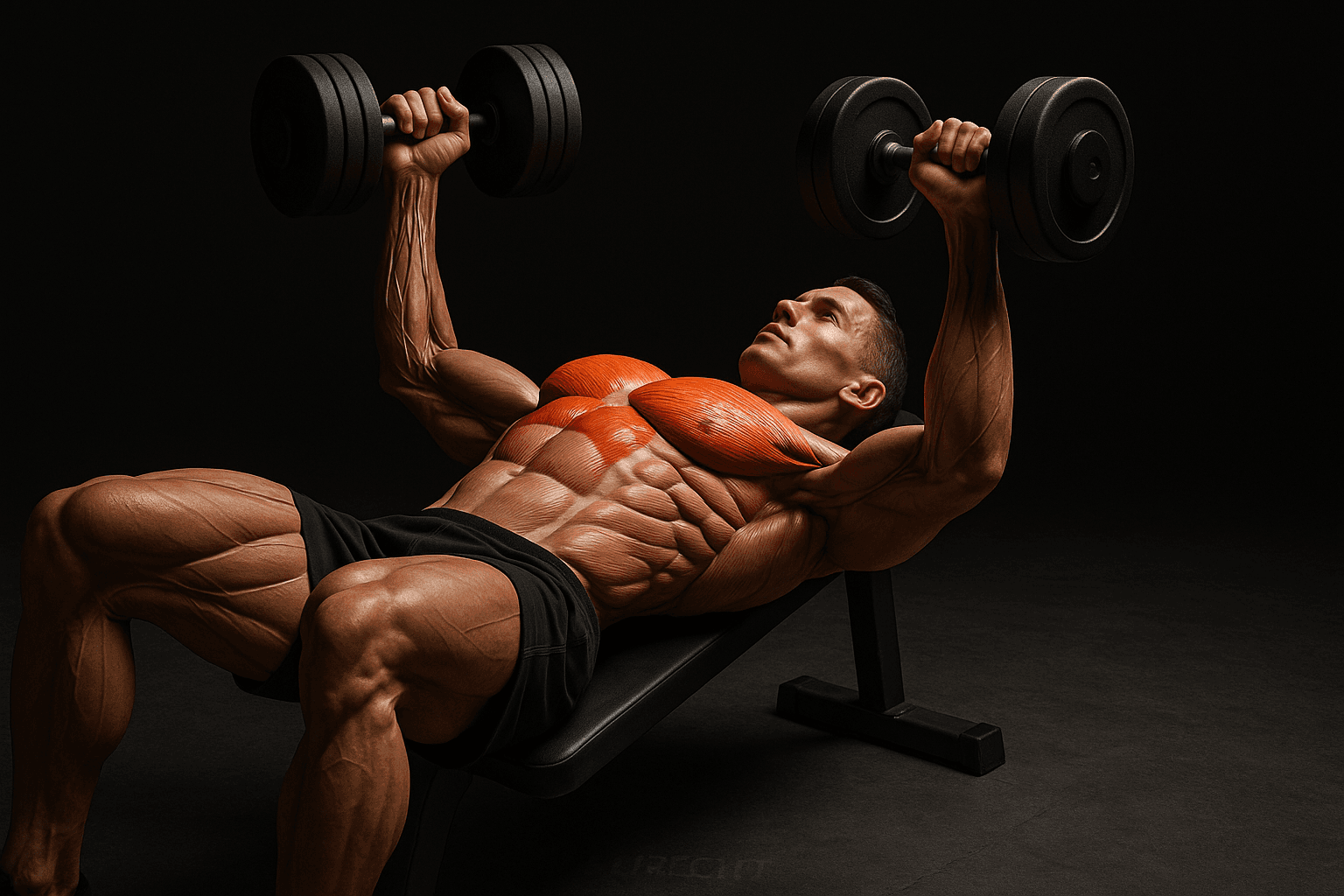
- Dumbbell floor close‑grip press: Lying on the floor, dumbbells held with a narrow grip (palms facing each other or slightly turned) to emphasize triceps while limiting range of motion.
- Single‑arm dumbbell press (neutral grip): Increases loading options and corrects imbalances while still using horizontal pressing mechanics.
- Banded close‑grip press: Anchor a resistance band behind a couch or door, press with a close grip to get variable resistance through the movement.
- Chair/bench dips (carefully): Hands close, shoulders packed, and range limited to avoid excessive anterior shoulder stress.
What does each alternative preserve and what does it lose compared with the barbell close‑grip bench press?
| Exercise | Preserves (mechanics/targets) | Loses (limitations) |
|---|---|---|
| Diamond/close push‑ups | Horizontal press pattern; triceps emphasis; good for high‑rep hypertrophy | Max absolute load limited; harder to add small, consistent load increments |
| Dumbbell floor close‑grip press | Dumbbell unilateral control; triceps emphasis; safer without a spotter | Reduced top‑end load vs barbell; shorter ROM (floor stops elbow travel) |
| Single‑arm DB press | Unilateral overload; core/bracing demand; progressive via heavier DBs | Stabilization differences vs bilateral barbell; harder to match heavy bilateral loads |
| Banded close‑grip press | Variable resistance that increases near lockout; portable progressive tension | Band tension increments less precise; fatigue curve differs from constant external load |
| Chair dips | Strong triceps stimulus, easy to load with weight | Higher shoulder strain risk; technique sensitive; not ideal for everyone |
How should I progress these alternatives if I don't have a barbell?
Progressive overload principles still apply: increase repetitions, increase sets, increase difficulty (e.g., feet elevated, single‑arm), increase external resistance (heavier dumbbells or loaded backpack), reduce rest, or slow the tempo (especially eccentric phase). For hypertrophy, many coaches aim for multiple sets per session and train a muscle group twice weekly. Track load, reps, and perceived difficulty to ensure steady progression over weeks.
Which alternative is closest to the close‑grip bench for strength vs hypertrophy?
- For pure hypertrophy: close‑hand push‑ups, dumbbell presses, and banded presses are all sufficient when progressively overloaded through volume and intensity techniques.
- For near‑maximal strength transfer to heavy barbell pressing: barbell close‑grip bench in a gym is preferable. Dumbbells can build strength but reaching the absolute loads and the same neural adaptations of heavy bilateral barbell work is harder at home without heavy DBs.
When should I keep using home alternatives and when should I go back to a gym?
Stay home when your goals are hypertrophy, maintaining pressing strength, or improving technique and muscle balance. Go to a gym when you need to train near‑maximal strength, require precise incremental loading (microplates), or need safety gear (rack, spotter arms) for heavy singles and doubles.
What about safety and injury risk with at‑home variants?
Stop immediately if you feel sharp pain. Use controlled tempo and avoid excessive shoulder extension (e.g., deep dips or wide hand placement). If you have shoulder history, consult a qualified healthcare or strength professional before loading heavy dips or deep presses. This article does not diagnose injuries or promise prevention.
Example 2‑day weekly template replacing a close‑grip bench press
Day A
- Close‑hand push‑ups 4 sets of 8–15 (progress by elevating feet or adding weight)
- Dumbbell floor close‑grip press 3 sets of 6–12
- Overhead triceps extension (band or DB) 2–3 sets of 10–15
Day B (48–72 hours later)
- Banded close‑grip press 4 sets of 8–12 (heavier band or slower tempo to progress)
- Single‑arm dumbbell close‑grip press 3 sets of 6–10 per side
- Triceps pushdowns with band or bench dips 2–3 sets of 8–15
Adjust sets to fit total weekly volume. For many lifters, working triceps twice weekly with cumulative sets in a typical hypertrophy range is effective.
When is a home substitute not adequate?
If you regularly handle barbell weights near your maximal capacity and want to increase heavy 1‑rep max numbers, home tools will limit progression once dumbbell/band intensity caps out. Also, if you value the exact motor pattern of barbell pressing (bilateral, fixed bar path), a gym barbell is necessary.
Limitations
- No app or written plan can see your form or replace a qualified coach or physical therapist for diagnosing injuries. - Remote coaching can guide progress, but cannot feel your pain, joint mechanics, or structural limitations in person. - A plan only works if you follow it consistently; adherence and recovery matter more than which specific exercise you pick.
If you want a simple way to track progressive overload and variations at home, a general workout log or apps like RepBro can help record sets, reps, and progression.
Safety note Use controlled technique, avoid sharp pain, and regress an exercise if form fails. For persistent pain or rehabilitation needs, consult a qualified healthcare or strength professional. This article provides general guidance, not medical advice.
References and reading Look for consensus summaries and meta‑analyses on training frequency and volume for hypertrophy and strength when you want deeper evidence‑based programming. Practical application: prioritize progressive overload, train a muscle group at least twice weekly for most trainees, and increase stimulus gradually over weeks.
Frequently asked questions
- Can push-ups replace the close-grip bench press for triceps growth?
- Close-grip push-ups target triceps similarly and can produce hypertrophy if you progressively overload (more reps, harder variations, bands). Heavy barbell loading and maximal strength carryover are reduced; for near-max strength development, a gym with barbells remains helpful.
- How often should I train triceps at home instead of using a close-grip bench press?
- Aim to stimulate triceps twice per week with a total weekly working-set range consistent with hypertrophy guidelines (many coaches use roughly 10–20 sets/week for a muscle group). Use progressive overload and recovery: increase load, reps, or difficulty over several weeks before adding volume.
- When is it worth getting to a gym rather than relying on home alternatives?
- If your goal is to raise very high absolute pressing strength (near-max 1RM barbell), or you need consistent heavy progressive overload beyond what dumbbells or bands allow, a gym with a barbell and safety equipment will be more appropriate.